Australian Journal of Crop Science
Article | https://doi.org/10.21475/ajcs.26.20.09.pne254
Submitted: 12 February 2026 | Revised: 11 August 2026 | Accepted: 12 August 2026
Pages 759-770
Potential of an indigenous bacterial consortium from tidal lowlands to improve rice growth, yield components, and nutrient uptake under different saturation regimes
Devi Andriani Luta1,2, Munif Ghulamahdi3*, Iskandar Lubis3, Panca Dewi Manu Hara Karti4
1Program Study Agrotechnology, Faculty of Science and Technology, Universitas Pembangunan Panca Budi. Jl. Gatot Subroto Km 4.5, Medan 20122, North Sumatra, Indonesia
2Graduate Program of Agronomy and Horticulture, Department of Agronomy and Horticulture, Faculty of Agriculture, Institut Pertanian Bogor. Jl. Meranti, Kampus IPB Darmaga, Bogor 16680, West Java, Indonesia
3Department of Agronomy and Horticulture, Faculty of Agriculture, Institut Pertanian Bogor. Jl. Meranti, Kampus IPB Darmaga, Bogor 16680, West Java, Indonesia
4Department of Nutrition and Feed Technology, Faculty of Animal Science, IPB University, Bogor 16680, West Java, Indonesia
*Corresponding author: munif@apps.ipb.ac.id
Abstract: Type B tidal lowlands are characterized by low nutrient availability and high iron (Fe) concentrations, which constrain rice growth and productivity. This study aimed to evaluate the potential of an indigenous bacterial consortium as a liquid biofertilizer to improve rice growth, yield components, and nutrient uptake under tidal lowland conditions. Bacterial isolates were obtained from rice rhizosphere and root samples, screened based on biosafety, nitrogen fixation ability, and siderophore production, and identified using 16S rRNA gene analysis. Four selected isolates were formulated into a liquid biofertilizer and evaluated in a field experiment under different saturation regimes and inorganic fertilizer levels. The results showed that biofertilizer application enhanced plant growth, improved several yield components, increased nitrogen uptake, and reduced Fe uptake compared with the non-biofertilizer treatment. Saturated soil management also contributed to improved plant performance and nutrient acquisition. Overall, the indigenous bacterial consortium demonstrated potential as a biofertilizer component for supporting rice cultivation in tidal lowlands. Further studies are required to evaluate its long-term effectiveness under broader field conditions.
Keywords: biofertilizer; nitrogen fixation; nutrient use efficiency; siderophore production; water regime.
Abbreviations: Atomic Absorption Spectrophotometry (AAS), Basic Local Alignment Search Tool (BLAST), Chrome Azurol S (CAS), Deoxyribonucleic Acid (DNA), iron (Fe), indole-3-acetic acid (IAA), potassium chloride (KCl), Molecular Evolutionary Genetics Analysis (MEGA), Nutrient Agar (NA), Nutrient Broth (NB), National Center for Biotechnology Information (NCBI), Nitrogen-Free Bromothymol Blue (NFB), nitrogen (N), phosphorus (P), Plant Growth-Promoting Rhizobacteria (PGPR), Polymerase Chain Reaction (PCR), revolutions per minute (rpm), Total Plate Count (TPC), and 16S ribosomal ribonucleic acid (16S rRNA).
Introduction
The expansion of rice cultivation into tidal swamp areas constitutes an important strategy to maintain the sustainability of national rice production in line with the increasing food demand due to population growth (Zahra et al., 2024). Rice is a staple food source for the majority of Indonesia's population and also a major global staple crop (Junaedi et al. 2025; Aswidinnoor et al., 2019). Indonesia has approximately 33.4 million ha of swamp land, of which ±20.11 million ha are tidal swamp areas distributed across Sumatra, Kalimantan, Sulawesi, and Papua (Hairani et al., 2024). In Jambi Province, the area of tidal swamp land reaches 684,000 ha, with approximately 246,481 ha having the potential to be developed for agriculture (Jambi, 2023). This potential makes tidal lowlands a strategic source for the expansion of rice production, although they are classified as sub-optimal land.
The main constraints in tidal lowlands are related to soil acidity, fluctuations in redox conditions, and high concentrations of soluble iron. Under flooded conditions, the oxidation–reduction of pyrite (FeS₂) causes the transformation of Fe³⁺ into Fe²⁺, which is more soluble and readily absorbed by plants; however, in excessive amounts, it can cause iron toxicity, inhibit root growth, reduce photosynthesis, and decrease rice yield (Ghulamahdi et al., 2024). These problems become increasingly complex due to climate change, which affects rainfall patterns and the stability of water management in tidal lowlands (Ratmini et al., 2021).
Water management through the saturated soil culture system (BJA) has been reported to suppress pyrite oxidation, stabilize soil pH, reduce the solubility of Al and Fe, and increase nutrient availability for rice plants (Ghulamahdi et al., 2024; Pujiwati et al., 2016). In addition, biological approaches involving biofertilizers based on Plant Growth-Promoting Rhizobacteria (PGPR) have attracted increasing attention as sustainable alternatives for supporting crop growth and nutrient acquisition while reducing dependence on chemical inputs (Ju et al., 2020).
Indigenous bacteria from tidal lowlands possess adaptive advantages because they have evolved under extreme environmental conditions, including high acidity, fluctuating redox status, and elevated iron concentrations. Several bacterial genera, such as Sphingobacterium, Paenibacillus, and Burkholderia, have been reported to possess plant growth-promoting characteristics, including nitrogen fixation, siderophore production, and phytohormone synthesis, which may contribute to plant growth and stress tolerance (Ali et al., 2021; Chang et al., 2024; Igiehon et al., 2024; Moon & Ali, 2022). Likewise, siderophore-producing rhizobacteria have been associated with improved iron acquisition and nutrient availability in soils with unstable redox conditions (Gureeva & Gureev, 2023; Singh et al., 2022).
Although various studies have reported the beneficial effects of PGPR on rice cultivation, information regarding the potential contribution of indigenous bacterial consortia from tidal lowlands to rice growth, yield performance, and nutrient uptake under different saturation regimes remains limited. Therefore, this study aimed to evaluate the potential role of indigenous bacteria derived from tidal lowlands as a liquid biofertilizer in improving rice growth, yield components, nutrient content, and nutrient uptake under different saturation regimes. The results of this study are expected to provide a scientific basis for the development of sustainable and site-specific biofertilizer technologies for rice cultivation in tidal swamp agroecosystems.
Results and Discussion
Macroscopic colony morphology of bacterial isolates
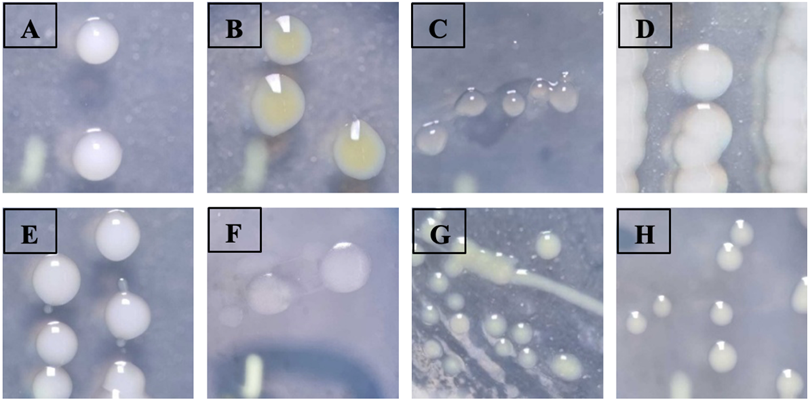
Macroscopic morphological observations revealed substantial variation among the bacterial isolates, particularly in colony color, size, and appearance, although most isolates exhibited circular colonies with smooth margins and convex elevation (Figure 1; Table 1). This phenotypic diversity reflects the presence of taxonomically diverse bacterial populations and their adaptive capacity to the dynamic environmental conditions of tidal lowlands. Molecular identification of selected isolates further revealed the presence of different bacterial taxa, including Sphingobacterium multivorum, Paenibacillus chitinolyticus, Paenibacillus amylolyticus, and Burkholderia plantarii.
The variation in colony morphology observed among the isolates is consistent with previous studies reporting that rhizosphere bacterial communities inhabiting periodically flooded environments exhibit diverse adaptive traits that support survival under fluctuating redox conditions and enhance their ability to colonize plant roots (López et al., 2023; Zapata et al., 2021). Morphological diversity among bacterial isolates may also indicate differences in physiological and ecological characteristics that contribute to plant–microbe interactions and support their potential role as Plant Growth-Promoting Rhizobacteria (PGPR) (Ajijah et al., 2023; Santoyo et al., 2021).
These morphological characteristics provided preliminary information for differentiating bacterial isolates and served as the basis for selecting candidate isolates for further characterization, including nitrogen fixation, indole-3-acetic acid (IAA) production, siderophore production, hypersensitivity testing, and molecular identification.
Uji hipersensitivitas (hypersensitive response/hr).
The hypersensitive response assay was used as a preliminary screening method to assess the potential pathogenicity of the bacterial isolates prior to consortium development. Although positive and negative controls were not included in the assay, all tested isolates were evaluated under the same experimental conditions.
The results of the hypersensitivity assay on tobacco leaves showed that none of the tested isolates induced necrosis, chlorosis, or other visible hypersensitive symptoms at the infiltration sites (Figure 2). All treated leaf tissues remained healthy throughout the observation period, indicating the absence of detectable pathogenic activity under the conditions tested. Notably, isolate TRF5, which showed the highest sequence similarity to Burkholderia plantarii based on 16S rRNA analysis, also produced a negative hypersensitive response.
The hypersensitive reaction is generally characterized by localized cell death as a plant defense response against pathogen infection, functioning to restrict the spread of pathogenic microorganisms (Balint-Kurti, 2019). The absence of such a reaction suggests that the tested isolates did not trigger plant defense responses typically associated with pathogenic bacteria.
Although Burkholderia plantarii has been reported as the causal agent of bacterial seedling blight in rice Kang et al, (2024) no necrotic or chlorotic symptoms were observed for isolate TRF5 in the present assay. Therefore, pathogenicity of the isolate could not be confirmed under the conditions evaluated in this study, and further pathogenicity testing on rice plants is required before practical application.
Overall, the results suggest that the tested isolates have potential for further evaluation as candidate Plant Growth-Promoting Rhizobacteria (PGPR). These findings are consistent with previous studies reporting that bacterial isolates showing negative hypersensitive reactions may establish beneficial plant–microbe interactions without causing visible tissue damage under the conditions tested (Zhu et al., 2022).
Nitrogen Fixation Production
Nitrogen fixation is an important biological process carried out by diazotrophic bacteria through the conversion of atmospheric nitrogen (N₂) into ammonia (NH₃), which can be utilized by plants. This activity is catalyzed by the nitrogenase
Fig 1. Macroscopic morphology of eight bacterial isolates, Note : A:TRF 1, B:TRF2, C:TRF 3, D:TRF4, E:TRF5, F:TRF6, G:TRF7, H:TRF8.
Table 1. Macroscopic colony morphology of bacterial isolates.
| Isolate Code | Colony Shape | Margin | Elevation | Colony Color | Colony Size |
|---|---|---|---|---|---|
| TRF 1 | Circular | Smooth | Convex | White | Medium |
| TRF 2 | Circular | Smooth | Convex | Yellow | Medium |
| TRF 3 | Circular | Smooth | Convex | Transparent | Small |
| TRF 4 | Circular | Smooth | Convex | White | Medium |
| TRF 5 | Circular | Smooth | Convex | White | Medium |
| TRF 6 | Circular | Smooth | Flat | Translucent | Medium |
| TRF 7 | Circular | Smooth | Convex | Yellow | Punctiform |
| TRF 8 | Circular | Smooth | Convex | White | Small |
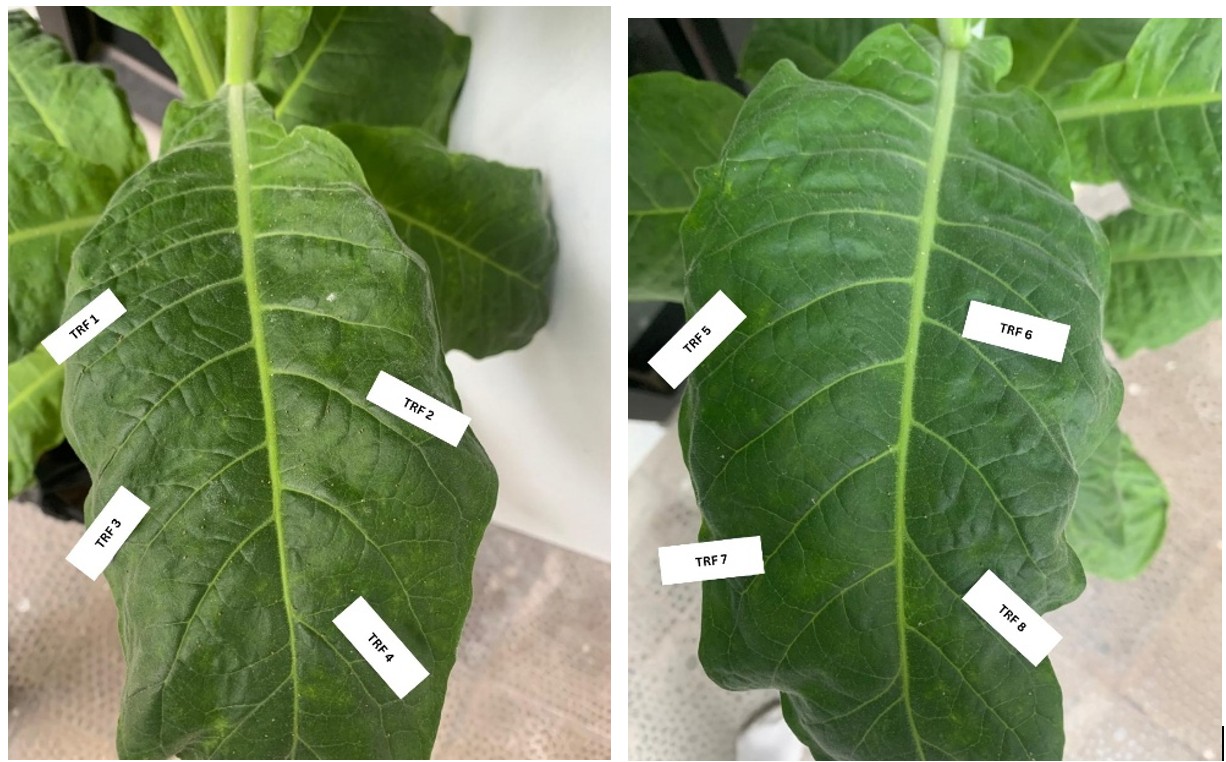
Fig 2. Hypersensitive response assay of bacterial isolates on tobacco leaves. No necrotic lesions or chlorotic symptoms were observed at the infiltration sites, indicating a negative hypersensitive response for all tested isolates.
enzyme and generally proceeds optimally under microaerobic conditions, as nitrogenase is sensitive to oxygen (Alleman et al., 2021).
In this study, all isolates demonstrated nitrogen fixation ability with varying levels of activity (Figure 3). This difference reflects variation in the physiological capacity among isolates to express and regulate the nitrogenase system, which is influenced by medium conditions, the availability of fixed nitrogen, and cellular metabolic regulation. At the molecular level, the N₂ fixation process is controlled by nif genes, which encode three main types of nitrogenase, namely molybdenum (Mo)-based, vanadium (V)-based, and iron (Fe)-based nitrogenase, with Mo-nitrogenase being the most common and biologically efficient form (Alleman et al., 2021; Zhang et al., 2023).
The ability of the isolates to produce ammonia indicates their functional potential as plant growth-promoting bacteria, particularly in enhancing nitrogen availability in tidal lowlands, which are generally deficient in available nitrogen.
Table 2. Identification of indigenous bacterial isolates from tidal lowland soils through 16S rRNA gene sequencing analysis.
| Isolate Label | Source of Isolation | Homologous Microorganism | % Identity |
|---|---|---|---|
| TRF 3 | Rhizosphere | Paenibacillus chitinolyticus | 99.93 % |
| TRF 4 | Rhizosphere | Sphingobacterium multivorum | 100 % |
| TRF 5 | Rhizosphere | Burkholderia plantarii | 100 % |
| TRF 8 | Rhizosphere | Paenibacillus amylolyticus | 100 % |
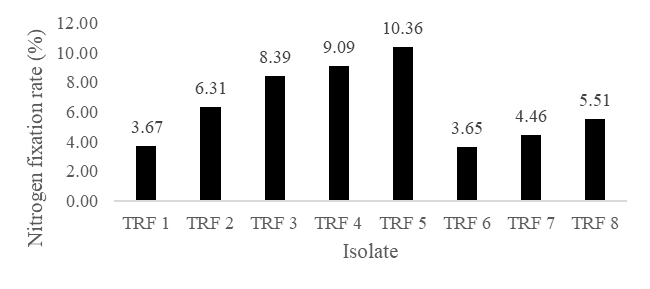
Fig 3. Nitrogen-fixing production.
Table 3. Results of initial soil chemical content analysis.
| Criteria | Result | Status |
|---|---|---|
| pH H₂O | 4.49 | Very acidic |
| pH KCl | 3.85 | - |
| Sand (%) | 0.88 | - |
| Silt (%) | 33.57 | - |
| Clay (%) | 65.55 | Clay texture |
| C-organic (%) | 8.13 | Very high |
| N-total (%) | 0.46 | Moderate |
| P-Bray (ppm) | 16.28 | Moderate |
| CEC (cmol(+)/kg) | 16.50 | Moderate |
| Mg-dd (cmol(+)/kg) | 0.20 | Very low |
| Ca-dd (cmol(+)/kg) | 2.15 | Moderate |
| K-dd (cmol(+)/kg) | 0.13 | Low |
| Na-dd (cmol(+)/kg) | 0.18 | Low |
| Al-dd (cmol(+)/kg) | 3.15 | Very high |
| K (mg/100 g) | 12.04 | Low |
| Fe (ppm) | 19,021 | High |
| P (mg/100 g) | 44.01 | High |
Criteria: Soil fertility status was classified according to Agricultural Research and Development Agency (2012).
Siderophore production
The test results showed that all bacterial isolates were capable of producing siderophores at varying levels among isolates (Figure 4). The highest production was exhibited by isolate TRF4 (82.14%), followed by TRF3 (73.33%), whereas the lowest production was observed in TRF8 (18.26%). This variation reflects differences in physiological capacity and microbial adaptive strategies in responding to iron availability in the growth medium.
Tidal lowlands are characterized by fluctuations in redox conditions that cause changes in the chemical form of iron, from Fe³⁺ to Fe²⁺ during the anaerobic phase and conversely under oxidative conditions. Although the total Fe content in tidal lowlands is relatively high, Fe availability to plants is often unstable due to precipitation and changes in iron valence (Ghulamahdi et al., 2024). Under these conditions, siderophore production by rhizosphere bacteria plays a role as an adaptive mechanism to regulate Fe acquisition and mobilization in the root microenvironment (Liu et al., 2022).
The high siderophore production in isolates TRF4 and TRF3 indicates a strong adaptive capacity to environments with extreme Fe dynamics. In addition to functioning in Fe acquisition, siderophores also contribute to reducing the potential toxicity of Fe by complexing Fe³⁺, thereby decreasing excessive Fe²⁺ accumulation that can impair plant physiology (Ghulamahdi et al., 2024).
Identification and Selection of Several Isolates
Partial 16S rRNA gene sequence analysis revealed that the selected isolates belonged to three major bacterial genera, namely Paenibacillus, Sphingobacterium, and Burkholderia (Table 2). Isolate TRF3 exhibited 99.93% sequence similarity with Paenibacillus chitinolyticus, while isolates TRF4, TRF5, and TRF8 showed 100% sequence similarity with
Table 4. Results of observations on the vegetative growth of rice plants under saturation treatment, optimal fertilizer, and liquid biofertilizer.
| Treatment | Parameter | |||
|---|---|---|---|---|
| Plant Height | Number of productive tillers | Root Length | Root Volume | |
| Saturation | ||||
| P1 | 73.65±11.89 b | 21.88±3.27 b | 21.12±4.73 b | 41.16±4.73 b |
| P2 | 78.76±4.90 ab | 24.15±5.07 ab | 25.62±5.81 ab | 44.93±5.05 ab |
| P3 | 79.93±15.71 a | 26.22±4.74 a | 28.28±5.47 a | 47.28±4.16 a |
| Inorganic Fertilizer Dose | ||||
| O1 | 75.81±7.15 ns | 23.51±4.57 ns | 25.12±6.76 ns | 44.01±5.20 ns |
| O2 | 79.09±9.33 ns | 24.66±4.81 ns | 24.89±5.35 ns | 44.87±5.33 ns |
| Liquid Biofertilizer | ||||
| A0 | 73.09±8.96 b | 21.87±3.25 b | 22.22±6.71 b | 42.28±3.54 b |
| A1 | 81.81±4.85 a | 26.30±4.87 a | 27.79±3.58 a | 46.60±5.78 a |
Note: P1 = one-month saturation treatment; P2 = two-month saturation treatment; P3 = continuous saturation treatment. O1 and O2 represent 50% and 100% of the recommended inorganic fertilizer dose, respectively. A0 = without liquid biofertilizer (control), and A1 = with liquid biofertilizer application. Values are presented as mean ± standard deviation. Means followed by different letters within the same column indicate significant differences according to Duncan’s Multiple Range Test (DMRT) at p < 0.05.
Table 5. Results of the calculation of rice plant production under saturation treatment, optimal fertilizer, and liquid biofertilizer.
| Treatment | Parameter | ||||
|---|---|---|---|---|---|
| Panicle Length | Filled Grains | Unfilled Grains | Weight of 1000 Grains | Grain yield | |
| Saturation | |||||
| P1 | 21.65±3.11 b | 102.25±8.65 b | 23.93±5.14 b | 21.88±3.27 b | 3.51±0.60 b |
| P2 | 23.63±2.56 b | 106.31±4.78 b | 27.40±6.13 ab | 24.16±5.07 ab | 3.83±0.80 b |
| P3 | 26.33±4.46 a | 116.64±12.19 a | 30.82±4.63 a | 26.22±4.74 a | 4.39±0.87 a |
| Inorganic Fertilizer Dose | |||||
| O1 | 23.52±3.67 ns | 107.93±11.35 ns | 26.75±6.19 ns | 23.51±4.57 ns | 3.85±0.90 ns |
| O2 | 24.22±4.18 ns | 108.87±10.39 ns | 28.01±5.74 ns | 24.66±4.81 ns | 3.97±0.77 ns |
| Liquid Biofertilizer | |||||
| A0 | 22.12±2.82 b | 105.46±9.42 b | 24.83±4.65 b | 21.87±3.25 b | 3.59±0.79 b |
| A1 | 25.62±4.10 a | 111.34±11.40 a | 29.94±6.05 a | 26.30±4.87 a | 4.24±0.75 a |
Note: P1 = one-month saturation treatment; P2 = two-month saturation treatment; P3 = continuous saturation treatment. O1 and O2 represent 50% and 100% of the recommended inorganic fertilizer dose, respectively. A0 = without liquid biofertilizer (control), and A1 = with liquid biofertilizer application. Values are presented as mean ± standard deviation. Means followed by different letters within the same column indicate significant differences according to Duncan’s Multiple Range Test (DMRT) at p < 0.05.
Sphingobacterium multivorum, Burkholderia plantarii, and Paenibacillus amylolyticus, respectively. These results indicate a close genetic relationship between the selected isolates and their corresponding reference strains.
Phylogenetic analysis based on 16S rRNA gene sequences further supported the taxonomic placement of the isolates (Figure 5). The phylogenetic tree showed that TRF3 clustered with reference sequences of Paenibacillus chitinolyticus, TRF4 grouped with Sphingobacterium multivorum, TRF8 clustered with Paenibacillus amylolyticus, and TRF5 was positioned within the Burkholderia plantarii clade. The clustering patterns were consistent with the sequence similarity results and confirmed the close evolutionary relationships between the isolates and their respective reference strains.
Although 16S rRNA gene sequencing is widely used for bacterial identification, species-level assignments based solely on this marker should be interpreted cautiously because closely related taxa may share highly similar 16S rRNA sequences. Therefore, additional molecular approaches, such as multilocus sequence analysis or whole-genome sequencing, are recommended for more robust taxonomic confirmation (Ishaq et al., 2025).
Soil chemical analysis
Initial soil chemical analysis results showed that the soil was under very acidic conditions (pH H₂O 4.49; pH KCl 3.85), reflecting the dominance of Al³⁺ and H⁺ ions in the exchange complex (Table 3). This condition is commonly found in humid tropical soils and tidal lowlands and has direct implications for aluminum and iron toxicity to plants (Zhu & Shen, 2024).
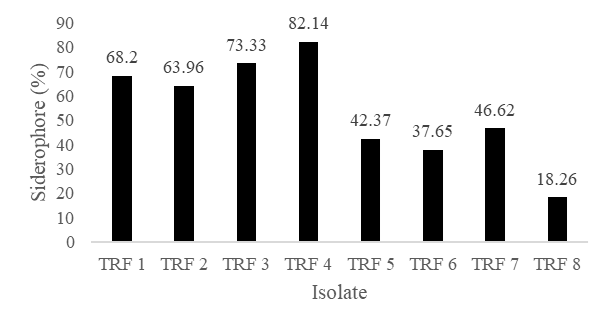
Fig 4. Siderophore production by bacteria from the rhizosphere of rice plants in tidal lowland areas.
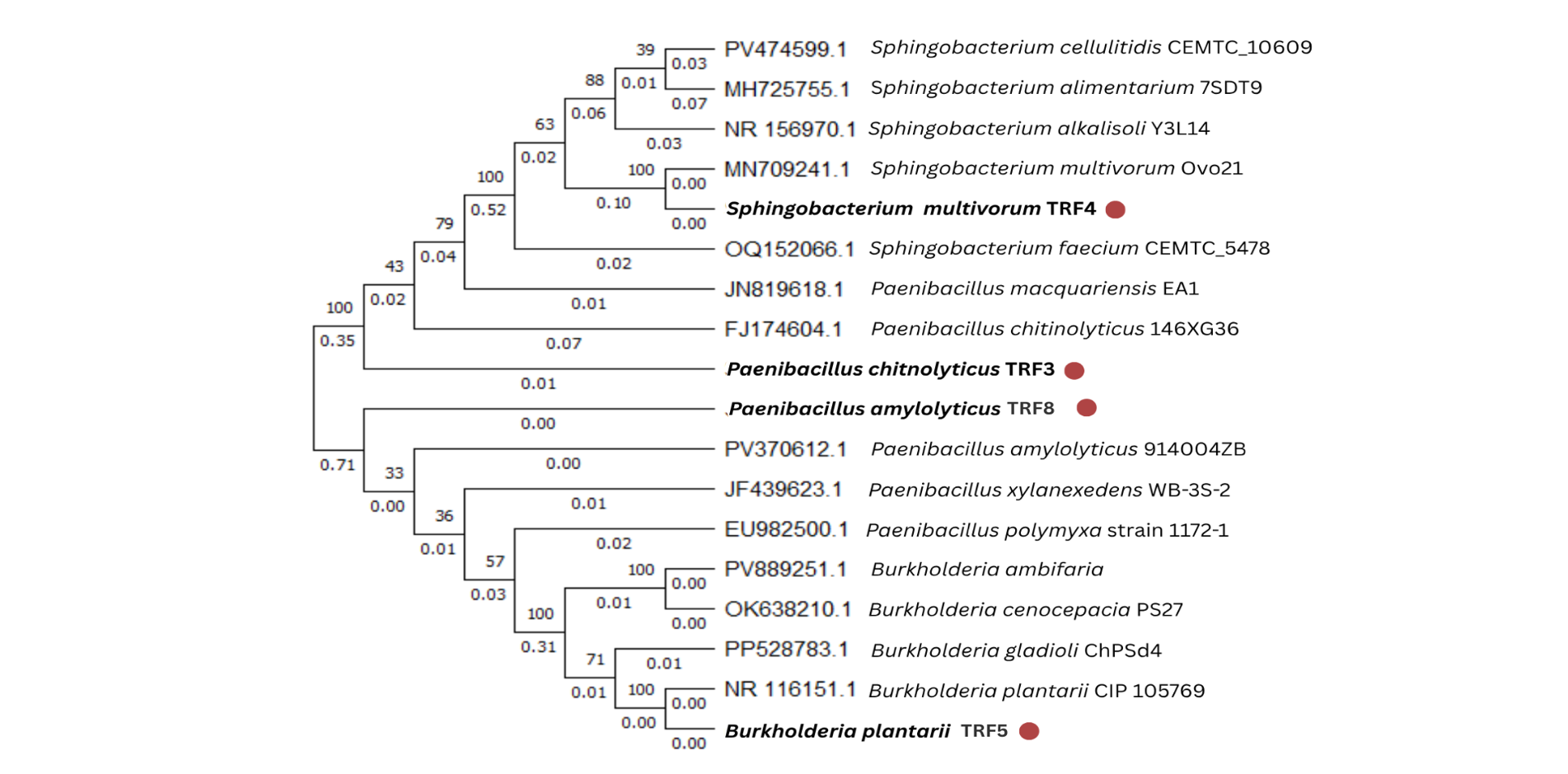
Fig 5. Phylogenetic tree of selected isolates.
The high levels of exchangeable Al (3.15 cmol/kg) and soluble Fe (19,021 ppm) have the potential to suppress root growth and inhibit nutrient uptake, particularly phosphorus through the mechanism of phosphate fixation by Fe and Al oxides.
The soil texture, dominated by the clay fraction (65.55%), indicates a relatively good adsorption capacity, as reflected by the moderate CEC value (16.5 cmol/kg). The very high organic C content (8.13%) indicates intensive accumulation of organic matter, which plays an important role in improving soil structure and reducing free Al activity through the formation of organo-Al complexes (Gerke, 2021). However, an imbalance of base cations is clearly observed, with very high exchangeable Ca, whereas exchangeable Mg and exchangeable K are classified as low, which may cause plant nutrient disorders.
Vegetative plant growth
Soil saturation significantly increased plant height, number of productive tillers root length, and root volume, with the highest response observed under treatment P3 (Table 4). This increase is associated with the improvement of redox conditions in acidic soils, which reduces the solubility of Al³⁺ and Fe²⁺, thereby supporting root system development and nutrient uptake efficiency (Ghulamahdi et al., 2024; Pujiwati et al., 2016). A more developed root system directly contributes to enhanced shoot growth through increased water and nitrogen supply (Xia et al., 2024).
The optimal fertilizer treatment did not show significant differences among levels, indicating that the response to mineral fertilizer in acidic soils is limited by soil chemical factors, particularly Al saturation and low effective nutrient availability (Tkaczyk et al., 2020). In contrast, the application of liquid biofertilizer significantly increased plant height, number of productive tillers and root parameters, which may be associated with the plant growth-promoting characteristics of the bacterial consortium identified during isolate screening.
Table 6. Results of the analysis of nutrient content in the shoot of rice plants under liquid biofertilizer treatment and water regime.
| Treatment | Parameter | ||
|---|---|---|---|
| Fe | N | P | |
| Saturation | |||
| P1 | 6199±32.76 a | 1.37±0.30 ns | 0.18±0.04 ns |
| P2 | 2547±21.76 b | 1.46±0.31 ns | 0.19±0.03 ns |
| P3 | 2035±10.53 b | 1.47±0.24 ns | 0.23±0.12 ns |
| Optimal Fertilizer | |||
| O1 | 3652±29.97 ns | 1.47±0.25 ns | 0.20±0.04 ns |
| O2 | 3535±30.09 ns | 1.40±0.31 ns | 0.19±0.10 ns |
| Liquid Biofertilizer | |||
| A0 | 4579±34.83 a | 1.31±0.27 b | 0.17±0.04 ns |
| A1 | 2609±19.48 b | 1.57±0.22 a | 0.23±0.09 ns |
Note: P1 = one-month saturation treatment; P2 = two-month saturation treatment; P3 = continuous saturation treatment. O1 and O2 represent 50% and 100% of the recommended inorganic fertilizer dose, respectively. A0 = without liquid biofertilizer (control), and A1 = with liquid biofertilizer application. Values are presented as mean ± standard deviation. Means followed by different letters within the same column indicate significant differences according to Duncan’s Multiple Range Test (DMRT) at p < 0.05.
Crop production
The results of the analysis showed that the saturation treatment and liquid biofertilizer had a significant effect on panicle length, filled grains, unfilled grains, and 1000-grain weight, whereas the optimal fertilizer did not provide a significant response (Table 5). The improvement in yield components under the highest saturation treatment (P3) indicates that water management plays an important role in supporting grain filling and crop productivity under tidal lowland conditions. Improved water availability and a more favorable soil environment during the reproductive stage may contribute to better grain development and reduced yield losses (Mosharrof et al., 2021).
The application of liquid biofertilizer significantly increased panicle length and 1000-grain weight and reduced unfilled grains. These responses may be associated with the plant growth-promoting characteristics of the bacterial consortium identified during the screening stage. However, the present study did not directly quantify the physiological or biochemical mechanisms underlying these responses under field conditions; therefore, the observed effects should be interpreted as potential contributions of the bacterial consortium rather than directly demonstrated mechanisms (Mosharrof et al., 2021).
Shoot Nutrient Content (N, P, and Fe)
Water regime and the application of liquid biofertilizer had a significant effect on shoot Fe content, whereas their interaction was not significant (Table 6). The reduction in shoot Fe under optimal saturation and liquid biofertilizer treatments suggests that these treatments may have contributed to limiting excessive Fe accumulation in plant tissues. This response is particularly important in tidal lowland soils, where elevated Fe availability may increase the risk of Fe toxicity and adversely affect plant growth (Carmona et al., 2021; Weinand et al., 2023).
Shoot N content was influenced by water regime, whereas the effect of biofertilizer was not significant. This result suggests that water management played a more important role than biofertilizer application in determining shoot N concentration under the conditions of this study (Flynn et al., 2023; Oldroyd & Dixon, 2014). Shoot P content was relatively stable across treatments, although a slight increasing trend was observed under biofertilizer application. This finding indicates that the response of P accumulation in plant tissues was limited and may depend on soil conditions and plant nutrient demand (Zhang et al., 2025).
N, P, and Fe uptake
N uptake increased under optimal saturation treatments (P2–P3) and the application of liquid biofertilizer (A1) (Table 7). These responses suggest that appropriate water-management practices and biofertilizer application may have contributed to improved plant nutritional status under tidal lowland conditions. Controlled flooded conditions have been reported to influence N availability and facilitate nutrient acquisition by rice plants (Marlina et al., 2025; Midya et al., 2021).
The observed increase in N uptake may be associated with the plant growth-promoting characteristics of the bacterial consortium identified during the screening stage, including nitrogen-fixing and siderophore-producing capabilities. However, the present study did not directly quantify biological nitrogen fixation or other underlying physiological mechanisms under field conditions. Therefore, these explanations should be interpreted as potential mechanisms rather than directly demonstrated processes (Flynn et al., 2023; Oldroyd & Dixon, 2014).
In contrast, Fe uptake tended to decrease under treatments that promoted greater N uptake, suggesting that water-management and biofertilizer treatments may have contributed to reducing excessive Fe accumulation in plant tissues. This response is important in tidal lowland soils, where elevated Fe availability may increase the risk of Fe toxicity and disrupt plant nutrient balance (Aung & Masuda, 2020; Wairich et al., 2024).
P uptake showed a relatively limited response compared with N uptake. This finding indicates that the effects of water-management and biofertilizer treatments on nutrient acquisition may vary among nutrient elements and depend on soil chemical conditions and plant demand. Overall, the combination of optimal saturation management and liquid biofertilizer
Table 7. N, P, and Fe uptake.
| Treatment | Parameter | ||
|---|---|---|---|
| N | P | Fe | |
| Saturation | |||
| P1 | 53.75±7.21 b | 32.73±1.40 ns | 451.13±267.20 b |
| P2 | 63.53±11.88 a | 33.08±1.45 ns | 253.73±233.04 ab |
| P3 | 70.25±10.59 a | 33.27±1.38 ns | 160.29±249.27 a |
| Optimal Fertilizer | |||
| O1 | 62.43±12.65 ns | 33.20±1.48 ns | 272.27±272.36 ns |
| O2 | 62.59±11.60 ns | 32.85±1.29 ns | 304.50±277.23 ns |
| Liquid Biofertilizer | |||
| A0 | 59.16±10.31 b | 32.87±1.30 ns | 365.56±269.75 b |
| A1 | 65.86±12.83 a | 33.19±1.48 ns | 211.21±256.59 a |
Note: P1 = one-month saturation treatment; P2 = two-month saturation treatment; P3 = continuous saturation treatment. O1 and O2 represent 50% and 100% of the recommended inorganic fertilizer dose, respectively. A0 = without liquid biofertilizer (control), and A1 = with liquid biofertilizer application. Values are presented as mean ± standard deviation. Means followed by different letters within the same column indicate significant differences according to Duncan’s Multiple Range Test (DMRT) at p < 0.05.
was associated with improved nutrient uptake patterns and lower Fe accumulation, thereby supporting favorable rice growth under tidal lowland conditions.
Materials and Methods
Study site and experimental period
The laboratory research was conducted at the Biotechnology Center Laboratory IPB and the Soil Biotechnology Laboratory IPB from January 2024 to July 2025. The field experiment was carried out in a type B tidal lowland in Karya Bhakti Village, Rantau Rasau Subdistrict, Tanjung Jabung Timur Regency, Jambi Province, from August 2024 to March 2025.
Sample Collection and Bacterial Isolation
Rhizosphere and rice root samples were collected from six observation points grouped into two main areas and then composited. Bacterial isolation was performed using the serial dilution method. Soil suspensions were serially diluted in 0.85% physiological NaCl solution, and aliquots of the diluted suspensions were spread onto Nutrient Agar (NA) medium followed by incubation at 30 °C for 24–48 h. Colonies exhibiting distinct morphological characteristics were selected and purified by repeated streaking on fresh NA medium to obtain pure cultures. Nitrogen-fixing bacteria were subsequently isolated through serial dilution and selection on semi-solid Nitrogen-Free Bromothymol Blue (NFB) medium. Isolates forming a white pellicle were selected and purified on solid NFB medium until pure cultures were obtained.
Safety, morphological, and functional characterization
Isolate safety was evaluated through a hypersensitivity test on tobacco leaves and a hemolysis test on 5% blood agar medium to ensure that the isolates were non-pathogenic (Gilligan, 2013; Nøhr-Meldgaard et al., 2026). Morphological characterization was performed based on macroscopic colony characteristics, including colony shape, margin, elevation, color, and colony size observed on Nutrient Agar (NA) medium. Nitrogen fixation ability was quantitatively analyzed using the Nessler method after incubation in Ashby medium, whereas siderophore production was qualitatively tested using Chrome Azurol S (CAS) medium, indicated by the formation of an orange halo zone around the colonies (Mir et al., 2022). Selected isolates were subsequently subjected to molecular identification based on 16S rRNA gene sequencing.
Biofertilizer consortium and molecular identification
Four isolates with the best plant growth-promoting characteristics were selected and formulated as a liquid biofertilizer consortium using Nutrient Broth supplemented with molasses as a carrier medium. The production of liquid biofertilizer is carried out with a ratio of 2:1 where the bacteria are first grown in nutrient broth and 5% molasses media. The bacterial population is 108 CFU/ml, molasses is added with a concentration of 2% and 5% bacterial isolates and fermented for 14 days.The selected isolates were chosen based on their performance in nitrogen fixation, siderophore production, and molecular identification analyses. Molecular identification was performed through genomic DNA extraction, amplification of the 16S rRNA gene using universal primers 63F and 1389R, followed by BLASTn analysis against sequences available in the NCBI database. Phylogenetic relationships were further evaluated using the neighbor-joining method with 1,000 bootstrap replicates in MEGA version 12 software.
Prior to consortium formulation, compatibility among the selected isolates was evaluated through an in vitro synergism assay on Nutrient Agar medium. No inhibition zones were observed between isolates after incubation, indicating compatibility among the bacterial strains and supporting their use as a consortium. The consortium was subsequently propagated in Nutrient Broth supplemented with molasses and incubated until a bacterial density of approximately 10⁸ CFU mL⁻¹ was achieved.
Experimental design and treatments
A field experiment was conducted to evaluate the effectiveness of a liquid biofertilizer consortium derived from indigenous tidal lowland bacteria under different water-management and fertilizer regimes. The experiment was arranged in a split-split plot design with three replications. Water-management regime was assigned as the main plot factor, inorganic fertilizer level as the subplot factor, and biofertilizer application as the sub-subplot factor. In total, 12 treatment combinations were evaluated in each replication.
The main plot factor consisted of three water-management regimes: P1, P2, and P3. Saturated soil conditions were maintained by controlling the water table at approximately 5 cm below the soil surface. In P1, soil saturation was maintained from transplanting until 30 days after transplanting (DAT), after which the plots were managed under conventional flooded conditions until harvest. In P2, soil saturation was maintained until 60 DAT and subsequently converted to flooded conditions until harvest. In P3, saturated soil conditions were maintained continuously from transplanting until harvest.
The subplot factor consisted of two inorganic fertilizer levels. O1 represented 50% of the recommended fertilizer rate, whereas O2 represented 100% of the recommended fertilizer rate. The recommended fertilizer rate consisted of 200 kg ha⁻¹ urea, 499 kg ha⁻¹ Fertiphos, and 167 kg ha⁻¹ KCl. Accordingly, O1 received 100 kg ha⁻¹ urea, 249.5 kg ha⁻¹ Fertiphos, and 83.5 kg ha⁻¹ KCl, while O2 received 200 kg ha⁻¹ urea, 499 kg ha⁻¹ Fertiphos, and 167 kg ha⁻¹ KCl. Fertiphos was used as the phosphorus source in place of SP-36.
The sub-subplot factor consisted of two biofertilizer treatments: A0 (without biofertilizer application) and A1 (with biofertilizer application). The liquid biofertilizer was formulated as a consortium of four indigenous bacterial isolates obtained from tidal lowland rice rhizospheres. These isolates were previously selected based on their plant growth-promoting characteristics, including nitrogen fixation, siderophore production, and molecular identification. The bacterial population density in the liquid biofertilizer was maintained at approximately 10⁸ CFU mL⁻¹ in accordance with the Indonesian Ministry of Agriculture standards for liquid biofertilizer products.
Biofertilizer application was conducted through three stages. First, rice seeds assigned to the biofertilizer treatment were subjected to biopriming by soaking them in the liquid biofertilizer suspension for 12 h prior to sowing. Second, rice seedlings were root-dipped in the biofertilizer suspension immediately before transplanting. Third, field application was performed at 7 days after transplanting by applying the biofertilizer around the plant base at a rate of 5 mL plant⁻¹. Each experimental plot measured 3 m × 1 m.
The split-split plot structure was maintained throughout the experiment, with water-management regime assigned to the main plots, fertilizer level to the subplots, and biofertilizer application to the sub-subplots. Statistical analyses were conducted according to this experimental structure.
Field experiment and crop management
Initial soil analysis was conducted on composite samples, including pH, organic C, total N, available P, K₂O, and Fe. Rice seeds of the Inpari 16 Pasundan variety were treated with liquid biofertilizer and transplanted at 18 days after sowing. The application of liquid biofertilizer was carried out at the seed soaking stage, at transplanting, and one month after planting. Basal fertilization included dolomite at 2 ton ha⁻¹ and rice husk charcoal at 0.5 ton ha⁻¹, whereas inorganic fertilizers were applied according to recommendations at 50% and 100% doses. Pest control was implemented in an integrated manner through mechanical and chemical methods according to field requirements (Dhakal & Poudel, 2020).
Observed parameters and statistical analysis
Growth parameters included plant height, number of productive tillers, root length, and root volume. Production parameters included panicle length, number of filled and unfilled grains, 1,000-grain weight, and grain yield. Shoot N, P, and Fe contents were analyzed using standard laboratory methods, whereas nutrient uptake was calculated based on plant dry weight (Shruti et al., 2024; Ugile et al., 2024).
Data were analyzed using analysis of variance (ANOVA) appropriate for a split-split plot design with three replications. Water-management regime was treated as the main plot factor, inorganic fertilizer level as the subplot factor, and biofertilizer application as the sub-subplot factor. Mean comparisons were performed using Duncan’s Multiple Range Test (DMRT) at the 5% significance level when treatment effects were significant. Nitrogen fixation and siderophore production assays were used as preliminary screening parameters for isolate selection and were therefore presented descriptively.
Conclusion
The indigenous bacterial consortium derived from tidal lowlands showed potential as a liquid biofertilizer for rice cultivation in type B tidal lowlands. The application of liquid biofertilizer and saturated soil management improved several rice growth variables, yield components, and nutrient uptake characteristics. Biofertilizer application was associated with increased N uptake and reduced Fe accumulation in plant tissues, whereas saturated soil conditions contributed to a more favorable environment for rice growth under tidal lowland conditions. These findings indicate that the integration of indigenous bacterial biofertilizer and appropriate water management may support rice cultivation in tidal lowlands and warrants further evaluation under broader field conditions.
References
Ajijah N, Fiodor A, Pandey AK, Rana A & Pranaw K (2023) Plant growth-promoting bacteria (PGPB) with biofilm-forming ability: a multifaceted agent for sustainable agriculture. Diversity 15(1): 112. https://doi.org/10.3390/d15010112
Ali MA, Lou Y, Hafeez R, Li X, Hossain A, Xie T, Lin L, Li B, Yin Y, Yan J & An Q (2021) Functional analysis and genome mining reveal high potential of biocontrol and plant growth promotion in nodule-inhabiting bacteria within Paenibacillus polymyxa complex. Frontiers in Microbiology 11: 618601. https://doi.org/10.3389/fmicb.2020.618601
*Alleman AB, Mus F & Peters JW (2021) Metabolic model of the nitrogen-fixing obligate aerobe Azotobacter vinelandii predicts its adaptation to oxygen concentration and metal availability. mBio. Available at: https://journals.asm.org/journal/mbio
*Aswidinnoor H, Listiyanto R, Rahim S, Setiyowati H, Nindita A & Ritonga AW (2019) Stability analysis, agronomic performance, and grain quality of elite new plant type rice lines (Oryza sativa L.) developed for tropical lowland ecosystem.
Aung MS & Masuda H (2020) How does rice defend against excess iron? Physiological and molecular mechanisms. Frontiers in Plant Science 11: 1102. https://doi.org/10.3389/fpls.2020.01102
Balint-Kurti P (2019) The plant hypersensitive response: concepts, control and consequences. Molecular Plant Pathology 20(8): 1163–1178. https://doi.org/10.1111/mpp.12821
*Carmona FC, Adamski JM, Wairich A, de Carvalho JB, Lima GG, Anghinoni I, Jaeger IR, Silva PRF, Terra TF, Fett JP & Carlos F (2021) Tolerance mechanisms and irrigation management to reduce iron stress in irrigated rice. Research Square preprint. https://doi.org/10.21203/rs.3.rs-473723/v1
Chang YL, Chang YC, Kurniawan A, Chang PC, Liou TY, Wang WD & Chuang HW (2024) Employing genomic tools to explore the molecular mechanisms behind the enhancement of plant growth and stress resilience facilitated by a Burkholderia rhizobacterial strain. International Journal of Molecular Sciences 25(11): 6091. https://doi.org/10.3390/ijms25116091
de Andrade LA, Santos CHB, Frezarin ET, Sales LR & Rigobelo EC (2023) Plant growth-promoting rhizobacteria for sustainable agricultural production. Microorganisms 11(4): 1088. https://doi.org/10.3390/microorganisms11041088
Dhakal A & Poudel S (2020) Integrated pest management (IPM) and its application in rice – a review. Reviews in Food and Agriculture 1(2): 54–58. https://doi.org/10.26480/rfna.02.2020.54.58
Flynn NE, Comas LH, Stewart CE & Fonte SJ (2023) High N availability decreases N uptake and yield under limited water availability in maize. Scientific Reports 13(1). https://doi.org/10.1038/s41598-023-40459-0
Gerke J (2021) Carbon accumulation in arable soils: mechanisms and the effect of cultivation practices and organic fertilizers. Agronomy 11(6): 1079. https://doi.org/10.3390/agronomy11061079
*Ghulamahdi M, Arifin Aziz S, Lubis I & Maryam Harahap S (2024) Reduction of Fe with application of saturated soil culture technology and biomass ameliorant on organic rice farming in tidal swamp. Tohoku University Journal of Integrated Field Science 21.
Gilligan PH (2013) Identification of pathogens by classical clinical tests. In: The Prokaryotes: Human Microbiology. Springer-Verlag, Berlin Heidelberg, pp. 57–89. https://doi.org/10.1007/978-3-642-30144-5_90
Gureeva MV & Gureev AP (2023) Molecular mechanisms determining the role of bacteria from the genus Azospirillum in plant adaptation to damaging environmental factors. International Journal of Molecular Sciences 24(11): 9122. https://doi.org/10.3390/ijms24119122
Hairani A, Noor M, Alwi M, Saleh M, Rina Y, Khairullah I, Sosiawan H, Heryani N, Mukhlis M & Lenin I (2024) Freshwater swampland as food buffer during El Niño: case study in South Kalimantan, Indonesia. Chilean Journal of Agricultural Research 84(1): 132–143. https://doi.org/10.4067/S0718-58392024000100132
Igiehon BC, Babalola OO & Hassen AI (2024) Rhizosphere competence and applications of plant growth-promoting rhizobacteria in food production – a review. Scientific African 23: e02081. https://doi.org/10.1016/j.sciaf.2024.e02081
Ishaq S, Belduz AO, Ceylan E, Senocak AN, Munawar W, Alkowlani ATH, Terzi R, Bektas KI & Canakci S (2025) Plant growth-promoting bacteria from Uzungöl forest stimulate rice growth via seed biopriming and root inoculation: isolation and functional characterization of potent PGPR strains from rhizosphere soils of different trees. Frontiers in Plant Science 16: 1622951. https://doi.org/10.3389/fpls.2025.1622951
*Jambi B (2023) Balai Pengkajian Teknologi Pertanian.
*Junaedi A, Aswidinnoor H, Purnamawati H & Kurniawati F (2025) Diseminasi teknologi padi IPB untuk memperkuat desa lumbung padi di Desa Pangumbahan Kabupaten Sukabumi (Dissemination of IPB rice technology to strengthen rice barn villages in Pangumbahan Village, Sukabumi District). 11(2): 207–217.
Ju W, Jin X, Liu L, Shen G, Zhao W, Duan C & Fang L (2020) Rhizobacteria inoculation benefits nutrient availability for phytostabilization in copper contaminated soil: drivers from bacterial community structures in rhizosphere. Applied Soil Ecology 150: 103450. https://doi.org/10.1016/j.apsoil.2019.103450
Kang M, Lee D, Mannaa M, Han G, Choi H, Lee S, Lim GH, Kim SW, Kim TJ & Seo YS (2024) Impact of quorum sensing on the virulence and survival traits of Burkholderia plantarii. Plants 13(18): 2657. https://doi.org/10.3390/plants13182657
Liu X, Sun D, Qin J, Zhang J, Yang Y, Yang J, Wang Z, Zhou D, Li Y, Wang X, Ning K & Yu J (2022) Spatial distribution of soil iron across different plant communities along a hydrological gradient in the Yellow River Estuary wetland. Frontiers in Ecology and Evolution 10: 979194. https://doi.org/10.3389/fevo.2022.979194
López JL, Fourie A, Poppeliers SWM, Pappas N, Sánchez-Gil JJ, de Jonge R & Dutilh BE (2023) Growth rate is a dominant factor predicting the rhizosphere effect. ISME Journal 17(9): 1396–1405. https://doi.org/10.1038/s41396-023-01453-6
Marlina N, Haitami A, Gusmiatun, Meidelima D, Aluyah C, Gribaldi & Asmawati (2025) Optimization of rice production in tidal swamps by combining bio-organic fertilizers and cropping systems. Journal of Ecological Engineering 26(9): 239–252. https://doi.org/10.12911/22998993/203257
Midya A, Saren BK, Dey JK, Maitra S, Praharaj S, Gaikwad DJ, Gaber A, Alhomrani M & Hossain A (2021) Crop establishment methods and integrated nutrient management improve: Part II. Nutrient uptake and use efficiency and soil health in rice (Oryza sativa L.) field in the lower Indo-Gangetic Plain, India. Agronomy 11(9): 1894. https://doi.org/10.3390/agronomy11091894
Mir MI, Hameeda B, Quadriya H, Kumar BK, Ilyas N, Kee Zuan AT, El Enshasy HA, Dailin DJ, Kassem HS, Gafur A & Sayyed RZ (2022) Multifarious indigenous diazotrophic rhizobacteria of rice (Oryza sativa L.) rhizosphere and their effect on plant growth promotion. Frontiers in Nutrition 8: 781764. https://doi.org/10.3389/fnut.2021.781764
Moon YS & Ali S (2022) Isolation and identification of multi-trait plant growth-promoting rhizobacteria from coastal sand dune plant species of Pohang beach. Folia Microbiologica 67(3): 523–533. https://doi.org/10.1007/s12223-022-00959-4
Mosharrof M, Uddin MK, Sulaiman MF, Mia S, Shamsuzzaman SM & Haque ANA (2021) Combined application of rice husk biochar and lime increases phosphorus availability and maize yield in an acidic soil. Agriculture 11(8): 793. https://doi.org/10.3390/agriculture11080793
Nøhr-Meldgaard K, Struve C, Ingmer H & Agersø Y (2026) Assessment of pathogenic potential in non-pathogenic industrially relevant bacteria. Access Microbiology 8(1). https://doi.org/10.1099/acmi.0.001079.v3
Oldroyd GED & Dixon R (2014) Biotechnological solutions to the nitrogen problem. Current Opinion in Biotechnology 26: 19–24. https://doi.org/10.1016/j.copbio.2013.08.006
*Pujiwati H, Ghulamahdi M, Yahya S, Aziz SA & Haridjaja O (2016) Produktivitas tiga genotipe kedelai dengan air berbeda dan kedalaman muka air pada berbagai kondisi tanah di pasang surut. Jurnal Agronomi Indonesia 44(3).
Ratmini NPS, Herwenita & Irsan F (2021) Climate change mitigation through superior varieties use to increase rice production in tidal swamp land. IOP Conference Series: Earth and Environmental Science 824(1): 012019. https://doi.org/10.1088/1755-1315/824/1/012019
*Santoyo G, Urtis-Flores CA, Loeza-Lara PD, Orozco-Mosqueda MC & Glick BR (2021) Rhizosphere colonization determinants by plant growth-promoting rhizobacteria (PGPR). Biology. https://doi.org/10.3390/biology
Shruti TH, Anantha MS, Diwan JR, Raveendra CH, Eshwar, Gireesh C, Sundaram RM, Neeraja CN, Kumar RM, Brajendra, Lokesha R, Mahantashivayogayya K, Suma TC, Beladadi RV, Saiprasad SV, Krishnamurthy SL, Senguttuvel P, Honnappa & Aleena D (2024) Exploring genetic variability in rice for yield improvement under low phosphorus soil conditions. Journal of Advances in Biology & Biotechnology 27(12): 347–357. https://doi.org/10.9734/jabb/2024/v27i121782
Singh P, Chauhan PK, Upadhyay SK, Singh RK, Dwivedi P, Wang J, Jain D & Jiang M (2022) Mechanistic insights and potential use of siderophores producing microbes in rhizosphere for mitigation of stress in plants grown in degraded land. Frontiers in Microbiology 13: 898979. https://doi.org/10.3389/fmicb.2022.898979
Tkaczyk P, Mocek-Płóciniak A, Skowrońska M, Bednarek W, Kuśmierz S & Zawierucha E (2020) The mineral fertilizer-dependent chemical parameters of soil acidification under field conditions. Sustainability 12(17): 7165. https://doi.org/10.3390/su12177165
Ugile SK, Chaudhari AA, Chavan PG, Mane SS & Satpathy A (2024) Soil and foliar application of Zn and Fe impact on growth, grain yield and seed quality of rice (Oryza sativa L.). Asian Journal of Soil Science and Plant Nutrition 10(2): 110–117. https://doi.org/10.9734/ajsspn/2024/v10i2267
Wairich A, Aung MS, Ricachenevsky FK & Masuda H (2024) You can’t always get as much iron as you want: how rice plants deal with excess of an essential nutrient. Frontiers in Plant Science 15: 1381856. https://doi.org/10.3389/fpls.2024.1381856
Wang Y, Zhang G, Huang Y, Guo M, Song J, Zhang T, Long Y, Wang B & Liu H (2022) A potential biofertilizer—siderophilic bacteria isolated from the rhizosphere of Paris polyphylla var. yunnanensis. Frontiers in Microbiology 13: 870413. https://doi.org/10.3389/fmicb.2022.870413
Weinand T, Asch J & Asch F (2023) Effects of endophytic Bacillus spp. on accumulation and distribution of iron in the shoots of lowland rice grown under iron toxic conditions. Journal of Plant Nutrition and Soil Science 186(3): 351–363. https://doi.org/10.1002/jpln.202200426
Xia Y, Feng J, Zhang H, Xiong D, Kong L, Seviour R & Kong Y (2024) Effects of soil pH on the growth, soil nutrient composition, and rhizosphere microbiome of Ageratina adenophora. PeerJ 12: e17231. https://doi.org/10.7717/peerj.17231
*Zahra A, Farhan Nashrullah M & Syahrim KA (2024) Enhancing rice productivity and ensuring food security in Indonesia through the adoption of innovative technologies in tidal swamp rice farming. International Journal of Life Science and Agriculture Research. https://doi.org/10.55677/ijlsar/V03I5Y2024-01
Zapata T, Galindo DM, Corrales-Ducuara AR & Ocampo-Ibáñez ID (2021) The diversity of culture-dependent Gram-negative rhizobacteria associated with Manihot esculenta Crantz plants subjected to water-deficit stress. Diversity 13(8): 366. https://doi.org/10.3390/d13080366
Zhang L, Chang L, Liu H, de Jesús Puy Alquiza M & Li Y (2025) Biochar application to soils can regulate soil phosphorus availability: a review. Biochar 7(1). https://doi.org/10.1007/s42773-024-00415-1
Zhang W, Chen Y, Huang K, Wang F & Mei Z (2023) Molecular mechanism and agricultural application of the NifA–NifL system for nitrogen fixation. International Journal of Molecular Sciences 24(2): 907. https://doi.org/10.3390/ijms24020907
Zhu L, Huang J, Lu X & Zhou C (2022) Development of plant systemic resistance by beneficial rhizobacteria: recognition, initiation, elicitation and regulation. Frontiers in Plant Science 13: 952397. https://doi.org/10.3389/fpls.2022.952397
Zhu XF & Shen RF (2024) Towards sustainable use of acidic soils: deciphering aluminum-resistant mechanisms in plants. Fundamental Research 4(6): 1533–1541. https://doi.org/10.1016/j.fmre.2023.03.004
The entries most clearly requiring verification are Aswidinnoor et al. (2019) and Junaedi et al. (2025) because the journal/source name is missing, Jambi B (2023) because it is incomplete as an institutional reference, and Santoyo et al. (2021) because the supplied DOI is incomplete (10.3390/biology does not identify a specific article).