Australian Journal of Crop Science
Article | https://doi.org/10.21475/ajcs.26.20.09.pne255
Submitted: 19 February 2026 | Revised: 29 July 2026 | Accepted: 06 August 2026
Pages 771-779
Integrated organic and chemical fertilizer strategies for sustainable corn yield and quality
Zübeyir Ağırağaç*, Şeyda Zorer Çelebi
Van Yuzuncu Yil University, Agriculture Faculty, Field Crops Department, 65080, Van, Türkiye
ahttps:/orcid.org/0000-0003-1414-1472, bhttps:/orcid.org/0000-0003-1278-1994
*Corresponding author: zubeyiragiragac@yyu.edu.tr
Abstract: This study evaluated the effects of different fertilizer applications on yield and quality parameters of the Simpatico (FAO 300) silage maize cultivar, aiming to assess the role of organomineral and foliar fertilizers in sustainable agriculture. The experiment was conducted under field conditions over two years using combinations of granular (DAP, UREA, OMB, OMT) and foliar (Seaweed, Humic Acid, Vermicompost) fertilizers. Granular fertilizers were soil-applied during sowing, while foliar treatments were applied at V4–V6, V11–V13, V14–V16, and tasseling stages. DAP-OMT and OMB-OMT treatments improved yield traits, while DAP-UREA showed the lowest performance. Vermicompost enhanced plant height and crude protein. Humic Acid increased dry matter yield and ratio. Seaweed improved digestible dry matter, intake, and relative feed value. ADF and NDF were highest in plots without foliar application. The best overall performance was observed in OMB-OMT-VC and DAP-OMT-HA combinations. The results confirm the effectiveness of organomineral and foliar fertilizers in improving maize performance and forage quality. The integration of organomineral and foliar fertilizers can reduce reliance on purely chemical fertilization, offering a more sustainable approach to improving forage quality.
Keywords: Corn, Organo-Mineral, Humic acid, Seaweed, Sustainable agriculture, Vermicompost.
Introduction
The rapidly increasing global population has intensified the demand for plant- and animal-based products. In animal production, forage costs account for nearly 70% of total expenses, and the insufficiency of pastures limits access to high-quality feed, leading to productivity losses. Therefore, expanding forage crop cultivation and improving productivity is of critical importance (Xu et al., 2020). Corn, due to its high yield potential and versatile use as grain, green fodder, and silage, is one of the most important feed crops in animal nutrition (Demin & Eremina, 2020). High energy content, easy digestibility, and storage advantages make silage corn particularly valuable in milk and meat production (Heuzé et al., 2017). Among the factors affecting silage yield and quality, fertilization plays a key role (Ahmad et al., 2018). Excessive use of chemical fertilizers may cause salinization and nutrient imbalance over time (Kamaei et al., 2019). Therefore, organic and organomineral fertilizers have gained importance for improving soil properties while sustaining productivity (Aquino et al., 2024; Uddin et al., 2025). In crop production, fertilizer type, dose, timing, and application method are equally important (Ağırağaç & Zorer Çelebi, 2025). When essential nutrients are insufficient or unavailable in soil, foliar fertilizers provide a rapid and effective solution (Veneziano et al., 2022). In recent years, the use of organic-based foliar fertilizers such as vermicompost, seaweed, and humic acid has increased. Vermicompost enhances nutrient uptake and stress tolerance (Garg & Gupta, 2010; Doan et al., 2014). Seaweed extracts support plant growth, particularly under stress conditions (Kumar et al., 2012; El Boukhari et al., 2020). Humic acid improves plant development and soil properties (Selladurai & Purakayastha, 2016). This study evaluated the effects of organomineral and chemical granular fertilizers combined with humic acid, seaweed, and vermicompost foliar applications on yield and quality parameters of silage maize, aiming to contribute to sustainable agricultural practices.
Results
Differences in the yield and quality parameters according to the application of fertilizers from the soil
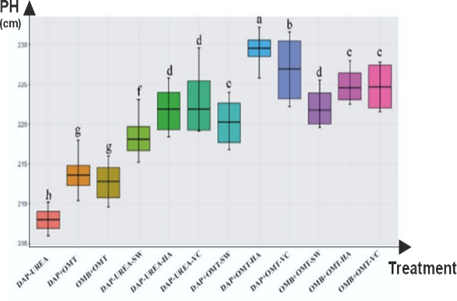
When examining the effects of soil-applied fertilizers on the corn plant, it was observed that all treatments yielded similar results for the NDF, DMI, and RFV parameters, with no statistically significant differences between them. However, for PH, DM, DMR, CP, and ADF parameters, the DAP-OMT and OMB-OMT treatments had a more pronounced effect, while the DAP-UREA treatment showed the lowest values. In terms of the DDM parameter, the highest result was obtained with the DAP-UREA treatment (71.59%), followed by the DAP-OMT treatment, which was in the same statistical group (70.76%) (Table 1; Fig 1).
Table 1. Comparison of the effects of soil-applied fertilizers on yield and quality parameters of corn (two-year average).
| TREATMENT | ||||||
|---|---|---|---|---|---|---|
| Parameters | DAP-UREA | DAP-OMT | OMB-OMT | |||
| PH (cm) | 217.81±6.7b | 222.56±6.86a | 221.1±5.62ab | |||
| DM (kg/da) | 1710.17±131.37b | 1894.88±189.03a | 1885.17±173.79a | |||
| DMR (%) | 26.73±1.42b | 28.53±1.71a | 28.54±1.57a | |||
| CP (%) | 6.5±0.34b | 6.76±0.38a | 6.86±0.42a | |||
| ADF | 22.22±2.94b | 23.29±2.29ab | 23.8±2.07a | |||
| NDF | 40.52±2.47 | 40.91±1.93 | 41.44±1.48 | |||
| DDM (%) | 71.59±2.29a | 70.76±1.78ab | 70.36±1.61b | |||
| DMI (%) | 2.97±0.18 | 2.94±0.14 | 2.9±0.1 | |||
| RFV | 165.19±14.69 | 161.32±11.09 | 158.16±8.38 | |||
Different letters in the same line mean significantly differences at P< 0.01.
Figure 1. Two-year mean values and grouping results for the effects of fertilizer combinations on PH.
The role of foliar fertilizer addition in yield and quality parameters
The effects of foliar fertilizers are presented in Table 2 and Fig 2, and differences from the control are expressed as percentages. Under DAP-UREA fertilization, VC provided the highest PH and CP increases (7.1% and 13.6%)(Fig 4), while HA was more effective for DM and DMR (21.7% and 14%). SW showed the strongest effect on DDM, DMI, and RFV, increasing them by 8.6%, 15.3%, and 25.5%, respectively. The DAP-UREA treatment without foliar fertilizer generally produced the lowest values, except for ADF and NDF. Under DAP-OMT fertilization, HA and VC yielded the best results for PH, DM, and CP, with average increases of 6.7%, 27.4%, and 14%, respectively. SW significantly improved DDM and DMI (6.4% and 11.5%) and, together with VC, enhanced RFV (18.3% and 8.8%). The highest ADF and NDF values were observed in plots without foliar fertilizer. In OMB-OMT applications, foliar fertilizers showed similar effects on PH and DMR, with average increases of 5.2% and 12%. VC significantly improved DM and CP (26.3% and 17%), whereas SW provided the best DDM, DMI, and RFV results (4.7%, 8.2%, and 13.4%) and produced the lowest ADF (Fig 5) and NDF values (Fig 6).
Differences in yield and quality of fertilizer combinations
The results of the variance analysis are presented in Table 3 and Fig 3. In both years, application and year effects were significant (P<0.01). In the combined analysis, the year × application interaction was significant for PH, DM, and DMR (P<0.01), while it was insignificant for the other parameters. Based on the two-year averages, the highest PH was obtained from DAP-OMT-HA (229.36 cm), followed by DAP-OMT-VC (226.86 cm). For DM, the highest values were recorded from OMB-OMT-VC, DAP-OMT-VC, and DAP-OMT-HA (approximately 2035–2040 kg/da), while the lowest value was observed in DAP-UREA (1514.00 kg/da). Similar trends were observed for DMR and CP, with OMB-OMT-VC and DAP-OMT-HA among the top-performing treatments and DAP-UREA producing the lowest values. Regarding fiber fractions, the highest ADF and NDF values were generally recorded in DAP-UREA and other treatments without foliar fertilizer, whereas the lowest values were obtained from DAP-UREA-SW. Consistently, DAP-UREA-SW provided the highest DDM (Fig 7), DMI (Fig 8), and RFV (Fig 9) values, while DAP-UREA showed the lowest results for these quality indices. Overall, DAP-OMT-HA and OMB-OMT-VC stood out in terms of PH, DM, DMR, and CP, whereas DAP-UREA generally resulted in the lowest performance except for ADF and NDF, highlighting the positive effects of organomineral and foliar fertilizer combinations on yield and quality parameters.
Materials and Methods
Study area, soil sampling, and climate data
The research was conducted in Van, Turkey, located at 38°34'18.8" N latitude and 43°17'17.5" E longitude, with the main crop corn planted on May 10, 2022, and May 5, 2023. During the study period, the impacts of global climate change were
Table 2. Differences in yield and quality parameters of foliar fertilizers used in combination with soilbased fertilizers (two-year average).
| DAP+UREA | ||||
|---|---|---|---|---|
| Parameters | DAP-UREA | DAP-UREA-SW | DAP-UREA-HA | DAP-UREA-VC |
| PH (cm) | 208±1.58c | 218.48±2.87b | 221.85±3.11ab | 222.9±4.37a |
| DM (kg/da) | 1513.83±52.11c | 1723±30.52b | 1842.83±38.46a | 1761±59.9b |
| DMR (%) | 24.76±0.76c | 27.04±0.65b | 28.25±0.39a | 26.87±0.73b |
| CP (%) | 5.99±0.08c | 6.57±0.24b | 6.64±0.07b | 6.81±0.12a |
| ADF | 26.59±0.84a | 19.03±0.71c | 21.54±0.82b | 21.71±1.4b |
| NDF | 44.03±1.1a | 38.08±0.75c | 39.62±1.57b | 40.33±0.98b |
| DDM (%) | 68.18±0.65c | 74.08±0.55a | 72.12±0.64b | 71.99±1.09b |
| DMI (%) | 2.73±0.07c | 3.15±0.06a | 3.03±0.12b | 2.98±0.07b |
| RFV | 144.1±4.37c | 180.97±4.74a | 169.58±8.2b | 166.1±5.23b |
| DAP+OMT | ||||
| DAP+OMT | DAP+OMT-SW | DAP+OMT-HA | DAP+OMT-VC | |
| PH (cm) | 213.77±2.63c | 220.25±3.03b | 229.37±2.22a | 226.87±4.3a |
| DM (kg/da) | 1598.33±57.57c | 1905.83±43.62b | 2034.83±37.54a | 2040.5±55.93a |
| DMR (%) | 25.85±0.74b | 28.97±0.56a | 29.72±0.62a | 29.6±0.6a |
| CP (%) | 6.17±0.07c | 6.82±0.05b | 6.99±0.13a | 7.08±0.13a |
| ADF | 25.77±0.63a | 20.1±0.73c | 23.5±1.42b | 23.78±1.12b |
| NDF | 43.13±0.93a | 38.81±1.42c | 41.23±1.62b | 40.49±0.34b |
| DDM (%) | 68.82±0.49c | 73.24±0.57a | 70.59±1.1b | 70.38±0.88b |
| DMI (%) | 2.78±0.06c | 3.1±0.12a | 2.91±0.11b | 2.96±0.03b |
| RFV | 148.47±3.08c | 175.75±7.48a | 159.41±6.52b | 161.65±2.37a |
| OMB+OMT | ||||
| OMB+OMT | OMB+OMT-SW | OMB+OMT-HA | OMB+OMT-VC | |
| PH (cm) | 212.73±2.54b | 222.12±2.49a | 224.87±2.27a | 224.7±3.11a |
| DM (kg/da) | 1611±52.43c | 1924.5±32b | 1969.83±55.1b | 2035.33±66.4a |
| DMR (%) | 26.17±0.81b | 29.27±0.45a | 28.98±0.71a | 29.74±0.79a |
| CP (%) | 6.2±0.08d | 6.91±0.08c | 7.07±0.09b | 7.26±0.2a |
| ADF | 25.03±1.03a | 20.75±0.94b | 24.63±0.8a | 24.78±1.47a |
| NDF | 43.05±1.09a | 39.76±0.62c | 41.8±0.99b | 41.17±0.88b |
| DDM (%) | 69.4±0.8b | 72.73±0.73a | 69.71±0.63b | 69.6±1.14b |
| DMI (%) | 2.79±0.07c | 3.02±0.05a | 2.87±0.07b | 2.92±0.06b |
| RFV | 150.02±4.66c | 170.17±2.53a | 155.17±3.16b | 157.29±4.53b |
Different letters in the same line mean significantly differences at P< 0.01.
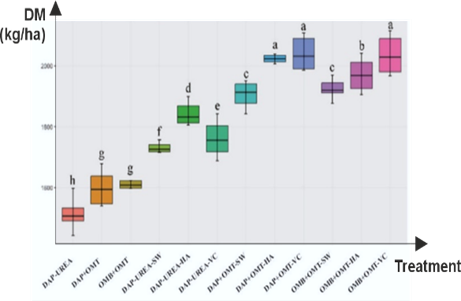
Figure 2. Two-year mean values and grouping results for the effects of fertilizer combinations on DM.
also observed in the region, with an increase in temperature and a decrease in precipitation and humidity compared to the long-term averages. The sowing was performed using a six-row maize planter, with a row spacing of 70 cm and an intra-row spacing of 12 cm. Each plot was arranged as 21 m² (6 rows × 70 cm × 5 m), with 250 cm between plots and 300 cm between blocks. According to the soil analysis results from TOB (2021), the soil in the experimental area is slightly alkaline with a sandy-loam texture. It has a low organic matter content and is classified as slightly calcareous.
Table 3. Analysis of variance table explaining the effect of fertilizer combinations on yield and quality parameters of corn.
| F value | ||||||||||
|---|---|---|---|---|---|---|---|---|---|---|
| Sources of Variation | 2022 | |||||||||
| PH (cm) | DM (kg/da) | DMR (%) | CP (%) | ADF(%) | NDF(%) | DDM (%) | DMI (%) | RFV | ||
| Block | 0.02 | 0.03 | 0.04 | 0.20 | 0.47 | 1.10 | 0.478 | 0.830 | 0.295 | |
| Treatment | 100.81** | 91.17** | 35.03** | 48.38** | 21.30** | 11.42** | 21.277** | 11.706** | 27.258** | |
| CV(%) | 0.47 | 1.81 | 1.98 | 1.40 | 4.30 | 2.90 | 1.25 | 2.40 | 3.10 | |
| 2023 | ||||||||||
| PH (cm) | DM (kg/da) | DMR (%) | CP (%) | ADF(%) | NDF(%) | DDM (%) | DMI (%) | RFV | ||
| Block | 4.70 | 0.54 | 0.54 | 0.33 | 1.64 | 1.63 | 2.440 | 1.936 | 1.683 | |
| Treatment | 81.32** | 136.22** | 41.44** | 54.42** | 18.17** | 12.11** | 14.527** | 12.232** | 23.734** | |
| CV(%) | 0.55 | 1.45 | 1.90 | 1.44 | 4.50 | 3.00 | 1.25 | 2.40 | 3.00 | |
| Two-Year Mean (2022-2023) | ||||||||||
| PH (cm) | DM (kg/da) | DMR (%) | CP (%) | ADF(%) | NDF(%) | DDM (%) | DMI (%) | RFV | ||
| Block | 3.01 | 0.17 | 0.15 | 0.50 | 0.62 | 0.13 | 0.622 | 0.260 | 0.596 | |
| Treatment | 163.47** | 221.98** | 74.59** | 105.79** | 37.96** | 20.99** | 37.886** | 20.986** | 48.120** | |
| Year | 286.98** | 78.53** | 29.08** | 33.53** | 16.97** | 18.01** | 16.961** | 18.398** | 34.167** | |
| Year×Treatment | 2.75** | 3.07** | 3.16** | 1.63 | 0.43 | 1.01 | 0.435 | 1.148 | 1.376 | |
| CV(%) | 0.51 | 1.63 | 1.94 | 1.42 | 4.40 | 2.95 | 1.25 | 2.40 | 3.05 | |
** P< 0.01
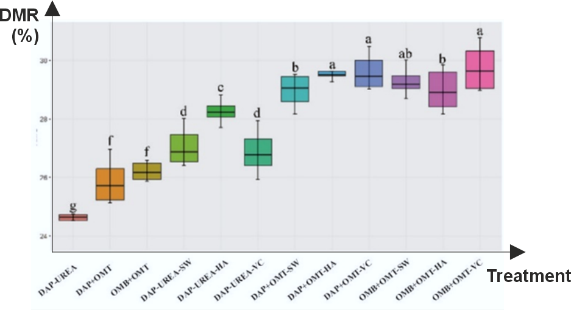
Figure 3. Two-year mean values and grouping results for the effects of fertilizer combinations on DMR.
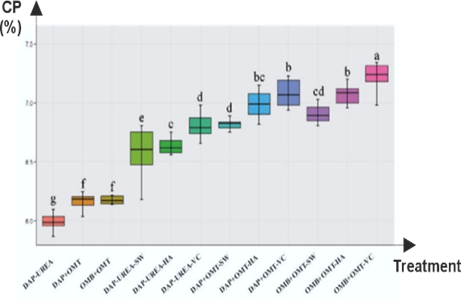
Figure 4. Two-year mean values and grouping results for the effects of fertilizer combinations on CP.
Sources of materials
The corn variety Simpatico (FAO 300) was used in the study. Diammonium phosphate (DAP) and organomineral base (OMB) fertilizers were applied as basal fertilizers, while UREA and organomineral top (OMT) fertilizers were used as topdressings. Seaweed, humic acid, and vermicompost were applied as foliar fertilizers.
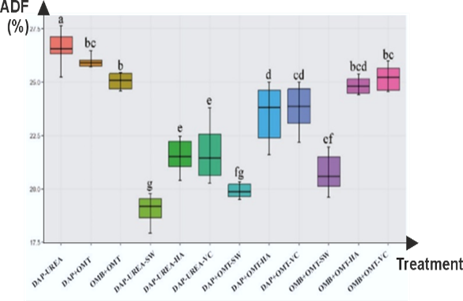
Figure 5. Two-year mean values and grouping results for the effects of fertilizer combinations on ADF.
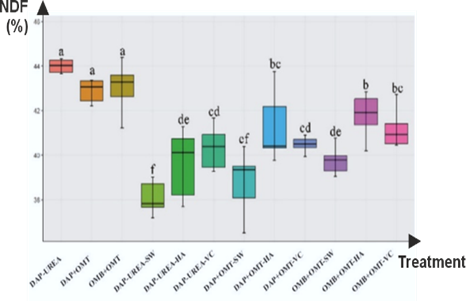
Figure 6. Two-year mean values and grouping results for the effects of fertilizer combinations on NDF.
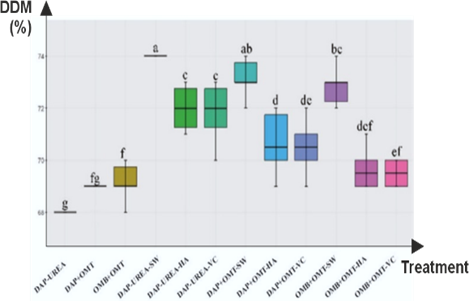
Figure 7. Two-year mean values and grouping results for the effects of fertilizer combinations on DDM.
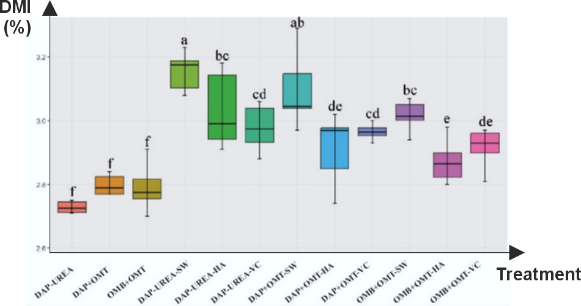
Figure 8. Two-year mean values and grouping results for the effects of fertilizer combinations on DMI.
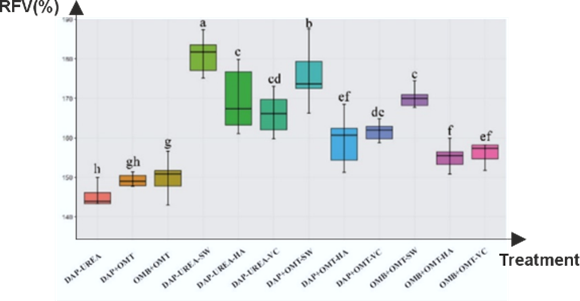
Figure 9. Two-year mean values and grouping results for the effects of fertilizer combinations on RFV.
Experimental design and statistical analysis
The experiment was established using a randomized block design with three replications. Each plot was 5 meters in length, with a spacing of 250 cm between plots and 300 cm between blocks. The planting was done with a row spacing of 70 cm and 12 cm between plants in the row. A total of 90 kg/ha of pure phosphorus and 170 kg/ha of pure nitrogen were applied, with soil fertilizers being administered in two stages (at planting and at the 8-12 leaf stage). Foliar fertilizer applications were carried out on designated plots during the V4-V6 (4-6 leaf), V11-V13 (11-13 leaf), V14-V16 (14-16 leaf), and VT (tasseling) stages. The application doses for foliar fertilizers (over four different periods), as recommended by the respective companies, were 600 cc/ha for seaweed (SW), 400 g/ha for humic acid (HA), and 2500 mL/ha for vermicompost (VC). A total of 12 treatment combinations were created using basal, top, and foliar fertilizers. The harvest was conducted at the R3 stage (August 18 in the first year, August 10 in the second year). In the study, plant height (PH), dry matter yield (DM), dry matter content (DMR), crude protein (CP), acid detergent fiber (ADF), neutral detergent fiber (NDF), digestible dry matter (DDM), dry matter intake (DMI), and relative feed value (RFV) were examined. PH was determined by averaging the measurements of 10 randomly selected plants from each plot. DM was calculated by drying plant samples in an oven at 70°C until constant weight was achieved. CP was calculated by multiplying nitrogen (N) content, measured using a Kjeldahl nitrogen analyzer, by 6.25 (AOAC, 1990). NDF and ADF analyses were performed using the methods of Van Soest et al. (1991). Amylase and sodium sulfite were used in the NDF analysis, and the results were expressed on a dry matter basis, including ash content. The digestible DDM, DMI, and RFV were calculated using the following equations (Rohweder, 1978):
| \[DDM\% = 88.9 - (0.779XADF\%)\] |
|---|
| \[DDI\% = \frac{120}{NDF\%}\] |
|---|
| \[RFV = \frac{DDM\% xDMI\%}{1.29}\] |
|---|
Analysis of variance (ANOVA) was performed to test the significance of treatments, i.e., basal/top fertilizer and foliar fertilizer applications. When treatment effects were significant, means were separated using Duncan’s multiple range test. Statistical significance was declared at *P < 0.05 and **P < 0.01, where applicable. The obtained data were analyzed using SPSS 27.0 statistical software according to a randomized complete block design (Mertler et al., 2021).
Discussion and Conclusion
Corn is widely used in agriculture, particularly as silage feed. Although chemical fertilizers increase yield, they pose risks to soil sustainability; therefore, organic and organomineral fertilizers have gained importance due to their environmental and soil health benefits. Fertilization timing and method are critical for corn growth, and foliar fertilizers have become a practical alternative (Fernández and Brown, 2013). PH, one of the parameters examined in the study, is directly related to silage yield (Olgun et al., 2012). The DAP-OMT-HA application gave the most favorable PH results, followed by DAP-OMT-VC. The superior performance of DAP compared to OMB as a base fertilizer is related to nitrogen form. De Grazia et al. (2003) reported that phosphorus had no significant effect on plant height, whereas nitrogen increased it. Nitrogen in DAP is in ammonium form, which dissolves and is absorbed faster than urea (Baran and Uygun, 2017). Early nitrogen availability is critical, particularly between V3 and V12 stages (Safdarian et al., 2014; Kaya, 2020). Increased nitrogen promotes rapid early growth and vegetative development (Rhezali and Rabii, 2020; El-Sobky and Abdo, 2020). OMT performed better than UREA in top dressing, likely due to sulfur oxide and humic-fulvic acids. Sulfur enhances nitrogen uptake, and humic substances improve nutrient utilization (Imran and Al Tawaha, 2022; Kouame et al., 2025). Among foliar fertilizers, HA showed the best PH response, followed by VC. Foliar fertilization increases nutrient content and yield (Niu et al., 2020; Veneziano et al., 2021). HA was more effective than VC due to its nitrogen form, as organic nitrogen requires conversion before plant uptake (Tokalak, 2020). Corn accumulates most dry matter during the generative period, especially between R2 and R3 stages (Bender et al., 2013; Kaya, 2020). Agronomic practices applied up to R3 significantly influence dry matter accumulation. In this study, treatments including foliar fertilizers (OMB-OMT-VC, DAP-OMT-VC, DAP-OMT-HA) showed higher dry matter than non-foliar treatments. This increase is associated with enhanced photosynthetic activity. Nitrogen fertilization increases leaf area and photosynthetic efficiency (Luo et al., 2015; Sieling and Kage, 2021). Zinc, copper, and sulfur also support photosynthesis and protein synthesis (Tsonev and Lidon, 2012; McCauley et al., 2009; Thirunavukkarasu et al., 2023). The OMB-OMT-VC application yielded the best CP results. Although cereals generally contain lower CP than legumes, corn’s high energy content compensates for this (McDonald, 1981; Açıkgöz, 1991). NDF and ADF are key indicators of feed quality and are inversely related to nutritional value (Behrouzi et al., 2023; Najaf Abadi et al., 2017). The highest ADF and NDF values were observed in treatments without foliar fertilizers, while the lowest values were obtained from SW applications. Although VC and HA increased CP more than SW, they also showed higher ADF-NDF values, possibly due to earlier maturation. Shortened vegetative period and accelerated maturity increase ADF levels (Cherney et al., 1990; Belyea et al., 1999; Rocateli and Zhang, 2017). Nitrogen and phosphorus in VC may have accelerated development, explaining maturity differences at harvest (Bolat and Kara, 2017). Regarding feed quality indices, the highest DDM, DMI, and RFV values were obtained from DAP-UREA-SW, while the lowest values were associated with DAP-UREA. The inclusion of SW improved these parameters, emphasizing the importance of foliar fertilization. Foliar nutrient supply is considered effective and environmentally favorable (Villares et al., 2013). In soils with high lime and pH, micronutrient uptake may be limited (Fageria and Santos, 2002). SW applications improved DDM, DMI, and RFV by 4–7% compared to HA and VC. SW extracts function as biostimulants that enhance growth, photosynthesis, and product quality (Babilie et al., 2015; Zhang et al., 2023). As a result, the combination of organomineral fertilizers with foliar applications such as humic acid, seaweed, and vermicompost can enhance the growth, yield, and quality of silage corn while improving nutrient use efficiency. Therefore, optimizing these fertilization strategies is essential for supporting sustainable agricultural production and reducing the environmental impacts associated with conventional fertilizer use.
Declaration of Competing Interest
The authors declare that they have no known competing financial interests or personal relationships that could have appeared to influence the work reported in this paper.
Data availability
Data will be made available on request.
References
*Açıkgöz E (1991) Fodder crops. Uludag University Faculty of Agriculture Publications, Bursa, Turkey.
Ağırağaç Z & Zorer Çelebi Ş (2025) Combined applications and multi-faceted evaluations of humic acid, seaweed, and vermicompost with chemical and organo-mineral fertilizers on corn, part I: chlorophyll concentration. Journal of Plant Nutrition: 1–12. https://doi.org/10.1080/01904167.2024.2405030
Ahmad S, Khan AA, Kamran M, Ahmad I, Ali S & Fahad S (2018) Response of corn cultivars to various nitrogen levels. European Journal of Experimental Biology 8(1): 1–4. https://doi.org/10.21767/2248-9215.100043
*AOAC (1990) Official methods of analysis of the Association of Official Analytical Chemists. 15th edn. Association of Official Analytical Chemists.
Aquino ACB, Otto R & Alleoni LRF (2024) Nitrogen fertilizers affecting the efficiency of mineral and organic phosphorus fertilizers in tropical soils cultivated with corn. Journal of Plant Nutrition 47(19): 3194–3209. https://doi.org/10.1080/01904167.2024.2376921
Babilie R, Jbour M & Trabi BA (2015) Effect of foliar spraying with licorice root and seaweed extracts on growth and seed production of onion (Allium cepa L.). International Journal of ChemTech Research 8(11): 557–563.
*Baran A & Uygun S (2017) Principles of nitrogen fertilization and nitrogen fertilization in barley. Agricultural Engineering 364: 18–29.
Behrouzi D, Diyanat M, Majidi E, Mirhadi MJ & Shirkhani A (2023) Yield and quality of forage corn as a function of diverse irrigation regimes and biofertilizer in the west of Iran. Journal of Plant Nutrition 46(10): 2246–2256. https://doi.org/10.1080/01904167.2022.2155539
Belyea R, Restrepo R, Martz F & Ellersieck M (1999) Effect of year and cutting on equations for estimating net energy of alfalfa forage. Journal of Dairy Science 82(9): 1943–1949. https://doi.org/10.3168/jds.S0022-0302(99)75430-5
Bender RR, Haegele JW, Ruffo ML & Below FE (2013) Nutrient uptake, partitioning, and remobilization in modern, transgenic insect-protected corn hybrids. Agronomy Journal 105(1): 161–170. https://doi.org/10.2134/agronj2012.0352
*Bolat İ & Kara Ö (2017) Plant nutrients: sources, functions, deficiencies and redundancy. Bartın University International Journal of Natural and Applied Sciences 19(1): 218–228.
Cherney DJ, Mertens DR & Moore JE (1990) Intake and digestibility by wethers as influenced by forage morphology at three levels of forage offering. Journal of Animal Science 68(12): 4387–4399. https://doi.org/10.2527/1990.68124387x
De Grazia J, Tittonell PA, Germinara D & Chiesa A (2003) Phosphorus and nitrogen fertilization in sweet corn (Zea mays L. var. saccharata Bailey). Spanish Journal of Agricultural Research 1(2): 103–107. https://doi.org/10.5424/sjar/2003012-28
Demin EA & Eremina DV (2020) Vliyanie mineral'nykh udobreniy i srokov poseva na urožhaynost' zelenoy massy kukuruzy v lesostępnoy zone Zaural'ya [The influence of mineral fertilizers and sowing terms on the yield of green mass of corn in the forest-steppe zone of the Trans-Urals]. Vestnik KrasGAU 10(163): 27–33. (In Russian).
Doan TT, Bouvier C, Bettarel Y, Bouvier T, Henry-des-Tureaux T, Janeau JL et al. (2014) Influence of buffalo manure, compost, vermicompost and biochar amendments on bacterial and viral communities in soil and adjacent aquatic systems. Applied Soil Ecology 73: 78–86. https://doi.org/10.1016/j.apsoil.2013.08.016
El Boukhari MEM, Barakate M, Bouhia Y & Lyamlouli K (2020) Trends in seaweed extract based biostimulants: manufacturing process and beneficial effect on soil-plant systems. Plants 9(3): 359. https://doi.org/10.3390/plants9030359
El-Sobky ESE & Abdo AI (2021) Efficacy of using biochar, phosphorous and nitrogen fertilizers for improving corn yield and nitrogen use efficiencies under alkali clay soil. Journal of Plant Nutrition 44(4): 467–485. https://doi.org/10.1080/01904167.2020.1845369
Fageria NK & Santos AB (2002) Lowland rice genotypes evaluation for phosphorus use efficiency. Journal of Plant Nutrition 25(12): 2793–2802. https://doi.org/10.1081/PLN-120015539
Fernández V & Brown PH (2013) From plant surface to plant metabolism: the uncertain fate of foliar-applied nutrients. Frontiers in Plant Science 4: 289. https://doi.org/10.3389/fpls.2013.00289
Garg VK & Gupta R (2010) Potential of Eisenia fetida for vermicomposting of garden trimmings spiked with cow dung. International Journal of Global Environmental Issues 10(3–4): 293–309. https://doi.org/10.1504/IJGENVI.2010.037272
*Heuzé V, Tran G, Edouard N, Lebas F & Hassoun P (2017) Maize silage. Feedipedia, a programme by INRAE, CIRAD, AFZ and FAO. Available at: https://www.feedipedia.org/node/13883
Imran A & Al Tawaha AR (2022) Humic acid and sulfur integration enhance growth and yield-related traits of Brassica napus L. Journal of Plant Nutrition 46(10): 2303–2314. https://doi.org/10.1080/01904167.2022.2128820
Kamaei R, Faramarzi F, Parsa M & Jahan M (2019) The effects of biological, chemical, and organic fertilizers application on root growth features and grain yield of sorghum. Journal of Plant Nutrition 42(18): 2221–2233. https://doi.org/10.1080/01904167.2019.1648667
*Kaya Y (2020) Growth and development in corn (Zea mays). Siirt University, Siirt, Turkey.
Kouame AK, Bindraban PS, Jallal L, Kwesie B, Anokye AN, El Allali A & Adzawla W (2025) Effect of sulfur- and zinc-containing fertilizers on soybean yield and analysis of spatial and seasonal yield variability in Ghana, West Africa. European Journal of Agronomy 164: 127461. https://doi.org/10.1016/j.eja.2024.127461
*Kumar NA, Vanlalzarzova B, Sridhar S & Baluswami M (2012) Effect of liquid seaweed fertilizer of Sargassum wightii Greville ex J. Agardh on the growth and biochemical content of green gram (Vigna radiata L. R. Wilczek). Recent Research in Science and Technology 4(4): 40–45.
Luo Z, Kong X, Dai J & Dong H (2015) Soil plus foliar nitrogen application increases cotton growth and salinity tolerance. Journal of Plant Nutrition 38(3): 443–455. https://doi.org/10.1080/01904167.2014.912324
*McCauley A, Jones C & Jacobsen J (2009) Soil pH and organic matter. Nutrient Management Module 8(2): 1–12.
McDonald IM (1981) A revised model for the estimation of protein degradability in the rumen. Journal of Agricultural Science 96(1): 251–252. https://doi.org/10.1017/S0021859600032081
*Mertler CA, Vannatta RA & LaVenia KN (2021) Advanced and multivariate statistical methods: practical application and interpretation. Routledge, New York, 350 pp.
*Najaf Abadi A, Jalilian J & Zardoshti M (2017) The effect of mixed cropping patterns on some quantitative and qualitative characteristics of safflower and cattle forage in high and low insert cropping systems. Journal of Crop Improvement 19(2): 445–460. https://doi.org/10.22059/jci.2017.60427
*Niu J, Lu TP, Lin YJ & Zhang WX (2020) Effects of tnitrogenadinin on the characteristics of foliar and soil ecological stoichiometry in Xishuangbanna tropical rainforest, southwest China. Journal of Tropical Forest Science 32(1): 1–7. https://doi.org/10.26525/jtfs32.1.1
*Olgun M, Kutlu İ, Ayter NG, Başçiftçi ZB & Kayan N (2012) Determination of the adaptation capabilities of different silage corn genotypes under Eskişehir conditions. Research Journal of Biological Sciences 5(1): 93–97.
Rhezali A & Rabii M (2020) Assessing corn response to nitrogen after poultry litter application. Journal of Plant Nutrition 44(5): 734–741. https://doi.org/10.1080/01904167.2020.1849302
*Rocateli A & Zhang H (2017) Forage quality interpretations. Oklahoma Cooperative Extension Service, Oklahoma State University, Factsheet PSS-2225.
Rohweder DA, Barnes RF & Jorgensen N (1978) Proposed hay grading standards based on laboratory analyses for evaluating quality. Journal of Animal Science 47(3): 747–759. https://doi.org/10.2527/jas1978.473747x
Safdarian M, Razmjoo J & Dehnavi MM (2014) Effect of nitrogen sources and rates on yield and quality of silage corn. Journal of Plant Nutrition 37(4): 611–617. https://doi.org/10.1080/01904167.2013.867986
Selladurai R & Purakayastha TJ (2016) Effect of humic acid multinutrient fertilizers on yield and nutrient use efficiency of potato. Journal of Plant Nutrition 39(7): 949–956. https://doi.org/10.1080/01904167.2015.1109106
Sieling K & Kage H (2021) Apparent fertilizer N recovery and the relationship between grain yield and grain protein concentration of different winter wheat varieties in a long-term field trial. European Journal of Agronomy 124: 126246. https://doi.org/10.1016/j.eja.2021.126246
Tavallali V (2017) Interactive effects of zinc and boron on growth, photosynthesis, and water relations in pistachio. Journal of Plant Nutrition 40(11): 1588–1603. https://doi.org/10.1080/01904167.2016.1270308
Thirunavukkarasu M, Subramanian KS & Yuvaraj M (2023) Response studies of nano-sulphur on nutrient uptake, sulphur fractions, yield and quality parameters of peanut (Arachis hypogaea L.). Journal of Plant Nutrition 47(7): 1079–1088. https://doi.org/10.1080/01904167.2023.2294931
*TOB (2021) Available at: https://arastirma.tarimorman.gov.tr. Accessed 10 October 2024.
*Tokalak I (2020) Health and consciousness begin from the soil. In: Rain Y (ed) Vol. 2. Ataç Publications, Istanbul, Turkey.
Tsonev T & Lidon F (2012) Zinc in plants – an overview. Emirates Journal of Food and Agriculture 24(4): 322–333.
Uddin MK, Saha BK, Wong VN & Patti AF (2025) Organo-mineral fertilizer to sustain soil health and crop yield for reducing environmental impact: a comprehensive review. European Journal of Agronomy 162: 127433. https://doi.org/10.1016/j.eja.2024.127433
*Veneziano VM, Rodrigues CR, Soffiatti JM, Araujo Neto FRD, Alves GB, Dias PDC et al. (2022) Is foliar fertilization essential for high soybean yields? Journal of Plant Nutrition 45(9): 1322–1335. https://doi.org/10.1080/01904167.2021.2014877
Villares R, Fernández-Lema E & López-Mosquera E (2013) Seasonal variations in concentrations of macro- and micronutrients in three species of brown seaweed. Botanica Marina 56(1): 49–61. https://doi.org/10.1515/bot-2012-0114
Xu LX, Tang GJ, Hu YQ & Zhang JG (2020) Research status and development prospects for forage wheat production and utilization. Acta Prataculturae Sinica 29(10): 192. https://doi.org/10.11686/cyxb2019553
Zhang N, Chu R, Zhang N & Yan J (2023) Seaweed fertilizer improved drought tolerance of tomato seedlings in sandy soil. Journal of Plant Nutrition 46(16): 3869–3880. https://doi.org/10.1080/01904167.2023.2217213
A few source entries deserve particular attention before publication. Niu et al. (2020) contains the apparent source-text error “tnitrogenadinin”, which should be checked against the original article rather than guessed. Najaf Abadi et al. (2017) has an unusual combination of journal volume/year and should be verified. Rocateli & Zhang (2017) gives “PSS-2225” in the supplied citation but its supplied URL points to a PDF labelled PSS-2117, so the factsheet number should be checked. The TOB (2021) entry is also insufficient as a formal reference because it provides neither a document title nor the full institutional author.