
Australian Journal of Crop Science
Article | https://doi.org/10.21475/ajcs.26.20.10.pne299
Submitted: 05 April 2026 | Revised: 12 July 2026 | Accepted: 06 August 2026
Pages 857–864
The effect of foliar spraying of some nutrients on the yield parameters and components of wheat (Triticum aestivum L.) at Alsamawa, Almuthanna, Iraq
Zainab Hasan AL-Sultan1, Hadeel S. Almaliki2, Iqbal Kareem Al-Hassani3, Duaa Majid Niema1, Haider S. Almnehlawi3, Dhulfiqar Hmiz3, Yousif S. Alhamadani, Elsherbiny A. Elsherbiny4, Kathryn L. Kingsley5, and James F. White5
1Department of Maternal and Neonate Nursing, College of Nursing, Al-Muthanna University, Al-Muthanna, Al-Samawa, 66001, Iraq
2Al-Samawa Technical Institute, Al-Furat Al-Awsat Technical University, Samawa 66001, Iraq
3Department of Environmental Health, College of Applied Medical Sciences, Al-Muthanna University, AlRumaytha 66002, Iraq
4Plant Pathology Department, Faculty of Agriculture, Mansoura University, Egypt
5Department of Plant Biology, Rutgers University, New Brunswick, NJ, 08091, USA
Corresponding author: hsa28@scarletmail.rutgers.edu
ORCID: https://orcid.org/0000-0001-9206-6952
Abstract: A field experiment was conducted during winter season 2023-2024 at Al-Shanabra area, Northern of Al-Muthanna Governorate, Sothern Iraq, the weather was hot, dry, with an average humidity of 40.4%. Foliar feeding effects on the yield and components of three wheat varieties was studied. the design of the experiment was according to the Randomized Complete Block Design (RCBD) with a split-plot factorial experiment with three replicates. Babylon, Ibaa99, and Wafia were the three wheat varieties in the main plots, while the subplots included foliar application of three concentrations of nutrients. The nutrient mixture composed of Fe, Mn, Zn, B, Mg, and Cu. Three concentrations of mixture were used in the field (0, 0.75, and 1.5 gm L-1) by using a chelated fertilizer containing the above elements. Foliar applications were applied right before flowering, plants reached the decimal growth stage 59 (Zadoks scale GS59), and the spray volume was 800 liters per hectare. The results showed that spraying at a concentration of 1.5 gm L-1 led to a significant increase in the number of spikes (255.00 spikes m-2), 1000-grain weight (41.42 gm), and total grain yield (2.95 tons ha⁻¹). The results also showed the superiority of variety Babylon in total grain yield (3.11 tons ha⁻¹) and harvest index (37.81%), while variety Ibaa 99 gave the lowest averages on number of spikes (198.60 spikes m-2) and harvest index (28.35%). The combination of (Babylon ×0.75 gm L-1) also had a significant effect on the total grain yield and gave the highest average of (3.39 tons per hectare). Our findings are important, suggesting a way to improve productivity of wheat.
Keywords: Foliar Spraying, Nutrients, Yield, Wheat, Triticum aestivum.
Abbreviations: RCBD: Randomized Complete Block Design; L.S.D. Least Significant Difference.
Wheat is the world leading crop in terms of economic importance, annual production volume, and cultivated area. Wheat contributes to food security and is well balanced in terms of protein and carbohydrate content (Costa et al., 2013; Nagyné Mester and Pepó, 2025). People have found ways to increase the productivity of this crop. Among the most important of these methods focuses on mineral nutrition. Nutrients play a crucial role in many physiological processes within the plant, such as photosynthesis and respiration, in addition to their role in chlorophyll formation, enzymatic reactions, and the synthesis of amino acids, fatty acids, and nucleic acids (Al-Alousi, 2003; Ram et al., 2024).
Nutrients are essential for healthy plant growth, and deficiency of nutrients can only be remedied by supplying them to the plants. They are directly involved in the synthesis of basic organic compounds such as carbohydrates, proteins, and fats. Magnesium is one of the most important elements for plants, as it is a limiting factor in photosynthesis. This is because it is necessary for the activity of the enzyme RUBP carboxylase. It is a component of the chlorophyll molecule, as each chlorophyll molecule contains one magnesium atom. It activates many enzymes involved in carbohydrate metabolism. Magnesium is also essential in the synthesis of fats and proteins, nitrogen metabolism, and is present in association with ADP and ATP (Hassanin, 2020).
Selecting the appropriate variety is a cornerstone of successful agricultural production, given the differences in genetic characteristics and responses to environmental conditions and fertilization levels among varieties. Recent studies have shown that the interaction between variety, environment, and balanced nutrient management plays an important role in improving crop productivity and quality characteristics (Alqasim and Al-Ghazal, 2024).
Khalil et al. (2023) demonstrated in their study on wheat that foliar spraying of nutrients at concentrations of 0, 200, and 300 gm/dunum resulted in significant differences in most yield characteristics and components. The 400 gm/dunum concentration achieved the highest averages for most studied characteristics, while the control treatment (no spraying) recorded the lowest averages.
Mohsen et al. (2014) showed that foliar feeding with a mixture of macro and micronutrients at different concentrations (0, 100, 150, and 200 ppm) had a significant effect on improving all studied characteristics of the wheat crop, as the 200 ppm concentration recorded the highest values for the number of spikes per square meter, the number of grains in the spike, and the weight of 500 grains, and also led to achieving the highest grain yield of 2.95 tons per hectare⁻¹.
Abd et al. (2023) demonstrated in their wheat crop study, which included three varieties (Ibaa 99, Babylon, and Wafia), the Babylonl variety achieved the highest average grain weight (1000 grains), reaching 39.20 g. This study differs from the current study in that the second factor in their experiment was harvest dates, in addition to evaluating several qualitative traits, including grain moisture and specific weight, while the current study focused on foliar nutrient application. The two studies also differed in their growing season; they conducted the study in 2022–2023 growing season, while our study was carried out during the 2023–2024 growing season.
The soil in Iraq has a high lime content and tends towards alkalinity. The low organic matter content reduces the availability of micronutrients. Iron, manganese, zinc, copper, and boron are micronutrients required by plants in relatively small quantities. Iron is involved in the synthesis of cytochrome and ferroxine. It also plays a role in nitrogen fixation. Furthermore, it activates nitrate and nitrogenase enzymes (Eskandari, 2011). Manganese acts as a precursor to several enzymes involved in fatty acid and nucleotide metabolism, in addition to its importance in respiration and photosynthesis. Foliar feeding is an effective method of fertilizing many agricultural crops, especially those grown on large areas such as wheat (Farhan and Al-Dulaimi, 2011; Alwan et al., 2019). The soil in Iraq, especially in Al-Muthanna Governorate, is alkaline, which fixes many elements, thus making nutrients unavailable to plants and unavailable for absorption through the roots. Therefore, spraying is the appropriate method to supply plants with nutrients and deliver elements directly to the leaves. Therefore, this study aims to identify the best variety and optimal concentration of nutrients that leads to increases in yield of wheat.
The results showed that the nutrient spraying has a significant effect on spike number. Wafia variety has the highest average of spike number (255.40 spike m-2), while Babylon variety has a spike number of (247.30 spike m-2). The lowest spike number was obtained by Ibaa 99 variety (198.60 spike m-2). In a previous study Al-Yasiri and Al-Sammak (2015) have indicated differences in spike number among wheat varieties (Table 1).
Foliar application of nutrients significantly affected the number of spikes per square meter. The third concentration (E2) yielded the highest average of 255.00 spikes per square meter, not significantly different from the second concentration (E1), which recorded an average of 244.80 spikes per square meter. The control treatment (E0) produced the lowest average of 201.50 spikes per square meter. This superiority may be attributed to the fact that foliar application of nutrients at the beginning (right before) of flowering season improved the plant nutritional and physiological status, leading to increased photosynthetic efficiency and a longer leaf lifespan. This, in turn, helped preserve fertile tillers and pre-formed spikes, reducing their loss until harvest, which resulted in an increased number of harvested spikes. This effect is not interpreted as the formation of new spikes, since the number of spikes is largely determined before the flowering stage, while the treatments applied at this stage contribute more to enhancing spike survival, continued growth and productivity than to influencing their formation (Fischer, 2011; Slafer et al., 2014). They showed that the formation of fertile tillers and the determination of the final number of spikes occur mainly during the vegetative stages prior to the flowering stage. Al-Jumaili (2011) indicated similar results, who found a significant increase in the number of spikes after spraying the wheat varieties the nutrients (Fe, Zn, B, Cu).
The combination (V3×E2), consisting of the Wafia cultivar and the highest concentration of nutrient spray, yielded the highest average number of spikes (302.50 spike m-2). Conversely, the combination (V2×E0), consisting of the Ibaa 99 cultivar and the no-spray treatment, yielded the lowest average number of spikes (144.40 spike m-2) (Table 1). Although the (V3×E2) combination recorded the highest average number of spikes, the GenStat program outputs showed relatively high variability between replicates of this treatment, suggesting intra-treatment variability that may be due to natural variation in field conditions, Also the field size was one of our limitations in the study that will be considered in future experiments involving different seasons and locations.
Results showed there was no significant differences of nutrients spraying on the grain number per spike. All the combinations of varieties and concentrations have a similar result and in general without any significant differences (Table 2). The lack of effect of nutrient spraying may be due to environmental conditions during the spraying phase, or it may be due to what is known in agriculture as the "law of compensation among yield components. Production components (such as the number of plants, the number of grains, and seed weight) compete for limited resources (food, water, and light). Therefore, when there is an exceptional increase in one component, there is a decrease in another to compensate for the energy loss. This finding is consistent with conclusions of another study (Sarhan, 2024).
Table 1. The effect of varieties and foliar feeding with nutrients and interaction on spikes number (spike m-2).
| Varieties | Foliar feeding | Mean | ||
|---|---|---|---|---|
| E0 | E1 | E2 | ||
| V1 | 226.20 | 283.80 | 231.90 | 247.30 |
| V2 | 144.40 | 220.60 | 230.80 | 198.60 |
| V3 | 233.70 | 230.00 | 302.50 | 255.40 |
| Mean | 201.50 | 244.80 | 255.00 | |
| L.S.D0.05 | E | V | EV | |
| 14.05 | 25.58 | 28.28 | ||
Table 2. Effect of varieties and foliar fertilization, and the interaction on the grains number per spike (grain spike-1).
| Varieties | Foliar feeding | Mean | ||
|---|---|---|---|---|
| E0 | E1 | E2 | ||
| V1 | 53.16 | 54.00 | 55.13 | 54.10 |
| V2 | 53.70 | 60.00 | 60.37 | 58.02 |
| V3 | 54.69 | 53.28 | 55.80 | 54.59 |
| Mean | 53.85 | 55.76 | 57.10 | |
| L.S.D0.05 | E | V | EV | |
| N.S | N.S | N.S | ||
Nutrient spraying showed a significant difference on the grains weight. The results showed that the third concentration (1.5 gm L-1) was the most effective concentration which yielded the highest average weight (41.42 gm), compared to the first (0 gm L-1) and second (0.75 gm L-1) concentrations, which yielded (36.39 gm) and (34.83 gm) respectively (Table 3). This may be attributed to the fact that nutrient spraying increases the activity of vital processes within the plant including photosynthesis and translocation of its products from the source to the endosperm. The majority of newly formed or stored photosynthetic products are used to increase seed weight during the filling stage. Grains are considered the permanent endosperm after a period of development (Ali and Aboud, 2015). The result is consistent with the findings of some previous study such as (Hadi et al., 2020) and (Abrol et al., 2020). The results of the statistical analysis showed that the effect of the variety on the weight of 1000 grains was non-significant (p = 0.756) Similarly, the results of the statistical analysis indicate that the interaction effect between varieties and foliar fertilization was non-significant (p = 0.202) (Table 3).
Table 3. Effect of varieties and foliar fertilization, and the interaction on 1000 grains weight (gm).
| Varieties | Foliar feeding | Mean | ||
|---|---|---|---|---|
| E0 | E1 | E2 | ||
| V1 | 34.52 | 38.75 | 42.76 | 38.68 |
| V2 | 40.83 | 32.19 | 40.09 | 37.70 |
| V3 | 33.81 | 33.55 | 41.41 | 36.26 |
| Mean | 36.39 | 34.83 | 41.42 | |
| L.S.D0.05 | E | V | EV | |
| 4.67 | N.S | N.S | ||
Results in (Table 4) show clearly there is a significant effect of nutrient spraying on the grain yield. Results also indicated a significant difference on total grain yield among the three varieties. Babylon variety yielding the highest average of 3.11 tons ha⁻¹, which means increased in grain yield by 29.63%, while Wafia variety yielded the lowest average of 2.40 tons ha⁻¹. These differences may be attributed to the variety genetic structure, adaptation, and responsiveness to environmental conditions (Saadoun et al., 2025).
The concentration of (1.5 gm L-1) yielded the highest average yield of 2.95 tons ha⁻¹, representing an increase of 20.19% comparing to the control treatment. Concentration E2 yielded the highest average of 2.95 tons e⁻¹, significantly surpassing concentration E1, which recorded 2.78 tons e⁻¹. both concentrations significantly outperformed the control treatment E0, which yielded the lowest average of 2.45 tons e⁻¹. Concentration E2 achieved a 20.19% increase compared to the control treatment. This may be due to the increase in the yield of the number of spikes and the weight of 1000 grains. Also, it could be due to the role of the studied nutrients, especially iron, zinc, and copper, which lead to an increase in the number of tillers in the plant, which improve the number of spikes. Furthermore, these elements play an important role in increasing the resistance to climatic stresses (Khalil et al., 2023; Saleh, 2010).
The interaction among varieties and nutrient spray concentrations also significantly affected the total grain yield. The combination (V1×E1), consisting of the Babylon variety (V1) and the first concentration of nutrients (E1), gave the highest average yield of 3.39 tons ha⁻¹. Conversely, the combination (V3×E0), consisting of the Wafia variety (V3) and the no-spray treatment (E0), gave the lowest average yield of 2.26 tons ha⁻¹ (Table 4). This may be attributed to the high productivity of the Babylon variety in the current study, while the first concentration level provided optimal conditions for improving the efficiency of physiological processes, which led to a synergistic effect between them that was reflected in an increase in the total yield (Khalil et al., 2023).
Table 4. Effect of varieties and foliar fertilization, and the interaction on grain yield (ton ha⁻¹).
| Varieties | Foliar feeding | Mean | ||
|---|---|---|---|---|
| E0 | E1 | E2 | ||
| V1 | 2.67 | 3.39 | 3.28 | 3.11 |
| V2 | 2.42 | 2.67 | 2.89 | 2.66 |
| V3 | 2.26 | 2.28 | 2.66 | 2.40 |
| Mean | 2.45 | 2.78 | 2.95 | |
| L.S.D0.05 | E | V | EV | |
| 0.13 | 0.22 | 0.25 | ||
The results indicate that Babylon variety (V1) significantly gave the highest average harvest index for all concentrations (37.81%), followed by Wafia variety which gave a harvest index of (34.77%), while the Abaa 99 variety gave the lowest average harvest index (28.35%). This may be due to the superiority of the Babylon variety in total grain yield (Table 5).
Regarding the interaction among varieties and concentrations, results showed that the combination of (V3×E2), represented by the Wafiya variety with the highest nutrient concentration, yielded the highest average harvest index (38.79%). Conversely, Ibaa 99 variety with the third concentration, represented by the combination (V2×E2), recorded the lowest average (27.03%). The harvest index is expressed as the ability of the estuary (grains) to absorb the products transported from the leaves (source), it also reflects the efficiency of transporting these products and the degree of interaction between the source and the estuary (Sharif and Abdullah, 2025).
Foliar nutrition relies on the ability of the plant vegetative system, particularly the leaves, to absorb nutrients through stomata, epidermal cells, and microscopic cracks in the cuticle layer, and then transport them via the vascular tissues to the growing organs. Foliar absorption is characterized by the rapid delivery of nutrients to their sites of activity within the plant compared to root absorption, especially in alkaline or calcareous soils where micronutrient availability is low. Therefore, foliar spraying contributes to improving the plant's nutritional status, which is reflected in increased photosynthetic efficiency, enzyme activation, and improved translocation of photosynthetic products to the grains, thus increasing yield and its components (Hassanin, 2020; Tahir et al., 2023). The results in Table 5 also indicate that there is no significant effect of nutrient spraying on the harvest index. However, the presence of a significant interaction between the variety and nutrient concentration indicates that the response of the varieties differed according to the spraying treatment, which shows that the harvest index response to foliar feeding was variety dependent.
Table 5. Effect of varieties and foliar fertilization, and the interaction on harvest Index (%).
| Varieties | Foliar feeding | Mean | ||
|---|---|---|---|---|
| E0 | E1 | E2 | ||
| V1 | 38.33 | 37.69 | 37.41 | 37.81 |
| V2 | 29.36 | 28.67 | 27.03 | 28.35 |
| V3 | 32.48 | 33.05 | 38.79 | 34.77 |
| Mean | 33.39 | 33.14 | 34.41 | |
| L.S.D0.05 | E | V | EV | |
| N.S | 5.16 | 5.18 | ||
The wheat crop field experiment was conducted in Al-Muthanna Governorate, in Al-Shanabra area, at the northern entrance to the governorate, Iraq, during the winter season (2023-2024), at longitude 45.17° East and latitude 31.22° North. The field of the study area was divided according to a Randomized Complete Block Design (RCBD) with a split-plot arrangement (supplementary data 1). Random soil samples from the study area were taken from different locations and mixed to obtain a composite sample representative of the experimental field, depth of 30 cm. Several physical and chemical properties of the soil samples were measured before planting
The electrical conductivity (ECE) of the saturation paste extract of the soil was 6.2 dS/m, indicating that the soil falls within the category of medium to high salinity soils. Iraqi soils, particularly in Al-Muthanna Governorate, are relatively basic and saline. This is attributed to the arid and semi-arid climate, high temperatures and associated high evaporation rates, limited efficiency of agricultural drainage networks, high groundwater levels in some areas, and the use of relatively high-salinity irrigation water, which leads to salt accumulation in the root zone. Wheat (Triticum aestivum L.) was selected for this experiment since it is relatively tolerant of salt stress compared to many other field crops.
The available phosphorus was measured using the Olsen method, which is as follows: 2.5 gm of dry, sieved aerated soil (2 mm diameter) was taken. Fifty mL of 0.5 M sodium bicarbonate (NaHCO₃) extraction solution at pH 8.5 was added. The sample was then shaken for 30 minutes using a shaker and filtered through Whatman No. 42 filter paper or equivalent. A portion of the filtrate was taken and a molybdate reagent with ascorbic acid was added (ascorbic acid method) to produce a blue color. The light absorption was then measured using a spectrophotometer at a wavelength of 882 nm (or 880 nm depending on the instrument). The available phosphorus concentration was determined using a standard curve (Table 6).
Table 6. Soil analysis before planting.
| Items | Value | Unit |
|---|---|---|
| ECE (1:1) | 6.20 | dsm-1 |
| pH | 6.10 | --- |
| Available nitrogen | 17.70 | mg kg-1 |
| Available phosphorus | 0.80 | |
| Available potassium | 121.50 | |
| Sand | 600.00 | gm kg-1 soil |
| Clay | 270.00 | |
| Silt | 130.00 | |
| Soil texture | Sandy clay soil | |
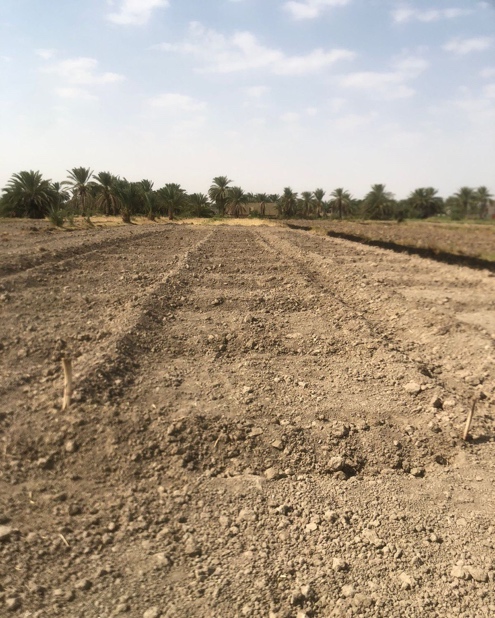
The experimental plot was plowed twice in perpendicular directions. The soil was then harrowed using disc harrows and subsequently leveled with a leveling machine. The area was divided into 2x2 m², there were 27 experimental units, comprising three replicates of 9 units each. Planting was carried out in rows with a spacing of 20 cm between rows. The grains were sown on November 25, 2023, at a rate of 120 kg ha-1 (Ministry of Agriculture, 2015). The field was fertilized during the tillering stage with NPK fertilizer (20-20-20) (Al-Abadi, 2011). Irrigation and weeding were carried out as needed, controlling weeds whenever necessary, by removing them manually by uprooting, with the aim of reducing their competition with wheat plants for water, nutrients and light, and ensuring that the plants grow naturally throughout the duration of the experiment. Irrigation process was carried out using surface irrigation, by creating three waterers for each replicate, and irrigation was carried out at different intervals depending on the water needs of the plant and its stages of growth, to ensure the provision of appropriate humidity throughout the duration of the experiment. The spraying was done early in the morning, and the spray volume was (800 liters per hectare) as recommended by the Iraqi Ministry of Agriculture, the harvest date was 24-4-2024. (Figure 1,2 and supplementary data1).
Three varieties: Babylon (V1), Ibaa 99 (V2) and Wafia (V3) were used in the study. They have been obtained from the local markets.
Three concentrations of nutrients were used: Concentrations of 0 gm L-1 (E0), 0.75 gm L-1 (E1) and 1.5 gm L-1 (E2) (Suppementary data 3).
Nutrients were sprayed using chelated fertilizer (Euro MIX, Jordan) containing 5% magnesium, 5% iron, 3% manganese, 3% zinc, 0.6% copper, and 0.5% boron at the beginning of flowering. The spraying was done in early morning using a 16-liter knapsack sprayer. A spreading agent (cleaning solution) was added to the solution to the nutrient solution to increase the efficiency of the spraying solution by reducing the surface tension of the water and ensuring complete wetness of the leaves. Distilled water was sprayed as for the control plots (Figure 3). Suppementary data3
A B
Figure 1. A: The study area showing the design of the plots B: One plot showing the spacing among the rows.
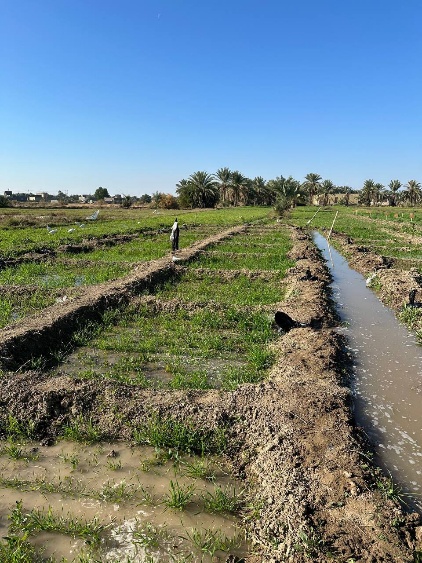
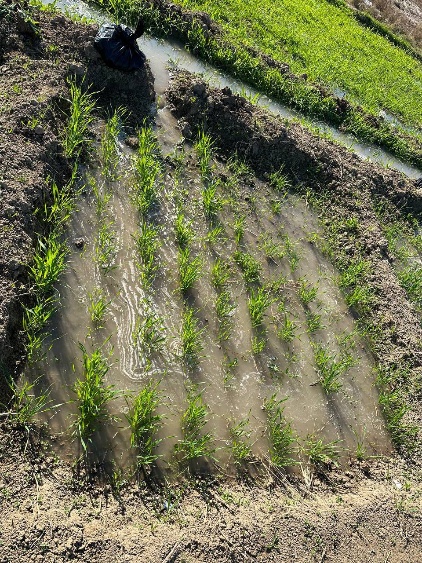
Figure 2. Irrigation and weeding control.
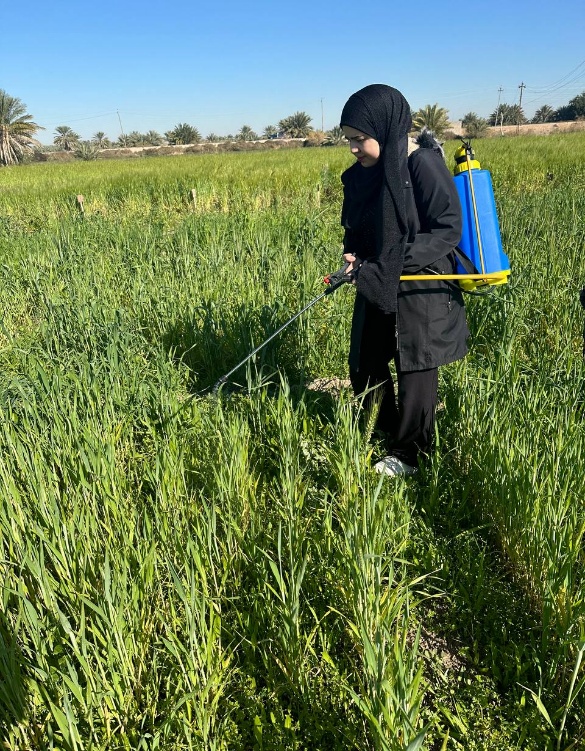
Figure 3. Spraying the nutrients at the beginning of flowering.
The spike number was calculated after reaching full maturity from each experimental unit in the two middle rows, based on harvesting per square meter (Figure 4).
The number of grains per spike was calculated for ten spikes randomly selected from each experimental unit, and the average was calculated (Figure 4).
A random sample of grain yield was taken from each experimental unit, and 1000 grains were weighed using a sensitive balance (Figure 4).
The grain yield of the harvested plants from the two middle rows of each experimental unit was estimated. After separating the straw from the grain, it was weighed, and the grain yield was calculated and converted to tons ha⁻¹(Figure 4).
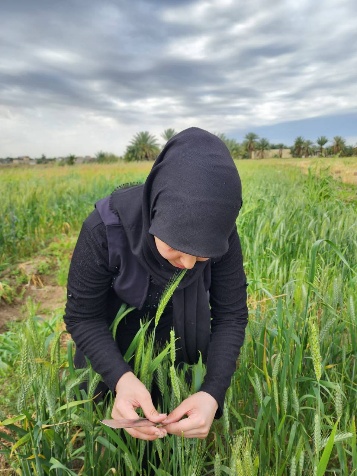
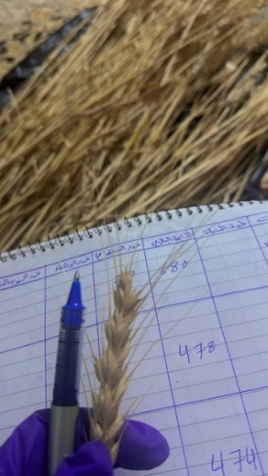

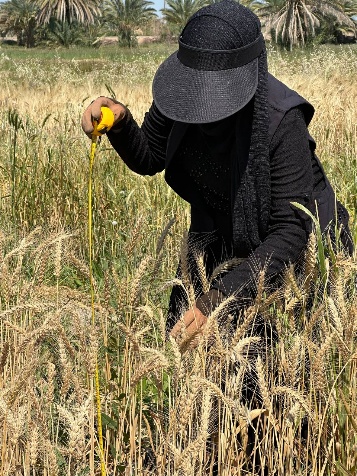
Figure 4. Measuring of some parameters of the study.
The harvest index was calculated according to the following equation (Hassanin et al., 2021):
\[\text{Harvest\ Index\ \%} = \frac{\text{Economic\ yield\ }\left( ton\ {ha}^{- 1} \right)}{\text{Biological\ yield\ }\left( ton\ {ha}^{- 1} \right)}\text{×100\ \ \ \ \ \ \ \ \ \ \ }\]
The data were statistically analyzed using GenStat software within a factorial split-plot design as part of a randomized complete block design (RCBD) with three replicates. The factorial split-plot design was used because the experiment involved two factors, one of which was more important than the other. The block design was used because there were two sources of variance in the experiment. Three replicates were used to increase the accuracy and efficiency of the experiment, with the varieties distributed in the main plots and the levels of foliar spraying in the secondary plots. The experiment consisted of 27 experimental units distributed across 9 experimental units per replicate. Analysis of variance (ANOVA) was performed to test the effect of the main factors and their interactions. Means were compared using the least significant difference (LSD) test at a probability level of 0.05. (Al-Rawi and Khalaf Allah, 2000) (Supplementary data 2).
Wheat is a very important crop for humans worldwide. It is desirable to improve the quantity and the quality of this crop. We investigated the effect of a foliar spray of some nutrients on several yield parameters on different wheat varieties at Almuthanna governorate. the foliar spray of the nutrient improved wheat crops, in terms of crop yield including spike number, grain weight, grain yield, and harvest index. We noticed a significant difference between wheat varieties and their response to foliar nutrient application. The Babylon variety exhibited the highest grain yield and harvest index, while application of the third concentration (E2) improved most yield characteristics and components compared to the control treatment. The interaction between varieties and application concentrations also demonstrated that the response of varieties to foliar application varies depending on the variety and the characteristic studied. The study is limited to the conditions, as the experiment was conducted during a single growing season (2023–2024) at a single field location in Al-Muthanna Governorate. Therefore, it is recommended that similar studies be conducted in different growing seasons and locations to verify the generalizability. On the other hand, we report that there is no effect of nutrient spraying on grain number per spike. Also, wheat Variety has an essential role in yield improvement.
The Authors thank people involved in some field activities
Abd RN, Al Farjawi TMK, Noaema AH, Alhasany AR, Sawicka B (2023) Effects of harvesting dates on qualitative characteristics of bread wheat cultivars. J Glob Innov Agric Sci 11(4):643–647. https://doi.org/10.22194/JGIAS/23.1114
Abrol V, Singh AP, Kumar A, Chary R, Srinivasarao C, Sharma P, Singh B, Salgotra S, Kapoor J, Dadhich H (2020) Effect of foliar application of nutrients on wheat (Triticum aestivum) crop performance, economics, resource use efficiency and soil properties under rainfed conditions. Indian J Agric Sci 90(1):138–141. https://doi.org/10.56093/ijas.v90i1.98592
Al-Abadi JA (2011) A guide to the use of chemical and organic fertilizers in Iraq. General Authority for Agricultural Extension and Cooperation, Ministry of Agriculture, Iraq.
Al-Alousi YAM (2003) Integrated diagnosis and recommendation (DRIS) in nutritional balance of wheat (Triticum aestivum L.). Iraqi J Soil Sci 3(1).
Ali HA, Aboud TY (2015) The role of foliar fertilization in the growth and yield of wheat (Triticum aestivum L.) grown with different seed quantities and its effect on yield characteristics and components. Al-Muthanna J Agric Sci 3(1):69–78.
Al-Jumaili IAS (2011) The effect of spraying with micronutrients on the growth and yield of three varieties of bread wheat. Anbar Agric J 9(2).
Alqasim YFY, Al-Ghazal SAY (2024) Growth and yield response of four bread wheat varieties (Triticum aestivum L.) to spraying with NPK nano fertilizer. Tikrit J Agric Sci 24(2):197–213.
Al-Rawi KM, Khalaf Allah AM (2000) Design and analysis of agricultural experiments. Dar Al-Kutub Foundation for Printing and Publishing, University of Mosul, Ministry of Higher Education and Scientific Research, Iraq.
Alwan BM, Al-Alawi MS, Jubair AR (2019) Effect of spraying iron and zinc concentrations in grain and leaf content for two varieties of wheat crop. Agric J 14(1):7–9.
Al-Yasiri AS, Al-Sammak QH (2015) The effect of foliar feeding with potassium on the growth and yield of five wheat varieties (Triticum aestivum L.). J Univ Karbala Sci 13(3).
Costa R, Pinheiro N, Almeida AS, Gomes C, Coutinho J, Coco J, Costa A, Maçãs B (2013) Effect of sowing date and seeding rate on bread wheat yield and test weight under Mediterranean conditions. Emir J Food Agric 25(12):951–961. https://doi.org/10.9755/ejfa.v25i12.16731
Eskandari H (2011) The importance of iron (Fe) in plant products and mechanism of its uptake by plants. J Appl Environ Biol Sci 1(10):448–452.
Farhan HN, Al-Dulaimi TMB (2011) The effect of foliar fertilization with some micronutrients on the growth and productivity of wheat (Triticum aestivum L.). Jordan J Agric Sci 7(1):105–118.
Fischer RA (2011) Wheat physiology: a review of recent developments. Crop Pasture Sci 62(2):95–114.
Hadi DR, Kreem TH, Mahmood BJ (2020) Effect of foliar application of some micronutrients at two growth stages on growth, yield and yield components of two bread wheat (Triticum aestivum L.) varieties. Zanco J Pure Appl Sci 32(5):186–195. https://doi.org/10.21271/ZJPAS.32.5.19
Hassanin AM (2020) Crop physiology book. Faculty of Agriculture, Al-Azhar University.
Hassanin AM, El Hawary ME, El Sayed FS (2021) Fundamentals of field crop production. Faculty of Agriculture, Al-Azhar University, Cairo, p 22.
Khalil AD, Khalil SD, Bashir AM, Khalil MM (2023) Effect of foliar feeding with micronutrients on yield characteristics and components of several wheat varieties (Triticum aestivum L.). Iraqi J Agric Res 27(1):20–31.
Ministry of Agriculture (2015) Department of Planning and Follow-up, Department of Statistics, Planning and Manpower, Ministry of Agriculture, Republic of Iraq.
Mohsen KH, Al-Asady KKG, Al-Abody MAK (2014) Effect of foliar application with macro and micronutrients on yield and its components of bread wheat (Triticum aestivum L.) under southern region conditions. Al-Muthanna J Agric Sci 2(2).
Nagyné Mester T, Pepó P (2025) Evaluation of the use of leaf fertilizers and growth regulators in winter wheat: a review. Acta Agrar Debrecen 2:77–82. https://doi.org/10.34101/ACTAAGRAR/2/15270
Ram S, Malik VK, Gupta V, Narwal S, Sirohi M, Ankush, Pandey V, Gupta OP, Misra AK, Singh G (2024) Impact of foliar application of iron and zinc fertilizers on grain iron, zinc, and protein contents in bread wheat (Triticum aestivum L.). Front Nutr 11:1378937. https://doi.org/10.3389/fnut.2024.1378937
Saadoun IH, Anis AHA, Mahdi AA (2025) A study to reveal the effect of using humic acid in improving the growth and productivity of some wheat varieties. J Plant Prod 16(5):225–229. https://doi.org/10.21608/jpp.2025.382867.1460
Saleh HM (2010) Effect of foliar fertilization with some micronutrients on yield and some components of wheat yield (Triticum aestivum L.). Tikrit J Agric Sci 10(2):129–136.
Sarhan IA (2024) Effect of potassium fertilizer on the growth and yield of three wheat varieties. Anbar J Agric Sci 22(1):652–664. https://doi.org/10.32649/ajas.2024.183774
Sharif SR, Abdullah AH (2025) Evaluation of some imported and approved genotypes of bread wheat (Triticum aestivum var. vulgare L.), under the influence of different planting dates on crop characteristics and components. J Plant Prod 16(8):451–455. https://doi.org/10.21608/jpp.2025.403176.1487
Slafer GA, Savin R, Sadras VO (2014) Coarse and fine regulation of wheat yield components in response to genotype and environment. Field Crops Res 157:71–83.
Tahir M, Bahzad MU, Nadeem M, Sheikh AA, Maqbool R (2023) Wheat yield and quality affected by foliar micronutrient mixture application. Pak J Sci Ind Res Ser B Biol Sci 66(2):163–168. https://doi.org/10.52763/PJSIR.BIOL.SCI.66.2.2023.163.168