Australian Journal of Crop Science
Article | https://doi.org/10.21475/ajcs.26.20.10.pne294
Submitted: 02 April 2026 | Revised: 20 July 2026 | Accepted: 07 August 2026
Pages 846–856
Effect of lime and husk ash application rates on soybean and corn intercropping system under saturated soil management in tidal swamp ecosystems
Munif Ghulamahdi1*, Eka Phungghalawati1, Iskandar Lubis1, Paul Taylor2, Tatsuhiko Shiraiwa3, A. Haitami4
1Department of Agronomy and Horticulture, Faculty of Agriculture, Bogor Agricultural University, Bogor, Indonesia
2School of Agriculture, Food and Ecosystem Sciences Melbourne University, Victoria, Australia
3Graduate School of Agriculture Kyoto University Crop Sciences, Japan
4Department of Agrotechology, Faculty of Agriculture, Universitas Islam Kuantan Singingi, Riau, Indonesia
*Corresponding author: mghulamahdi@yahoo.com
Abstract: Tidal swamp soils in tropical regions are characterized by severe acid sulfate conditions, including low pH, aluminum and iron toxicity, and phosphorus deficiency, which collectively constrain crop productivity. This study evaluated the effects of varying lime and rice husk ash doses on the growth, yield, and land equivalent ratio (LER) of soybean (Glycine max L. Merr.) and corn (Zea mays L.) under an intercropping system managed with saturated soil culture (SSC) on tidal swamp land. Tidal swamp land is a periodically tide-inundated agricultural land type characterized by acidic, poorly drained soils and fluctuating water tables that constrain crop growth. Its agronomic management relies on tidal-based irrigation and drainage systems to regulate water levels and mitigate soil acidity. A randomized complete block design with two factors lime dose (0, 2, 4, and 6 ton ha⁻¹ dolomite) and husk ash dose (0 and 1 ton ha⁻¹) was arranged in three replications at a Type B overflow tidal swamp in Banyuasin District, South Sumatra, Indonesia. Results demonstrated that lime application significantly improved soybean growth parameters, including plant height, leaf number, nodule dry weight, root dry weight, and stalk dry weight, as well as yield components such as fill pod number, seed dry weight per plot, and productivity, which increased by approximately 41% from 1.03 to 1.45 ton ha⁻¹ at the highest lime rate. For corn, moderate lime application at 2 ton ha⁻¹ produced the highest grain yield (6.08 ton ha⁻¹), while excessive liming tended to reduce productivity, likely through micronutrient imbalances induced by over-elevation of soil pH. Husk ash at 1 ton ha⁻¹ contributed significantly to stalk dry weight in both crops and exhibited synergistic interactions with lime on soybean biomass accumulation. LER values across all treatment combinations consistently exceeded 1.0, ranging from 1.31 to 1.41, confirming the biological and agronomic superiority of the corn-soybean intercropping system over monoculture under all soil amendment regimes. These findings indicate that the combined application of 2 ton ha⁻¹ lime and 1 ton ha⁻¹ husk ash represents the most promising and practically viable management strategy for optimizing system productivity in tidal swamp agriculture.
Keywords: Land equivalent ratio, pyrite oxidation, ameliorant, tidal swampland, saturated soil culture, acid sulfate soil.
Global population growth and rapid urbanization have intensified pressure on agricultural systems to meet escalating food demands. The world population, projected to reach approximately 9.7 billion by 2050, necessitates a substantial increase in food production estimated at 50–70% above current levels without proportionally expanding cultivated land area (Lam, 2025). Among the staple food and feed crops, soybean (Glycine max L. Merr.) and corn (Zea mays L.) occupy a strategically important position in global agriculture. Soybean is recognized not only as a principal source of high-quality plant protein and edible oil, but also as a nitrogen-fixing legume capable of enriching soil fertility through biological nitrogen fixation (Dilawari et al., 2022). Corn, on the other hand, is one of the world's leading cereal crops, serving as a critical component in food, feed, and industrial raw material supply chains. In Indonesia, these two crops are classified as strategic commodities, with domestic demand consistently outpacing production capacity, thereby driving continued importation and highlighting the urgency of productivity enhancement strategies.
One of the most promising yet underutilized land resources for agricultural expansion in tropical countries, particularly Indonesia, is tidal swamp land. Indonesia possesses approximately 20.1 million hectares of tidal swampland, of which around 9.53 million hectares have been identified as potentially suitable for food crop cultivation (Ghulamahdi et al., 2025). Despite their enormous potential, these lands remain largely sub-optimally exploited due to a complex set of biophysical constraints. Acid sulfate soils the dominant soil type in many tidal swamp areas are notorious for their extremely low pH (< 4.0), high concentrations of soluble aluminum (Al³⁺) and iron (Fe²⁺), deficiencies in phosphorus (P), calcium (Ca), and magnesium (Mg), and the presence of toxic levels of sulfate upon oxidation of pyrite (FeS₂) (Sharma et al., 2025). These chemical constraints severely impair root development, nutrient uptake, and overall crop productivity, making conventional upland crop management practices ineffective in these environments.
Soil amelioration through liming has long been recognized as a fundamental strategy for reclaiming acid soils (Wang et al., 2021). The application of agricultural lime neutralizes soil acidity, raises soil pH to a range more favorable for crop growth (5.5–6.5), precipitates toxic Al³⁺ and Mn²⁺ ions, and enhances nutrient availability (Sharma et al., 2025). In tidal swamp soils, liming is especially critical because the re-oxidation of pyritic materials generates sulfuric acid that can rapidly re-acidify the soil profile (Lucas et al., 2013). However, the optimal lime dose is highly site-specific, and excessive application can induce secondary micronutrient deficiencies. Therefore, calibrating the appropriate lime dosage remains a critical research challenge in tidal swamp agriculture.
In addition to conventional liming, rice husk ash (RHA) has gained increasing attention as a low-cost, locally available soil amendment in rice-producing tropical regions. RHA contains a high proportion of amorphous silica (SiO₂, typically 85–95%), along with quantities of potassium (K₂O), calcium (CaO), and magnesium (MgO), making it a multipurpose soil conditioner (Hossain et al., 2018). Its alkaline nature contributes to soil pH elevation, while the silicon it supplies has been shown to strengthen plant cell walls, enhance resistance to abiotic stresses, and improve tolerance to aluminum toxicity (Chauhan et al., 2021). Several studies have reported synergistic effects when lime and husk ash are applied in combination, suggesting that integrated use may provide more comprehensive amelioration of acid soil constraints (Mosharrof et al., 2021).
Intercropping the simultaneous cultivation of two or more crop species on the same land during the same growing season is one of the most time-tested strategies for optimizing land use efficiency. The ecological rationale rests on the principle of competitive resource partitioning: species with complementary morphological and physiological traits exploit temporal and spatial niches in ways that individual species cannot achieve in monoculture (Bourke et al., 2021). The combination of a legume and a cereal is among the most widely studied intercropping arrangements, as it couples the nitrogen-fixing capacity of the legume with the high biomass potential of the cereal, thereby improving nutrient cycling and reducing synthetic nitrogen fertilizer requirements (Kebede, 2021). Soybean-corn intercropping has been extensively researched in tropical and subtropical environments with consistently positive outcomes in total productivity, land use efficiency, and economic returns compared to monoculture (Xin et al., 2018). The Land Equivalent Ratio (LER) the relative land area required under monoculture to produce yields achieved by the intercrop is the principal metric for quantifying intercropping advantage (Liu et al., 2018; Feng et al., 2021).
Water management in tidal swamp agriculture presents another layer of complexity. Saturated Soil Culture (SSC) is a water management technique in which the soil is maintained at or near water saturation rather than under continuous submergence throughout the growing period (Ghulamahdi et al., 2016). When adapted to upland crops such as soybean and corn on tidal swamp soils, SSC prevents excessive drying and re-oxidation of pyritic subsoil layers, thereby mitigating acute acidification episodes while simultaneously providing adequate aeration for aerobic root metabolism (Bautista et al., 2023).
Despite the individual significance of lime application, husk ash amendment, intercropping, and saturated soil culture as agronomic strategies, their combined and interactive effects on the productivity of soybean and corn in tidal swamp environments have not been comprehensively investigated. Therefore, this study was conducted to evaluate the effects of different lime and husk ash doses on the productivity, Land Equivalent Ratio, and economic performance of soybean-corn intercropping under saturated soil culture conditions on tidal swamp land, with the aim of identifying the most agronomically effective and economically beneficial management combination.
A significant interaction between lime and husk ash was observed on stalk dry weight and leaf dry weight of soybean (Table 1). Soil acidity is a major constraint in tropical soils, where low pH suppresses nutrient availability and triggers Al³⁺ and Mn²⁺ toxicity that inhibit root function and biomass accumulation (Hussain et al., 2026). Lime corrects soil acidity by neutralizing H⁺ and Al³⁺ ions, while husk ash rich in silica (SiO₂), potassium (K), calcium (Ca), and magnesium (Mg) improves soil fertility and cation exchange capacity, making both amendments complementary in supporting plant growth (Mahmad-Toher et al., 2022). Among all treatment combinations, the highest stalk dry weight (12.92 g plant⁻¹) was recorded at 6 ton ha⁻¹ lime combined with 1 ton ha⁻¹ husk ash, as lime enhanced phosphorus, calcium, and magnesium availability while husk ash supplied potassium and silicon that strengthen cell wall integrity and facilitate phloem transport of photosynthates toward the stem (Elakiya et al., 2025).
Conversely, the untreated control yielded the lowest stalk dry weight (9.72 g plant⁻¹), confirming that unameliorated acid soils severely limit soybean biomass production (Vishwanath et al., 2022). Regarding leaf dry weight, the highest value (7.99 g plant⁻¹) was obtained at 4 ton ha⁻¹ lime without husk ash, suggesting that moderate liming alone was sufficient to optimize soil pH toward 6.0–6.5, enhancing Bradyrhizobium japonicum activity, biological nitrogen fixation, chlorophyll formation, and photosynthetic capacity (Kaschuk et al., 2012 ; Sarioğlu, 2025). A slight reduction in leaf dry weight when husk ash was added under the same lime rate (6.53 g plant⁻¹) may reflect potassium-induced antagonism against calcium and magnesium uptake.
Table 1. Effect of interaction of lime and husk ash on the stalk and leaf dry weight of soybean.
Husk Ash (ton ha-1 ) |
Lime (ton ha-1 ) | |||
|---|---|---|---|---|
| 0 | 2 | 4 | 6 | |
| Stalk Dry Weight (g plant-ha) | ||||
| 0 | 9.72h | 10.50e | 11.03b | 10.21g |
| 1 | 10.61d | 10.33f | 10.96c | 12.92a |
| Leaf Dry Weight (g plant-ha) | ||||
| 0 | 6.17g | 5.88h | 7.99a | 6.36e |
| 1 | 6.54c | 6.27f | 6.53d | 7.41b |
Note: Values sharing the same letter notation are not statistically different according to Duncan's Multiple Range Test at α = 5%.
Lime application significantly influenced plant height at 4, 8, and 10 WAP, and leaf number at 4, 6, 8, and 10 WAP (Table 2). At 8 and 10 WAP, plant height under 6 ton ha⁻¹ lime (72.33 and 72.90 cm, respectively) was significantly greater than the control but not significantly different from 2 and 4 ton ha⁻¹ lime. Liming improves soil pH and enhances calcium (Ca²⁺) availability, which plays a fundamental role in cell elongation, cell wall formation, and vegetative development, while simultaneously neutralizing exchangeable Al³⁺ that inhibits root penetration and nutrient uptake (Gebrekidan, 2026). Leaf number also increased consistently with lime application from 4 WAP onward, rising from 1.69 leaves plant⁻¹ at 0 ton ha⁻¹ to 8.33 leaves plant⁻¹ at 6 ton ha⁻¹ at 4 WAP, as adequate liming raises soil pH toward 6.0–6.5, promoting Bradyrhizobium japonicum activity, nitrogen fixation, and chlorophyll synthesis that drive leaf initiation and expansion (Szpunar-Krok et al., 2023). Husk ash significantly affected leaf number only at 4 WAP, where 1 ton ha⁻¹ produced slightly more leaves (7.27) than the control (6.84), attributed to the contribution of potassium (K) and silica (SiO₂) in supporting early leaf tissue development. Nevertheless, the absence of significant husk ash effects at later growth stages indicates that its contribution at 1 ton ha⁻¹ is insufficient to independently sustain vegetative growth, and its benefits are more prominent when combined with lime in tropical acid soil conditions.
Table 2. Effect of single factor of lime and husk ash on the plant height and leaf number of soybean.
| Variable | Lime (ton ha-1) | Husk Ash (ton ha-1) | ||||
|---|---|---|---|---|---|---|
| 0 | 2 | 4 | 6 | 0 | 1 | |
| Plant Height (cm) | Plant Height (cm) | |||||
| 2 WAP | 14.83ns | 15.33ns | 14.56ns | 15.57ns | 15.09ns | 15.05ns |
| 4 WAP | 34.94b | 36.69b | 35.72b | 40.44a | 37.12 ns | 36.78 ns |
| 6 WAP | 54.05 ns | 58.19 ns | 59.19 ns | 61.03 ns | 57.89 ns | 58.34 ns |
| 8 WAP | 62.70b | 71.06a | 71.28a | 72.33a | 68.98ns | 69.70 ns |
| 10 WAP | 63.93b | 72.01a | 72.01a | 72.90a | 70.04ns | 70.39 ns |
| Leaf Number | Leaf Number | |||||
| 2 WAP | 1.94 ns | 2.11 ns | 2.00 ns | 1.97 ns | 2.02 ns | 1.98 ns |
| 4 WAP | 1.69d | 6.58c | 7.63b | 8.33a | 6.84b | 7.27a |
| 6 WAP | 10.36b | 13.11a | 12.75a | 14.22a | 12.62 | 12.59 |
| 8 WAP | 19.33b | 21.74a | 22.25a | 21.91a | 21.19 | 21.42 |
| 10 WAP | 19.91b | 21.99a | 22.69a | 22.64a | 21.68 | 21.94 |
Note: Values within the same row accompanied by identical letters are not statistically different based on Duncan's Multiple Range Test at the 5% significance level. WAP = Weeks After Planting. ns= non significant.
Lime application significantly influenced nodule, root, stalk, and leaf dry weight of soybean, whereas husk ash only significantly affected stalk dry weight (Table 3). Nodule dry weight increased progressively from 0.47 g plant⁻¹ at 0 ton ha⁻¹ to 0.67 g plant⁻¹ at 6 ton ha⁻¹ lime, reflecting improved soil pH conditions that enhance Bradyrhizobium japonicum activity, nodule formation, and biological nitrogen fixation (Al-Jubouri et al., 2025). In acid soils, Al³⁺ and Mn²⁺ toxicity inhibit rhizobial survival and infection, and liming effectively detoxifies these elements to create a more conducive rhizosphere environment (Munyaneza et al., 2024).
Table 3. Effect of single factor of lime and husk ash on the nodule, root, stalk, and leaf dry weight of soybean.
| Variable | Lime (ton ha-1) | Husk Ash (ton ha-1) | ||||
|---|---|---|---|---|---|---|
| 0 | 2 | 4 | 6 | 0 | 1 | |
| Dry Weight (g) | Dry Weight (g) | |||||
| Nodule | 0.47c | 0.58b | 0.63ab | 0.67a | 0.58 ns | 0.59 ns |
| Root | 0.95b | 1.10ab | 1.19a | 1.21a | 1.10ncs | 1.13cns |
| Stalk | 10.16c | 10.41bc | 10.99ab | 11.56a | 10.36b | 11.20a |
| Leaf | 6.35b | 6.08b | 7.26a | 6.88a | 6.60 ns | 6.69 ns |
Note: Values sharing the same letter notation are not statistically different according to Duncan's Multiple Range Test at α = 5%. ns= non significant.
Root dry weight similarly increased from 0.95 to 1.21 g plant⁻¹ with increasing lime rates, as lime eliminates Al³⁺ toxicity that disrupts root cell division and elongation, thereby promoting root proliferation and improving uptake of phosphorus, calcium, and magnesium (Hossain et al., 2023). Stalk dry weight increased from 10.16 to 11.56 g plant⁻¹ with higher lime rates, and husk ash as a single factor also significantly increased stalk dry weight from 10.36 to 11.20 g plant⁻¹, attributed to the role of silica (SiO₂) and potassium (K) in husk ash that strengthen cell wall rigidity and promote phloem loading of photosynthates toward the stem. Leaf dry weight was significantly higher under 4 and 6 ton ha⁻¹ lime (7.26 and 6.88 g plant⁻¹, respectively), as adequate liming optimizes soil pH and enhances nitrogen availability, chlorophyll accumulation, and photosynthetic efficiency, collectively driving greater leaf biomass production (Enesi et al., 2023).
Lime application significantly influenced branch number and fill pod number of soybean, whereas husk ash and empty pod number were not significantly affected by either amendment (Table 4). Branch number increased progressively with increasing lime rates, from 4.55 at 0 ton ha⁻¹ to 5.97 branches plant⁻¹ at 6 ton ha⁻¹, while fill pod number rose from 52.94 to 71.28 pods plant⁻¹, with both variables showing that 4 and 6 ton ha⁻¹ lime were significantly superior to lower rates. Liming neutralizes soil acidity and reduces Al³⁺ toxicity, thereby improving the availability of phosphorus (P), calcium (Ca), and magnesium (Mg) that are essential for vegetative branching and reproductive development (Ahmed et al., 2023).
Phosphorus availability at near-neutral soil pH is particularly critical during reproductive stages R3–R5, directly driving pod initiation, ovule development, and seed fill. Enhanced Bradyrhizobium japonicum activity under improved soil pH further supplies nitrogen demand during pod-setting stages, contributing to a greater number of fertile pods per plant (Prusiński et al., 2020). Husk ash at 1 ton ha⁻¹ did not independently affect branch or pod number, suggesting that its contribution is more evident when combined with lime rather than applied alone. Empty pod number remained statistically unaffected across all treatments (1.91–2.44 pods plant⁻¹), indicating that pod abortion is more influenced by source-sink dynamics during grain filling than by soil amendment inputs at the rates tested (Xiao-Li et al., 2022).
Table 4. Effect of single factor of lime and husk ash on the branch number, fill pod number , and empty pod number of soybean.
| Variable | Lime (ton ha-1 ) | Husk Ash (ton ha-1 ) | ||||
|---|---|---|---|---|---|---|
| 0 | 2 | 4 | 6 | 0 | 1 | |
| Branch Number | 4.55c | 4.91b | 5.80a | 5.97a | 5.25 ns | 5.38 ns |
| Fill Pod Number | 52.94c | 61.91b | 68.55a | 71.28a | 62.97 ns | 64.37 ns |
| Empty Pod Number | 2.44 ns | 2.30 ns | 2.22 ns | 1.91 ns | 2.29 ns | 2.15 ns |
Note: Values sharing the same letter notation are not statistically different according to Duncan's Multiple Range Test at α = 5%. ns= non significant.
Among the yield components measured, lime application significantly influenced seed dry weight per plot and productivity of soybean, whereas 100 seed dry weight was not significantly affected by either lime or husk ash as single factors (Table 5). Seed dry weight per plot increased progressively from 824.17 g per 8 m² at 0 ton ha⁻¹ to 1023.08 g per 8 m² at 6 ton ha⁻¹ lime, with 4 and 6 ton ha⁻¹ treatments being significantly superior to lower rates. Productivity followed the same trend, rising from 1.03 ton ha⁻¹ in the control to 1.45 ton ha⁻¹ at 6 ton ha⁻¹, representing a yield increase of approximately 41%. Neutralization of soil acidity through liming reduces Al³⁺ toxicity and enhances the availability of phosphorus, calcium, and magnesium, all of which are critical for reproductive development, grain filling, and overall yield formation in soybean (Bossolani et al., 2022).
Improved soil pH toward 6.0–6.5 also promotes Bradyrhizobium japonicum activity and biological nitrogen fixation, increasing nitrogen supply during grain-filling stages and directly contributing to greater seed yield per plant. Additionally, magnesium (Mg²⁺) availability — markedly increased under near-neutral soil pH — plays a pivotal role in sucrose loading into the phloem and carbohydrate transport from source to sink organs, thereby enhancing grain filling efficiency and productivity (Huang et al., 2026). Husk ash had no significant effect on any yield component as a single factor, suggesting that at 1 ton ha⁻¹, its contribution to soybean yield is more evident in combination with lime rather than independently. Notably, 100 seed dry weight remained relatively stable across all treatments (10.45–10.90 g), indicating that the amendments primarily increased the number of filled pods and seeds per plant rather than individual seed size, which is predominantly governed by genotypic characteristics.
Table 5. Effect of single factor of lime and husk ash on the 100 seed dry weight, dry weight per plot, and productivity of soybean.
| Variable | Lime (ton ha-1 ) | Husk Ash (ton ha-1) | ||||
|---|---|---|---|---|---|---|
| 0 | 2 | 4 | 6 | 0 | 1 | |
| 100 seed dry weight (g) | 10.45 ns | 10.85 ns | 10.81 ns | 10.90 ns | 10.70 ns | 10.81 ns |
| Seed dry weight plot-1 (g/ 8 m-2) | 824.17c | 920.24b | 1009.26a | 1023.08a | 929.16 ns | 959.21ns |
| Productivity (ton ha-1 ) | 1.03c | 1.23b | 1.39a | 1.45a | 1.26 ns | 1.29 ns |
Note: Values sharing the same letter notation are not statistically different according to Duncan's Multiple Range Test at α = 5%. ns= non significant. ns= non significant.
Neither lime nor husk ash as single factors significantly affected corn plant height at any observation period (2–10 WAP), as shown by the absence of letter notations in the plant height data (Table 6). Although plant height under 2 ton ha⁻¹ lime appeared numerically higher at most observation periods recording 241.58 cm at 10 WAP compared to 233.08 cm in the control these differences were not statistically significant. Corn (Zea mays L.) is generally considered more tolerant of moderate soil acidity than soybean, and its plant height response to liming tends to be less pronounced when soil acidity is not at an extreme level (Pagani & Mallarino, 2015). Furthermore, plant height in corn is predominantly governed by genotypic potential, and vegetative elongation may not respond as sensitively to soil amendment inputs as reproductive or yield components.
Regarding leaf number, husk ash as a single factor significantly affected corn leaf number at 4 and 6 WAP, where 1 ton ha⁻¹ husk ash produced significantly more leaves (6.75 and 10.70 leaves plant⁻¹, respectively) than the control (6.33 and 10.10 leaves plant⁻¹). Husk ash is a natural source of potassium (K) and silica (SiO₂), both of which play essential roles in early vegetative development; potassium regulates cell osmotic pressure and expansion, while silica strengthens emerging leaf tissue and improves photosynthetic efficiency at early growth stages (Hafez et al., 2021). Husk ash application enhanced early vegetative growth parameters in maize, attributed to the contribution of K and Si to cell division and leaf initiation. However, the significant effect of husk ash on leaf number diminished at 8 and 10 WAP, suggesting that its nutrient contribution at 1 ton ha⁻¹ was insufficient to sustain a lasting advantage in leaf production throughout the growing season. Lime application showed no significant effect on corn leaf number at any growth stage, which may be attributed to the relatively moderate acidity of the experimental soil that did not severely constrain nitrogen availability or root function below the threshold needed to affect leaf initiation rate in corn.
Table 6. Effect of single factor of lime and husk ash on the plant height and leaf number of corn.
| Variable | Lime (ton ha-1 ) | Husk Ash (ton ha-1 ) | ||||
|---|---|---|---|---|---|---|
| 0 | 2 | 4 | 6 | 0 | 1 | |
| Plant Height (cm) | Plant Height (cm) | |||||
| 2 WAP | 41.54 ns | 46.40 ns | 43.20 ns | 42.13 ns | 42.27 ns | 44.36 ns |
| 4 WAP | 106.17 ns | 118.13 ns | 109.79 ns | 107.83 ns | 108.79 ns | 112.17 ns |
| 6 WAP | 193.54 ns | 203.71 ns | 195.46 ns | 195.88 ns | 192.63 ns | 201.67 ns |
| 8 WAP | 229.62 ns | 234.41 ns | 230.62 ns | 229.70 ns | 230.98 ns | 235.29 ns |
| 10 WAP | 233.08 ns | 241.58 ns | 236.79 ns | 241.12 ns | 236.43 ns | 239.85 ns |
| Leaf Number | Leaf Number | |||||
| 2 WAP | 4.41ns | 4.45 ns | 4.20 ns | 4.16 ns | 4.29 ns | 4.33 ns |
| 4 WAP | 6.45 ns | 6.50 ns | 6.75 ns | 6.45 ns | 6.33b | 6.75a |
| 6 WAP | 10.08 ns | 10.75 ns | 10.41 ns | 10.37 ns | 10.10b | 10.70a |
| 8 WAP | 12.08 ns | 12.37 ns | 12.41 ns | 11.91 ns | 12.35 ns | 12.35a |
| 10 WAP | 11.79 ns | 11.41 ns | 11.12 ns | 11.45 ns | 11.43 ns | 11.45 ns |
Note : Values within the same row accompanied by identical letters are not statistically different based on Duncan's Multiple Range Test at the 5% significance level. WAP = Weeks After Planting. ns= non significant.
Among the dry weight components measured, lime application significantly influenced root and stalk dry weight of corn, while husk ash as a single factor only significantly affected stalk dry weight, and leaf dry weight was not significantly affected by either amendment (Table 7). Root dry weight increased progressively from 7.05 g plant⁻¹ at 0 ton ha⁻¹ to 8.81 g plant⁻¹ at 6 ton ha⁻¹ lime, with 2, 4, and 6 ton ha⁻¹ lime being significantly superior to the control. Al toxicity in corn primarily reduces root length, subsequently decreasing water and nutrient absorption and liming effectively alleviates this constraint by neutralizing exchangeable Al³⁺ and raising soil pH to the optimal range for root elongation and proliferation (Hossain et al., 2023).
Table 7. Effect of single factor of lime and husk ash on the root, stalk, and leaf dry weight of corn.
| Variable | Lime (ton ha-1 ) | Husk Ash (ton ha-1) | ||||
|---|---|---|---|---|---|---|
| 0 | 2 | 4 | 6 | 0 | 1 | |
| Dry Weight (g) | Dry Weight (g) | |||||
| Root | 7.05b | 8.21a | 8.24a | 8.81a | 8.05 ns | 8.10 ns |
| Stalk | 21.83b | 25.70a | 26.25a | 25.74a | 24.52b | 25.24a |
| Leaf | 20.90 ns | 22.76 ns | 21.62 ns | 21.45 ns | 21.26 ns | 22.10 ns |
Note : Values within the same row accompanied by identical letters are not statistically different based on Duncan's Multiple Range Test at the 5% significance level. WAP = Weeks After Planting. ns= non significant.
Greater root biomass under higher lime rates reflects improved root system architecture that supports more efficient uptake of phosphorus, calcium, and magnesium — nutrients whose availability is markedly enhanced at near-neutral soil pH. Stalk dry weight similarly increased with lime application, from 21.83 g plant⁻¹ at 0 ton ha⁻¹ to 25.70–26.25 g plant⁻¹ at 2–4 ton ha⁻¹ lime. Husk ash at 1 ton ha⁻¹ also significantly increased stalk dry weight from 24.52 to 25.24 g plant⁻¹, as the silica (SiO₂) and potassium (K) in husk ash strengthen cell wall rigidity and enhance phloem transport of photosynthates toward the stem. Leaf dry weight showed no significant response to either amendment, likely because leaf biomass in corn at this growth stage is predominantly determined by genotypic characteristics and is less sensitive to soil amendment inputs compared to root and stalk development.
Application of lime at varying rates (0, 2, 4, and 6 ton ha⁻¹) demonstrated a consistent influence on corn yield components. Notably, the highest cob number per plant (1.50), seed dry weight per cob (222.91 g), 100-seed dry weight (39.50 g), seed dry weight per plot (4,870.80 g/8m²), and productivity (6.08 ton ha⁻¹) were all recorded at a lime rate of 2 ton ha⁻¹, surpassing both the control (0 ton ha⁻¹) and higher application rates. Such a pattern suggests that moderate lime application optimally ameliorates soil acidity, thereby enhancing nutrient availability particularly phosphorus, calcium, and magnesium which are critical for reproductive growth and grain filling in maize. Excessive lime application (4 and 6 ton ha⁻¹), however, tended to reduce yield performance compared to the 2 ton ha⁻¹ treatment, likely due to over-liming effects that may induce micronutrient deficiencies such as zinc and boron through excessive pH elevation. Soil pH correction within an optimal range (6.0–6.5) is well-established as a key factor in maximizing nutrient use efficiency in maize production. Furthermore, Sharma et al. (2025) affirmed that balanced liming significantly improves maize grain yield in tropical acid soils by facilitating root development and nutrient uptake, particularly in highly weathered Oxisols and Ultisols commonly found in humid tropical regions.
Table 8. Effect of single factor of lime and husk ash on the cob number/plant, seed dry weight/cob, 100 seed dry weight, seed dry weight/plot, and productivity of corn.
| Variable | Lime (ton ha-1) | Husk Ash (ton ha-1) | ||||
|---|---|---|---|---|---|---|
| 0 | 2 | 4 | 6 | 0 | 1 | |
| Cob Number/Plant | 1.29 ns | 1.50 ns | 1.41 ns | 1.37 ns | 1.37 ns | 1.41 ns |
| Seed Dry Weight/Cob (g) | 207.80 ns | 222.91 ns | 208.88 ns | 204.70 ns | 209.20 ns | 212.95 ns |
| 100 Seed Dry Weight (g) | 39.33 ns | 39.50 ns | 42.66 ns | 40.33 ns | 39.83 ns | 41.08 ns |
| Seed Dry Weight/Plot (g/8m2) | 4535.80 ns | 4870.80 ns | 4695.30 ns | 4576.90 ns | 4636.10 ns | 4703.30 ns |
| Productivity (ton ha-1) | 5.67 ns | 6.08 ns | 5.86 ns | 5.72 ns | 5.79 ns | 5.87 ns |
Note : Values within the same row accompanied by identical letters are not statistically different based on Duncan's Multiple Range Test at the 5% significance level. WAP = Weeks After Planting. ns= non significant.
Regarding husk ash, application at 1 ton ha⁻¹ produced slightly superior values across all measured yield components compared to the control (0 ton ha⁻¹), including cob number per plant (1.41 vs. 1.37), seed dry weight per cob (212.95 vs. 209.20 g), 100-seed dry weight (41.08 vs. 39.83 g), seed dry weight per plot (4,703.30 vs. 4,636.10 g/8m²), and productivity (5.87 vs. 5.79 ton ha⁻¹). As a source of silica (SiO₂), potassium (K₂O), and calcium (CaO), husk ash contributes positively to soil chemical properties by raising soil pH and supplying essential macronutrients that support grain development and biomass accumulation. Ameliorative roles of agricultural ashes in improving soil fertility of acidic soils have been well-documented; organic ash amendments have been shown to enhance cation exchange capacity and base saturation, ultimately improving crop productivity in Ultisols. Furthermore, silicon-rich amendments derived from biomass ash positively influenced crop physiological processes, including water use efficiency and photosynthetic activity, which are directly related to grain yield formation (Sohail et al., 2019). Marginal yet consistent improvements observed with husk ash application suggest its potential as a cost-effective, locally available soil amendment, particularly in smallholder farming systems in tropical regions where acid soil constraints are prevalent.
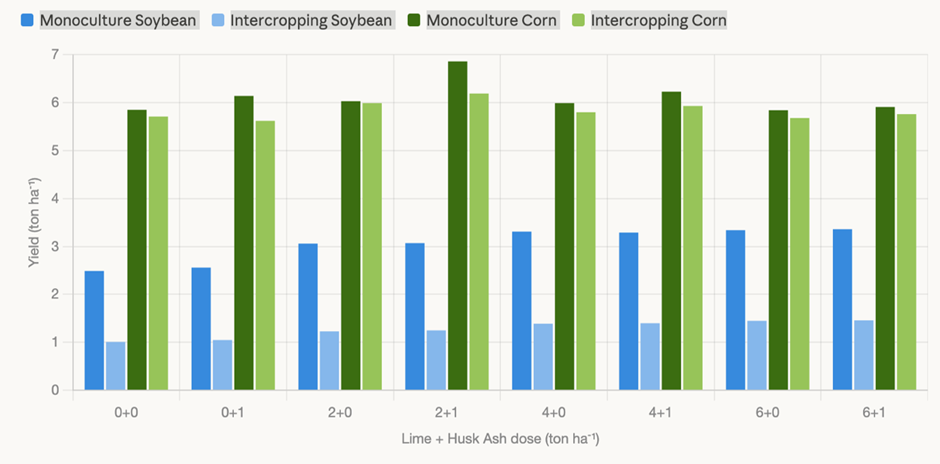
Across all lime and husk ash dose combinations, monoculture systems consistently produced higher yields for both soybean and corn compared to their respective intercropping counterparts, which is an expected outcome given the inherent interspecific competition for light, water, and nutrients in intercropping arrangements. Monoculture soybean yields ranged approximately from 2.50 to 3.35 ton ha⁻¹, with a progressive increase observed as lime doses increased from 0 to 6 ton ha⁻¹, regardless of husk ash addition, suggesting that soil acidity amelioration through liming exerted a more pronounced effect on soybean productivity than husk ash supplementation. Intercropping soybean, by contrast, yielded substantially lower values (approximately 1.00–1.50 ton ha⁻¹) across all treatment combinations, reflecting the competitive suppression imposed by the associated corn crop, which is a taller and more light-intercepting species. Regarding corn, monoculture yields peaked at the 2+1 combination (lime 2 ton ha⁻¹ + husk ash 1 ton ha⁻¹) reaching approximately 6.87 ton ha⁻¹, reinforcing the earlier observation that moderate liming combined with husk ash application optimally improves soil physicochemical properties conducive to corn grain development.
Intercropping corn yields were relatively stable across treatments, ranging from approximately 5.55 to 6.20 ton ha⁻¹, indicating that corn, as the dominant species in the intercropping system, maintained competitive advantage and sustained productivity under varying amendment regimes. These findings align with the general notion that intercrops tend to reduce individual species yields relative to monocultures, yet may offer system-level advantages in resource use efficiency. Furthermore, liming acid soils in tropical regions has been shown to substantially enhance legume and cereal productivity by neutralizing aluminum toxicity and improving phosphorus availability, corroborating the yield increments observed with increasing lime doses in the present data (Agegnehu et al., 2021). Overall, the combined application of lime and husk ash at moderate rates (2+1 ton ha⁻¹) represents the most promising treatment combination for optimizing corn productivity in both monoculture and intercropping systems on acid tropical soils.
Figure 1. Soybean and corn yield (ton ha⁻¹) Monoculture vs. intercropping across lime and husk ash dose combinations. Numbers on the x-axis (0+0, 0+1, 2+0, 2+1, 4+0, 4+1, 6+0, 6+1) represent the combined application rates of Lime and Husk Ash, expressed as Lime dose + Husk Ash dose (ton ha⁻¹). For example, "2+1" denotes a treatment combining 2 ton ha⁻¹ of Lime with 1 ton ha⁻¹ of Husk Ash. Lime was applied at four rates (0, 2, 4, and 6 ton ha⁻¹), while Husk Ash was applied at two rates (0 and 1 ton ha⁻¹).
Land Equivalent Ratio (LER) values across all lime and husk ash dose combinations consistently exceeded 1.0, ranging from approximately 1.31 (at 2+1 treatment) to 1.41 (at 6+1 treatment), unequivocally demonstrating the biological advantage of the corn-soybean intercropping system over their respective monocultures under all soil amendment regimes tested. An LER value greater than 1.0 signifies that a larger monoculture area would be required to achieve the same total productivity as the intercropping system, reflecting superior resource use complementarity between the two species in terms of light interception, nutrient acquisition, and canopy architecture. Notably, a slight decline in LER was observed at the 2+1 combination (≈1.31), which may be attributed to heightened interspecific competition at this treatment level where both crops responded vigorously to the combined amelioration of soil acidity and potassium supply from husk ash, temporarily intensifying resource competition within the intercropping system.
Conversely, the highest LER values were recorded at 6+0 and 6+1 treatments (≈1.40–1.41), suggesting that higher lime doses with or without husk ash further facilitated niche differentiation and resource partitioning between corn and soybean, thereby enhancing system-level productivity. These results are consistent with findings demonstrating that cereal-legume intercropping systems in tropical environments consistently yield LER values between 1.20 and 1.50, attributed to complementary nitrogen dynamics through biological nitrogen fixation by the legume component (Namatsheve et al., 2020). Moreover, soil amendment applications in intercropping systems have been shown to amplify LER values by alleviating edaphic constraints, allowing each component crop to exploit its ecological niche more effectively. Collectively, these data strongly support the agronomic and ecological superiority of corn-soybean intercropping over monoculture across all tested lime and husk ash combinations on acid tropical soils.
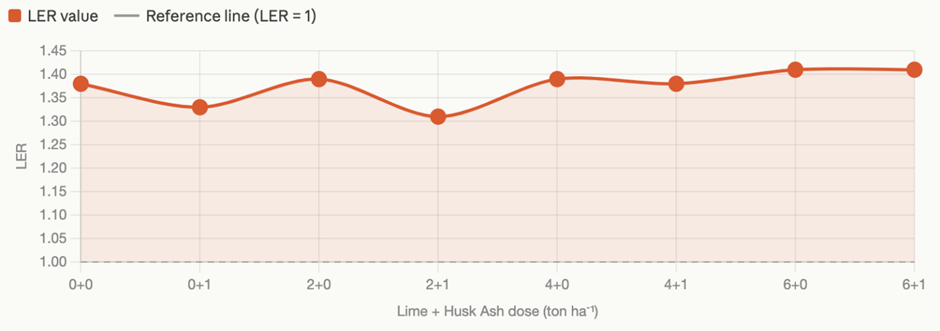
Figure 2. Land Equivalent Ratio (LER). LER > 1 indicates the advantage of the intercropping system over monoculture.
This study was carried out on tidal swamp land classified as B overflow type, located in Mulyasari Village, Tanjung Lago Sub-District, Banyuasin District, South Sumatra Province, spanning the period from April to August 2023. A Randomized Complete Block Design (RCBD) with two treatment factors and three replications was employed in this experiment. The first factor consisted of four levels of dolomite lime application: 0, 2, 4, and 6 tons ha⁻¹. The second factor involved two levels of husk ash application: no husk ash application and 1 ton husk ash ha⁻¹. The Land Equivalent Ratio (LER) value was determined by comparing the yield obtained under an intercropping system to that of soybean and corn monocultures across each lime treatment level (0, 2, 4, and 6 tons dolomite ha⁻¹), both in the absence and presence of husk ash application. The LER value was computed using the following equation:
LER :\(\frac{\text{Soybean\ yield\ in\ }\text{intercropping+Corn}\text{\ yield\ in\ intercropping}}{\text{Soybean\ yield\ in\ }\text{monoculture+Corn}\text{\ yield\ in\ monoculture}}\)
In the intercropping system, corn was established using a double-row spacing arrangement of 240 cm x 40 cm x 20 cm with one seed per planting hole, while soybean was grown between the double corn rows using a single-row spacing of 25 cm x 20 cm with two seeds per hole (Figure 3). Under the monoculture system, corn was cultivated at a single-row spacing of 100 cm x 20 cm with one seed per hole, whereas soybean was grown at a single-row spacing of 25 cm x 20 cm with two seeds per hole. The corn variety used throughout this experiment was Pioneer 27, while Tanggamus was the selected variety for soybean.
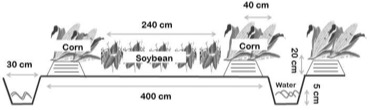
Figure 3. Soybean-corn intercropping system grown under saturated soil conditions in tidal swampland.
Each experimental plot measured 4 m x 5 m in size and was enclosed by a surrounding trench with a width of 30 cm and a depth of 25 cm. Water management was maintained at 20 cm below the soil surface at the time of planting and sustained at that level throughout the growing season until the crops reached maturity, ensuring the plots remained in a consistently moist condition. One week prior to planting, each plot received applications of dolomite and husk ash according to the designated treatments, along with a basal fertilizer application of 300 kg SP36 ha⁻¹ and 150 kg KCl ha⁻¹. On the day of planting, soybean seeds were subjected to inoculation with Rhizobium sp. and subsequently treated with an insecticide containing Carbosulfan 25.53% as its active ingredient.
Corn beds were raised to a height of 20 cm above the soil surface as a precautionary measure against temporary waterlogging. Corn seeds were treated with Ridomil prior to sowing. Nitrogen fertilization for corn was carried out using 150 kg Urea ha⁻¹, applied at the time of planting and again at 30 days after planting. Both corn and soybean plants received foliar spray applications of 10 g Urea per liter of water at 2, 3, 4, and 5 weeks after planting (WAP), with a spray volume of 400 liters of water per hectare. The agronomic variables recorded for soybean included plant height and leaf number at 2, 4, 6, 8, and 10 WAP; time to 50% flowering; as well as nodule dry weight, root dry weight, stem dry weight, and leaf dry weight measured at 8 WAP. At harvest, the following variables were also assessed: number of branches, filled pods, and empty pods per plant, along with seed dry weight per plot and 100-seed dry weight. For corn, the observed variables comprised plant height and leaf number at 2, 4, 6, 8, and 10 WAP; time to 50% silking; time to 50% tasseling; root dry weight, stem dry weight, and leaf dry weight at 12 WAP; as well as number of cobs per plant, seed dry weight per cob, and 100-seed dry weight recorded at harvest. Soil samples were collected prior to planting and subsequently submitted for analysis at the Bogor Laboratory.
Data were analyzed using analysis of variance (ANOVA) based on a two-factor Randomized Complete Block Design (RCBD). Significant treatment effects were further compared using Duncan's Multiple Range Test (DMRT) at the 5% level of significance. All analyses were performed using SAS version 9.0.
Lime application at rates of 4 and 6 ton ha⁻¹ most effectively ameliorated soil acidity constraints in soybean, enhancing nodule formation, biological nitrogen fixation, vegetative growth, reproductive development, and grain yield, with productivity reaching 1.45 ton ha⁻¹ at the highest lime rate representing a 41% increase over the unameliorated control. For corn, moderate lime application at 2 ton ha⁻¹ yielded the optimal agronomic response, producing the highest grain yield of 6.08 ton ha⁻¹, while excessive liming at 4 and 6 ton ha⁻¹ tended to depress corn productivity, likely due to secondary micronutrient imbalances associated with pH over-elevation.
Husk ash at 1 ton ha⁻¹, although limited in its independent effect on most growth and yield variables, significantly contributed to stalk dry weight in both soybean and corn through the supply of silica and potassium, and demonstrated synergistic interactions with lime on soybean biomass accumulation. Its consistent, marginal improvements across yield components underscore its value as a cost-effective, locally available soil conditioner in tropical smallholder farming systems.
Land equivalent ratio values consistently exceeding 1.0 across all treatment combinations ranging from 1.31 to 1.41 unequivocally confirm the biological and agronomic advantage of corn-soybean intercropping over monoculture production under all tested soil amendment regimes on tidal swamp land. Higher lime doses (6 ton ha⁻¹) further enhanced LER by facilitating niche differentiation and reducing interspecific competition, while the combined treatment of 2 ton ha⁻¹ lime and 1 ton ha⁻¹ husk ash represented the most balanced strategy for optimizing system-level productivity.
Collectively, these findings demonstrate that the integration of moderate lime application, husk ash supplementation, intercropping, and saturated soil culture constitutes an agronomically effective and ecologically sound management framework for sustainable food crop production on acid tidal swamp soils in tropical regions. Further research is recommended to evaluate the long-term effects of these combined amendments on soil chemical properties, microbial activity, and crop productivity across multiple growing seasons.
This research was funded by the Ministry of Higher Education, Science and Technology. The authors also thank the field staff and technical assistants involved in data collection, as well as all parties who contributed to the successful completion of this study.
Agegnehu G, Amede T, Erkossa T, Yirga C, Henry C, Tyler R, Sileshi GW (2021) Extent and management of acid soils for sustainable crop production system in the tropical agroecosystems: a review. Acta Agriculturae Scandinavica, Section B – Soil & Plant Science. 71(9):852-869. https://doi.org/10.1080/09064710.2021.1954239
Ahmed N, Zhang B, Bozdar B, Chachar S, Rai M, Li J, Tu P (2023) The power of magnesium: unlocking the potential for increased yield, quality, and stress tolerance of horticultural crops. Frontiers in Plant Science. 14:1285512. https://doi.org/10.3389/fpls.2023.1285512
Al-Jubouri GJO, Al-Kurtany AAS (2025) Improving root growth and nodule formation of two soybean cultivars using combinations of local Bradyrhizobium japonicum inoculants with cobalt in gypsum soil. IOP Conference Series: Earth and Environmental Science. 1538(1):012062. DOI 10.1088/1755-1315/1538/1/012062
Bautista I, Oliver J, Lidón A, Osca JM, Sanjuán N (2023) Improving the chemical properties of acid sulphate soils from the Casamance river basin. Land. 12(9):1693. https://doi.org/10.3390/land12091693
Bossolani JW, Crusciol CAC, Moretti LG, Garcia A, Portugal JR, Bernart L, dos Reis AR (2022) Improving soil fertility with lime and phosphogypsum enhances soybean yield and physiological characteristics. Agronomy for Sustainable Development. 42(2):26. https://doi.org/10.1007/s13593-022-00765-9
Bourke PM, Evers JB, Bijma P, van Apeldoorn DF, Smulders MJ, Kuyper TW, Bonnema G (2021) Breeding beyond monoculture: putting the "intercrop" into crops. Frontiers in Plant Science. 12:734167. https://doi.org/10.3389/fpls.2021.734167
Chauhan DK, Yadav V, Vaculik M, Gassmann W, Pike S, Arif N, Tripathi DK (2021) Aluminum toxicity and aluminum stress-induced physiological tolerance responses in higher plants. Critical Reviews in Biotechnology. 41(5):715-730. https://doi.org/10.1080/07388551.2021.1874282
Dilawari R, Kaur N, Priyadarshi N, Prakash I, Patra A, Mehta S, Islam MA (2022) Soybean: a key player for global food security. In: Soybean improvement: physiological, molecular and genetic perspectives. Springer International Publishing, Cham. pp 1-46. https://doi.org/10.1007/978-3-031-12232-3_1
Elakiya A, Jerlin R, Sundaralingam K, Gnanachitra M, Maruthasalam S, Sathyamoorthy P (2025) Exploring crop stress alleviation: a potassium silicate perspective. Journal of Soil Science and Plant Nutrition. 25(2):4687-4705. https://doi.org/10.1007/s42729-025-02423-x
Enesi RO, Dyck M, Chang S, Thilakarathna MS, Fan X, Strelkov S, Gorim LY (2023) Liming remediates soil acidity and improves crop yield and profitability – a meta-analysis. Frontiers in Agronomy. 5:1194896. https://doi.org/10.3389/fagro.2023.1194896
Feng C, Sun Z, Zhang L, Feng L, Zheng J, Bai W, van der Werf W (2021) Maize/peanut intercropping increases land productivity: a meta-analysis. Field Crops Research. 270:108208. https://doi.org/10.1016/j.fcr.2021.108208
Gebrekidan HH (2026) Soil acidification: sources, processes, impacts on soil properties, nutrient dynamics, crop health, and yield. A review with evidence from Ethiopia and Sub-Saharan Africa. EQA – International Journal of Environmental Quality. 73:27-39. https://doi.org/10.60923/issn.2281-4485/23055
Ghulamahdi M, Chaerunisa SR, Lubis I, Taylor P (2016) Response of five soybean varieties under saturated soil culture and temporary flooding on tidal swamp. Procedia Environmental Sciences. 33:87-93. https://doi.org/10.1016/j.proenv.2016.03.060
Ghulamahdi M, Melati M, Mansur I, Muis R, Haitami A, Shiraiwa T, Taylor P (2025) Isolation, trapping, and application of arbuscular mycorrhizal fungi to increase of phosphorus efficiency, growth, and productivity of soybean under saturated soil culture on acid sulphate soil. Journal of Ecological Engineering. 26(1). https://doi.org/10.12911/22998993/194941
Hafez EM, Osman HS, El-Razek UAA, Elbagory M, Omara AED, Eid MA, Gowayed SM (2021) Foliar-applied potassium silicate coupled with plant growth-promoting rhizobacteria improves growth, physiology, nutrient uptake and productivity of faba bean (Vicia faba L.) irrigated with saline water in salt-affected soil. Plants. 10(5):894. https://doi.org/10.3390/plants10050894
Hossain SS, Mathur L, Roy PK (2018) Rice husk/rice husk ash as an alternative source of silica in ceramics: a review. Journal of Asian Ceramic Societies. 6(4):299-313. https://doi.org/10.1080/21870764.2018.1539210
Hossain A, Maitra S, Sarker S, Al Mahmud A, Ahmad Z, Emon RM, Brestic M (2023) Aluminium stress in plants: consequences and mitigation mechanisms. In: Beneficial chemical elements of plants: recent developments and future prospects. Wiley, Hoboken. pp 123-168. https://doi.org/10.1002/9781119691419.ch6
Huang Y, Yang XX, Liu PY, Chen XY, Zhu HY, Wang CC, Shang Q (2026) Thermally activated serpentine: a dual-function adsorbent for simultaneous heavy metal immobilization and soil pH regulation in acidified agricultural systems. Pedosphere. https://doi.org/10.1016/j.pedsph.2026.02.008
Hussain S, Mahmood MH, Akber AR, Iqbal MS (2026) Alkaline and acidic soils pose problems for nutrient availability: mitigation strategies. In: Sustainable soil chemistry and plant nutrition. Elsevier, Amsterdam. pp 115-136.
Kaschuk G, Yin X, Hungria M, Leffelaar PA, Giller KE, Kuyper TW (2012) Photosynthetic adaptation of soybean due to varying effectiveness of N2 fixation by two distinct Bradyrhizobium japonicum strains. Environmental and Experimental Botany. 76:1-6. https://doi.org/10.1016/j.envexpbot.2011.10.002
Kebede E (2021) Contribution, utilization, and improvement of legumes-driven biological nitrogen fixation in agricultural systems. Frontiers in Sustainable Food Systems. 5:767998. https://doi.org/10.3389/fsufs.2021.767998
Lam D (2025) The next 2 billion: can the world support 10 billion people? Population and Development Review. 51(1):63-102. https://doi.org/10.1111/padr.12685
Liu X, Rahman T, Song C, Yang F, Su B, Cui L, Yang W (2018) Relationships among light distribution, radiation use efficiency and land equivalent ratio in maize-soybean strip intercropping. Field Crops Research. 224:91-101. https://doi.org/10.1016/j.fcr.2018.05.010
Lucas RW, Sponseller RA, Laudon H (2013) Controls over base cation concentrations in stream and river waters: a long-term analysis on the role of deposition and climate. Ecosystems. 16(5):707-721. https://doi.org/10.1007/s10021-013-9641-8
Mahmad-Toher AS, Govender N, Dorairaj D, Wong MY (2022) Comparative evaluation on calcium silicate and rice husk ash amendment for silicon-based fertilization of Malaysian rice (Oryza sativa L.) varieties. Journal of Plant Nutrition. 45(9):1336-1347. https://doi.org/10.1080/01904167.2021.2014878
Mosharrof M, Uddin MK, Sulaiman MF, Mia S, Shamsuzzaman SM, Haque ANA (2021) Combined application of rice husk biochar and lime increases phosphorus availability and maize yield in an acidic soil. Agriculture. 11(8):793. https://doi.org/10.3390/agriculture11080793
Munyaneza V, Zhang W, Haider S, Xu F, Wang C, Ding G (2024) Strategies for alleviating aluminum toxicity in soils and plants. Plant and Soil. 504(1):167-190. https://doi.org/10.1007/s11104-024-06617-7
Namatsheve T, Cardinael R, Corbeels M, Chikowo R (2020) Productivity and biological N2-fixation in cereal-cowpea intercropping systems in sub-Saharan Africa: a review. Agronomy for Sustainable Development. 40(4):30. https://doi.org/10.1007/s13593-020-00629-0
Pagani A, Mallarino AP (2015) On-farm evaluation of corn and soybean grain yield and soil pH responses to liming. Agronomy Journal. 107(1):71-82. https://doi.org/10.2134/agronj14.0314
Prusiński J, Baturo-Cieśniewska A, Borowska M (2020) Response of soybean (Glycine max (L.) Merrill) to mineral nitrogen fertilization and Bradyrhizobium japonicum seed inoculation. Agronomy. 10(9):1300. https://doi.org/10.3390/agronomy10091300
Sarioğlu A (2025) Growth of soybean plants under saline conditions: the role of potassium and Bradyrhizobium japonicum inoculation. BMC Plant Biology. 25(1):473. https://doi.org/10.1186/s12870-025-06477-y
Sharma UC, Datta M, Sharma V (2025) Chemistry, microbiology, and behaviour of acid soils. In: Soil acidity: management options for higher crop productivity. Springer Nature Switzerland, Cham. pp 121-322. https://doi.org/10.1007/978-3-031-76357-1_3
Sharma UC, Datta M, Sharma V (2025) Managing soil acidity. In: Soil acidity: management options for higher crop productivity. Springer Nature Switzerland, Cham. pp 427-522. https://doi.org/10.1007/978-3-031-76357-1_5
Sohail MI, Rehman MZU, Murtaza G, Wahid MA (2019) Chemical investigations of Si-rich organic and inorganic amendments and correlation analysis between different chemical composition and Si contents in amendments. Arabian Journal of Geosciences. 12(2):47. https://doi.org/10.1007/s12517-018-4215-x
Szpunar-Krok E, Bobrecka-Jamro D, Pikuła W, Jańczak-Pieniążek M (2023) Effect of nitrogen fertilization and inoculation with Bradyrhizobium japonicum on nodulation and yielding of soybean. Agronomy. 13(5):1341. https://doi.org/10.3390/agronomy13051341
Vishwanath, Kumar S, Purakayastha TJ, Datta SP, Ravikumar KG, Mahapatra P, Yadav SP (2022) Impact of forty-seven years of long-term fertilization and liming on soil health, yield of soybean and wheat in an acidic Alfisol. Archives of Agronomy and Soil Science. 68(4):531-546. https://doi.org/10.1080/03650340.2020.1843023
Wang Y, Yao Z, Zhan Y, Zheng X, Zhou M, Yan G, Butterbach-Bahl K (2021) Potential benefits of liming to acid soils on climate change mitigation and food security. Global Change Biology. 27(12):2807-2821. https://doi.org/10.1111/gcb.15607
Xiao-Li W., Liu M, Liu CS, McHugh ADJ, Li M, Xiong T, Tang YL (2022) Source-sink relations and responses to sink-source manipulations during grain filling in wheat. Journal of Integrative Agriculture. 21(6):1593-1605. https://doi.org/10.1016/S2095-3119(21)63640-7
Xin SUN,Yang F, Liu J, Shu K, Liu WG, Yang WY (2018) Maize-soybean strip intercropping: achieved a balance between high productivity and sustainability. Journal of Integrative Agriculture. 17(4):747-754. https://doi.org/10.1016/S2095-3119(17)61789-1