Australian Journal of Crop Science
Article | https://doi.org/10.21475/ajcs.26.20.10.pne265
Submitted: 26 February 2026 | Revised: 12 June 2026 | Accepted: 07 August 2026
Pages 806–817
Vegetative and productive responses of mango (Mangifera indica L.) cultivars to renewal pruning height under subtropical conditions
Maykon Florêncio Ferreira1, Marcelo de Souza Silva1*, Jackson Mirellys Azevedo Souza2, Marco Antonio Tecchio1, Magali Leonel3 and Sarita Leonel1
1Departamento de Produção Vegetal, Universidade Estadual Paulista ‘Júlio de Mesquita Filho” (UNESP), Botucatu, São Paulo, Brasil.
2Departamento de Agronomia, Universidade Federal de Viçosa (UFV), Viçosa, Minas Gerais, Brasil.
3Centro de Raízes e Amidos Tropicais (CERAT), Universidade Estadual Paulista ‘Júlio de Mesquita Filho” (UNESP), Botucatu, São Paulo, Brasil.
*Corresponding author: marcelo.s.silva@unesp.br
ORCID: https://orcid.org/0000-0002-2440-0282
Abstract: Canopy management through renewal pruning is an essential practice for regulating vegetative growth, productivity, and orchard efficiency in mango trees, particularly under subtropical production systems. This study evaluated the effects of different renewal pruning heights on vegetative development, yield, and fruit quality of commercial mango cultivars grown in the state of São Paulo, Brazil. The experiment was conducted using a randomized complete block design in a 3 × 5 factorial arrangement, with three pruning intensity (1.50, 2.10, and 2.70 m) and five cultivars (Palmer, Tommy Atkins, Keitt, Parwin, and IAC 103 Espada Vermelha), with five replications and two plants per experimental plot. Vegetative, productive, and physicochemical fruit traits were assessed, in addition to multivariate analysis. Vegetative growth responded in a genotype-and pruning-intensity-dependent manner, with greater vigor associated with more severe pruning, without changes in leaf chlorophyll contents. A pruning height of 2.70 m increased overall yield and cultivars differed in yield potential. Fruit quality attributes were mostly determined by genotype, and main findings showed that pruning at 1.50 m improved soluble solids but reduced yield, while pruning at 2.70 m maximized yield but not soluble solids. Principal component analysis suggested an inverse relationship between vegetative vigor and yield, highlighting the need for specific pruning strategies for each cultivar. The results indicate that renewal pruning management should be adjusted in a genotype-oriented manner to optimize the balance among vegetative growth, yield, and fruit quality in mango orchards grown in subtropical regions.
Keywords: Canopy management; genotype × management interaction; mango cultivars; subtropical fruit production.
Abbreviations: IAC: Agronomic Institute of Campinas; FCA: School of Agronomic Sciences; UNESP: São Paulo State University “Júlio de Mesquita Filho”; PCA: Principal component analysis.
Mango (Mangifera indica L.) is cultivated in different regions worldwide, and Brazil stands out as one of the major producers and the largest exporter of mango fruit in the Southern Hemisphere (Abrafrutas, 2024). The competitiveness and sustainability of the mango production chain strongly depend on the adoption of management practices capable of reconciling high yield, fruit quality, and orchard operational efficiency (Matos Filho et al., 2024). Among these practices, canopy management is particularly important, as it influences plant architecture, solar radiation interception and distribution, internal ventilation, and photosynthetic efficiency, all of which are key determinants of vegetative and reproductive development (Silva et al., 2012).
Renewal pruning is widely used to control tree size, stimulate the emergence of new shoots, and reestablish source–sink balance, thereby favoring the balance between vegetative growth and fruiting, especially in mature or high-density orchards (Souza et al., 2023). However, pruning intensity may differentially modulate vegetative vigor, flowering, fruit set, and fruit quality, and its effects are highly dependent on genotype and edaphoclimatic conditions.
Previous studies have shown that pruning height significantly influences the relationship between vegetative growth and yield in mango trees (Reddy and Kurian, 2011; Hahn et al., 2022; Souza et al., 2023). More severe pruning tends to stimulate intense initial vegetative growth due to the disruption of apical dominance and the redistribution of carbohydrate reserves, which may delay fruiting and reduce short-term yield (Reddy and Kurian, 2011).
In contrast, less severe pruning preserves a larger functional photosynthetic area, favoring yield, although it may result in excessive shading and gradual loss of productive efficiency if not properly managed (Albuquerque et al., 2002; Hahn et al., 2022). These contrasting responses indicate that pruning height is a critical factor for mango agronomic performance and requires adjustments compatible with the physiological characteristics of each cultivar.
In addition to its effects on growth and yield, canopy architecture directly influences fruit quality by affecting physical and physicochemical attributes such as soluble solids content, titratable acidity, coloration, and sugar composition. Adjustments in pruning management may improve fruit coloration and soluble solids accumulation, especially when they result in better solar exposure of reproductive organs (Paiva et al., 2024). Thus, renewal pruning represents a potential tool to simultaneously optimize productivity and fruit quality, provided that it is applied at appropriate intensities.
Selecting and diversifying cultivars in commercial mango orchards is a key strategy for increasing yield and reducing vulnerability to biotic and abiotic stresses. Mango cultivars differ substantially in vegetative vigor, canopy architecture, fruiting season, and fruit size and composition, resulting in contrasting responses to management practices (Matos Filho et al., 2024).
Although cultivars such as Tommy Atkins, Palmer, Keitt, and Parwin are widely grown in Brazil, most pruning management recommendations were developed under tropical or semiarid conditions, and information on the performance of these genotypes in subtropical regions remains scarce (Souza et al., 2018). In addition, cultivars exhibit contrasting growth and assimilate allocation strategies, which are reflected in differences in vegetative vigor, productivity, and fruit physicochemical attributes (Reis et al., 2019; Izidoro et al., 2023). Therefore, understanding the interaction between genotype and management practices, such as renewal pruning height, is essential for formulating specific and efficient technical recommendations.
Climate is one of the main limiting factors for fruit production, and climate change has increased the need to adapt production systems to new edaphoclimatic conditions (Paiva et al., 2024; Leonel et al., 2025). In subtropical regions, such as the central-western region of São Paulo State, climatic conditions differ markedly from those of the traditional mango-producing areas, especially in terms of rainfall distribution, thermal amplitude, and the occurrence of lower winter temperatures.
These environmental particularities may alter plant physiological responses to canopy management practices, reinforcing the need for studies evaluating the interaction between genotypes and pruning strategies under non-traditional cultivation conditions (Sobrinho et al., 2019). This issue becomes even more relevant in the context of global climate change, which imposes new challenges for the sustainability and adaptation of production systems.
The timing of renewal pruning is an important decision for mature, size-controlled mango orchards. Further studies are needed on commercial crops in subtropical regions. These should adopt innovative approaches to address management and cultivation practices, such as renewal pruning, and the specific responses of each cultivar. The present study aimed to evaluate the effects of different renewal pruning heights on vegetative development, productive performance, and fruit quality of commercial mango cultivars grown in a subtropical environment, in order to support more efficient technical recommendations adapted to the edaphoclimatic conditions of these regions.
There was a significant interaction between pruning heights and cultivars for branch length, branch diameter, and stem diameter (Table 1). Pruning height influenced only branch length and branch diameter, whereas cultivars affected all vegetative indicators analyzed, except chlorophyll b content, highlighting the effect of genotype on these variables (Table 1). This pattern indicates that mango tree responses to pruning intensity are not uniform, but rather modulated by genotype, reflecting intrinsic differences in vigor and vegetative plasticity among cultivars. Comparisons among cultivars subjected to the same pruning height also revealed cultivar-specific performance patterns.
This variation reinforces that vegetative vigor can be modulated by canopy management intensity (Paiva et al., 2024). The cultivars Parwin and Keitt showed the greatest mean branch lengths at the intermediate pruning height (2.1 m), standing out from the others. Under the least severe pruning (2.7 m), ‘Keitt’ showed the greatest branch lengths (Table 2), indicating greater vegetative stability under reduced pruning severity.
The comparison among cultivars within each pruning height indicated that, under the most severe pruning (1.5 m), ‘Tommy Atkins’ and ‘Keitt’ had the highest means. At the intermediate height (2.1 m), Parwin and Keitt showed the greatest branch length, whereas under the least severe pruning (2.7 m), Tommy Atkins exhibited shorter branches than the other cultivars. This result may indicate that vegetative vigor is strongly associated with pruning intensity and the remaining canopy architecture, with more vigorous genotypes responding more markedly to more severe pruning.
The effects of pruning heights on branch diameter showed distinct response patterns among cultivars (Table 2). ‘Tommy Atkins’ exhibited a greater branch diameter under the most severe pruning, indicating a high capacity for structural biomass
Table 1. F-test values, degrees of freedom (DF), coefficient of variation (CV), and overall mean of the variables branch length (BL), branch diameter (BD), stem diameter (SD), chlorophyll a (Chl a), chlorophyll b (Chl b), and total chlorophyll (Total Chl), number of fruits per plant (NFP), pulp yield (PY), fruit fresh mass (FM), production per plant (PP), yield (YLD), soluble solids (SS), ripeness index (RI), pH, titratable acidity (TA), reducing sugars (RS), non-reducing sugars (NRS), and total sugars (TS) of different mango cultivars subjected to different pruning intensities.
| SV | DF | BL | BD | SD | Chl. a | Chl. b | Total Chl. | ||||||||||
|---|---|---|---|---|---|---|---|---|---|---|---|---|---|---|---|---|---|
| Block | 4 | 3.42* | 10.77** | 2.43ns | 19.88** | 5.84** | 16.79** | ||||||||||
| Pruning height (A) | 2 | 27.95** | 9.40** | 2.23ns | 0.34ns | 1.26ns | 0.55ns | ||||||||||
| Cultivars (B) | 4 | 29.73** | 30.64** | 58.56** | 5.59** | 1.61ns | 4.71* | ||||||||||
| AxB | 8 | 12.96** | 2.47* | 12.30** | 0.31ns | 0.63ns | 0.30ns | ||||||||||
| C.V. (%) | 3.29 | 5.19 | 2.89 | 31.49 | 39.55 | 31.60 | |||||||||||
| Overall mean | 103.67 | 46.99 | 28.92 | 7.95 | 2.65 | 10.57 | |||||||||||
| SV | DF | NFP | PY | FM | PP | YLD | |||||||||||
| Block | 4 | 0.52ns | 0.34ns | 0.20ns | 0.90ns | 1.14ns | |||||||||||
| Pruning height (A) | 2 | 4.74* | 1.09ns | 0.01ns | 3.27* | 3.62* | |||||||||||
| Cultivars(B) | 4 | 15.96** | 31.35** | 106.92** | 18.21** | 18.69** | |||||||||||
| AxB | 8 | 1.16ns | 0.84ns | 0.69ns | 1.05ns | 1.08ns | |||||||||||
| C.V. (%) | 37.11 | 3.72 | 12.05 | 36.58 | 37.22 | ||||||||||||
| Overall mean | 115.43 | 77.74 | 639.37 | 70.96 | 31.50 | ||||||||||||
| SV | DF | SS | RI | pH | TA | RS | NRS | TS | |||||||||
| Block | 4 | 0.21ns | 1.43ns | 0.02ns | 0.60ns | 4.35* | 0.12ns | 1.41ns | |||||||||
| Pruning height (A) | 2 | 3.37* | 7.61** | 0.28ns | 0.18ns | 1.80ns | 0.09ns | 0.11ns | |||||||||
| Cultivars (B) | 4 | 3.73* | 1.19ns | 2.51ns | 1.24ns | 62.79** | 2.21ns | 5.12** | |||||||||
| AxB | 8 | 1.00ns | 6.26** | 0.91ns | 1.85ns | 1.56ns | 2.08ns | 0.70ns | |||||||||
| C.V. (%) | 11.34 | 25.57 | 6.47 | 32.57 | 22.83 | 36.13 | 32.18 | ||||||||||
| Overall mean | 15.58 | 26.17 | 3.79 | 0.70 | 0.59 | 0.83 | 1.46 | ||||||||||
ns = not significant; ** and * = significant at 1% and 5% by the F test, respectively; CV = coefficient of variation.
Table 2. Mean values of branch length (cm), branch diameter (mm), stem diameter (cm) and ripeness index of plants from different mango cultivars subjected to pruning heights. São Manuel, SP, Brazil, 2025.
| Pruning height | Branch length (cm) | ||||
|---|---|---|---|---|---|
| T. Atkins | Palmer | Parwin | E. Vermelha | Keitt | |
| Pruning 1.5 m | 116.98aA | 103.88aC | 109.08bB | 95.16bD | 116.53aA |
| Pruning 2.1 m | 99.76bB | 100.15aB | 115.08aA | 92.08bC | 111.27bA |
| Pruning 2.7 m | 88.52cC | 97.87aB | 100.99cB | 101.00aB | 106.67bA |
| Pruning height | Branch diameter (mm) | ||||
| T. Atkins | Palmer | Parwin | E. Vermelha | Keitt | |
| Pruning 1.5 m | 51.68aA | 52.78aA | 53.67aA | 40.17aC | 47.53aB |
| Pruning 2.1 m | 46.23bA | 47.38bA | 49.58aA | 40.69aB | 43.49bB |
| Pruning 2.7 m | 43.56bB | 52.01aA | 49.59aA | 38.72aC | 47.84aA |
| Pruning height | Stem diameter (cm) | ||||
| T. Atkins | Palmer | Parwin | E. Vermelha | Keitt | |
| Pruning 1.5 m | 27.57bC | 33.65aA | 30.93aB | 23.99bD | 26.97bC |
| Pruning 2.1 m | 29.45aB | 31.00bA | 29.49bB | 27.50aC | 26.91bC |
| Pruning 2.7 m | 29.29aB | 29.43cB | 31.46aA | 26.89aC | 29.24aB |
| Pruning height | Ripeness index | ||||
| T. Atkins | Palmer | Parwin | E. Vermelha | Keitt | |
| Pruning 1.5 m | 22.92aB | 49.65aA | 20.01aB | 22.64aB | 24.58aB |
| Pruning 2.1 m | 24.83aA | 16.73bA | 22.19aA | 25.91aA | 14.44aA |
| Pruning 2.7 m | 25.62aA | 15.97bA | 24.27aA | 22.50aA | 24.58aA |
Means followed by the same lowercase letter in the column (pruning heights) and uppercase letter in the row (cultivars) do not differ statistically from each other by the Scott–Knott test [1974] at the 5% probability level.
redistribution after drastic canopy reduction. In Palmer and Keitt, branch diameter was reduced only at the intermediate height. In contrast, ‘Parwin’ and ‘IAC 103 Espada Vermelha’ did not show significant variation across pruning heights, indicating branch diameter stability regardless of the applied management. These results indicate that more vigorous cultivars, such as Tommy Atkins, Palmer, and Keitt, show greater plasticity in response to pruning intensity, whereas less vigorous genotypes tend to maintain more stable growth.
Analysis of pruning-height effects within cultivars confirmed the genotype × management interaction in determining branch diameter. At 1.5 m and 2.10 m, the cultivars Parwin, Palmer, and Tommy Atkins showed similar performance, with the largest branch diameters. In contrast, IAC 103 Espada Vermelha had the smallest branch diameter at pruning heights of 1.5 and 2.7 m. Under the least severe pruning (2.7 m), Palmer, Parwin, and Keitt showed the largest branch diameters, indicating that this pruning height favored the structural vigor of these cultivars, whereas IAC 103 Espada Vermelha showed greater growth limitation. These results reinforce that the response to canopy management is strongly conditioned by genotype.
Cultivar performance as a function of pruning height indicated that IAC 103 Espada Vermelha, Tommy Atkins, and Keitt showed smaller stem diameters under the most severe pruning, suggesting a greater structural impact of this management in these genotypes. However, under the least severe pruning, Palmer was the only cultivar that showed reduced stem diameter, indicating a cultivar-specific response to maintaining a larger canopy volume. These results suggest that stem diameter responds more conservatively to pruning interventions, reflecting the growth history and structural strategy of each cultivar.
The results for pruning-height effects within cultivars indicated that Palmer had the largest stem diameter compared with the other cultivars at the greater pruning heights (1.5 and 2.1 m). Under the least severe pruning (2.7 m), Parwin showed a higher mean and IAC 103 Espada Vermelha a lower mean than the others; moreover, under this pruning treatment, Tommy Atkins, Palmer, and Keitt responded similarly. In general, more vigorous cultivars, such as Palmer and Parwin, tended to maintain greater stem thickness across pruning heights, whereas less vigorous cultivars, such as IAC 103 Espada Vermelha, showed reduced diameters (Table 2). Previous studies indicate that heading-back pruning has a more pronounced impact on less vigorous cultivars, influencing biomass allocation and structural growth (Silva et al., 2012; Daudt and Marodin, 2014), which corroborates the patterns observed in this study. Pruning at 1.5 m increases the ripeness index, particularly in the ‘Palmer’ cultivar, making it superior to the others under these conditions (Table 2).
The cultivars Tommy Atkins, Parwin, and IAC 103 Espada Vermelha showed the highest chlorophyll a and total chlorophyll contents (Table 3), whereas pruning heights did not influence the evaluated photosynthetic pigments. This pattern indicates that chlorophyll contents primarily reflected genetic differences associated with photosynthetic efficiency and pigment density, rather than direct responses to canopy management. Similar results have been reported in mango and other tropical fruit crops, in which spectrophotometric chlorophyll quantification was effective for discriminating intergenotypic differences but showed low sensitivity to short-term management interventions (Salla et al., 2007; Almeida et al., 2015).
Table 3. Mean values of chlorophyll a and total chlorophyll of plants from different mango cultivars subjected to pruning heights. São Manuel, SP, Brazil, 2025.
| Cultivars | Chlorophyll a (mg mL-1) |
Total chlorophyll (mg mL-1) |
|---|---|---|
| T. Atkins | 8.33 a | 10.89 a |
| Palmer | 6.27 b | 8.41 b |
| Parwin | 10.13 a | 13.45 a |
| E. Vermelha | 9.43 a | 12.27 a |
| Keitt | 5.57 b | 7.85 b |
Means followed by the same letter in the column do not differ statistically from each other by the Scott–Knott test [1974] at the 5% probability level.
The lower responsiveness of chlorophyll b reinforces that, under conditions without substantial changes in the light environment or leaf metabolism, light-harvesting complexes tend to show low variation amplitude (Salla et al., 2007). Thus, the results indicate that renewal pruning, within the evaluated range, did not compromise plant photosynthetic capacity, and that chlorophyll contents are more suitable for physiological characterization among cultivars than for detecting immediate effects of canopy management, provided that plant nutritional balance is maintained (Santana et al., 2022; Khorobrykh et al., 2020; Song et al., 2020).
There was no interaction between pruning heights and cultivars for fruit production and yield indicators (Table 1), indicating that the effects of management and genotype acted independently on these variables. Pruning height influenced the number of fruits per plant, production per plant, and yield, whereas all production and yield indicators were affected by the evaluated cultivars (Table 1). This pattern suggests that pruning intensity mainly modulated total production volume, whereas productive differences among cultivars reflected intrinsic performance characteristics and production efficiency.
This result suggests that management acted primarily on fruit number, without markedly altering individual fruit attributes. In mango cultivation, productivity gains associated with pruning practices have mainly been attributed to increased fruit number per plant, with limited effects on physical fruit traits such as fruit fresh mass and pulp yield (Singh et al., 2017; Hahn et al., 2022). In a study conducted in India with the cultivar Alphonso, Reddy and Kurian (2011) reported that renewal pruning promoted a marked increase in cumulative production over four years, reinforcing the role of canopy management in regulating the crop productive potential.
The highest number of fruits per plant, production per plant, and yield were obtained in plants subjected to the least severe pruning, performed at 2.7 m (Table 4). The hypothesis is that drastic pruning abruptly reduces the functional photosynthetic area, destabilizing the source–sink relationship and favoring the dominance of vegetative sinks, which may compromise flowering and fruit set. In addition, the removal of apical dominance stimulates intense vegetative sprouting, often at the expense of reproductive development (Hahn et al., 2022).
Table 4. Mean values of number of fruits per plant, production, and yield of mango cultivars as a function of different pruning heights. São Manuel, SP, Brazil, 2025.
| Pruning heights | n° of fruits per plant | Production per plant (kg) | Yield (t ha-1) |
|---|---|---|---|
| Pruning 1.5 m | 101.23 b | 61.73 b | 27.40 b |
| Pruning 2.1 m | 96.73 b | 59.64 b | 26.48 b |
| Pruning 2.7 m | 148.33 a | 91.50 a | 40.62 a |
Means followed by the same letter in the column do not differ statistically from each other by the Scott–Knott test (1974) at the 5% probability level.
Although adequate light interception is essential for yield, excessive canopy removal may reduce carbon assimilation and limit productivity, especially in environments subject to climatic variability and water restriction. In this context, management strategies that balance vegetative growth, light interception, and assimilate allocation are essential for the productive sustainability of mango orchards (Hahn et al., 2022; Rossouw et al., 2024).
Kumar Singh et al. (2010) reported that pruning is expected to improve the orchard microclimate, enhance vegetative and reproductive performance, and increase photosynthetic rates, which may explain higher fruit production in severely pruned mango trees. However, these effects are strongly associated with orchard age, planting density, and environmental conditions, indicating that responses to pruning intensity are context-dependent and may vary among production systems.
In older, denser mango orchards, light interception and tree photosynthetic potential are reduced, and branch pruning may improve air circulation, photosynthetic efficiency, yield, and fruit quality (Reddy and Kurian, 2011). However, in systems where light interception is not yet limiting, as observed in the present study, excessive canopy reduction may compromise carbon balance and restrict productivity.
The evaluation of pulp yield showed an exclusive genotype effect, with the cultivar IAC 103 Espada Vermelha presenting lower pulp yield than the others (Table 5). Fruit fresh mass was also genotype-dependent, with the cultivar Keitt showing the highest mean values. The stability of mean fruit fresh mass and pulp yield across pruning heights indicates that these traits are weakly responsive to canopy management, reinforcing their genetic control. The combined analysis of these parameters gives an innovative character to the results of this study by demonstrating that adjustments in pruning intensity affect total production volume without compromising individual fruit attributes.
Table 5. Mean values of number of fruits per plant, pulp yield, fruit fresh mass, production, and yield as a function of different mango cultivars. São Manuel, SP, Brazil, 2025.
| Cultivars | nº of fruits per plant | Pulp yield (%) | Fruit fresh mass (g) | Production per plant (kg) | Yield (t ha-1) |
|---|---|---|---|---|---|
| T. Atkins | 171.11 a | 78.60 a | 613.46 c | 104.96 a | 46.55 a |
| Palmer | 144.05 a | 80.65 a | 755.11 b | 108.77 a | 45.35 a |
| Parwin | 199.22 a | 79.10 a | 569.26 c | 112.58 a | 49.99 a |
| E. Vermelha | 78.72 b | 68.38 b | 267.01 d | 20.94 b | 9.30 b |
| Keitt | 84.00 b | 81.98 a | 992.03 a | 82.42 a | 36.59 a |
Means followed by the same letter in the column do not differ statistically from each other by the Scott–Knott test [1974] at the 5% probability level.
When the cultivars were compared, it was found that Tommy Atkins, Palmer and Parwin produced a greater number of fruits. Meanwhile, Parwin, Tommy Atkins, Palmer and Keitt stood out in terms of total yield. IAC 103 Espada Vermelha, however, showed substantially lower absolute yield levels (Table 5). It is important to note that this cultivar was included in the study despite its lower productivity levels (Souza et al., 2018). This is because it is a national cultivar that was specifically developed for the subtropical regions of São Paulo state, Brazil. It produces fruit that matures early. These fruits enter the market early, taking advantage of a market window without alternate bearing. Additionally, it is gaining consumer preference because of its small, flavorful fruit. Although Keitt produced fewer fruits, its higher mean fruit fresh mass compensated for this difference, resulting in yield similar to that of the more prolific cultivars. Imbalances induced by more severe pruning may reduce photosynthetic efficiency and carbon availability, negatively affecting yield and, in the long term, productive sustainability (Rossouw et al., 2024).
No interaction was observed for the analyzed physicochemical attributes (Table 5). For maturity index, pH, titratable acidity, and non-reducing sugars, no differences were found among pruning heights, cultivars, or their interaction, indicating high stability of these attributes under the experimental conditions. Pruning height affected only fruit soluble solids content, whereas cultivars affected soluble solids, reducing sugars, and total sugars. This pattern suggests that, unlike vegetative and productive components, internal fruit quality is less sensitive to canopy management and is predominantly determined by genotype.
Fruit soluble solids content was influenced by pruning height, with higher values observed in plants subjected to the most severe pruning (1.5 m) compared with those pruned at 2.1 m and 2.7 m (Table 6). This result indicates a compensatory effect between production and quality, since the more drastic pruning, associated with lower production per plant and lower yield, favored a greater sugar concentration in the fruits. Thus, pruning intensity modulated internal fruit quality through adjustments in the source–sink relationship, without altering the other physicochemical attributes.
Table 6. Soluble solids content of fruits from mango cultivars as a function of different pruning heights. São Manuel, SP, Brazil, 2025.
| Pruning heights | Soluble solids (ºBrix) |
|---|---|
| Pruning 1.5 m | 16.52 a |
| Pruning 2.1 m | 14.92 b |
| Pruning 2.7 m | 15.29 b |
Means followed by the same letter in the column do not differ statistically from each other by the Scott–Knott test (1974) at the 5% probability level.
The increase in soluble solids content with increasing pruning severity can be physiologically explained by the reduction in the total number of fruits per plant, which decreases sink demand and favors the accumulation of carbohydrates and sugars in the remaining fruits. This mechanism, widely described in mango, reflects an adjustment in the source–sink relationship in response to canopy volume reduction (Kumar Singh et al., 2010). When cultivars were compared, Palmer, IAC 103 Espada Vermelha, and Parwin showed the highest soluble solids contents, whereas Keitt and Tommy Atkins showed the lowest values. For reducing and total sugars, the cultivar Palmer stood out with the highest contents (Table 7), indicating superior efficiency in sugar accumulation and reinforcing the genetic control of these quality traits.
Table 7. Mean values of soluble solids, reducing sugars, and total sugars of mango fruits as a function of different cultivars. São Manuel, SP, Brazil, 2025.
| Cultivars | Soluble solids (ºBrix) |
Reducing sugars (g 100g-1) |
Total sugars (g 100g-1) |
|---|---|---|---|
| T. Atkins | 14.31 b | 0.38 c | 1.40 b |
| Palmer | 16.10 a | 1.17 a | 2.03 a |
| Parwin | 16.74 a | 0.31 c | 1.04 b |
| E. Vermelha | 16.33 a | 0.40 c | 1.44 b |
| Keitt | 14.40 b | 0.68 b | 1.42 b |
Means followed by the same letter in the column do not differ statistically from each other by the Scott-Knott test (1974) at the 5% probability level.
Studies conducted in high-density systems and aged orchards have reported that different pruning intensities may alter fruit quality attributes, such as mass, volume, pulp-to-seed ratio, and sugar contents, especially under conditions of excessive shading and reduced light interception (Kumar Singh et al., 2010). In such systems, pruning contributes to restoring photosynthetic efficiency, reducing relative humidity within the canopy, and improving the visual and internal quality of fruits.
However, the results of the present study indicate that, under subtropical conditions and in orchards without severe light limitation, pruning effects on fruit quality are more restricted, being concentrated mainly on soluble solids. Paiva et al. (2024) reported that greater light availability and canopy openness are associated with improved fruit quality. The authors also suggested the possibility of establishing an optimal light threshold to maximize the production of high-quality mangoes and, consequently, enhance the competitiveness of mango growers in the global market.
Principal component analysis
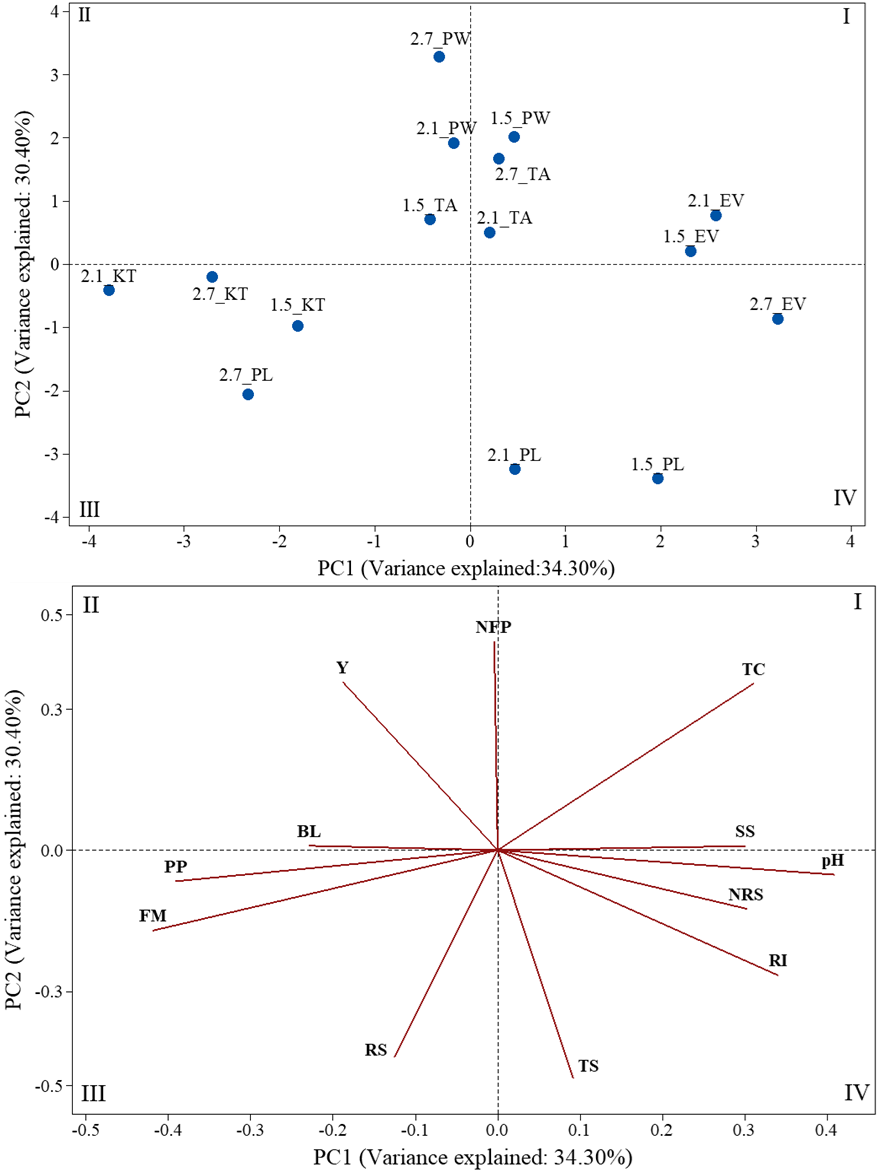
Principal component analysis (PC1 and PC2) explained 64.70% of the total data variation, with 34.30% attributed to PC1 and 30.40% to PC2 (Fig. 1). This percentage indicates that most of the variability in vegetative, productive, and fruit quality indicators can be adequately interpreted from these two axes, allowing an integrated visualization of cultivar responses to the different renewal pruning heights.
Fig. 1. Principal component analysis of variables related to renewal pruning heights and mango cultivars, with the objective of characterizing the interactions between the treatments and the various variables analyzed. Legend: BL = branch length; TC = total chlorophyll; NFP = number of fruits per plant; FM = fruit fresh mass; PP = production per plant; Y = yield; PY = pulp yield; SS = soluble solids; RI = ripeness index; RS = reducing sugars; NRS = non-reducing sugars; TS = total sugars; TA = Tommy Atkins; PL = Palmer; EV = Espada Vermelha; KT = Keitt; PW = Parwin.
The biplot showed a clear distinction among cultivars and renewal pruning heights, demonstrating that canopy management and genotype jointly modulated the balance among vegetative growth, productivity, and fruit quality. Treatments involving more severe pruning tended to cluster on the right-hand side of the graph, associated with higher values for fruit quality attributes, reflecting the hypothesis of a source-sink relationship that may be more conducive to sugar accumulation. This distribution confirms that increasing pruning severity shifts the production system toward improved internal fruit quality, at the expense of yield.
The higher productivity values were associated with lower pruning severity, indicating that branch vegetative growth in response to renewal pruning influences this variable by favoring plant vigor to the detriment of fruit production. The cultivars Tommy Atkins and IAC 103 Espada Vermelha showed similar performance at pruning heights of 2.10 m and 1.50 m, and at the latter height, under more drastic pruning, trees showed the smallest stem diameters.
The multivariate analysis showed that the response of mango trees to renewal pruning depends on the genotype and management intensity, indicating that the trees allocate carbohydrate reserves differently in response to renewal pruning. These results provide a basis for pruning strategies appropriate to different cultivars in subtropical regions.
The results obtained in this study are preliminary findings that require validation over several growing seasons, but they represent the first report on this topic in the state of São Paulo, Brazil, and highlight the need for canopy management strategies tailored to the vigor and efficiency of assimilate distribution of each mango cultivar, particularly in subtropical regions. Furthermore, the study includes both yield and fruit quality attributes, which is important because pruning may involve a trade-off between production volume and fruit composition. Therefore, pruning intensity can be used as a management tool to orient the production system towards yield or quality, in accordance with commercial objectives. Overall, the results may contribute to productive sustainability and the adaptation of the crop to non-traditional growing environments.
The experiment was conducted at the São Manuel Experimental Farm, belonging to the School of Agronomic Sciences (FCA), São Paulo State University “Júlio de Mesquita Filho” (UNESP), located in the municipality of São Manuel, São Paulo, Brazil. The experimental area is located at the geographic coordinates 22°44′28″ S and 48°34′37″ W, at an altitude of 740 m.
According to the Köppen–Geiger classification system, the climate of the region is classified as humid subtropical (Cfa), characterized by a mean annual rainfall of 1,377 mm and a mean temperature of the warmest month above 22 °C (Cunha and Martins, 2009). The soil in the experimental area was classified as a typical dystrophic Red Latosol, with medium to sandy texture (Santos et al., 2018).
Five mango cultivars were evaluated: Tommy Atkins, Palmer, Parwin, Keitt, and IAC 103 Espada Vermelha (Tab. 8 and Fig. 2). The orchard was pruned annually from the sixth year after planting, with the same intensity for all cultivars evaluated, in line with the recommended production pruning as per Mouco and Albuquerque (2021). Subsequently, the orchard went for two years without any production pruning. Prior to this study, following renewal pruning at different intensities, the average tree height of the different cultivars was 3.0 to 4.0 m.
Table 8. A brief description of the main characteristics of the cultivars studied.
| Cultivar | Origin | Main characteristics | References |
|---|---|---|---|
| Tommy Aktins | North American. Florida (USA). | High vegetative vigor, productivity and robustness, as well as mechanical strength of the fruit. It produces oval-oblong fruits (400–500 g) with an orange-yellow skin and a final red-purple color, with good post-harvest shelf life. | Morais and Assis (2004), Souza et al., (2017), EMBRAPA, (2023 and 2024). |
| Palmer | North American. Florida (USA). | Vigorous growth, average yield and widespread commercial acceptance. Late ripening. Produces oval-oblong fruit (450–650 g) with orange-yellow skin and a reddish-purple tinge, juicy flesh, low fiber content and soluble solids in line with quality standards. | Alves and Cavalcante (2007), Reis et al., (2019), Dias et al., (2023), EMBRAPA (2023). |
| Keitt | North American. Florida (USA). | Moderately vigorous growth, medium-sized tree and high productivity. Consistent yields, with no alternate bearing, late ripening and good post-harvest shelf life. Large fruit (600–800 g), firm, juicy, with yellow flesh, low to moderate fibre content, an average flesh yield of approximately 70% and soluble solids ranging between 16 and 17° Brix, considered ideal for export. | Alves and Cavalcante (2007), Reis et al., (2019), Figueiredo et al. (2020). |
| Parwin | North American. Florida (USA). | High vegetative vigor, with a medium to large tree size and moderate yield. Produces fruit weighing 380–560 g with orange, firm, low-fibre flesh. The fruit can be used for both fresh consumption and processing. Valued for the quality of its flesh and its post-harvest shelf life. | Izidoro et al., (2023), Lossoli et al., (2023). |
| IAC 103 Espada Vermelha | South American. São Paulo (Brazil). | Good adaptation to Brazilian growing conditions, medium to large tree size, upright growth habit. Early ripening, low yield, no alternate bearing. Elongated fruit weighing an average of 280 g, with a small seed and juicy, slightly fibrous flesh of moderate acidity; recommended for fresh consumption. | Souza et al., (2018), Gallo et al., (2025). |
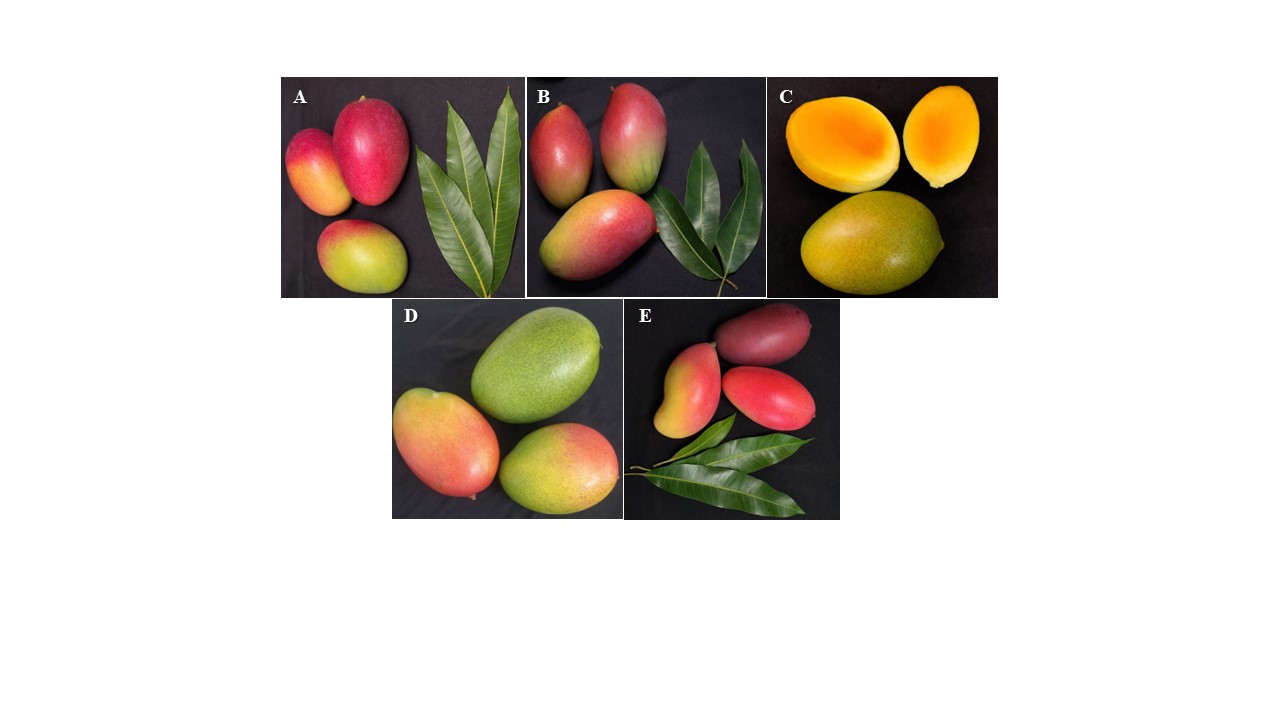
Fig. 2. Original photos of the fruits of the mango cultivars Tommy Atkins (A), Palmer (B), Parwin (C), Keitt (D), and IAC 103 Espada Vermelha (E) harvested in the study. The photos were enhanced using generative AI (ChatGPT 4.0).
Plants of the different cultivars were subjected to three pruning heights relative to the soil surface: 1.50 m, 2.10 m, and 2.70 m (Fig. 3). The 1.50 m height was the most severe pruning height adopted as the reference height. Plant width was maintained at 45% of the interrow spacing (Albuquerque et al., 2002; Mouco and Albuquerque, 2021).
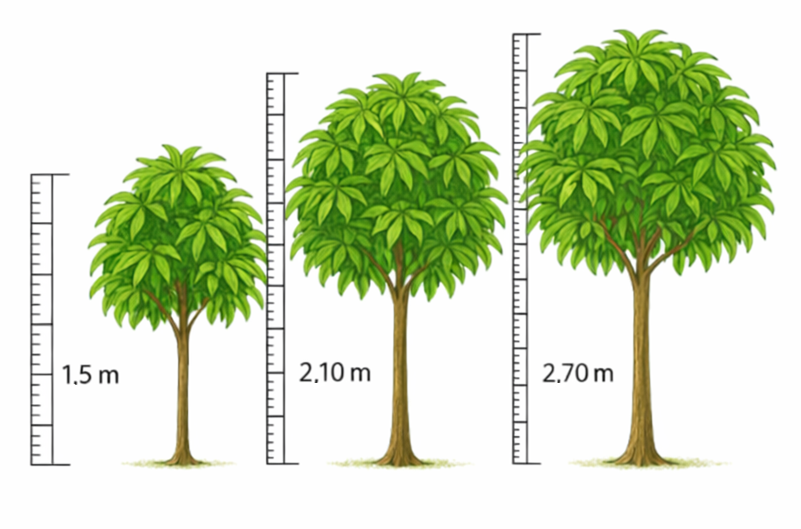
Fig. 3. Pruning heights in relation to the soil surface: 1.50 m (control), 2.10 m, and 2.70 m. Source: Generative AI (ChatGPT 4.0).
Pruning in all treatments was performed manually using a STIHL HT 75/131 pole pruner. The experiment was arranged in a randomized complete block design, in a 3 × 5 factorial scheme, corresponding to three canopy renewal pruning heights and five cultivars, totaling 15 treatments, with five replications, two plants per experimental plot, and border plants surrounding the trial.
The experiment was conducted in a 15-year-old mango orchard planted at a spacing of 6.0 m between rows and 4.0 m between plants within the row. All cultivars were grafted onto the ‘Espada’ rootstock. The orchard was cultivated as a rain-fed crop, without irrigation, and flowering was induced naturally due to the local subtropical climate. No paclobutrazol or other plant growth regulators were used. Treatments were applied on 10 July 2023, and thereafter the orchard was not subjected to any additional pruning management until the end of the experiment in 2025.
Data collection covered the productive cycle of the 2024/2025 harvest season Orchard management practices were performed according to technical recommendations for mango cropping and consisted of liming, fertilization (Cantarella et al., 2022), and phytosanitary control for pests and diseases (Souza et al., 2023). Although this study evaluates a single production season rather than a long-term multi-year cycle, the rigorous agronomic control, uniform orchard management, and the complete absence of additional pruning interventions ensure the stability and reliability of the evaluated vegetative and productive traits.
The determination of fruit physiological maturity stage was based on fruit dry matter content (15–20%) and visual and tactile indicators, including peel color, fruit shape, and flesh firmness, which are recognized harvest indices for mango (Lima Filho et al., 2002). The harvest season varied depending on the cultivar: Tommy Aktins (20 December 2024 to 30 January 2025); Palmer (30 January to 6 March); Keitt (28 February to 30 March); Parwin (24 January to 6 March) and IAC 103 Espada Vermelha (10 December to 10 January).
The vegetative development variables evaluated were stem diameter (cm), measured at 30 cm above ground level using a measuring tape. Circumference was first measured, and diameter was then calculated using Equation 1:
\(D = \frac{C}{\pi}\) (Eq. 1)
Where:
D = diameter
C = circumference
π = 3,1416
The length of secondary branches (cm) was measured with a flexible measuring tape using branches selected at the four cardinal points of the plant (north, south, east, and west), previously identified, and measured from the point of attachment to the scaffold branch to the base of the terminal flush showing soft, actively growing tissue. The diameter (mm) of secondary branches was measured at the base of each branch using a digital caliper.
To determine chlorophyll a, b, and total chlorophyll contents (mg mL⁻¹), four leaves per plant were collected from the four cardinal points (north, south, east, and west). The fourth fully expanded leaf from the terminal shoot was sampled. Evaluations were performed throughout the year to capture seasonal variation (February, April, June, August, and October 2024), and the average of the readings was used. Quantification was performed by spectrophotometry. Quantification was performed by spectrophotometry. To extract the pigments, a disk of leaf tissue measuring 10 cm² was sampled from each leaf and immediately transferred to tubes containing 20 mL of 80% (v/v) acetone. The tubes were then sealed and stored in a refrigerator at 4 °C in the dark for 48 hours. After extraction, the supernatant was homogenized using a vortex mixer for one minute. Absorbance (A) was measured at wavelengths of 663 nm and 646 nm using a spectrophotometer (SP-1105, Bel Photonics®). Chlorophyll concentrations were calculated according to Lichtenthaler and Welburn (1983), using equations 2, 3 and 4:
\(C_{a} = 12.21 \times A_{663} - 2.81 \times A_{646}\) (Eq. 2)
\(C_{b} = 20.13 \times A_{646} - 5.03 \times A_{663}\) (Eq. 3)
\(C_{a + b} = 7.18 \times A_{663} + 17.32 \times A_{646}\) (Eq. 4)
Where Ca, Cb, and Ca+b represents the concentrations of chlorophyll a, chlorophyll b, and total chlorophylls, respectively.
Productive performance was measured based on the number of fruits per plant, fruit fresh mass (kg), production (kg plant⁻¹), and yield (t ha⁻¹), considering a plant density of 417 plants ha⁻¹. For the analysis of fruit quality attributes, ten fruits were randomly selected from the total harvested in each experimental plot, making a total of fifty fruits per cultivar. Pulp samples were homogenized by experimental plot, within each treatment and cultivar, using a mixer-type grinder. Pulp yield was obtained as the ratio of pulp mass to fruit fresh mass multiplied by 100 and expressed as a percentage (%). Soluble solids content was measured using a digital refractometer and expressed in °Brix (AOAC, 2005). Titratable acidity was determined by titration with sodium hydroxide (NaOH) and expressed as % citric acid (IAL, 2008).
The maturity index, a dimensionless indicator, was obtained from the soluble solids/titratable acidity ratio. pH was measured using a pH meter, and reducing, non-reducing, and total sugars were determined by spectrophotometry, with results expressed as g 100 g⁻¹ (Nelson, 1944). All analyses were performed in triplicate.
The normality of the data was assessed using the Shapiro-Wilk test, employing Minitab® software, version 18 [Minitab, 2018]. The experimental unit consisted of a plot containing two trees, and the data from both plants per plot were averaged prior to statistical analysis. Subsequently, the data were subjected to analysis of variance (ANOVA), and when a significant difference among treatments was detected, means were compared using the Scott–Knott test (1974) at the 5% probability level, using Sisvar® software (Ferreira, 2019).
Multivariate and correlation analyses were performed using XLSTAT® software. Principal component analysis (PCA) was used to characterize the interactions between pruning heights and the evaluated cultivars across the different analyzed variables (Lumivero, 2025), version 2025.1. The data were previously standardized (zero mean and unit variance), and PCA was based on the correlation matrix.
The height at which renewal pruning is carried out influences the growth and fruit production of mango cultivars in subtropical conditions, depending on the cultivar. The most severe pruning (1.50 m), carried out during a single growing season assessed, stimulated growth without altering the chlorophyll content in the leaves, indicating that the effects were associated with the canopy architecture. Less severe pruning (2.70 m) preserved yield, particularly for the Tommy Atkins and Parwin cultivars, while pruning at a height of 1.50 m stimulated regrowth and increased soluble solids. Fruit quality indicators were, for the most part, determined by genotype, except in the case of soluble solids.
The authors thank the National Council for Scientific and Technological Development (CNPq) for financial support (Process No. 302611/2021-5).
The authors declare no conflict of interest.
Figure 3 was created based on the experimental procedures. The aim of reinterpreting and transforming this reference image using the generative artificial intelligence tool ChatGPT 4.0 was to produce illustrations that are more consistent, standardized and suitable for scientific presentation in terms of visual appearance.
ABRAFRUTAS (2024) Brasil bate recorde de receita e exportação com manga produzida no Nordeste. ABRAFRUTAS, Brasília, Brazil. https://abrafrutas.org/2024/03/brasil-bate-recorde-de-receita-e-exportacao-com-manga-produzida-no-nordeste/
Albuquerque JAS, Mouco MAC, Medina VD, Vasconcelos LFL (2002) Sistemas de poda. In: Genu PJC, Pinto ACQ (eds) A cultura da mangueira. Embrapa Informação Tecnológica, Brasília, DF, Brazil.
Almeida EIB, Celin EF, Freire AG, Lacerda CF, Bezerra MA, Mesquita RO (2015) Ecofisiologia de mangueiras ‘Tommy Atkins’ submetidas a diferentes regimes hídricos e disponibilidade de luz. Rev Agro@ambiente O. 9(3):251–260.
Alves EF, Cavalcante JEF (2007) A cultura da manga. 2nd ed. Embrapa Informação Tecnológica, Brasília, Brazil.
AOAC (2005) Official methods of analysis of the Association of Official Analytical Chemists. 18th edn. AOAC, Gaithersburg, USA.
Cantarella H, Righetto MP, Hernandes FB, Silva FM, Batista MA (2022) Recomendações de adubação e calagem para o Estado de São Paulo. 2nd ed. Instituto Agronômico/Fundag, Campinas, Brazil. (Boletim Técnico 100).
Cunha AR, Martins D (2009) Classificação climática para os municípios de Botucatu e São Manuel, SP. Irriga 14:1–11.
Daudt RHS, Marodin GAB (2014) Growth and flowering of five mango cultivars under subtropical conditions of Brazil. Cienc Rural 44(11):1960–1966.
Dias WPA, Aguiar FS, Silva LJ, Souza MATS, Pereira ACB, Pinheiro JMS, Mizobutsi GP (2023) Conservação pós-colheita da manga ‘Palmer’ com uso de permanganato de potássio. Ver Contrib Cienc Soc. 16(12):30019–30032.
EMBRAPA (2023) Cultivo da mangueira: sistema de produção. 4th ed. Embrapa Semiárido, Petrolina, Brazil.
EMBRAPA (2024) Boletim de produção de manga. Embrapa Semiárido, Petrolina, Brazil.
Ferreira DF (2019) Sisvar: a computer analysis system to fixed effects split plot type designs. Braz J Biom. 37(4):529–535.
Figueiredo VB, Simões WL, Batista RO, Andrade VPM, Mouco MAC (2020) Produção e pós-colheita da mangueira ‘Keitt’ submetida a lâminas de irrigação no semiárido nordestino. Water Resour Irrig Manag. 9(1–3):12–22.
Freitas ST, Pereira AL, Silva MGO, Silva MCM, Moura MSB (2021) Definição do ponto ideal de colheita de mangas em função do teor de matéria seca do fruto, visando a alta qualidade de consumo. Embrapa Semiárido, Petrolina, PE, Brazil. (Comunicado Técnico 127).
Gallo PB, Rossetto CJ, Ribeiro IJA, Soares NB, Bortoletto N, Sabino CJ, Martins ALM, Carvalho LH, Silveira LCP (20125) Manga cultivar IAC 103 – Espada Vermelha. Instituto Agronômico de Campinas (IAC), Campinas, Brasil. https://www.iac.sp.gov.br/cultivares/inicio/Folders/Manga/IAC103Espadavermelha.htm
Hahn F, Valle S, Navarro-Gómez C (2022) Pruning and water saving management effects on mango high-density and mature orchards. Agronomy 12:2623.
IAL – Instituto Adolfo Lutz (2008) Métodos físico-químicos para análise de alimentos. Instituto Adolfo Lutz, São Paulo, Brazil. https://www.ial.sp.gov.br/resources/editorinplace/ial/2016_3_19/analisedealimentosial_2008.pdf
Izidoro M, Leonel M, Leonel S, Lossolli NAB, Cândido HT, Züge PGU, Assis JLJ (2023) Nutritional and technological properties of pulp and peel flours from different mango cultivars. Cienc Tecnol Aliment. 43:e107922.
Khorobrykh S, Havurinne V, Mattila H, Tyystjärvi E (2020) Oxygen and ROS in photosynthesis. Plants 9(1):91.
Kumar Singh S, Singh SK, Sharma RR (2010) Pruning alters fruit quality of mango cultivars (Mangifera indica L.) under high density planting. J Trop Agric. 48(1–2):55–57.
Leonel S, Roberto SR, Silva SR (2025) Orchard management under climate change. Horticulturae 11(1):98.
Lichtenthaler HK, Welburn AR (1983) Determination of total carotenoids and chlorophylls a and b of leaf extracts in different solvents. Biochem Soc Trans. 11:591–592.
Lima Filho JMP, Assis JS, Teixeira AHC, Cunha GAP, Castro Neto MT (2002) Ecofisiologia. In: Genu PJC, Pinto ACQ (eds) A cultura da mangueira. Embrapa Informação Tecnológica, Brasília, DF, Brazil, 38–49.
Lossolli NAB, Leonel M, Leonel S, Izidoro M, Paula GV, Santos TPR, Oliveira LA (2023) Cultivars and fruit part as differentiating factors of physicochemical characteristics of mango starches. Horticulturae 9:69.
Lumivero. (2025) XLSTAT | Software estatístico para Excel. Version 2025.1. https://www.xlstat.com/
Matos Filho CHAM, Carvalho Júnior JEV, Lima MAC, Lopes ACA, Gomes RLF, Lima Neto FP (2024) Evaluation of varieties and hybrid selections of mango in the Brazilian semi-arid region. Rev Bras Frutic. 46:e026.
Minitab LLC (2018) Minitab statistical software, version 17. Minitab Inc., State College, PA, USA. http://www.minitab.com
Morais PLD, Assis JS (2004) Quality and conservation of mango cv. ‘Tommy Atkins’. Acta Hortic. 645:539–543.
Mouco MAC, Albuquerque JAS (2021) Manga – poda. Embrapa Semiárido, Petrolina, PE, Brazil. https://www.embrapa.br/agencia-de-informacao-tecnologica/cultivos/manga/producao/tratos-culturais/poda
Nelson N (1944) A photometric adaptation of the Somogyi method for the determination of glucose. J Biol Chem. 153(2):375–380.
Paiva HN, Silva JLB, Teles KN, Lima Júnior C, Maciel AMA, Bastos Filho C (2024) Avaliação de produtividade e saúde vegetal em mangueira a partir de dados de luminosidade de abertura da copa. Rev Eng Pesq Apl. 9(1):105–114.
Reddy VTN, Kurian RM (2011) Studies on rejuvenation of old, unproductive ‘Alphonso’ mango trees in orchards. J Hortic Sci. 6(2):145–147.
Reis RC, Viana ES, Fonseca N, Almeida JN, Rodrigues Filho JA, Guedes ISA, Sena LO (2019) Atributos físico-químicos de frutos de variedades de mangueira cultivadas em sistema orgânico. Embrapa Mandioca e Fruticultura, Cruz das Almas, BA, Brasil. (Boletim de Pesquisa e Desenvolvimento 106).
Rossouw GC, Dale Bennett OR, Bally ISE (2024) The roles of non-structural carbohydrates in fruiting: a review focusing on mango (Mangifera indica). Funct Plant Biol. 51:FP23195.
Salla L, Rodrigues JC, Marenco RA (2007) Teores de clorofila em árvores tropicais determinados com medidor SPAD-502. Rev Bras Biocienc. 5(2):159–161.
Santana ES, Medeiros JF, Cavalcante IHL, Lobo JT (2022) Índices fisiológicos e clorofila em mangueira ‘Palmer’ submetida a fontes de potássio. Rev Temas Agrar. 27(2):411–422.
Santos HG, Jacomine PKT, Anjos LHC, Oliveira VA, Lumbreras JF, Coelho MR, Almeida JA, Araújo Filho JC, Oliveira JB, Cunha TJF (2018) Sistema brasileiro de classificação de solos. 5th edn. Embrapa, Brasília, DF, Brazil.
Scott AJ, Knott M (1974) Cluster analysis methods for grouping means in the analysis of variance. Biometrics 30(3):507–512.
Silva DFP, Siqueira DL, Rocha A, Salomão LCC, Matias RGP, Stuiving TB (2012) Genetic diversity among mango cultivars, based on fruit quality characters. Rev Ceres 59(2):225–232.
Singh AK, Singh CP, Bora L (2017) Impact of pruning on growth, yield and quality of mango cv. Dashehari. J Hortic Sci. 12(2):118–123.
Sobrinho MS, Cavalcante AMB, Duarte AS, Sousa GS (2019) Modelagem da distribuição potencial de Mangifera indica L. sob cenários climáticos futuros no bioma Caatinga. Rev Bras Agrometeorol. 39(3):351–358.
Song H, Li Y, Xu X, Zhang J, Sheng S, Hou L, Xing G, Li M (2020) Analysis of genes related to chlorophyll metabolism under elevated CO₂ in cucumber (Cucumis sativus L.) Sci Hortic. 261:108988.
Souza VAB, Fonseca NM, Mouco MAC (eds) (2023) Cultivo da mangueira. 3rd ed. Embrapa Semiárido, Petrolina, PE, Brazil.
Souza JMA, Leonel S, Modesto JH, Ferraz RA, Silva MS, Bolfarini ACB (2018) Performance of mango cultivars under subtropical conditions in the state of São Paulo. Biosc J. 34:1–11.
Souza MA, Mesquita AC, Simões WL, Ferreira KM, Araujo EFJ (2017) Caracterização fisiológica e bioquímica de mangueira com a aplicação de paclobutrazol via irrigação. Pesq Agropecu Trop. 46(4):442–449.