Australian Journal of Crop Science
Article | https://doi.org/10.21475/ajcs.26.20.06.pne223
Submitted: 18 December 2025 | Revised: 27 April 2026 | Accepted: 28 April 2026
Pages 486-494
Foliar application of Azospirillum brasilense and urea sources to enhance yield and bromatological composition of Urochloa brizantha
Mauricio Franceschi1, Jhonathann Willian Furquin da Silva1, Oscarlina Lucia dos Santos Weber2, Joadil Gonçalves de Abreu3, Elisamara Caldeira do Nascimento4; Luana Aparecida Menegaz Meneghetti1, Edna Maria Bonfim-Silva5*
1Faculty of Agronomy and Animal Science, Federal University of Mato Grosso, PhD student in the Graduate Program in Tropical Agriculture, Cuiabá, Mato Grosso, Brazil
2Department of Soils and Rural Engineering, Federal University of Mato Grosso, Cuiabá, Mato Grosso, Brazil
3Department of Animal Science and Rural Extension, Faculty of Agronomy and Animal Science, Federal University of Mato Grosso, Cuiabá, Mato Grosso, Brazil
4Research Associate at the Faculty of Agronomy and Animal Science, Graduate Program in Tropical Agriculture, Federal University of Mato Grosso, Cuiabá, Mato Grosso, Brazil
5Institute of Agricultural and Technological Sciences, Federal University of Rondonópolis, Rondonópolis 78736-900, Mato Grosso, Brazil
Corresponding authors: Edna Maria Bonfim-Silva
Abstract: Brazil is the world's leading producer and exporter of beef, with Marandu grass being the most widely used cultivar for cattle production. However, since most established pastures exhibit some degree of degradation, it is crucial to identify strategies for their recovery. This study aimed to evaluate the effects of combining foliar application of Azospirillum brasilense and different urea sources on the morphological and bromatological characteristics of Marandu grass. A field experiment was conducted in the Amazon biome using a randomized block design in a 2x3 factorial scheme, consisting of two A. brasilense levels (with and without) and three nitrogen sources (control/no nitrogen, common urea, and coated urea), with four replications. Foliar inoculation of A. brasilense associated with nitrogen fertilization promoted an increase in cumulative height and shoot dry mass production (ADM) in Marandu grass. However, no significant difference in ADM was observed when A. brasilense was applied without nitrogen fertilization, indicating that the bacteria's potential is maximized only when in association with N sources. Urea application increased crude protein content; specifically, coated urea increased the crude protein yield (kg ha⁻¹) and reduced both neutral detergent fiber (NDF) and indigestible neutral detergent fiber (iNDF) compared to the unfertilized treatment. Regardless of inoculation, both common and coated urea increased the mineral matter content of the grass. The combination of A. brasilense and coated urea demonstrated synergism, improving both morphological traits and bromatological composition, thus representing a promising management tool for established Marandu grass pastures.
Keywords: Coated urea. Forage plant nutrition. Marandu grass. PGPR. Plant growth-promoting bacteria.
Abbreviations: ADF: Acid detergent fiber; ADM: Accumulation of dry matter; CHI: Cumulative height increment; CP: Crude protein; iNDF: indigestible neutral detergent fiber; N: Nitrogen; NDF: Neutral detergent fiber; TPD: tiller population density
Introduction
Due to lower production costs, 93% of the Brazilian cattle herd has been raised on extensive pastures (Guimarães et al., 2023). In Brazil, the grass most used to maintain all this production is Urochloa brizantha (Hochst. ex A. Rich.) R.D. Webster cv. Marandu, but 70% of these pastures are in some level of degradation (Hungria et al., 2021). One of the leading causes of this degradation is the low fertility of the soil, combined with a lack of nutrient replacement, especially nitrogen (Duarte et al., 2020).
Nitrogen is a key nutrient for maintaining or increasing yields of forage grasses (Heinrichs et al., 2020). Urea is the most widely used fertilizer worldwide (Tapia-Hernández et al., 2022). However, the surface application of nitrogen without incorporation is the method commonly used in established pastures, especially in large areas (Serra et al., 2018), and with this, losses due to ammonia volatilization are common (Rosolem et al., 2017), which results in a partial loss of nitrogen and can decrease the efficiency of the fertilizer (Silva et al., 2022).
More efficient fertilizers have been developed to regulate the release of N to coincide with crop demand, increase crop yield per unit of fertilizer (Dimkpa et al., 2020), and reduce N losses, mainly through ammonia volatilization (NH3) (Miyazawa et al., 2020), which can have significant implications for forage production (Corrêa et al., 2021).
To this end, an innovative option that has been studied is the use of "coated urea," a controlled-release nitrogen fertilizer that has a gradual rate of release of the nutrient, with continuous supply and for a prolonged period. It is stabilized with urease and nitrification inhibitors, whose objectives are to reduce the processes of N losses due to N volatilization.
Another great strategy in the search for a production system that meets the nutritional demands of pastures with reduced production costs and less environmental impact is using inoculants containing bacteria that promote plant growth, with the advantage of the A. brasilense species. According to Hungria et al. (2021), in established pastures, the only viable method of applying inoculants would be via foliar spraying. Their study found positive evidence of foliar spraying of A. brasilense strains Ab-V5 (=CNPSo 2083) and Ab-V6 (=CNPSo 2084) in greenhouse experiments with Urochloa brizantha cv. BRS Piatã and Urochloa decumbens (Stapf) cv Basilisk, and in field experiments with Urochloa ruziziensis (Hungria et al., 2021), encouraging verification of the viability of its use in pastures with Urochloa brizantha cv. Marandu.
From this perspective, studies investigating the interactions between the strategies above are necessary to develop better pasture management practices. This study aimed to evaluate the association between with and without foliar inoculation of A. brasilense, and urea use strategies (no urea, common urea, and coated urea) on the morphological and bromatological characteristics of Urochloa brizantha cv. Marandu grass.
Results and discussion
Biomass production and structural characteristics
There was a significant interaction (p≤0.05) between the doses of A. brasilense and the sources of urea on the production of accumulated shoot dry mass (ADM) (Table 2). It was found that inoculation with A. brasilense significantly increased the production of ADM when coated urea was used. This increase was 11.7% higher compared to the treatment without A. brasilense. The same occurred when using common urea, in which inoculation with A. brasilense promoted increases of 17.5% in ADM when compared to the absence of inoculation.
According to Hungria et al. (2021), this increase results from improved root growth due to the synthesis of phytohormones and N nutrition via biological nitrogen fixation. Plant growth promotion has been associated with high levels of synthesized phytohormones, especially indole-3-acetic acid (IAA) (Fukami et al., 2017).
The Ab-V5 e Ab-V6 strains of A. brasilense have NIF and FIX genes that confer the capacity for biological nitrogen fixation and share genes related to auxin synthesis (Hungria et al., 2018). It is also reported that these strains carry several stress response genes, mostly related to oxidative stress (Hungria et al., 2018). Thus, improving plant performance with the strategic supply of N via inoculation with A. brasilense and improving nitrogen fertilizer use efficiency may represent an effective strategy for increasing the survival of forage plants (Pedreira et al., 2017; Heinrichs et al., 2020).
Considering a grazing efficiency of 50%, the use of coated urea associated with A. brasilense resulted in 2900 kg more dry mass available for grazing compared to not using urea. This is fundamental because during the 166 days of this rainy season, if consider an animal consumption of 11.25 kg DM day-1, this represents an increase of 1.55 UA ha-1.
There was no statistical difference (p > 0.05) in ADM when only A. brasilense was applied in isolation. This suggests that in established pastures with low soil fertility—as evidenced by the initial soil analysis (Table 1)– the biological nitrogen fixation provided by the bacteria alone is insufficient to meet the high demand for biomass production in Marandu grass. This demonstrates that the association with nitrogen fertilization maximizes the potential of the bacteria and is necessary to increase productivity in Urochloa pastures (Santos et al., 2021a). The primary benefits obtained with A. brasilense are related to promoting plant growth rather than biological N₂ fixation (Hungria et al., 2010). Therefore, nitrogen fertilizer supplementation is essential to increase productivity in Urochloa pastures (Santos et al., 2021a).
When looking at the differences between the types of urea, the application of coated urea in the presence of inoculation with A. brasilense Ab-V5 + Ab-V6 led to increases in ADM of 24% when compared to the application of common urea and increases of 120% in the treatment without urea (Table 2).
Leite et al. (2018), found a 241% increase in daily forage accumulation with N compared to without N at a dose of 50 kg ha-1 of N applied in the form of urea after each cut of Marandu grass. The non-inoculated plants using the same dose of N produced 181% more ADM than those in the control group (without N fertilization and without inoculation). In addition, the yields obtained are within the expected range for Marandu grass (Leite et al., 2018; Heinrichs et al., 2020).
Nitrogen fertilization influences the rate of leaf area expansion, the weight, and number of tillers, promoting biomass gains in pastures (Whitehead, 1995), an increase in stocking rate and animal production per area in Urochloa pastures (Moreira et al., 2011; Delevatti et al., 2019).
Validating sustainable beef intensification practices on pasture in tropical areas can increase land use efficiency, reduce pressure on new areas, free up areas for other crops, and indirectly reduce greenhouse gas emissions.
According to the results of this study, using increased efficiency urea (stabilized and controlled-release coated fertilizers) instead of common urea, from an environmental point of view, seems to be the most recommended, since the ADM and other variables discussed below were superior.
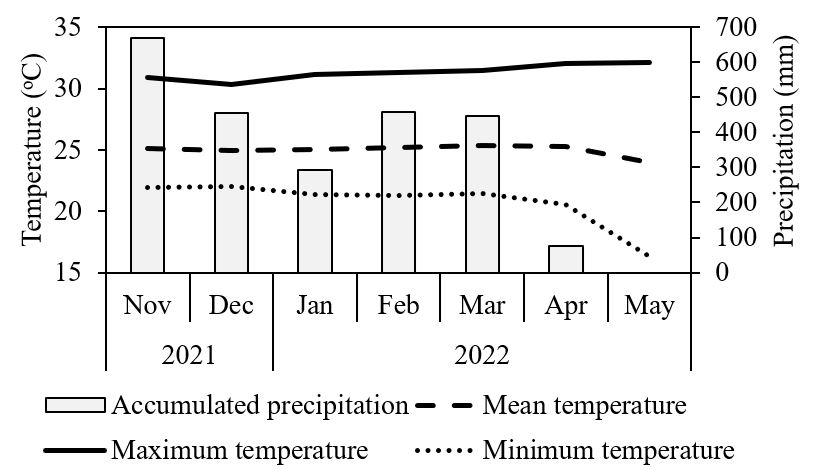
Figure 1. Accumulated precipitation, mean, maximum, and minimum temperature data for November 2021 to May 2022.
Table 1. Chemical and granulometric characteristics of the Yellow-Red Oxisol in the experimental area, at different depths, in analyses carried out before the experiment was set up. Terra Nova do Norte - MT, November 2021.
| Depth | pH | Ca | Mg | Al | H+Al | SB | CEC | V | m | ||||||
|---|---|---|---|---|---|---|---|---|---|---|---|---|---|---|---|
| m (meters) | (H2O) | (CaCl2) | ------------------cmolc dm-3----------------- | -------%------- | |||||||||||
| 0-0.1 | 5.7 | 4.8 | 1.55 | 0.53 | 0.0 | 3.6 | 2.5 | 6.1 | 40.5 | 0.0 | |||||
| 0.1-0.2 | 5.4 | 4.5 | 1.04 | 0.21 | 0.27 | 3.5 | 1.4 | 4.9 | 28.6 | 16.2 | |||||
| 0.2-0.4 | 5.4 | 4.5 | 0.89 | 0.1 | 0.21 | 3 | 1.1 | 4.1 | 25.9 | 16.5 | |||||
| OM | P | K | S | B | Cu | Fe | Mn | Zn | |||||||
| dag kg-1 | -------------------------------------mg dm-3------------------------------------- | ||||||||||||||
| 2.32 | 1.0 | 152.1 | 3.6 | 0.17 | 0.3 | 94.7 | 13.9 | 1.1 | |||||||
| 1.85 | 0.6 | 57.4 | 2.9 | 0.15 | 0.3 | 82.5 | 7.1 | 0.9 | |||||||
| 1.12 | 0.4 | 28 | 2.5 | 0.12 | 0.2 | 46.6 | 2.3 | 0.5 | |||||||
| Depth | Clay | Silt | Total sand | Textural class | |||||||||||
| m (meters) | --------------g kg-1-------------- | ||||||||||||||
| 0.0-0.1 | 338 | 84 | 578 | Medium | |||||||||||
| 0.1-0.2 | 348 | 104 | 548 | Medium | |||||||||||
| 0.2-0.4 | 400 | 102 | 498 | Clayey | |||||||||||
CEC pH7.0 = (SB+H+Al); V(%) = base saturation. m(%) = saturation by aluminum; OM = organic matter determined by colorimetry; P; K, Cu, Zn, Fe e Mn extracted by Mehlich1; B = combustion.
Table 2. Accumulated dry mass production (ADM) kg ha-1 of Marandu grass in four cuts, with or without the inoculation of A. brasilense associated with urea sources.
| Azospirillum brasilense | Urea sources | ||
|---|---|---|---|
| Without urea | Common urea | Coated urea | |
| With | 4837 Ac | 8589 Ab | 10677 Aa |
| Without | 4918 Ac | 7302 Bb | 9555 Ba |
| CV (%) | 5.57 | ||
Means followed by the same capital letter in the column and lowercase letter in the row do not differ by the Tukey test at 5% probability.
The increase in cumulative height increment was significantly and positively influenced by inoculation for common urea and coated urea (Table 3). The increase provided by inoculation was in the order of 8.64 cm (13.4%) when using coated urea and 11.59 cm (23.80%) when using common urea.
Leite et al. (2018) found that plant height was positively influenced by applying A. brasilense, both in the dry season, where the increase was 16%, and in the rainy season, where the increase was 11%. However, inoculation only with A. brasilense in isolation, without urea, is not enough to increase the growth in the height of Marandu grass plants, which corroborates the studies carried out by Hungria et al. (2016) and Santos et al. (2021b).
Table 3. Cumulative height increment (CHI) in centimeters (cm) of Marandu grass after four cuts, with or without A. brasilense inoculation, in association with urea sources.
| Azospirillum brasilense | Urea sources | ||
|---|---|---|---|
| Without urea | Common urea | Coated urea | |
| With | 32.08 Ac | 60.28 Ab | 73.28 Aa |
| Without | 33.19 Ac | 48.69 Bb | 64.64 Ba |
| CV (%) | 9.27 | ||
Means followed by the same uppercase letter in the column and lowercase letter in the row do not differ by the Tukey test at 5% probability.
Table 4. TPD (m2) of Marandu grass with or without A. brasilense inoculation, in association with urea sources.
| Azospirillum brasilense | Urea sources | ||
|---|---|---|---|
| Without urea | Common urea | Coated urea | |
| With | 310.11 Ab | 468.32 Aa | 488.14 Aa |
| Without | 300.94Ac | 432.78 Bb | 482.48 Aa |
| CV (%) | 4.83 | ||
Means followed by the same uppercase letter in the column and lowercase letter in the row do not differ by the Tukey test at 5% probability.
Concerning urea sources, it was found that coated urea promoted gains of 13 and 41.2cm in height, compared to common urea and without urea, respectively. When evaluating the treatment without inoculation, coated urea increased height by 15.95cm compared to common urea and 31.45cm compared to treatment without urea (Table 3).
Nitrogen plays a role as a structural component of macromolecules and enzymes involved in the plant's vegetative development process (Malavolta, 2006) and also influences the leaf area index, leaf elongation rate and final leaf length (Fagundes et al., 2006), on the leaf area index (Yasuoka et al., 2018) and as Marandu grass pastures with gains in height show an increase in forage production (Silva et al., 2013; Leite et al., 2018), it can be said that the Marandu grass made better use of the N released in a controlled manner through the coated urea, which led to a higher ADM and CHI.
Table 4 shows that tiller population density (TPD) was different with or without the application of the inoculant containing A. brasilense. The inoculated and non-inoculated plants were similar in the treatment without urea and with coated urea. When using common urea, the inoculated plants showed an 8.21% increase in TPD compared to the non-inoculated plants. The number (density) and weight of tillers determine changes in the production of the forage plant and are also controlled by the availability of nitrogen (Pedreira et al., 2001; Silva et al., 2013), or even by the inoculation of A. brasilense (Duarte et al., 2020; Fukami et al., 2016).
Morphogenesis and tillering of Marandu grass
The number of tillers may not represent the shoot dry mass since tillers vary in size and weight in response to their environment and may not be representative when expressed in number rather than total mass (Heinrichs et al., 2020). This explains why TPD was the only morphogenic variable that showed no difference between applying or not applying the inoculant containing A. brasilense when coated urea was used.
As for the TPD evaluated in the different urea sources (coated urea, common urea, and without urea) in the presence of A. brasilense, Marandu grass plants fertilized with common urea and coated urea did not differ, but both were higher than the treatment without urea. In this case, it is possible that the N made available by the coated urea and recovered by the inoculated plants was not sufficient to stimulate a difference in TPD, as occurred in the other variables evaluated (ADM and CHI), i.e., the difference between the ADM treatments is made by the CHI.
However, in the absence of A. brasilense, the treatment with coated urea increased this variable, in line with the other variables evaluated, such as ADM and CHI. In this case, in the absence of the inoculant, the results observed when using coated urea are possibly due to the gradual release capacity of the N fertilizer over a prolonged period, in which the supply may have been "slow" enough to provide N to the Marandu grass more adequately. And/or even lower volatilization losses may have occurred when using this N source.
The more gradual release of N from FortBlen® fertilizer, which contains coated granules, reduced N-NH3 losses by 36,4% compared to common urea (Minato et al., 2020), which, according to Corrêa et al., (2021), such reductions in ammonia (NH3) losses through volatilization have significant implications for forage production.
Nutritional value and nitrogen use efficiency
When evaluating the sources of urea on the bromatological composition of Marandu grass, it was found that regardless of inoculation, the use of urea promoted a higher CP content compared to not using urea, rising on average from 5.5 to 6.73% (Table 5). However, for ADF, there was no significant difference depending on the treatments, and the average was 32.6% (data not shown).
According to Van Soest (1994) and Lazzarini et al. (2009), for rumen microorganisms to be able to fully digest and take advantage of the fibrous components of forage, it is necessary for the diet to contain a CP content of at least 7 to 8% in the dry mass. It is, therefore, necessary to provide supplements that increase the CP content of the diet when the animals are fed this forage.
Table 5. Bromatological composition of Marandu grass forage after four cuts, with and without the inoculation of A. brasilense in association with urea sources.
| Compounds | Urea sources | No Azo | With Azo | CV (%) |
|---|---|---|---|---|
| CP (%) | N0 | 5.43 Ab | 5.57 Ab | |
| N-UC | 6.87 Aa | 6.59 Aa | 8.17 | |
| N-UR | 6.91 Aa | 6.40 Aab | ||
| Kg CP/ha | N-0 | 267.95 Ac | 271.26 Ac | 10.55 |
| N-UC | 503.41 Ab | 566.15 Ab | ||
| N-UR | 657.90 Aa | 681.20 Aa | ||
| NDF (%) | N0 | 60.60 Aa | 59.47 Aa | 2.06 |
| N-UC | 59.04 Aab | 59.85 Aa | ||
| N-UR | 57.97Ab | 59.46 Aa | ||
| iNDF (%) | N0 | 23.89 Aa | 24.08 Aa | 1.22 |
| N-UC | 23.42 Aab | 23.33 Ab | ||
| N-UR | 23.04 Bb | 23.52 Ab | ||
| MM (%) | N0 | 8.38 Ab | 8.33 Ab | 1.16 |
| N-UC | 8.58 Aa | 8.58 Aa | ||
| N-UR | 8.62 Aa | 8.52 Aa |
N0= without ureia; N-UC= with common urea; N-UR= with coated urea; No Azo= without Azospirillum; With Azo= with Azospirillum; CV= coefficient of variation. Means followed by the same uppercase letter in the column and lowercase letter in the row do not differ by the Tukey test at 5% probability.
When comparing urea sources, regardless of inoculant application, coated urea provided 669.55 kg of CP ha-1, an increase of 134.77 and 399.95 kg of CP ha-1 compared to common urea and without urea, respectively, results similar to those for the morphological characteristics ADM and CHI.
For NDF, the urea sources did not influence this variable in inoculated plants. However, in the absence of inoculation, coated urea reduced NDF values compared to the unfertilized treatment, indicating improvements in forage quality since this reduction increases forage digestibility and, consequently, energy availability for animals.
Similarly, Dupas et al. (2016), found that N-urea applications decreased the NDF content and increased the CP content of Marandu grass, while ADF concentrations were unaffected.
Similarly, Costa et al. (2009), when evaluating the effect of nitrogen fertilization on Urochloa brizantha Marandu, Xaraés and MG-4, found a linear increase in dry mass production, N concentration, CP content, and a reduction in NDF content for the three Urochloa brizantha cultivars, as N doses increased. Bernardi et al. (2018) and Castagnara et al. (2011) also confirmed that nitrogen fertilization increases dry mass and CP production and reduces NDF content, respectively.
According to Van Soest (1994), NDF content is higher than 60% of the limit forage consumption. Diets with a high fiber content can limit forage consumption and nutrient absorption by ruminants, as fiber takes up space in the digestive tract. In this sense, all the treatments were very close to this limit, and the only treatment that exceeded 60% was without urea and A. brasilense.
When comparing whether or not the inoculant was applied to plants fertilized with coated urea, the presence of A. brasilense increased the iNDF content of Marandu. When comparing urea sources, regardless of using the inoculant, the iNDF of Marandu grass fertilized with coated urea was lower than that of the unfertilized grass.
Having low levels of iNDF, as occurred when using coated urea, is a good thing because it means that a large part of the fiber ingested by the animal will be easily used, thus improving the digestibility of nutrients. In this way, greater utilization of NDF depends on a lower content of iNDF since studies have shown a negative correlation between the in vivo digestibility of NDF and the amount of total NDF in the rumen (Huhtanen and Khalili, 1986).
The results obtained in this work are in line with those obtained by Sales et al. (2020) and Sales (2022), indicating an adequate content for this variable, which should not limit ruminant consumption of the forage.
The MM of Marandu grass was higher when nitrogen fertilization was used, i.e., both urea and coated urea provided higher MM values than when no fertilization was used. These results align with Santos et al. (2007) since the mineral composition varies depending on a series of interdependent factors, including the fertilizer used.
MM represents the macronutrients and micronutrients present in forage, and this increase in the use of nitrogen fertilization is interesting because it accompanies an increase in forage mass.
Therefore, as the pressing challenge is to maintain or increase livestock production while achieving greater environmental and economic sustainability (Lopes and Contini, 2012; Díaz-Gaona et al., 2021), the strategies of using A. brasilense with nitrogen fertilizers and the use of coated urea are effective in growing Urochloa brizantha cv Marandu, providing improvements in bromatological composition.
The integration of these technologies has shown synergism, presenting itself as an important management practice, especially when adopted after soil correction in an already established area of Marandu grass that was in the process of degradation. In addition, these results can help to define more precise fertilization guidelines in livestock production systems that use Marandu grass as their food base.
As already explained by Cardoso et al. (2020), the intensification of Urochloa pastures is an important alternative for reducing Greenhouse Gases (GHGs) and increasing the environmental, economic, and social benefits of using pastures. However, despite the positive and promising results found in this work, further research should be carried out to validate these strategies, comparing other N sources and even other technologies that seek to improve N utilization efficiency.
Material and methods
Experimental site and experimental design
The experiment was carried out under field conditions in the municipality of Terra Nova do Norte, Mato Grosso, whose geographical coordinates are 10° 34’ 00” S e de 55° 07’ 00” W. The average altitude is 285 meters.
The region's climate is classified by Koppen-Geiger as Am (tropical with dry winter), with two well-defined seasons: rainy from October to April and dry from May to September (Tres et al., 2016). Precipitation and temperature data (Figure 1) were obtained from the weather station located in the city of Sinop, Mato Grosso, Brazil (Embrapa, 2022). The cuts were carried out when the average of one of the treatments first reached a pre-grazing height close to 40cm (Sales et al., 2020). During the growing season, four successive cuts were made (January 11, February 22, March 28, and May 7, 2022).
The soil in the experimental area is classified as Red-Yellow Oxisols according to the Brazilian Soil Classification System (Santos et al., 2025). The chemical and granulometric characterization of the soil was carried out in the 0-0.1m, 0.1-0.2m, and 0.2-0.4m layers in samples collected before the experiment was set up (Table 1).
The Urochloa brizantha (Hochst. ex A. Rich.) R.D. Webster cv. Marandu forage had already been grown for over 20 years on 6.5 hectares, which had not received any chemical soil fertility correction until then. Within this area, 2350 m2 were set aside for the experiment, so it was necessary to even out the height of the grass by mowing it so that the treatments could be applied.
The experimental design was a randomized block design in a 2 × 3 factorial scheme, with and without A. brasilense and three levels of the fertilization factor [common urea, coated urea, and without nitrogen application], with 4 replications. Each experimental unit consisted of an area of 4m x 4m (16m2), and the center of the plot (3m x 3m) was considered the useful area, making a total of 24 experimental plots.
Liming was calculated using the base saturation method to correct the soil, where the V% was raised to 45% (Ribeiro et al., 1999). Initially, 138 kg ha-1 of dolomitic limestone was applied to the plots, and 180 kg ha-1 of P2O5 was applied after 300 mm of accumulated precipitation.
The N sources used in the experiment were conventional urea (45% N) and coated urea supplied by Haya Nitrogen (44% N and 0.1% B; raw materials: urea and ulexite; containing 8% coating additive). According to the manufacturer, this product is a coated urea with active compounds (polymers with different carbon chains), which makes it a controlled-release fertilizer, with gradual nutrient release and continuous supply over a long period, and a stabilized fertilizer, containing urease and nitrification inhibitors intended to reduce N losses from the fertilizer. To equalize boron input among treatments, ulexite, in an amount equivalent to the boron supplied by the Haya® fertilizer, was added to the other plots that did not receive the coated urea.
The inoculant consisted of A. brasilense bacteria, strains Ab-V5 (CNPSo 2083) and Ab-V6 (CNPSo 2084), with 2.0 x 10¹¹ CFU mL-1. A single dose of 300 mL per hectare was applied before each cut using a CO2 backpack sprayer with a spray volume of 470 L ha-1. The day after each cut, 40 kg of N ha-1 in the form of urea and coated urea were applied together with the inoculant.
Variables analyzed
The results presented correspond to the grouping of the four cuts carried out. All the experimental plots were cut simultaneously at a residue height of 20 cm when the average of one of the treatments first reached a pre-grazing height close to 40 cm (Sales et al., 2020).
Nine plant height measurements were taken at each cut. The height increase (HI), resulting from the sum of the differences between pre-grazing height and residue (0.2 m), was obtained.
\[HI = (Pre - grazing\ height\ cut\ 1 - 0.2\ m) + (Pre - grazing\ height\ cut\ 2 - 0.2\ m) + \ (Pre - grazing\ height\ cut\ 3 - 0.2\ m) + \ (Pre - grazing\ height\ cut\ 4 - 0.2\ m)\]
Three samples of forage mass were collected from each plot at 0.2 m residue height, using a 0.7 x 0.7 m metal square, followed by a count of tillers.
After weighing all the material to obtain the fresh mass, a 400 g sample was placed in paper bags, identified, weighed, and taken to dry in a forced-air circulation and renovation oven at 55 oC for 72 hours. The material was weighed on a 0.01 g precision electronic scale to obtain the shoot dry mass.
The bromatological parameters of the forage were analyzed using the methodology of Silva; Queiroz (2002), and Fernández-Cabanás et al. (2023). Subsamples were collected from each of the four cuts made. The subsamples from each plot were homogenized, resulting in a composite sample representative of all cuts. From this composite sample, obtained per plot, an aliquot was taken for use in laboratory analyses. Thus, a single chemical analysis was performed for each plot during the season. Therefore, the contents of crude protein (CP), mineral matter (MM), neutral detergent fiber (NDF), acid detergent fiber (ADF), and indigestible neutral detergent fiber (iNDF) were analyzed using a ZEUTEC SpectraAlyzer NIRS Near Infrared Reflectance Spectrometer, with a spectral range of 1445 to 2348 nm.
Statistical analysis
The data was subjected to variance analysis, and the means were compared using the Tukey test at a probability of 5% using the SISVAR statistical software (Ferreira, 2019).
Conclusion
The association of foliar application of A. brasilense with coated urea in established Marandu grass pastures contributes positively to morphological characteristics and CP production ha-1 and improves the bromatological composition of the forage.
References
Bernardi A, Silva AWL, Baretta D (2018) Estudo metanalítico da resposta de gramíneas perenes de verão à adubação nitrogenada. Arq Bras Med Vet Zootec 70:545–553. https://doi.org/10.1590/1678-4162-9501
Cardoso AS, Barbero RP, Romanzini EP, Teobaldo RW, Ongaratto F, Fernandes MHMR, Ruggieri AC, Reis RA (2020). Intensification: A Key Strategy to Achieve Great Animal and Environmental Beef Cattle Production Sustainability in Brachiaria Grasslands. Sustainability, 12(16): 6656. https://doi.org/10.3390/su12166656
Castagnara DD, Zoz T, Krutzmann A, Uhlein A, Mesquita EE, Neres MA, Oliveira PSR (2011). Forage yield, structural characteristics and nitrogen use efficiency in tropical forages under nitrogen fertilizer. Semina: Ciênc. Agrár., 32(4): 1637–1648. https://doi.org/10.5433/1679-0359.2011v32n4p1637
Corrêa DCC, Cardoso AS, Ferreira MR, Siniscalchi D, Gonçalves PHA, Lumasini RN, Reis RA, Ruggieri AC (2021). Ammonia Volatilization, Forage Accumulation, and Nutritive Value of Marandu Palisade Grass Pastures in Different N Sources and Doses. Atmosphere, 12(9): 1179. https://doi.org/10.3390/atmos12091179
Costa KAP, Oliveira IP, Faquin V, Silva GP, Severiano EC (2009) Produção de massa seca e nutrição nitrogenada de cultivares de Brachiaria brizantha (A. Rich) Stapf sob doses de nitrogênio. Ciênc Agrotecnol, 33:1578–1585.
Delevatti LM, Cardoso AS, Barbero RP, Leite RG, Romanzini EP, Ruggiere AC, Reis RA (2019) Effect of nitrogen application rate on yield, forage quality, and animal performance in a tropical pasture. Sci Rep 9:7596. https://doi.org/10.1038/s41598-019-44138-x
Díaz-Gaona C, Sánchez-Rodríguez M, Rodríguez-Estévez V (2021) Assessment of the sustainability of extensive livestock farms on the common grasslands of the natural park Sierra de Grazalema. Sustainability 13:1818. https://doi.org/10.3390/su13041818
Dimkpa CO, Fugice J, Singh U, Lewis TD (2020) Development of fertilizers for enhanced nitrogen use efficiency–Trends and perspectives. Sci Total Environ 731:139113. https://doi.org/10.1016/j.scitotenv.2020.139113
Duarte CFD, Cecato U, Hungria M, Fernandes HJ, Biserra TT, Galbeiro S, Toniato AKB, da Silva DR (2020) Morphogenetic and structural characteristics of Urochloa species under inoculation with plant-growth-promoting bacteria and nitrogen fertilisation. Crop Pasture Sci 71:82–89.
Dupas E, Buzetti S, Rabêlo FHS, Sarto AL, Cheng NC, Teixeira Filho MCM, Galindo FS, Dinalli RP, de Niro Gazola R (2016) Nitrogen recovery, use efficiency, dry matter yield, and chemical composition of palisade grass fertilized with nitrogen sources in the Cerrado biome. Aust J Crop Sci 10:1330–1338. https://doi.org/10.21475/ajcs.2016.10.09.p7854
Embrapa (2022) Dados meteorológicos mensais - estação Embrapa Agrossilvipastoril. Empresa Brasileira de Pesquisa Agropecuária, Brasília, DF, Brasil. Available at: https://www.embrapa.br/documents/1354377/2455052/Dados+meteorol%C3%B3gicos+mensais/fa06cdc7-d4d5-67f0-9f98-986013ce403c. Accessed 02 May 2023.
Fagundes JL, Fonseca DM, Mistura C, Morais RV, Vitor CMT, Gomide JA, Nascimento Junior D, Casagrande DR, Costa LT (2006) Características morfogênicas e estruturais do capim-braquiária em pastagem adubada com nitrogênio avaliadas nas quatro estações do ano. Rev Bras Zootec 35:21–29.
Fernández-Cabanás VM, Pérez-Marín DC, Fearn T, Gonçalves de Abreu J (2023) Optimisation of the predictive ability of NIR models to estimate nutritional parameters in elephant grass through LOCAL algorithms. Spectrochim Acta A Mol Biomol Spectrosc 285:121922. doi: 10.1016/j.saa.2022.121922
Ferreira DF (2019) SISVAR: a computer analysis system to fixed effects split plot type designs. Rev Bras Biom 37:529–535. https://doi.org/10.28951/rbb.v37i4.450.
Fukami J, Nogueira MA, Araujo RS, Hungria M (2016) Accessing inoculation methods of maize and wheat with Azospirillum brasilense. AMB Express 6:1–13.
Fukami J, Ollero FJ, Megías M, Hungria M (2017) Phytohormones and induction of plant-stress tolerance and defense genes by seed and foliar inoculation with Azospirillum brasilense cells and metabolites promote maize growth. AMB Express 7:1–13.
Guimarães GS, Rondina ABL, de Oliveira Junior AG, Jank L, Nogueira MA, Hungria M (2023) Inoculation with Plant Growth-Promoting Bacteria Improves the Sustainability of Tropical Pastures with Megathyrsus maximus. Agronomy 13:734.
Heinrichs R, Meirelles GC, Santos LFM, Lira MVS, Lapaz AM, Nogueira MA, Bonini CSB, Soares Filho CV, Moreira A (2020) Azospirillum inoculation of 'Marandu' palisade grass seeds: Effects on forage production and nutritional status. Semina: Ciênc Agrár 41:465–478.
Huhtanen P, Khalili H (1986) Sucrose supplements in cattle given grass silage based diet. 1. Digestion of organic matter and nitrogen. Anim Feed Sci Technol 33:247–258.
Hungria M, Campo RJ, Souza EM, Pedrosa FO (2010) Inoculation with selected strains of Azospirillum brasilense and A. lipoferum improves yields of maize and wheat in Brazil. Plant Soil 331:413–425.
Hungria M, Rondina ABL, Nunes ALP, Araujo RS, Nogueira MA (2021) Seed and leaf-spray inoculation of PGPR in brachiarias (Urochloa spp.) as an economic and environmental opportunity to improve plant growth, forage yield and nutrient status. Plant Soil 463:171–186.
Hungria M, Nogueira MA, Araujo RS (2016) Inoculation of Brachiaria spp. with the plant growth-promoting bacterium Azospirillum brasilense: an environment-friendly component in the reclamation of degraded pastures in the tropics. Agric Ecosyst Environ 221:125–131.
Hungria M, Ribeiro RA, Nogueira MA (2018) Draft genome sequences of Azospirillum brasilense strains Ab-V5 and Ab-V6, commercially used in inoculants for grasses and legumes in Brazil. Genome Announc 6:10.1128.
Lazzarini I, Detmann E, Sampaio CB, Paulino MF, Valadares Filho SC, Souza MA, Oliveira FA (2009) Dinâmicas de trânsito e degradação da fibra em detergente neutro em bovinos alimentados com forragem tropical de baixa qualidade e compostos nitrogenados. Arq Bras Med Vet Zootec 61:635–647.
Leite RC, dos Santos JGD, Silva EL, Alves CCRC, Hungria M, Leite RC, dos Santos AC (2018) Productivity increase, reduction of nitrogen fertiliser use and drought-stress mitigation by inoculation of Marandu grass (Urochloa brizantha) with Azospirillum brasilense. Crop Pasture Sci 70:61–67.
Lopes MA, Contini E (2012) Agricultura, sustentabilidade e tecnologia. Agroanalysis 32:27–34.
Malavolta E (2006) Manual de nutrição mineral de plantas. Editora Agronômica Ceres, São Paulo, Brasil.
Minato EA, Cassim BMAR, Besen MR, Mazzi FL, Inoue TT, Batista MA (2020) Controlled-release nitrogen fertilizers: characterization, ammonia volatilization, and effects on second-season corn. Rev Bras Ciênc Solo 44:0190108.
Miyazawa M, Gil LG, Costa A, Reis Júnior RA, Tiski I (2020) Volatilization of ammonia in tropical soil with different moisture after application of polymer-coated urea. Aust J Crop Sci 14:712–717.
Moreira LM, Santos MER, Fonseca DM, Martuscello JA, Morais RV, Mistura C (2011) Produção animal em pastagem de capim-braquiária adubada com nitrogênio. Arq Bras Med Vet Zootec 63:914–921.
Pedreira BC, Barbosa PL, Pereira LET, Mombach MA, Domiciano LF, Pereira DH, Ferreira A (2017) Tiller density and tillering on Brachiaria brizantha cv. Marandu pastures inoculated with Azospirillum brasilense. Arq Bras Med Vet Zootec 69:1039–1046.
Pedreira CGS, Mello ACL, Otani L (2001) O processo de produção de forragem em pastagens. Reunião Anual Soc Bras Zootec 38:772–807.
Ribeiro AC, Guimarães PTG, Alvarez VH (1999) Recomendação para o uso de corretivos e fertilizantes em Minas Gerais: 5a Aproximação. Embrapa/UFV/SBCS, Viçosa, 359 p.
Rosolem CA, Ritz K, Cantarella H, Galdos MV, Hawkesford MJ, Whalley WR, Mooney SJ (2017) Chapter Five - Enhanced Plant Rooting and Crop System Management for Improved N Use Efficiency. Advances in Agronomy 146: 205-239. https://doi.org/10.1016/bs.agron.2017.07.002
Sales KC (2022) Produção e composição bromatológica do capim marandu adubado com nitrogênio e potássio. Dissertação, Universidade Federal de Mato Grosso, Cuiabá, 59 p.
Sales KC, Cabral CEA, Abreu JG, Barros LV, Silva FG, Cabral CHA, Santos ARM, Silva Junior CA, Campos Filho JB (2020) What is the maximum nitrogen in marandu palisadegrass fertilization?. Grassl Sci 66:153–160. https://doi.org/10.1111/grs.12266
Santos BNR, Sales RO, Costa MRGF (2007) Teores de matéria seca e matéria mineral do feno de duas variedades de capim elefante sob quatro períodos de corte. Simpósio de Nutrição e Alimentação Animal 1.
Santos FM, Pires JCM (2018) Nutrient recovery from wastewaters by microalgae and its potential application as bio-char. Bioresour Technol 267:725–731.
Santos MS, Nogueira MA, Hungria M (2021a) Outstanding impact of Azospirillum brasilense strains Ab-V5 and Ab-V6 on the Brazilian agriculture: Lessons that farmers are receptive to adopt new microbial inoculants. Rev Bras Ciênc Solo 45:0200128.
Santos MS, Rodrigues TF, Nogueira MA, Hungria M (2021b) The challenge of combining high yields with environmentally friendly bioproducts: A review on the compatibility of pesticides with microbial inoculants. Agronomy 11:870. https://doi.org/10.3390/agronomy11050870
Santos HG, Jacomine PKT, Anjos LHC, Oliveira VA, Coelho MR, Lumbreras JF, Cunha TJF, Oliveira JA, Oliveira JB, Ribeiro FT (2025) Sistema Brasileiro de Classificação de Solos. 6th edn. Embrapa, Brasília, DF.
Serra AP, Marchetti ME, Dupas E, Ensinas SC, Reis E, Silva EF, Almeida RG, Carducci CE, Alovisi AMT (2018) Best management practices (BMPs) for nitrogen fertilizer in forage grasses. New Perspect Forage Crops 131–148.
Silva AA, Fangueiro D, Carvalho M (2022) Slurry acidification as a solution to minimize ammonia emissions from the combined application of animal manure and synthetic fertilizer in no-tillage. Agronomy 12:265.
Silva DJ, Queiroz AC (2002) Análise de alimentos: métodos químicos e biológicos. 3rd ed. UFV, Imprensa Universitária, Viçosa.
Silva DRG, Costa KAP, Faquin V, Oliveira IP, Bernardes TF (2013) Doses e fontes de nitrogênio na recuperação das características estruturais e produtivas do capim-marandu. Rev Ciênc Agron 44:184–191.
Tapia-Hernández JA, Madera-Santana TJ, Rodríguez-Félix F, Barreras-Urbina CG (2022) Controlled and prolonged release systems of urea from micro-and nanomaterials as an alternative for developing a sustainable agriculture: a review. J Nanomater 2022:1–14.
Tres A, Tetto AF, Soares RV, Wendling WT, Mengatto APR (2016) Classificação do estado de Mato Grosso segundo sistema de zonas de vida de Holdridge. Encicl Biosf 13:329–343.
Van Soest PJ (1994) Nutritional ecology of the ruminant. 2nd ed. Cornell University Press, Ithaca, 476 p.
Whitehead DC (1995) Grassland Nitrogen. CAB International, Wallingford, 397 p.
Yasuoka JI, Pedreira CGS, Silva VJ, Alonso MP, Silva LS, Gomes FJ (2018) Canopy height and N affect herbage accumulation and the relative contribution of leaf categories to photosynthesis of grazed brachiaria grass pastures. Grass Forage Sci 73:183–192. https://doi.org/10.1111/gfs.12302