Australian Journal of Crop Science
Article | https://doi.org/10.21475/ajcs.26.20.07.pne200
Submitted: 03 December 2025 | Revised: 23 April 2026 | Accepted: 11 May 2026
Pages 565-573
The potential of chrysanthemum (Chrysanthemum morifolium sp.) extract as a bioherbicide for controlling coatbuttons weeds (Tridax procumbens) in soybean (Glycine max L.) crops
Yumna Hanifa S, Dyah Weny Respatie*, Aziz Purwantoro
Department of Agronomy, Faculty of Agriculture, Universitas
Gadjah Mada, Jl. Flora no.1, Bulaksumur, Sleman, Daerah Istimewa
Yogyakarta 55281, Indonesia
*Corresponding author : wenyrespatie@ugm.ac.id
ORCID: https://orcid.org/0000-0001-5382-6197
Abstract: Indonesian soybean production is affected by several biotic and abiotic environmental factors. One biotic environmental factor in soybean production is weeds, such as coatbuttons (Tridax procumbens) which is known as gletang weed in Indonesia. Weed control in soybean production using synthetic herbicides can polute the environment and cause health issues for other organisms. Thus, there is a merit to stepping away from these methods and invention of more environmentally friendly ones, such as the use of waste from chrysanthemum (Chrysanthemum morifolium L.) harvest for bioherbicides. This research was conducted from April 2024 to July 2025 at the Production Management Laboratory and Greenhouse of the Faculty of Agriculture, Gadjah Mada University, Yogyakarta. Panting media used is a mixture of soil and manure that has been sterilized. This experiment had 3 steps. The first step was to identify secondary metabolites present in chrysanthemum extracts with potential bioherbicide compounds. The second step was to determine which plant tissue of chrysanthemum and at concentrations could inhibit the growth of coatbuttons without affecting soybean plants. The third step was to determine the optimal application time of chrysanthemum bioherbicide to manage weeds in semi-field soybean experiments. Results demonstrated that leaf and stem chrysanthemum extracts at a concentration of 40 g.L-1 inhibited coatbuttons growth but not soybean. Potential herbicidal secondary metabolite found in chrysanthemum extracts included is9-Octadecenamide (Z)-, Cyclononasiloxane, octadecamethyl-, dan Hexadecanoic acid. The optimum application time of chrysanthemum bioherbicide to control weeds in semi-field soybean experiments was during planting.
Keywords: allelochemicals, bioherbicide, Tridax procumbens weeds, soybean, chrysanthemum.
Introduction
Soybean (Glycine max L.), a member of the Leguminosae family, is one of the main food commodities besides rice and corn in Indonesia. Soybean is a main source of plant-based protein for Indonesian. There are many factors that affect the growth and quality of soybean yields, one of which is weeds. Weeds are unwanted plants that can inhibit the growth, development, and productivity of cultivated plants. One of the dominant weeds in soybean cultivation is Tridax procumbens, commonly known as coatbuttons or gletang weed by locals. Weeds can compete with cultivated plants for growing space, light energy, water, and nutrients, which then leads to yield decrease. In soybean production, yield decrease caused by weeds can reach 18-76% (Sembiring & Sebayang, 2018).
Weeds can be controlled using various methods, one of which is by using herbicides. Increased usage of synthetic herbicides in industrial agriculture has led to many problems such as herbicide-resistant weeds, environmental pollution, and human health issues. On the other hand, weed control is a major concern in organic farming. Improper weed control can lead to yield decrease and food safety issues. Due to the increasing attention to sustainable agriculture, environmentally friendly methods of weed control have attracted attenttion. In this regard, the use of natural products such as plant derivatives is gaining attention (Taban et al., 2022).
Allelopathic plants can be sources of new potential herbicidal compounds, which can help overcome the negative effects of synthetic herbicides. Allelopathy refers to the stimulation and inhibition of plants due to the direct or indirect release of chemical compounds. These plants synthesize and accumulate various allelochemicals in their leaves, roots, fruits, flowers, and bark with various, including phenols, terpenoids, alkaloids, and flavonoids (Shakkira et al., 2022). Arora et al. (2015) stated that one promising way to overcome synthetic herbicides is to use natural plant herbicides from allelopathic compounds. These phytotoxic compounds are being explored using highly sophisticated chemical identification procedures. Among natural plant products, volatile essential oils are the most effective bio-herbicides due to their high phytotoxicity and rapid biodegradation in the environment. Among these plants with bioactive oils, known weed species from the Asteraceae family serve as potential candidates (Arora et al., 2015). Research by Mastro et al. (2021) stated that the Asteraceae family has been studied extensively for its bioherbicide potential after the Lamiaceae family. The Asteraceae family has members that are rich in complex secondary compounds. The basic compounds found in this family are terpenoid-based sesquiterpene lactones and fructan polysaccharides. Chrysanthemum (Chrysanthemum morifolium), which belongs to the Asteraceae family, is a high producer of secondary metabolites with various biological activities. Respatie et al. (2021) stated in their study that cosmos flower extract (Asteraceae) had bioherbicidal activity against purple nutsedge (Cyperus rotundus L.) without causing adverse effects on soybean plants. Wedelia leaf extract (Asteraceae) also showed the most significant inhibitory effect on the growth of billygoat and purple nutsedge weed (Respatie et al., 2024). Other Asteraceae plants that have been studied for their bioherbicidal activity include chrysanthemums. Beninger & Hall (2005) stated that phenolic acids identified by gas chromatography from the flowers, leaves, and roots of Chrysanthemum morifolium are phytotoxic and exhibit allelopathic activity. The allelopathic effects of plant secondary metabolites indicate that simple phenols and phenolic acids are responsible for inhibiting the growth of competing plants. The phytotoxic activity of luteolin 7-O-b-glucuronide from chrysanthemum extract caused allelopathic activity in leaf extracts from this species, such as significantly reducing the number of leaves and chlorophyll content of Lemna gibba L. Therefore, further work is needed to elucidae allelopathic potential of chrysanthemum as an environmentally friendly bioherbicide for weed control.
Result & Discussion
Biochemical properties of Chrysanthemum extract
The pH of chrysanthemum extracts increased respective to extract concentration (Table 1). The pH measurement showed that chrysanthemum extracts at concentrations of 10%, 20%, and 40% were alkaline, with values ranging from 6.6 to 9.6. This indicated that chrysanthemum extract is neutral to alkaline. Electrical conductivity of distilled water was 0 µS/cm, while chrysanthemum extracts showed higher electrical conductivity respectively to the concentration. Higher chrysanthemum extract concentrations had higher the amount of dissolved substances (TDS). Meanwhile, the amount of dissolved substances in the control was 0 ppm. A study on chrysanthemum tea infusions demonstrated stability across pH 2 to 9, but instability at pH 10, indicating that chrysanthemum tea extracts are generally stable in acidic to neutral conditions (Peng et al., 2022).
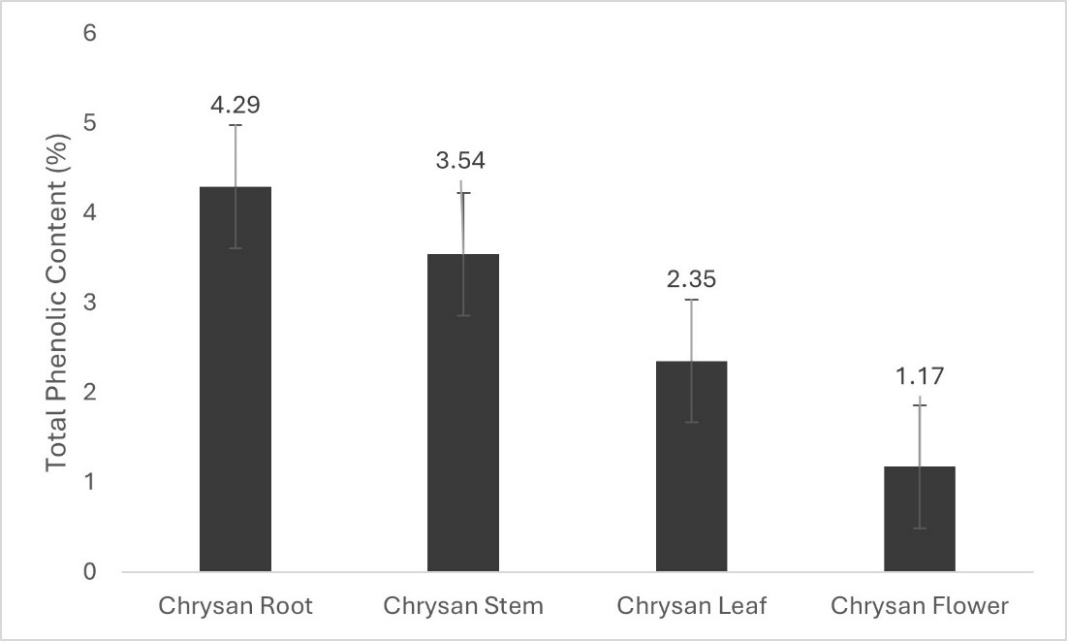
Gallic acid content in various parts of chrysanthemum significantly varied between organs (Fig 1). Chrysanthemum roots had the highest gallic acid content at 4.29% followed by chrysanthemum stems at 3.54%, chrysanthemum leaves at 2.35%, and chrysanthemum flowers, which have the lowest content at 1.17%. Gallic acid belong to the phenolic compound group, which plays an important role as a allelopathic activity. These compounds are known to inhibit seed germination, root growth, and physiological activity of competing plants through disrupting cell membrane and increasing free radicals that trigger oxidative stress (Bednarz et al., 2023). This makes chrysanthemums a candidate for bioprospecting and developing of natural bioherbicides. The use of chrysanthemum extracts rich in gallic acid can be an alternative to synthetic herbicides for environmentally friendly weed control. In addition, the utilization of non-economic chrysanthemum waste can provide new added value to this ornamental plant.
Table 1. pH, electrical conductivity (EC), and total dissolved solid (TDS) of chrysanthemum organ extract.
| Parameters | Chrysanthemum Organ Sources |
Concentration | ||
|---|---|---|---|---|
| 1% | 2% | 4% | ||
| pH | Control (distilled water) | 7.6 | ||
| Root | 6.5 | 7.4 | 8.6 | |
| Stem | 6.3 | 6.6 | 9.3 | |
| Leaf | 8.8 | 8.5 | 9.4 | |
| Flower | 9 | 9.3 | 9.6 | |
| EC (µS/cm) | Control (distilled water) | 0 | ||
| Root | 480 | 460 | 850 | |
| Stem | 970 | 1080 | 2030 | |
| Leaf | 1450 | 980 | 3920 | |
| Flower | 1840 | 2520 | 4760 | |
| TDS (ppm) | Control (distilled water) | 0 | ||
| Root | 250 | 220 | 420 | |
| Stem | 480 | 530 | 1010 | |
| Leaf | 720 | 480 | 1950 | |
| Flower | 910 | 1250 | 2380 | |
Figure 1. Total Phenolic Content (%) of Chrysanthemum extracts.
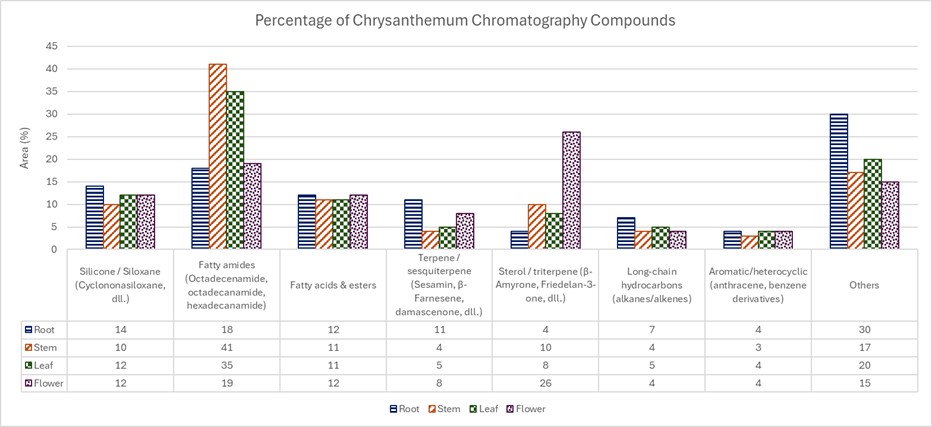
Figure 2. Components in gas chromatography of chrysanthemum plant extract.
The total phenolic content (TPC) of chrysanthemum extracts is highly dependent on the variety, extraction method, and solvent used. Commercial chrysanthemums may exhibit significant variations in their TPC and hot water is an effective solvent for extracting phenolic compounds from chrysanthemum flowers (Cao et al., 2020). The same work reported TPC from hot water extractions ranged from 1.06 to 12.72 mg GAE/g which were similar to 75% methanol extractions (5.31–35.60 mg GAE/g). Both extration methods resulted in significantly more polyphenols compared to 60% methanol extracts reported (Yang et al., 2011), which only resulted in 0.25 to 0.37 mg GAE/g.
The presence of bioherbicidal secondary metabolite compounds in chrysanthemum extract indicates its potential of this plant as a source of natural bioherbicides (Fig 2). The compound 9-Octadecenamide (Z)-, also known as oleamide, is a fatty amide with lipophilic and semi-volatile properties. Its high concentration in the stems, leaves, and flowers indicates its important role as a bioactive component. Oleamide is known to disrupt cell membrane permeability, thereby inhibiting seed germination and weed growth. Its volatile nature allows this compound to play a role in long-distance allelopathy mechanisms, through the release of vapors from plant tissues into the surrounding environment (Chenyin et al., 2023). Meanwhile, the compound hexadecanoic acid (palmitic acid), which is a fatty acid, is found in almost all parts of chrysanthemums. Various studies reported that palmitic acid had phytotoxic properties by inhibiting cell respiration and disrupting energy metabolism in weed seeds during the germination process. These compounds have allelopathic activity through a multi-target mechanism which imply chrysanthemums as a potential source for development of natural bioherbicides (Landi et al., 2020). Wu et al. (2016) showed that the volatile components of chrysanthemum consisted of 2,6,6-trimethylbicyclo[3.1.1]hept-2-en-4-ol acetate (15.90%) and 4,6,6-trimethyl-bicyclo[3.1.1]hept-3-en-2-one (14.86%). In a study, alkenes (26.48%), alcohols (23.55%), and ketones (5.86%) were the most dominant compounds (Pengyun et al. 2019). Luong et al. (2022) demonstrated the major compounds in the essential oil of chysanthemum were chrysanthenone (64.14%), followed by camphor (9.66%), thujone (9.01%), gamma-eudesmol (5.71%), and 1,8-cineole (2.08%). In Chrysanthemum indicum, chrysanthenone was also the major constituent

Figure 3. Seed germination of coatbuttons seeds and soybean seeds in several treatments.
(32.02%), followed by 4-epi-cubebol (15.48%), beta-sesquiphellandrene (6.19%), 9-isopropyl-methyl-2-methyl-5-oxatrecyde (6.05%), and shyobunol (4.90%).
The effect of chrysanthemum extract on seed germination
Coatbuttons weed seeds were affected by chrysanthenmum extracts. Significantly low germination rates were observed when treated with stem, leaf, and flower extracts at a concentration of 40 g.L-1 (Fig. 3). Meanwhile, chrysanthemum extracts did not show significant effects on soybean seeds compared to the control. This indicated that the chrysanthemum extracts are potential coatbuttons control strategy while also being safe to soybean. Considering that chrysanthemums have a higher economic value when used as cut flowers, further research focused on chrysanthemum stem and leaf extract at a concentration of 40 g.L-1. Wang et al. (2020) stated that the inhibitory effect of plant extracts on seed germination is often concentration-dependent, with higher concentrations causing stronger inhibition. The specific chemical composition of the extract (e.g., phenolic compounds, alkaloids) plays a key role in determining its allelopathic activity (Gomaa et al., 2014).
Chrysanthemum extract significant affected germination rate, vigor index, and seedling length in coatbutton seeds (Table 2). Meanwhile, chrysanthemum extract had less significant effects on soybean growth variables namely its abnormal germination and seed respiration rate. This indicated that the allelochemicals in chrysanthemum extract did not inhibit soybean seed growth, as evidenced by the germination rate, vigor index, seedling length, and seedling weight variables, which showed no significant difference from the control soybean seeds that were only treated with distilled water. In observing the respiration rate of seeds, the higher the concentration of extract given, the higher the respiration rate. This showed that soybean seeds experienced slight stress but could still survive over time.
Chrysanthemum extracts have been shown to exhibit allelopathic properties, suppressing seed germination and seedling growth of certain plant species. For example, distilled water extracts of C. coronarium suppressed germination and reduced seedling growth in weeds, such as Sinapis arvensis and Phalaris canariensis (Hosni et al. 2013). This suggests potential for chrysanthemum extracts to inhibit coatbuttons growth.
The effect of chrysanthemum extract and application time on plant growth
The third experiment examined the effect of pendimethalin, chrysanthemum leaf and stem extract, and application timing on the vegetative growth of soybean plants. Results showed that the germination rate of soybeans treated with distilled water was not affected by timing and resulted in high germination rate at all application times (Fig 4). In contrast, pendimethalin application resulted in the lowest germination rate while 40 g L⁻¹ chrysanthemum leaf extract showed high and relatively stable results. Meanwhile, 40 g L⁻¹ chrysanthemum stem extract showed a lower average germination rate. Although no difference regarding the application timing of chrysanthemum extract were detected, other studies on other plant extracts indicated the importance of application timing. For example, the timing of administration of C. odorata extract affected soybean yield variables even though no interactions were observed between the extract and the application timing (Hasanuddin et al. 2021). Meanwhile, other plant extracts exhibit selective effects, inhibiting weeds while stimulating crop growth. For example, extracts of Avena strigosa and Raphanus sativus increased soybean seedling growth while suppressing weed germination (Zonetti et al. 2022). This raises the possibility that chrysanthemum extracts could have selective effects on coatbuttons and soybean.
Difference in effects on different plant species could be explained physiologically by the different content of secondary metabolites such as alkaloids, flavonoids, terpenoids, and phenolic compounds in chrysanthemums that have allelopathic activity. These compounds can affect cell membrane permeability, disrupt the balance of growth hormones such as auxin and gibberellin, and inhibit the activity of enzymes that play a role in breaking down food reserves during germination. In leaf extracts, the concentration of toxic compounds is likely to be lower, so they do not significantly inhibit germination.

Fig 4. Seed germination of coatbuttons seeds and soybean seeds in several treatments. Remarks : B0 : Aquadest distilled water (control), B1 : Pendimethalin, B2 : Chrysan Leaf Bioherbicide 40 g.L-1, Chrysan Stem Bioherbicide 40 g.L-1, T1 : before planting, T2 : during planting, T3 : after planting.
Conversely, in stems, the concentration of inhibitory compounds was higher and have the potential to reduce seed viability. Meanwhile, pendimethalin, works by disrupting the cell division (mitosis) and radicle growth processes, thus greatly affecting the low germination rate of soybean seeds. The application of chrysanthemum leaf extract had less adverse effects on soybean seed viability compared to pendimethalin or chrysanthemum stem extract. Thus, making chrysanthemum leaf extract to be considered as an environmentally friendly bioherbicide alternative.
The contrast analysis showed that there was a significant difference between the herbicide treatment and the aquadest distilled water control (Table 3). Pendimethalin herbicide and chrysanthemum extract bioherbicide treatments significantly affected on the germination rate of weed seeds and other coatbuttons growth variables. Meanwhile, the contrast analysis test comparing the chrysanthemum leaf extract to stem extract did not show significant difference. A contrast analysis between pendimethalin and chrysanthemum extract showed no significant difference, indicating that chrysanthemum extract was as effective as pendimethalin in controlling coatbuttons growth. Given the results of the experiment comparing chrysanthemum extracts to pendimethalin, chrysanthemum leaf and stem extracts has potential as and environmentally friendly bioherbicide.
The contrast analysis test showed that there was a significant difference between the herbicide treatment and the distilled water control (Table 4). This indicated that the herbicide treatment had a different effects on the germination rate of soybean seeds and other growth variables. A contrast analysis comparing the pendimethalin herbicide treatment with the chrysanthemum extract bioherbicide treatment also showed a significant difference. Contrast analysis between distilled water control to chrysanthemum leaf and stem extracts showed no significant difference, indicating that both treatments had the same effect on soybean growth. These resuls imply that chrysanthemum leaf and stem extracts may have comparable effects to pendimethalin.
Soybean plants under stress can trigger the accumulation of reactive oxygen species (ROS) such as hydrogen peroxide (H₂O₂). H₂O₂ is a key indicator of oxidative stress as it is a stable form of ROS that readily accumulates within cells. In response to this stress, the plant’s antioxidant defence system is activated. One key enzyme in this system is catalase (CAT), which functions to break down H₂O₂ into water and oxygen to prevent oxidative damage. Low catalase activity, as observed in treatments with chrysanthemum leaf or stem extracts, suggests that these treatments did not cause severe stress or, conversely, helped suppress ROS production, so that the enzymatic defence system was not overactivated. Conversely, in the distilled water treatment, catalase activity was quite high, likely as a natural response to ROS accumulation without additional protection from external bioactive compounds.
Another indicator of oxidative stress damage is MDA (malondialdehyde), the end product of lipid peroxidation. Elevated MDA levels indicate that cell membranes have been damaged by ROS. Treatment with pendimethalin significantly increased MDA levels indicative of severe stress and disrupted plant cell integrity. Conversely, chrysanthemum leaf and stem extracts lowered MDA levels, indicating that the bioactive compounds within them are capable of stabilizing membranes and reducing oxidative damage. In addition to catalase, plants also produce POD (peroxidase), another key enzyme in the antioxidant defense system. POD plays a role in oxidizing phenolic compounds and decomposing H₂O₂. High POD activity in the pendimethalin and chrysanthemum stem extract treatments suggests that plants enhanced their enzymatic defense against stress. However, high activity may indicate severe stress while moderate to low activity may indicate effective defense system without excessive stress.
To balance ROS non-enzymatically, plants also increase their levels of vitamin C (ascorbic acid), which acts as a powerful antioxidant within the cellular system. Vitamin C can directly neutralize ROS and protect proteins, lipids, and DNA from oxidative damage. Treatment with chrysanthemum leaf extract increased vitamin C levels which supports antioxidant function and strengthens the plant’s internal defense system. Conversely, pendimethalin treatment resulted in lower vitamin C levels.

Fig 5. Chlorophyll content of soybean leaf under several treatments.
Table 2. Growth parameters of coatbuttons Seeds and Soybeans.
| No. | Parameter | Coatbuttons | Soybeans |
|---|---|---|---|
| 1 | Seed germination rate | * | ns |
| 2 | Vigor index | * | ns |
| 3 | Sprout length | * | ns |
| 4 | Sprout weight | - | ns |
| 5 | Abnormal sprout | - | * |
| 6 | Seed respiration rate | - | * |
* = significantly different between treatments, ns = not significant. All test were at α = 5% α level.
Table 3. Contrast analysis on coatbuttons plants.
| No. | Variable | Aquadest (distilled water) vs Herbicide |
Chemical Herbicide Pendimethalin vs Chrysan Bioherbicide |
Distilled water vs Bioherbicide |
Chrysan Leaf Bioherbicide vs Chrysan Stem Bioherbicide |
|---|---|---|---|---|---|
| 1 | Seed germination rate | * | ns | ** | ns |
| 2 | Fresh weight 2 & 4 WAP | * | ns | ** | ns |
| 3 | Plant height 2 & 4 WAP | * | ns | ** | ns |
| 4 | Leaf area 2 & 4 WAP | * | ns | ** | ns |
| 5 | Plant dry weight 2 & 4 WAP | * | ns | ** | ns |
| 6 | Net assimilation rate | * | ns | ** | ns |
* = significantly different between treatments, ns = not significant. All test were at α = 5% α level. WAP = weeks after plant.
Overall, the relationship between H₂O₂, POD, CAT, MDA, and vitamin C reflects the physiological condition of the plants when facing stress. Treatments that cause increases in H₂O₂ and MDA without being balanced by antioxidant activity (CAT, POD, vitamin C) indicate severe stress. Conversely, if H₂O₂ and MDA levels are low accompanied by increased antioxidant enzyme activity and vitamin C, then the plants are in a state of good adaptation to the applied stress.
Chrysanthemum leaf and stem extracts did not affect soybean plants chlorophyll a, chlorophyll b, total chlorophyll, and carotenoid content indicating that no physiological damage to the soybean photosynthetic system (Fig 5). In fact, chrysanthemum secondary metabolites with antioxidant activity may protect chloroplasts from oxidative damage. Meanwhile pendimethalin suppressed soybean chlorophyll content, thereby reducing photosynthetic capacity. Li et al. (2024) stated that stress can trigger changes in gene expression involved in chlorophyll biosynthesis pathway. This could decrease enzyme activity, inhibiting chlorophyll biosynthesis, and later affecting chlorophyll content. Based on these results, it can be concluded that pendimethalin application reduced soybean chlorophyll a, b, and total chlorophyll content and thereby potentially suppressing photosynthetic activity. Conversely, chrysanthemum leaf and stem extracts were able to maintain chlorophyll making them safer for soybean physiology.
Chrysanthemum extracts are rich in bioactive compounds, including flavonoids and phenolics, which have antioxidant properties (Wang et al. 2024). While these compounds may influence plant health and stress tolerance, pendimethalin has been shown to negatively affect plant growth and photosynthetic pigments in various studies. In Prunus domestica, pendimethalin caused chlorosis (yellowing of leaves) and growth suppression (Nacheva et al. 2012). In soybean,
Table 4. Contrast analysis on soybeans plants.
| No. | Variable | Aquadest (distilled water) vs Herbicide |
Chemical Herbicide Pendimethalin vs Chrysan Bioherbicide |
Aquadest (distilled water) vs Bioherbicide |
Chrysan Leaf Bioherbicide vs Chrysan Stem Bioherbicide |
|---|---|---|---|---|---|
| 1 | Seed Germination rate | * | * | ns | ns |
| 2 | Plant Height | * | * | ns | ns |
| 3 | Number of Leaves | * | * | * | ns |
| 4 | Leaf fresh weight 2 & 4 WAP | * | * | ns | ns |
| 5 | Stem fresh weight 2 & 4 WAP | * | * | ns | ns |
| 6 | Root fresh weight 2 & 4 WAP | * | * | ns | ns |
| 7 | Leaf area 2 & 4 WAP | * | * | ns | ns |
| 8 | Total root length 2 & 4 WAP | * | * | ns | ns |
| 9 | Root area 2 & 4 WAP | * | * | ns | ns |
| 10 | Root dry weight 2 & 4 WAP | * | * | ns | ns |
| 11 | Stem dry weight 2 & 4 WAP | * | * | ns | ns |
| 12 | Leaf dry weight 2 & 4 WAP | * | * | ns | ns |
| 13 | Total dry weight 2 & 4WAP | * | * | ns | ns |
| 14 | Specific leaf weight 2 & 4 WAP | * | * | ns | ns |
| 15 | Leaf area ratio 2 & 4 WAP | * | * | ns | ns |
| 16 | Stomata | * | * | ns | ns |
| 17 | Chlorophyll a | * | * | ns | ns |
| 18 | Chlorophyll b | * | * | ns | ns |
| 19 | Total Chlorophyll | * | * | ns | ns |
| 20 | Karotenoid | * | * | ns | ns |
| 21 | H2O2 | * | * | ns | ns |
| 22 | MDA (Malondialdehyd) | ns | * | ns | ns |
| 23 | Prolin | ns | ns | ns | ns |
| 24 | Katalase Activity | * | ns | * | ns |
| 25 | POD (Peroxidase) | * | ns | ns | ns |
| 26 | Vit C (mg/100 gr fruit) | ns | ns | ns | ns |
* = significant and markedly different between treatments, ns = no significant difference between treatments at the 5% α level. WAP = weeks after plant.
pendimethalin exposure reduced germination rates and enzyme activities, indicating stress (Rajashekar & Shivashankara, 2009). In cyanobacteria, pendimethalin significantly reduced photosynthetic pigments and photosynthesis rates (Bhat et al. 2021). These findings suggest that pendimethalin may reduce chlorophyll content due to its phytotoxic effects. Extracts from other plants (such as sunflowers), when combined with lower doses of pendimethalin, have been shown to reduce some of the herbicide’s negative effects on photosynthesis and plant health (Farhoudi & Lee, 2015). This suggests that
chrysanthemum extract may have similar potential, but its bioherbicidal potential against other weed species requires another experimental treats.
Materials & Methods
Collection site
C. morifolium plants were collected from the waste of chrysanthemum screenhouse cultivation in Pakem, Sleman, Special Region of Yogyakarta, Indonesia (-7.633518117286619, 110.42201862394046) in April 2024. Chrysanthemum plants are primarily used as cut flowers, which have high economic value.
Total phenolic as gallic acid equivalent
The total phenol was expressed as mg of gallic acid equivalent and was determined by adding 0.5 mL Folin–Ciocalteu phenol reagent and 7.5 mL of distilled water to 50 mg of samples. Solutions were homogenized and incubate for 10 min at room termperature. Afterward, 1.5 mL of 20% sodium carbonate solution was added, homogenized, and incubate for another 10 min at room termperature. Next, 10 mL of distilled water was added to solutions, and optical density was recorded at 760 nm. Gas chromatography was performed to detect secondary metabolites in chrysanthemum organs.
III.3. Chrysanthemum extraction and solution preparations
Chrysanthemum plant organs were oven-dried 40°C for 48 h until constant weight are obtained. Dried chrysanthyemum were macerated and sifted using a 16-mesh sieve. As much 10, 20, and 40 g of obtained powder were added to 100 mL distilled water and incubated at room temperature. After 24 h, solutions were filtered, extracted through a muslin cloth (<0.1 mm diameter), and Whatman filter paper No. 1 to filter remaining debris. The final solution was refrigerated until further testing.
Determining effective chrysanthemum plant organ and concentration as herbicides
To determine effective plant organs and concentration for herbicidal activity, a germination bioassay was done. The germination bioassay was set as a factorial completely randomized design with two factors. Chrysanthemum plant organ used as herbicide sources was the first factor which included roots (B1), stems (B2), leaves (B3), and flowers (B4). The second factor was extract concentrations. In this study we used a 0% as a control (C0), 1% (K1), 2% (K2), and 4% (K3) concentration. Effect of each treatment combination was tested on two plant species: soybean and coatbuttons seed. Each species was germinated in separated petri dishes containing chrysanthemum extract. Four replications that consisted of fifty seeds were used for each treatment combination.
As much as 10 mL of chrysanthemum extracts from each treatment combination were applicated to filter papers used as a germination medium. Each designated extract was reapplied to maintain the humidity. Observation results from the seven-day germination assay were used as preliminary results to determine inhibitory levels of chrysanthemum extracts and later treatments for the following phase of this study.
Determining effective application period
Effective application periods of chrysanthemum extacts were determined using a greenhouse experiment that was set as a split-plot design with two factors. The first factor was the herbicide used which included distilled water as a control (B0), pendimethalin herbicide (B1), chrysanthemum leaf extract 40 g.L-1, chrysanthemum stem extract 40 g.L-1. The second factor was application time that was done before planting (T1), during planting (T2), and after planting (T3). Experiment was done on two plant species: soybean and coatbuttons. Seeds from each species was separately germinated on a tray in a greenhouse of the Faculty of Agriculture, Universitas Gadjah Mada. Three replications were used for each treatment combination and each experimental unit used one hundred seeds. The plants were observed for 4 week (1 month).
Observations of growth parameters
Several parameters were systematically evaluated to determine seedling development and chrysanthemum extract effects. Observations done during phase included the germination rate, germination index, average germination time, and incidence of abnormal sprouts. All observation parameters were observed daily for seven days. Abnormal sprouts, characterized by atypical growth patterns such as stunted or deformed shoots and roots, were recorded for each plant species. These abnormal sprouting were indication of potential interference on seedling development. On the last observation day, shoot length, root length, number of leaves, and fresh weight of sprouts were also measured. Before application chrysanthemum extracts electrical conductivity and osmotic potential of were assessed.
Statistical analysis
All observed parameters were analyzed using an ANOVA. If significant differences were detected after the ANOVA, a Tukey’s HSD test was performed. The statistical tests were conducted in RStudio version 4.41 (2025.05.1+513). Contrast analyses were conducted by SAS Studio. All tests were performed at α = 5%.
Conclusion
Chrysanthemum extract contained several potential bioherbicidal secondary metabolites including 9-Octadecenamide (Z)-, Cyclononasiloxane, octadecamethyl-, and Hexadecanoic acid. Chrysanthemum leaf and stem extracts at a concentration of 40 g.L-1 could inhibit coatbuttons growth while not negatively affect soybean. Optimum application time of chrysanthemum bioherbicide to control weeds in soybean production was during planting.
Acknowledgement
Authors would like to express gratitude to the parties who assisted the work in this study and the collaborative grant funds for lecturers and students of the Faculty of Agriculture, Universitas Gadjah Mada in 2024 which funded this research.
Reference *The Chenyin et al. author names should be checked against the original article because they appear to have been entered as given names rather than surnames.
Arora K, Batish DR, Singh HP & Kohli RK (2015) Allelopathic potential of the essential oil of wild marigold (Tagetes minuta L.) against some invasive weeds. Journal of Environmental and Agricultural Sciences 3: 56–60.
Bednarz MK, Płonka J & Barchańska H (2023) Allelopathy as a source of bioherbicides: challenges and prospects for sustainable agriculture. Reviews in Environmental Science and Bio/Technology 22: 471–504.
Beninger CW & Hall JC (2005) Allelopathic activity of luteolin 7-O-β-glucuronide isolated from Chrysanthemum morifolium L. Biochemical Systematics and Ecology 33: 103–111.
Bhat MA, Singh DP, Khattar JS & Singh RS (2021) Toxicological effect of pendimethalin on some physiological parameters of the diazotrophic cyanobacterium Desmonostoc muscorum PUPCCC 405.10. Journal of Applied Biology and Biotechnology 9(4): 10–18.
Cao X, Xiong X, Xu Z, Zeng Q, He S, Yuan Y, Wang Y, Yang X & Su D (2020) Comparison of phenolic substances and antioxidant activities in different varieties of chrysanthemum flower under simulated tea-making conditions. Journal of Food Measurement and Characterization 14: 1443–1450. https://doi.org/10.1007/s11694-020-00394-4
*Chenyin P, Yu W, Fenghou S & Yongbao S (2023) Review of the current research progress of seed germination inhibitors. Horticulturae 9: 462. https://doi.org/10.3390/horticulturae9040462
Farhoudi R & Lee DJ (2015) Allelopathic potential of sunflower (Helianthus annuus) water extracts to reduce the pendimethalin herbicide dose to control Chenopodium album in corn (Zea mays). Allelopathy Journal 35(1): 97–108.
Gomaa NH, Hassan MO, Fahmy GM, González L, Hammouda O & Atteya AM (2014) Allelopathic effects of Sonchus oleraceus L. on the germination and seedling growth of crop and weed species. Acta Botanica Brasilica 28(3): 408–416.
Hasanuddin H, Hafsah S, Erida G, Marliah A, Bahri H, Zainabun, Bobihoe J & Aryani DS (2021) Allelopathic potential of siam weed (Chromolaena odorata L.) extract for enhancing soybean productivity. IOP Conference Series: Earth and Environmental Science 922(1): 012003.
Hosni K, Hassen I, Sebei H & Casabianca H (2013) Secondary metabolites from Chrysanthemum coronarium flowerheads: chemical composition and biological activities. Industrial Crops and Products 44: 263–271.
Landi M, Misra BB, Muto A, Bruno L & Araniti F (2020) Phytotoxicity, morphological and metabolic effects of the sesquiterpenoid nerolidol on Arabidopsis thaliana seedling roots. Plants 9: 1347. https://doi.org/10.3390/plants9101347
Li X, Zhang W, Niu D & Liu X (2024) Effects of abiotic stress on chlorophyll metabolism. Plant Science 342: 112030. https://doi.org/10.1016/j.plantsci.2024.112030
Luong TH, Nguyen DMC, Trinh TN, Han VC & Jung WJ (2022) Chemical properties and antioxidant activity of essential oils of Chrysanthemum morifolium Ramat. and Chrysanthemum indicum L. in Vietnam. Journal of Applied Biological Chemistry 65(4): 367–374.
Mastro GD, Mahdi JE & Ruta C (2021) Bioherbicidal potential of the essential oils from Mediterranean Lamiaceae for weed control in organic farming. Plants 10: 818.
Nacheva L, Rankova Z & Gercheva P (2012) Effect of some soil herbicides on the vegetative habits and pigment content of Prunus domestica ‘Wangenheims’ plum rootstock under in vitro conditions. Bulgarian Journal of Agricultural Science 18(4): 583–588.
Peng A, Lin L & Zhao M (2022) Discovery, characterization and stability evaluation of self-assembled submicroparticles in chrysanthemum tea infusions. Food Bioscience 47: 101642.
Pengyun Z, Rong L, Haoyang L, Chunxia L, Luqi Y & Feng Z (2019) Analysis of volatile compounds in Chrysanthemum morifolium Ramat. by HS-SPME-GC-MS/MS combining retention index. Journal of Food and Fermentation Industries 45(1): 202–209.
Rajashekar N & Shivashankara MTC (2009) Effects of pendimethalin on certain oxidizing and hydrolytic enzyme activities during germination and seedling development of soybean (Glycine max L. Merr.). Asian Journal of Microbiology, Biotechnology and Environmental Sciences 11(2): 447–452.
Respatie DW, Yudono P, Purwantoro A & Trisyono YA (2021) Effect of spraying volume of Cosmos sulphureus Cav. flower extract on weed dominance and soybean yield. IOP Conference Series: Earth and Environmental Science 662: 012017.
Respatie DW, Purwantoro A, Indradewa D, Uyun Q & Ilmiah HH (2024) Evaluation of Wedelia water extract on soybean, purple nutsedge and billygoat weed seed germination. Jurnal Agronomi Indonesia 52(2): 141–150.
Sembiring DTS & Sebayang HT (2018) Pengaruh herbisida pratumbuh (oxyfluorfen) dan waktu penyiangan gulma terhadap pertumbuhan dan hasil kedelai (Glycine max L.). Jurnal Produksi Tanaman 6(11): 2916–2922.
Taban R, Nasirzadeh M & Saharkhiz MJ (2022) Essential oil composition and comparative phytotoxic activity of fennel, summer savory, Mexican marigold and feverfew: a potential bioherbicide. Vegetos 35: 502–510.
Wang YX, Tang ZS, Cao ML, Li YX, Zhang TB & Du HL (2020) Allelopathic effects of Hylotelephium erythrostictum flowers on three weed species and identification of potential allelochemicals. Acta Prataculturae Sinica 29(1): 175–182.
Wang F, Liu H, Huang Z, Zhang Y, Lu Y & Zhou Y (2024) Evaluation of whitening effects and identification of potentially active compounds based on untargeted metabolomic analysis in different chrysanthemum cultivar extracts. Antioxidants 13(12): 1557.
Wu Y, Yan Z, Zhao J & Zhu Y (2016) Headspace solid-phase microextraction and gas chromatography–mass spectrometry of volatile components of Chrysanthemum morifolium Ramat. Tropical Journal of Pharmaceutical Research 15(10): 2241–2244.
Yang J, Kim JS, Jeong HJ, Kang HH, Cho JC, Yeom HM & Kim MJ (2011) Determination of antioxidant and α-glucosidase inhibitory activities and luteolin contents of Chrysanthemum morifolium Ramat. extracts. African Journal of Biotechnology 10: 19197–19202.
Zonetti PC, Dotto G, de Carvalho TFF, Bido GS, Corrêa RCG, Albrecht LP & Albrecht AJP (2022) Effect of forage aqueous extracts on Glycine max L. Merr., Zea mays L. and Bidens pilosa L. Revista de la Facultad de Ciencias Agrarias 54(1): 70–76.