Australian Journal of Crop Science
Article | https://doi.org/10.21475/ajcs.26.20.07.pne155
Submitted: 19 October 2025 | Revised: 25 January 2026 | Accepted: 12 May 2026
Pages 523-532
Low-cost energy efficiency using a frequency inverter for center pivot irrigation pumping in a pearl millet cultivation area
André Luiz Milhardes Mendes1, José Alves Júnior1, Delvio Sandri2, João Maurício Fernandes Souza3, Derblai Casaroli1, Diogo Silva Pena1, Adão Wagner Pêgo Evangelista1, Frank Freire Capuchinho1*
1Department of Biosystems Engineering, Federal University of Goiás, Brazil
2Faculty of Agronomy and Veterinary Medicine, University of Brasilia, Brazil
3Department of Agronomy, Evangelical University of Goiás, Brazil
*Corresponding author: frankfreire@discente.ufg.br
ORCID: 0000-0001-7491-361X
Abstract: Center pivot irrigation is the predominant system in Brazil, particularly in the Southeast, Northeast, and Midwest regions. Many systems operate on sloping terrain (up to 15%), where pumps run continuously at full power, leading to unnecessary energy consumption in lower-elevation sections. Although frequency inverters can improve energy efficiency, their adoption remains limited due to high costs. This study aimed to develop and validate a low-cost pump rotation control system for center pivots for pearl millet (Penissetum glaucum L), considering system pressure variations and terrain slope changes. The system comprised a three-phase energy meter, control panel, flow and pressure transducers, digital display, pump, and a smartphone application. It was tested and validated on a center pivot for millet cultivation. The experiment was conducted in a completely randomized design with four treatments corresponding to terrain slopes of 2, 1, -1, and -2 m. Morphological, physiological, and yield characteristics of millet plants, energy consumption, and irrigation uniformity were evaluated. Results showed that terrain slope did not affect water application uniformity (≈ 92.8%) or plant growth and yield. Moreover, the modernization reduced electricity consumption by 8.11%, with a cost 36.87% lower than commercial automation. Therefore, this modernization represents a technically viable option for center pivot systems, with increasing economic feasibility as terrain slope increases.
Keywords: Automation; energy consumption; irrigation management; Penissetum glaucum L.
Abbreviations: DU_distribution uniformity; DAS_days after sowing; NBI_ nitrogen balance index; GAB_green aerial biomass; GRB_green root biomass; DAB_dry aerial biomass; DRB_dry root biomass; PID_proportional integral derivative; CHL_chlorophyll content; FLAV_flavonols; ANTH_anthocyanins; NL_number of leaves; H_plant height; D_stem diameter.
Introduction
Center pivot has been established as the predominant irrigation system in Brazil, widely adopted in major grain, horticultural, and industrial crops due to its high operational efficiency (Embrapa, 2021). However, inadequate management can increase production costs through excessive electricity consumption (Medeiros et al., 2023) and compromise crop performance through excessive water application. In this context, modernizing center pivots that are in good mechanical condition represents a cost-effective strategy to improve energy efficiency and extend system lifespan without full replacement (Leite, 2007).
Center pivot irrigation is recommended for medium- and large-scale farms, with a irrigated area of approximately 80 ha in Brazil (Lima et al., 2018). These systems are commonly installed on terrain with slopes of up to 15% and are designed to operate under worst-case conditions, with pumping designed for the highest elevation point. As a result, continuous operation at lower elevations leads to unnecessary energy consumption. The use of frequency inverters in pumping motors can mitigate this inefficiency; however, high investment costs still limit their widespread adoption.
Previous studies have reported significant energy savings from inverter use, including reductions between 9.23-10.6% in electricity costs (Medeiros et al., 2010; Brar et al., 2017) and improvements in operational control, including regulation of current, power factor, and rotational speed, can enhance system flexibility and performance (Moraes et al., 2014). Additionally, adjusting pump rotation to match variable flow demand has been shown to optimize energy use, with reported electricity savings of up to 40.13% in center pivot systems operating on sloping terrain (Teixeira, 2014; Lima et al., 2015).
Despite these advantages, variations in irrigation depth may occur across different terrain slopes and pump rotation speeds. Although this effect has been reported previously, motor speed variation using a frequency inverter has not been evaluated through pressure monitoring along the center pivot lateral line.
The objective of this study was to develop an alternative low-cost system to control the pump rotation of a center pivot based on irrigation pressure variation across different terrain slopes, as well as to evaluate energy consumption and the effects of maintaining a consistent irrigation depth on pearl millet crop performance.
Results and Discussion
Monitoring of electrical energy
The inverter output results indicated improved phase balance when the system operated between 50 and 60 Hz, with voltages in the three phases approaching the nominal motor voltage of 380 V (Table 1). Similar behavior was reported by Pereira (2017), who observed stable operation in pump units with direct-on-line start and inverter-controlled motor speed within a frequency range of 49.67 to 62.29 Hz.
Before the modernization, input voltages were lower due to system constraints, particularly the electrical cable gauge, which limited current flow and increased voltage fluctuations. When modulated at 50 Hz, phase voltages converged toward 380 V, indicating proper inverter configuration for motor operation and corroborating recommendations for safe equipment performance (Fantin, 2016).
Table 1. Line voltages at the frequency inverter output in the three-phase system before and after pump house upgrades.
| Output (Hz) | Phase-to-phase voltage – before (V) | ||||
|---|---|---|---|---|---|
|
|||||
|
|||||
| Phase-to-phase voltage – after (V) | |||||
| L12 | L23 | L31 | |||
| 10 | 83.9 | 83.9 | 83.8 | ||
| 15 | 127.7 | 127.7 | 127.6 | ||
| 20 | 161.1 | 161.2 | 161.1 | ||
| 30 | 236.1 | 236.1 | 236.0 | ||
| 40 | 308.5 | 308.5 | 308.4 | ||
| 50 | 381.5 | 381.5 | 381.4 | ||
| 60 | 381.9 | 382.0 | 381.9 | ||
Monitoring of radio communication
During the monitoring of the Wi-Fi communication link (Figure S14), the signal strength was excellent, allowing the electric currents of the motor to be monitored throughout a full rotation of the center pivot, with no data loss during transmission between the pivot and the pump house. Other studies using similar equipment reported satisfactory communication and system functionality (Duarte, 2010; Rolim, 2021). Therefore, automatic irrigation systems can be considered a viable tool to improve water use efficiency.
Monitoring of pump power, pressure, and flow rate in the center pivot lateral line
Without motor speed control, electrical energy consumption varied by 4.38%, ranging from 14.38 to 15.04 kWh⁻¹ (Figure S15), reflecting fluctuations in the voltage supplied by the utility during conventional operation at nominal motor power. In contrast, speed control using a frequency inverter resulted in electrical power ranging from 10 to 15 kWh⁻¹, with a mean of 11 kWh⁻¹ (Figure S15), primarily due to topographic variability that alters the energy demand required to maintain motor rotation. These results reinforce the potential of motor speed control to reduce energy consumption in agricultural operations (Moraes et al., 2014).
Regarding hydraulic performance, the center pivot without speed control showed pressure oscillations between 11 and 15 mH₂O, with a mean of 13 mH₂O. Under speed-controlled operation, pressure remained stable around the target value, with a mean of 10.98 mH₂O, and minor variations (10–11.98 mH₂O) (Figure S16), attributed to the response time between pressure sensing along the lateral line and motor speed adjustment in the pump house.
Under operation without speed control, the flow rate exhibited a mean value of 45 m³ h⁻¹, with values ranging from 44 and 47 m³ h⁻¹, whereas inverter-controlled operation reduced the mean flow rate to 42.3 m³ h⁻¹, with values between 40 and 44 m³ h⁻¹ (Figure S17).
Energy and water use efficiency
Pump speed control reduced flow rate by 6.58% and electricity consumption by 13.32% (Table 2), demonstrating the effectiveness of the low-cost Potamus system for automatic frequency adjustment based on pressure variation. Despite the lower flow rate, water distribution uniformity was maintained (DU = 92.8%). Operation with speed control resulted in a 6% reduction in applied water depth at full pivot movement, requiring a proportional increase in irrigation time; however, total electricity consumption remained 8.11% lower than that observed without motor speed control (with control: 30.63 kWh; without control: 33.34 kWh).
Other studies have reported substantial energy savings with frequency inverter use in center pivot systems, with reductions ranging from 16% to 48% depending on terrain slope (Pereira et al., 2013; Moraes et al., 2014; Lima et al., 2015; Silva et al., 2020). Differences in the magnitude of savings reported in the literature are mainly attributed to variations in terrain elevation, as greater topographic gradients increase the potential for energy reduction (Lima et al., 2015; Silva, 2020).
Table 2. Water and energy efficiency metrics of the center pivot irrigation system.
| Operation | Condition | Mean flow rate (m3 h-1) | Mean electrical energy consumption (kWh) |
|---|---|---|---|
| Without control | 107.52 | 29.80 | |
| With control | 100.44 | 25.83 | |
| Calculated savings | Difference | 7.08 | 4.44 |
| % Difference | 6.58 % | 13.32 % |
Costs for center pivot modernization
The proposed center pivot modernization achieved a 36.87% cost reduction compared with a commercial system (Table S2), mainly due to in-house manufacturing, imported materials, and shared labor structure. Although economic indicators such as net present value and payback were not evaluated (Alves Júnior et al., 2018), the lower modernization cost combined with reduced energy consumption directly decreases operational expenses.
The integration of frequency inverters, telemetry, real-time monitoring, and automated control enhances system efficiency and supports uniform irrigation, which is critical for converting technological investment into economic return. The adoption of automation and intelligent control systems enables cost-effective and feasible improvements in irrigation management (Vieira, 2004; Pazuch, 2021; Campos et al., 2021).
Water distribution uniformity
After modernization, the center pivot achieved a DU of 92.8%, classified as excellent (Mantovani, 2001), under full-speed operation, low wind conditions (< 3 m s⁻¹), and a mean applied irrigation depth of 3.16 mm (Figure 4). This value exceeds those reported for similar sprinkler model (DU = 80.8%) (Bortoluzzi and Mattioni, 2021), indicating enhanced hydraulic performance. Motor speed control via a frequency inverter modified pump rotation and applied depth without affecting water distribution uniformity (Lima, 2009). Operating pressure remained within acceptable limits (1.4 kgf cm⁻² at the riser and 1.2 kgf cm⁻² at the last sprinkler), supporting efficient irrigation management and highlighting the role of pressure regulation in system performance and crop response (Martins et al., 2010; Santos et al., 2015; Nascimento et al., 2017).
Plant morphology
At 44, 79 and 107 days after sowing (DAS), no significant differences (p > 0.05) were observed between treatments for the variables evaluated (Table 3). The number of leaves showed minor spatial variation, with mean values of 5.15 and 5.12 at 1 m and −1 m, respectively, and a slightly lower value at 2 m (5.03). Compared with Animasaun et al. (2024), plant height and number of leaves were higher than those reported for millet at 35 DAS, whereas stem diameter values were similar.
Plant heights were lower than those observed by Reddy et al. (2021) and Khandelwal et al. (2024) during the grain-filling period (≈190 cm), but within the range (≈128–161 cm) reported by Raval et al. (2015). Climatic factors, including solar radiation, precipitation, and temperature, did not limit millet growth or development during the experimental period. Additionally, the absence of significant differences throughout the crop cycle indicates that elevation-related variation within the irrigated area did not influence millet biometric variables.
Chlorophyll and polyphenols
No significant differences (p > 0.05) were identified between treatments for the variables in the different DAS and for the crop cycle (Table 4), indicating that terrain elevation did not influence the physiological status of millet plants. The Nitrogen Balance Index (NBI), an indicator of plant nutritional status (Liu et al., 2021), showed lower values than those reported by Vitorino et al. (2020).
Chlorophyll and anthocyanin values obtained using Dualex measurements were within the ranges documented for millet and other cereal crops (Cerovic et al., 2012; Silva et al., 2022; Vitorino et al., 2020). Overall, the stability of chlorophyll, anthocyanin, and NBI values indicates that topographic variation within the irrigated area did not affect the physiological condition of millet plants and supports the use of Dualex-derived indices as indicators of plant physiological status under irrigated conditions.
Soil moisture
Saturated soil moisture (0.515 m³ m⁻³), field capacity (0.317 m³ m⁻³), critical point (0.224 m³ m⁻³), and permanent wilting point (0.193 m³ m⁻³) were within the expected range for the soil of the center pivot area (Medrado and Lima, 2014). Throughout the crop cycle, soil water content remained between field capacity and the critical point across all sampling periods, indicating the absence of water restriction for millet plants (Table 5). Soil moisture monitoring showed no significant differences (p > 0.05) for treatments and depths, and comparisons between the highest and lowest terrain positions indicated no influence of topography on soil water status, consistent with sensor-based monitoring approaches applied in similar soils (Antunes Junior et al., 2018).
Likewise, no significant differences (p > 0.05) were observed in mean applied water depth over the crop cycle (Table 6). The mean daily irrigation depth was 6.79 mm, resulting in a total depth of 229.09 mm, with no detectable effect of terrain elevation on water application. These results indicate that the irrigation system provided adequate and uniform water supply throughout the cycle, which is essential for proper crop development and irrigation efficiency (Nascimento et al., 2017).
Table 3. Number of leaves (NL), plant height (H; cm), and stem diameter (D; mm) of millet at 44, 79, and 107 days after sowing (DAS), and cycle means for treatments under center pivot motor–pump speed control.
| DAS | Treatments | NL | H | D |
|---|---|---|---|---|
| 44 | 1 | 5.06 (±0.11)a | 58.17 (±1.7)a | 6.83 (±0.16)a |
| 2 | 5.15 (±0.09)a | 58.25 (±1.1)a | 6.70 (±0.11)a | |
| 3 | 5.12 (±0.14)a | 52.22 (±1.2)a | 6.24 (±0.18)a | |
| 4 | 5.03 (±0.10)a | 56.24 (±0.8)a | 6.36 (±0.14)a | |
| Significance | ns | ns | ns | |
| 79 | Treatments | NL | H | D |
| 1 | 6.22 (±0.11)a | 122.47 (±0.9)a | 8.03 (±0.69)a | |
| 2 | 6.29 (±0.33)a | 127.12 (±2.8)a | 8.17 (±0.12)a | |
| 3 | 5.89 (±0.18)a | 115.33 (±2.7)a | 7.20 (±0.33)a | |
| 4 | 6.09 (±0.12)a | 114.16 (±1.8)a | 8.18 (±0.36)a | |
| Significance | ns | ns | ns | |
| 107 | Treatments | NL | H | D |
| 1 | 6.42 (±0.42)a | 153.27 (±6.3)a | 8.99 (±0.36)a | |
| 2 | 6.44 (±0.21)a | 156.01 (±5.5)a | 8.34 (±0.19)a | |
| 3 | 5.98 (±0.18)a | 152.36 (±2.8)a | 7.84 (±0.42)a | |
| 4 | 6.21 (±0.19)a | 150.35 (±3.8)a | 8.82 (±0.38)a | |
| p-value | ns | ns | ns | |
| Crop cycle | Treatments | NL | H | D |
| 1 to 4 | 5.83 (±0.35)a | 109.66 (±3.2)a | 7.64 (±0.49)a | |
| Significance | ns | ns | ns |
**: Significant by F test at 5% probability; ns: not significant. Means followed by the same letter do not differ by Tukey’s test (5%). (±) Standard error of the mean.
Table 4. Nitrogen balance index (NBI), chlorophyll (CHL), flavonols (FLAV), and anthocyanins (ANTH) of millet at 44, 79, and 107 days after sowing (DAS), and cycle means for treatments under center pivot motor–pump speed control.
| DAS | Treatments | NBI | CHL | FLAV | ANTH |
|---|---|---|---|---|---|
| 44 | 1 | 10.93 (±0.48)a | 23.88 (±0.16)a | 2.55 (±0.19)a | 0.36 (±0.04)a |
| 2 | 11.68 (±0.25)a | 24.47 (±0.10)a | 2.59 (±0.18)a | 0.35 (±0.06)a | |
| 3 | 9.79 (±0.29)a | 23.31 (±0.13)a | 2.30 (±0.08)a | 0.30 (±0.02)a | |
| 4 | 10.23 (±0.55)a | 23.09 (±0.07)a | 2.26 (±0.17)a | 0.29 (±0.05)a | |
| Significance | ns | ns | ns | ns | |
| 79 | Treatments | NBI | CHL | FLAV | ANTH |
| 1 | 16.21 (±0.62)a | 47.02 (±1.20)a | 2.82 (±0.18)a | 0.39 (±0.04)a | |
| 2 | 16.83 (±0.49)a | 47.11 (±1.27)a | 2.92 (±0.10)a | 0.44 (±0.01)a | |
| 3 | 16.02 (±0.39)a | 45.63 (±1.80)a | 2.63 (±0.11)a | 0.36 (±0.01)a | |
| 4 | 16.10 (±0.58)a | 46.29 (±1.93)a | 2.97 (±0.17)a | 0.40 (±0.02)a | |
| Significance | Ns | ns | ns | ns | |
| 107 | Treatments | NBI | CHL | FLAV | ANTH |
| 1 | 17.52 (±0.2)a | 48.29 (±0.4)a | 3.67 (±0.19)a | 0.60 (±0.02)a | |
| 2 | 18.84 (±1.3)a | 50.67 (±1.5)a | 3.83 (±0.09)a | 0.61 (±0.09)a | |
| 3 | 17.02 (±0.6)a | 49.03 (±0.6)a | 3.19 (±0.23)a | 0.44 (±0.04)a | |
| 4 | 16.77 (±0.4)a | 48.93 (±0.12)a | 3.26 (±0.11)a | 0.47 (±0.08)a | |
| Significance | ns | ns | ns | Ns | |
| Crop cycle | Treatments | NBI | CHL | FLAV | ANTH |
| 1 to 4 | 14.83 (±0.2)a | 39.81 (±1.5)a | 2.92 (±0.15)a | 0.42 (±0.06)a | |
| Significance | ns | ns | ns | ns |
**: Significant by F test at 5% probability; ns: not significant. Means followed by the same letter do not differ by Tukey’s test (5%). (±) Standard error of the mean.
Phenometric data
At 115 DAS, no statistically significant differences (p > 0.05) were observed between treatments for green aerial biomass, green root biomass, dry aerial biomass, and dry root biomass of millet plants; low standard errors indicate high experimental uniformity (Table 7). Extrapolated biomass productivity, based on mean plant weight and final stand in the
Table 5. Mean soil moisture dynamics for slope treatments throughout the millet crop cycle.
| Treatments | Soil depth | |||
|---|---|---|---|---|
| 0-0.15 m | 0.15-0.25 m | 0.25-0.35 m | 0.35-0.45 m | |
1 to 4 (m3 m-3) |
0.27 (±0.18)a | 0.292 (±0.5)a | 0.321 (±0.47)a | 0.331 (±0.23)a |
| Significance | ns | ns | ns | ns |
**: Significant by F test at 5% probability; ns: not significant. Means followed by the same letter do not differ by Tukey’s test (5%). (±) Standard error of the mean.
Table 6. Daily mean and total irrigation depth for treatments during the millet crop cycle.
| Treatments | Daily (mm) | Total (mm) |
|---|---|---|
| 1 | 6.77 (±0.3)a | 229.32 (±0.4)a |
| 2 | 6.74 (±0.3)a | 224.77 (±1.5)a |
| 3 | 6.80 (±0.1)a | 230.23 (±0.6)a |
| 4 | 6.85 (±0.3)a | 232.05 (±0.12)a |
| Significance | ns | ns |
**: Significant by F test at 5% probability; ns: not significant. Means followed by the same letter do not differ by Tukey’s test (5%). (±) Standard error of the mean.
Table 7. Green aerial biomass (GAB; g), green root biomass (GRB; g), dry aerial biomass (DAB; g), and dry root biomass (DRB, g) of millet at 115 days after sowing.
| Treatments | GAB | GRB | DAB | DRB |
|---|---|---|---|---|
| 1 | 0.61 (±0.013)a | 0.22 (±0.003)a | 0.21 (±0.001)a | 0.12 (±0.001)a |
| 2 | 0.61 (±0.013)a | 0.23 (±0.003)a | 0.22 (±0.001)a | 0.12 (±0.001)a |
| 3 | 0.65 (±0.013)a | 0.23 (±0.003)a | 0.22 (±0.001)a | 0.13 (±0.001)a |
| 4 | 0.62 (±0.015)a | 0.22 (±0.003)a | 0.23 (±0.001)a | 0.12 (±0.002)a |
| Significance | ns | ns | ns | ns |
**: Significant by F test at 5% probability; ns: not significant. Means followed by the same letter do not differ by Tukey’s test (5%). (±) Standard error of the mean.
central pivot area, indicated 32% dry matter at harvest (Figure 5). Fresh biomass yield reached 56.04 t ha⁻¹, while dry biomass yield reached 17.76 t ha⁻¹. These values are higher than those reported for irrigated millet, with fresh biomass of 21.43 t ha⁻¹ and dry biomass of 5.75 t ha⁻¹ (Ferreira et al., 2020), as well as dry biomass yields of 14.99 t ha⁻¹ (Reddy et al., 2021) and 11.14 t ha⁻¹ (Khandelwal et al., 2024).
Materials and Methods
Location and description of the center pivot before modernization
The experiment was conducted under a center pivot irrigation system at the Federal University of Goiás, Goiânia, Goiás, Brazil (16°35′ S, 49°16′ W; 722 m). The system comprised a reservoir-fed pumping station equipped with a three-phase induction motor (WEG, 25 HP, 380 V) coupled to a centrifugal pump (KSB 40-200; 3500 rpm; total head of 32 mH₂O) and an analog control panel, connected to a 5″ galvanized steel suction line and a 4″ galvanized steel mainline (356 m) (Figure S1).
The center pivot consisted of a single-span lateral line (88.08 m) with an overhang, standard height of 2.7 m, no end gun, and 39 outlets equipped with drop tubes, pressure regulators (10 PSI; 7 mH₂O), and sprinklers. Operating pressures were 15 mH₂O at the pivot base and 13 mH₂O at the end of the lateral line, and the applied irrigation depth at a 100% flow-meter setting was 3.37 mm (Figure S2).
Physical adjustments
The modernization comprised electrical, hydraulic, and infrastructure upgrades to the pumping station and center pivot system. The original distribution panel was replaced by a centralized, isolated cabinet with rerouted power cables in PVC conduits, and new instrumentation was installed to monitor voltage, current, frequency, and apparent, active, and reactive power, including a multimeter and a frequency inverter (Figures S3 and S4).
Wireless antennas enabled remote system management (Figure S5). Hydraulic adjustments included adjustable metal supports at suction and discharge points, flow transducers at 39 sprinkler drop tubes, and pressure transducers installed at the pivot base, mobile tower, and overhang end (Figures S6 and S7).
A digital control panel was developed and installed on the central tower enabled automated operation and programming of irrigation depth, travel speed, rotation direction, operation with or without water, fertigation activation, scheduling, angular position tracking, flow monitoring, and electrical current measurement (Figure S8).
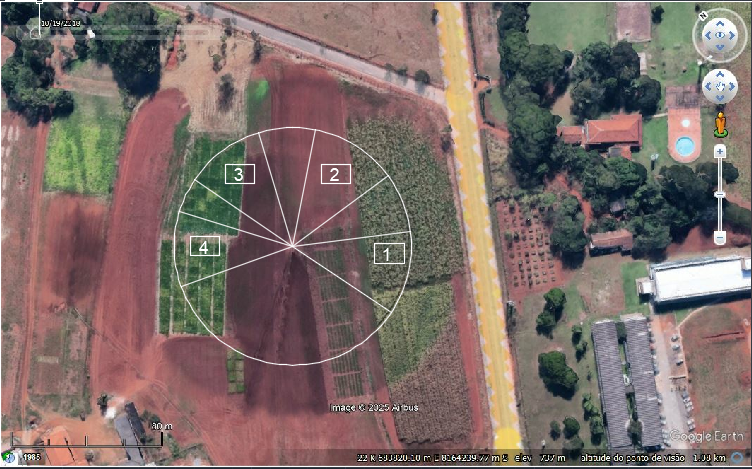
Figure 1. Diagram of the experimental area illustrating the distribution of treatments (1: 2 m; 2: 1 m; 3: −1 m; and 4: −2 m).
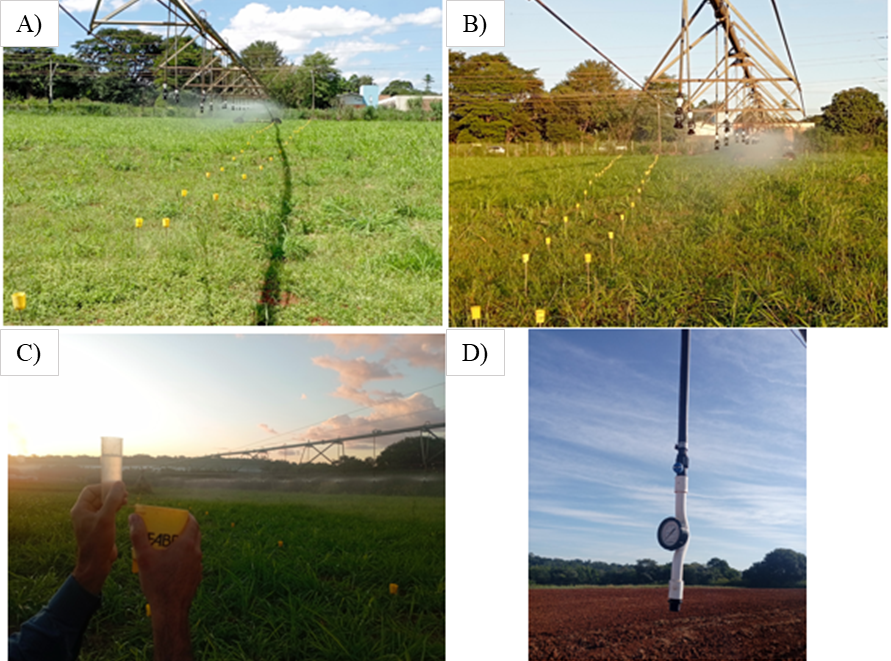
Figure 2. Collector layout for water application uniformity assessment: (A) collector rows; (B) two radial rows (3° apart; 3 m spacing; 0.5 m height); (C) graduated cylinder for water depth measurement; and (D) manometer installed at the pivot end.
Experimental design and millet cultivation system
The experiment followed a completely randomized design with four treatments and 16 replicates defined by terrain slope along an 88 m center pivot span: two uphill positions (2.0 m, 2.3%; and 1.0 m, 1.15%) and two downhill positions (−1.0 m, −1.15%; and −2.0 m, −2.3%) (Figure 1). Each replicate consisted of a single millet plant (Pennisetum glaucum L.) located 40 m from the pivot center and used for biometric, physiological, and soil water status assessments. Millet (cultivar ANm07) was sown at 10 kg ha⁻¹ (10.6 seeds m⁻¹) with 0.9 m row spacing, plant density of 10 plants m⁻¹ (111,000 plants ha⁻¹); seed purity and germination were 98% and 75%, respectively, and sowing uniformity showed a coefficient of variation of 20.47%.
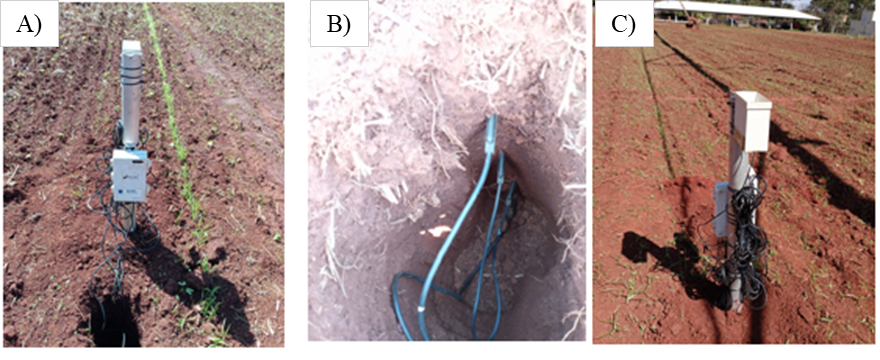
Figure 3. Soil moisture and precipitation monitoring setup: (A) data collection station; (B) installation of EC-5 sensors at multiple soil depths; and (C) station in operation.
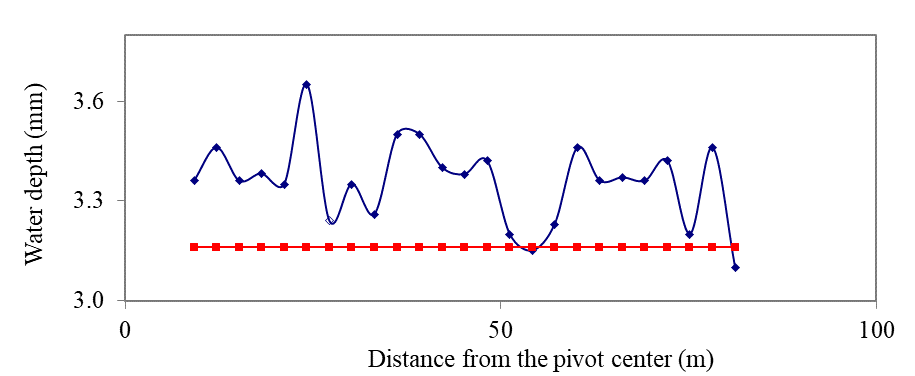
Figure 4. Applied water depth under center pivot irrigation operating without (blue line) and with (red line) motor speed control.
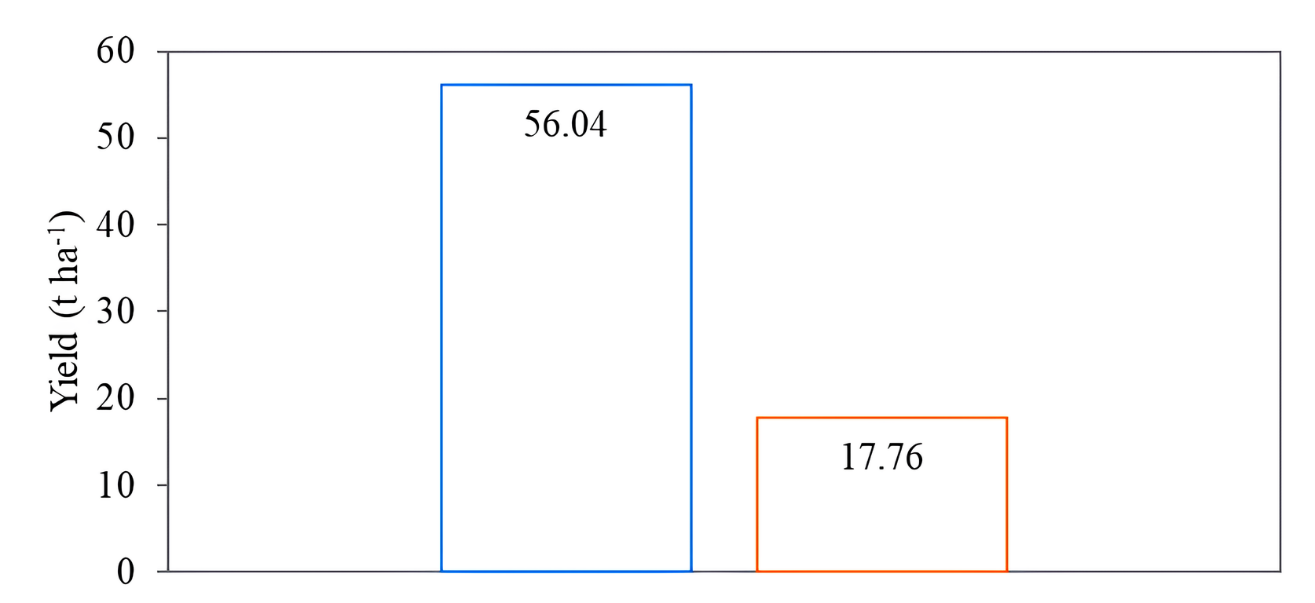
Figure 5. Fresh (blue) and dry (orange) biomass yields of millet across treatments under center pivot motor–pump speed control.
Emergence started on 1 July 2023, with the final stand established on 4 July 2023 (≈10 plants m⁻¹); no basal fertilization was applied due to organic certification. The experiment was performed from 27 June to 20 October 2023. For soil characterization, disturbed samples were collected at 0–0.20 m depth from upper, central, and lower positions within the pivot area (Table S1), and the soil was classified as a dystrophic Red Latosol with sandy-clay texture (Santos et al., 2018).
Modernized center pivot, irrigation management, and cultural practices
Irrigation management and system operation were performed via a digital control panel installed on the center pivot, with remote monitoring through a smartphone application (Figure S9). Scheduling followed crop evapotranspiration–based recommendations considering air relative humidity and mean air temperature for Goiânia, Goiás (Marouelli et al., 2008). The 115-day crop cycle was divided into four phenological stages: initial establishment (I), vegetative development (II), inflorescence formation and grain filling (III), and pre-harvest (IV), with respective water depth allocations of 10%, 35%, 40%, and 15%.
From 28 to 30 June 2023, three daily irrigations of 7.38 mm were applied to ensure emergence and stand establishment; thereafter, irrigation depths were adjusted according to stage-specific crop water requirements and monthly climatological normals provided by the National Institute of Meteorology (INMET). Irrigation intervals were set at 2 days for stages I–II and 4 days for stages III–IV, considering root system development and soil texture. Additionally, weed control was performed at 25 and 45 days after emergence, and no additional cultural practices were applied due to the organic certification of the experimental area.
Uniformity of water application after modernization
Water application uniformity was evaluated after modernization using Senninger I-Wob emitters with nine-groove deflectors and 10 PSI (7 mH₂O) pressure regulators. Collectors were installed along two radial lines from the pivot center at a 3° angle and 3 m spacing, using cylindrical cups (0.08 m diameter, 0.102 m height) mounted on 0.75 m aluminum rods in accordance with NBR 14.244 (ABNT, 1998). Operating pressure was measured at the pivot base and at the end of the overhang using a glycerin-filled manometer and applied water depth was determined with a graduated cylinder (Figure 2).
“Potamus” system for motor rotation control via pressure sensor
A control system designated “Potamus” was developed for real-time monitoring and automated control of a center pivot irrigation system (Figure S10). The system operates in parallel with the original pivot infrastructure and can be adapted to other center pivot systems, enabling monitoring of motor energy consumption, discharge flow rate, applied irrigation depth, and pivot operation with or without water. Motor speed control was implemented based on pressure transducer readings, with user-defined pressure setpoints configured via a digital control panel.
Motor rotation was regulated using a proportional–integral–derivative (PID) control algorithm (Figure S11). Pressure signals were acquired by pressure transducers (Novus NP400) installed at the central tower, mobile tower, and overhang section, processed by ESP32 microcontrollers, and transmitted via Wi-Fi (2.4 GHz). Control commands were sent through RS485 communication to a three-phase variable frequency drive (HC800, 25 CV / 18.5 kW), which adjusted motor frequency according to the control algorithm. The target operating pressure was set at 11 mH₂O, and system operation could be initiated locally through the pivot control panel or remotely via a SCADA-based smartphone interface (Figures S12 and S13).
Biometric and Physiological analyses of millet plants
Biometric measurements of millet plants were performed at 44 DAS and repeated at 28–35 day intervals, including plant height, stem diameter, and number of leaves per plant. Plant height was measured with a measuring tape, and stem diameter was measured 5 cm above the soil surface using a digital caliper on 16 plants per treatment. At 115 DAS, plants were harvested and separated into aboveground biomass and roots. Fresh mass was determined using an electronic scale; samples were then washed, oven-dried at 65 °C to constant weight, and weighed to determine dry aboveground and root biomass.
Chlorophyll content, flavonols, anthocyanins, and the nitrogen balance index (chlorophyll/flavonols) were measured using a leaf analyzer (Force A®, DUALEX Scientific™) on the +1 leaf, defined as the first fully expanded leaf with a visible sheath from the apex toward the base (Oliveira et al., 2010), avoiding the central vein. Evaluations were conducted on sixteen plants per experimental plot at 44, 79, and 107 DAS.
Soil moisture profile and applied water depth assessment
Soil moisture and applied water depth were monitored throughout the crop cycle using four stations (one per treatment), each equipped with four sensors (EC-5, Decagon Devices) installed at depths of 0.15, 0.25, 0.35, and 0.45 m and a rain gauge (ECRN-50) connected to an EM-50 datalogger (Figure 3). Measurements were recorded every 20 minutes, with data downloaded biweekly. Field capacity, permanent wilting point, soil texture, organic matter, and bulk density were determined from undisturbed soil cylinders (5 cm × 5 cm) collected for each monitored layer.
Data analysis
Evaluations of center pivot irrigation performance were conducted over two days, starting at 09:00 h, with two irrigation operations covering a full rotation of the center pivot in the counterclockwise direction. Data were subjected to analysis of variance (ANOVA) using R software, and Tukey’s test was applied at the 5% significance level.
Conclusion
The low-cost Potamus system effectively modernized and automated center pivot operation, reducing pump motor electricity consumption by 13.32% and by 8.11% after irrigation time adjustment to maintain the target water depth, while achieving modernization costs 36.87% lower than those of commercial solutions.
Pressure-based motor speed control did not compromise irrigation performance, maintaining soil moisture in the 0–0.25 m layer between field capacity and critical moisture levels throughout the crop cycle and preserving high water distribution uniformity (≈ 92.8%), which ensured consistent millet responses across terrain slopes. In addition to improving energy efficiency, the system enabled real-time monitoring of three-phase electrical power quality, making it a cost-effective and scalable alternative for enhancing the energy and hydraulic performance of center pivots, particularly in sloping terrain.
Acknowledgements
We would like to thank the Graduate Agronomy Program of the Federal University of Goiás (PPGA-UFG) and the professors and collaborators of the Climate and Water Resource Research Center of the Cerrado (NUCLIRH) for technical and scientific support.
Authors contribution
ALMM and JAJ: Conceptualization, data curation, formal analysis, investigation, methodology, project administration, supervision, software, validation, visualization, writing original draft, review and editing. DS and JMFS: Formal analysis, review and editing. JMF Souza: Formal analysis, review and editing. DC and DSP: Formal analysis, writing original draft, review and editing. AWPE: Project administration, supervision, formal analysis, writing original draft, review and editing. FFC: Writing original draft, suggested improvements, review and editing.
Data Availability
The data generated during and/or analyzed during the current study are available from the corresponding author on reasonable request.
Conflicts of Interest
The authors declare no conflicts of interest regarding the publication of this paper.
References
ABNT (1998) NBR 14244: Equipamentos de irrigação mecanizada - Pivô central e lateral móvel providos de emissores fixos ou rotativos - Determinação da uniformidade de distribuição de água. ABNT, Rio de Janeiro.
Alves Júnior J, Sales DLA, Pereira RM, Rodriguez WDM, Casaroli D, Evangelista AWP (2018) Viabilidade econômica da irrigação por pivô central nas culturas de soja, milho e tomate. Pesq. Agropecu. Pernambucana. 22:e201703.
Animasaun DA, Mustapha KA, Akinbobola AM, Bakare AT, Ogunjobi JT, Adedoyin KA, Awujoola KF (2024) Morphological screening and expression of droughtrelated genes P5SC1 and DREB1A in water-stressed pearl millet (Pennisetum glaucum) at the pre-fruiting stage. Bragantia. 83:e20230270.
Antunes Junior EJ, Alves Junior J, Casaroli D (2018) Calibração do sensor capacitivo EC-5 em um Latossolo em função da densidade do solo. Revista Engenharia na Agricultura. 26(1):80–88.
Brar D, Kranz WL, Lo T, Irmak S, Martin DL (2017) Energy conservation using variable-frequency drives for center-pivot irrigation: Standard systems. Transactions of the ASABE. 60(1):95–106.
Embrapa (Empresa Brasileira de Pesquisa Agropecuária) (2021) Área irrigada por pivôs centrais no Brasil atinge 1,6 milhão de hectares. Embrapa Milho e Sorgo. Available from: https://www.embrapa.br/busca-de-noticias/-/noticia/59843654/area-irrigada-por-pivos-centrais-no-brasil-atinge-16-milhao-de-hectares. Accessed 17 Jun 2024.
Bortoluzzi MP, Mattioni MH (2021) Uniformidade de distribuição de água em pivô central. In: Padrón RAR (ed) Manejo, gestão e técnicas de irrigação. Mérida Publishers, Canoas. 2.
Campos HM, Oliveira HFE, Mesquita M, Castro LEV, Ferrarezi RS (2021) Low-cost open-source platform for irrigation automation. Comput. Electron. Agr. 190:106481.
Cerovic ZG, Masdoumier G, Ghozlen NB, Latouche G (2012) A new optical leaf‐clip meter for simultaneous non‐destructive assessment of leaf chlorophyll and epidermal flavonoids. Physiol Plantarum. 146(3):251–260.
Duarte LFC (2010) Sistema automatizado georreferenciado sem fio para irrigação localizada auxiliado por sensor de umidade do solo. 2010. 68p. Dissertation (MSc) Universidade Estadual de Campinas, Campinas, Brazil, 2010.
Fantin CA (2016) Metodologia para estimação do estado trifásica em sistemas de distribuição incorporando medidas SCADA, virtuais, pseudo-medidas e medidas fasoriais sincronizadas. 2016. 130p. Thesis (PhD). Universidade de São Paulo, São Carlos, Brazil, 2016.
Ferreira FN, Oliveira ICM, Andrade CLT, Simeão RM, Souza IRP (2020) Produção de silagem de milheto sob diferentes lâminas de irrigação. Embrapa Milho e Sorgo. Available from: http://www.infoteca.cnptia.embrapa.br/infoteca/handle/doc/1125185. Accessed 15 Apr 2024.
Khandelwal V, Patel R, Choudhary KB, Pawar SB, Patel MS, Lyanar K, Mungra KD, Kumar S, Satyavathi T (2024) Stability analysis and identification of superior hybrids in pearl millet [Pennisetum glaucum (L.) R. Br.] using the multi trait stability index. Plants. 13(8): 1101.
Leite EO (2007) Retrofitting Industrial – O uso de novas tecnologias. 2007. 46p. Undergraduate thesis. Universidade São Francisco, Campinas, Brazil, 2007.
Lima ADS, Zocoler JL, Maggi MF, Lima HK (2009) Uso de inversor de frequência em sistema de irrigação do tipo pivô central e seu efeito na lâmina e uniformidade de distribuição de água. Pesquisa Aplicada & Agrotecnologia. 2(1):119–125.
Lima ADS, Zocoler JL, Jadoski SO, Maggi MF, Amarante RR (2015) Desempenho operacional no bombeamento em pivô central utilizando inversor de frequência. Revista Brasileira de Tecnologia Aplicada nas Ciências Agrárias. 8(2):51–61.
Lima GH, Alves Junior J, Evangelista AWP, Casaroli D, Mesquita M (2018) Estudo comparativo de manejo fitossanitário/nutricional: quimigação x aplicação convencional, em área irrigada por pivô central, com soja, milho e tomate industrial. Revista Agrotecnologia 9(2):49-56.
Liu Y, Wang J, Yao X, Shi X, Zeng Y (2021) Diversity analysis of chlorophyll, flavonoid, anthocyanin, and nitrogen balance index of tea based on Dualex. Phyton. 90(5):1549–1558.
Mantovani EC (2001) Avalia: Programa de Avaliação da Irrigação por Aspersão e Localizada. UFV, Viçosa.
Martins CM, Galindo ICL, Souza ER, Poroca HA (2010) Atributos químicos e microbianos do solo de áreas em processo de desertificação no semiárido de Pernambuco. Rev. Bras. Cienc. Solo. 34(6):1883–1890.
Marouelli WA, Carvalho e Silva WL, Silva HR (2008) Irrigação por aspersão em hortaliças: qualidade da água, aspectos do sistema e método prático de manejo. Embrapa Hortaliças, Brasília.
Medeiros AMM (2010). Otimização de sistema de irrigação por aspersão pivô central. 2010. 131p. Thesis (PhD). Universidade Federal de Goiás, Goiânia, Brazil, 2010.
Medeiros AMM, Oliveira AM, Mendes ALM, Júnior CP, Nerys JWL (2023) Modernização de sistema de pivô central visando economia de energia elétrica e água com monitoramento e controle remotos. Paper presented at the 21st Conferência de Estudos em Engenharia Elétrica, Universidade Federal de Uberlândia, Uberlândia, 6-10 November 2023.
Medrado E, Lima JEFW (2014) Development of pedotransfer functions for estimating water retention curve for tropical soils of the Brazilian savanna. Geoderma. 1:59–66.
Moraes MJ, Oliveira Filho D, Mantovani EC, Monteiro PMB, Mendes ALC, Damião JC (2014) Automação em sistema de irrigação tipo pivô central para economia de energia elétrica. Eng. Agr. - Jaboticabal. 34(6):1075–1088.
Nascimento VF, Feitosa EO, Soares JI (2017) Uniformidade de distribuição de um sistema de irrigação por aspersão via pivô central. Revista de Agricultura Neotropical. 4:65–69.
Oliveira ECA, Oliveira RI, Andrade BMT, Freire FJ, Lira Júnior MA, Machado PR (2010) Crescimento e acúmulo de matéria seca em variedades de cana-de-açúcar cultivadas sob irrigação plena. Rev. Bras. Eng. Agr. Amb. 14(9):951–960.
Pazuch FA (2021) Desenvolvimento, construção e validação de um pivô central experimental. 2021. 80p. Thesis (PhD). Universidade do Oeste do Paraná, Cascavel, Brazil, 2021.
Pereira FAL (2017) Desenvolvimento e análise da eficiência energética de um sistema de automação de precisão para irrigação localizada utilizando Arduino e inversor de frequência. 2017. 74p. Thesis (PhD). Universidade Federal Rural do Semiárido, Mossoró, Brazil, 2017.
Pereira PHC, Colombo A, Rabelo GF, Machado DA (2013) O uso da engenharia de automação na redução do consumo de energia elétrica em um sistema de irrigação por pivô central. Paper presented at the 13th Safety, Health and Environment World Congress, COPEC, Porto, 7-10 July 2013.
Raval CH, Patel AM, Bhatt PK, Vyas KG, Bedse RD, Patel CS, Patel SJ (2015) Response of multi-cut summer forage pearl millet (Pennisetum glaucum) to varying levels of irrigation and nitrogen under semi-arid condition of north Gujarat. Forage Research. 41(1):34–39.
Reddy PS, Satyavathi CT, Khandelwal V, Patil HT, Gupta PC, Sharma LD, Mungra KD, Singh SP, Narasimhulu R, Bhadarge HH, Iyanar K, Tripathi MK, Yadav D, Bhardwaj R, Talwar AM, Tiwari VK, Kachole UG, Sravanti K, Priya MS, Athoni BK, Anuradha N, Govindaraj M, Nepolean T, Tonapi VA (2021) Performance and stability of pearl millet varieties for grain yield and micronutrients in arid and semi-arid regions of India. Frontiers in Plant Science. 12:670201.
Rolim TWR (2021) Unidade autônoma de manejo da irrigação de baixo custo controlado via aplicativo para cultivos em ambiente protegido. 2021. 142p. Dissertation (MSc). Universidade Federal do Ceará, Fortaleza, Brazil, 2021.
Santos MAL, Santos DP, Silva DS, Silva MS, Cavalcante PHS (2015) Avaliação da uniformidade de distribuição de um sistema de irrigação por gotejamento em inhame (Dioscorea cayennensis L.). Revista Ciência Agrícola. 13(1):7–13.
Santos HG, Jacomine PKT, Anjos LH, Oliveira VA, Lumbreras JF, Coelho MR, Almeida JA, Araújo Filho JC, Oliveira JB, Cunha TJF (2018) Sistema Brasileiro de Classificação do Solo. Embrapa, Brasília.
Silva TBG (2020) Software para avaliação da viabilidade econômica do uso do inversor de frequência em pivô central. 2020. 84p. Thesis (PhD). Universidade Estadual Paulista, Botucatu, Brazil, 2020.
Teixeira TS (2014) Uma contribuição ao estudo de dimensionamento de motores e de um sistema de irrigação por gotejamento. 2014. 91p. Dissertation (MSc). Universidade Federal de Uberlândia, Uberlândia, Brazil, 2014.
Vieira S (2004) As novas tecnologias das IHMs. Mecatrônica Atual: Automação Industrial de Processos e Manufatura. Available from: http://www.mecatronicaatual.com.br/secoes/leitura/428. Accessed: 17 Jul 2024.
Vitorino LC, Silva FO, Cruvinel BG, Bessa LA, Rosa M, Souchie EL, Silva FG (2020) Biocontrol potential of Sclerotinia sclerotiorum and physiological changes in soybean in response to Butia archeri palm rhizobacteria. Plants. 9(1):64.