Australian Journal of Crop Science
Article | https://doi.org/10.21475/ajcs.26.20.07.pne151
Submitted: 07 October 2025 | Revised: 17 December 2025 | Accepted: 11 May 2026
Pages 512-522
Initial growth of maize seedlings under soil water tension and density levels
Alan Ricardo Valdanha de Souza1, Tonny José Araújo da Silva1, Lucas Silveira Lecci2, Edna Maria Bonfim-Silva1, Luana Aparecida Menegaz Meneghetti1, Ivis Andrei Campos e Silva1, Patrícia Ferreira da Silva3
1Institute of Agricultural and Technological Sciences, Federal University of Rondonópolis, Rondonópolis 78736-900, Mato Grosso, Brazil
2Faculdade Anhanguera de Rondonópolis - FAR, Rondonópolis, MT, Brazil
3National Center for Natural Disaster Monitoring and Alerts - Cemaden, Estrada Doutor Altino Bondesan, 500 - Eugênio de Melo District, São José dos Campos 12247-016, São Paulo, Brazil
Corresponding authors: Edna Maria Bonfim-Silva
Abstract: Soil bulk density and water tension are critical factors influencing the early development of maize (Zea mays L.), a crop of major agricultural importance. This study, which was conducted at the Federal University of Rondonópolis, Brazil, aimed to evaluate the combined effects of these factors on seedling growth via a tension table, with the goal of identifying the optimal cultivation range. The experiment followed a completely randomized design in a 4x5 factorial scheme, with four soil densities (1.2, 1.4, 1.6, and 1.8 g cm-3) and five water tensions (0, 10, 20, 60, and 100 cm H2O), totaling 60 experimental units. Samples of dystrophic Oxisol (Red Latosol) were compacted into PVC pots without mineral fertilization. Measurements were taken at 15 and 20 days after sowing and included variables such as plant height, leaf area and dry mass of shoots and roots, and various root system parameters. The data were subjected to normality and homoscedasticity tests, followed by analysis of variance and regression analysis. The results revealed that emergence time, plant height, and growth rate were significantly influenced by the tested factors. A density of 1.4 g cm-3 and a water tension of 65.2 cm H2O yielded the highest fresh shoot biomass. Water tensions of 72.03 and 94.5 cm H2O enhanced root system development, whereas soil densities between 1.3 and 1.49 g cm-3 favored greater dry root mass. These findings highlight the importance of managing soil physical conditions and water availability for optimal maize seedling development.
Keywords: Initial development; Root system; Soil physical quality; Soil water content; Zea mays L.
Introduction
Maize (Zea mays L.) occupies approximately 21.97 million hectares in Brazil, with an emphasis on the state of Mato Grosso, which is responsible for 45.2 million tons (CONAB, 2022). As a strategic commodity, its productive performance depends heavily on the initial growth of seedlings, including germination and vigor (Taiz and Zeiger, 2024).
The early development of maize is strongly related to the physical properties of the soil, such as density, porosity, and moisture (Ali et al., 2021). High density reduces porosity and increases penetration resistance, making root emergence and growth difficult (Xiong et al., 2022). In cultivars such as Zhengdan958, compaction caused a significant reduction in root volume (Xiong et al., 2020), reflecting losses of up to 34% in productivity (Hargreaves et al., 2019).
Compaction, caused mainly by machine traffic and inadequate handling, deforming the soil structure, reduces porosity, and compromises water storage and transport (Keller et al., 2017; Schjønning et al., 2017). This condition increases water tension in the soil, reducing its availability to plants. Water tension, measured by tensiometers or pressure chambers with porous plates, reflects water retention as a function of soil density and moisture, composing the so-called water retention characteristic curve (Silva et al., 2018; Zarehaghi et al., 2017).
Although lower stresses indicate soils with higher moisture contents and favor germination, excessive moisture in compacted soils can cause oxygen deficiency and limit root growth. Thus, the balance between water density and tension is fundamental. The water retention characteristic curve (RCC) allows the identification of the range of moisture useful for plant growth, delimiting points such as field capacity and permanent wilting (Xiong et al., 2020; Silva et al., 2018).
Several methods can be used to obtain the RCC, such as the Richards chamber, dew point psychrometer, filter paper and tension table, the choice of which depends on the characteristics of the soil and the objectives of the study (Melo Filho et al., 2015; Lucas et al., 2011; Cintra et al., 2004). The adequacy of the method to the local reality is essential for the accuracy of the data (Gotardo et al., 2019; Nascimento et al., 2010).
Considering the scarcity of studies that investigate, in an integrated way, the combined effects of soil density and water tension on the initial growth of maize, especially under tropical conditions, the present work aims to evaluate these interactions in seedlings cultivated under a tension table. The study also aims to identify the ideal range of density and tension to maximize the initial establishment of the crop.
Results and discussion
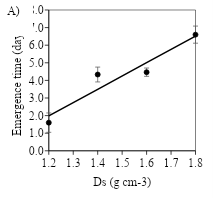
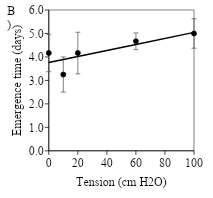
The emergence time variable was significantly influenced and isolated by soil density (p<0.05) and soil water tension (p<0.05) in a linear manner (Figures 1A and 1B). The increase in these factors prolonged the emergence time, with no evidence of a maximum point, suggesting a proportional and continuous response.
The increase in soil density and water tension prolonged the emergence time of the maize seedlings. Although the average time observed coincides with that reported by Magalhães and Durães (2002) for favorable conditions (four to five days), the results indicate that high levels of these factors delay emergence, with emphasis on the negative effect of density. According to Viana et al. (2006), soil compaction hinders the absorption of oxygen by seeds, delaying germination. According to Genero et al. (2023), the physical and chemical conditions of the soil are determinants of maize emergence and productivity.
Plant height had a significant effect (p<0.05) on the relationship between soil density and water tension. The maximum height, 16.2 cm, was observed under a tension of 2.28 cm H2O and a density of 1.51 g cm-3 (Figure 2), indicating the joint influence of these factors on initial growth.
|
|
Fig 1. Emergence time (days) of the Pioneer P3889R hybrid maize plant as a function of the combinations of soil density levels (A) and soil water stresses (B). * indicates p ≤ 0.05. DS=soil density. T = water tension in the soil.
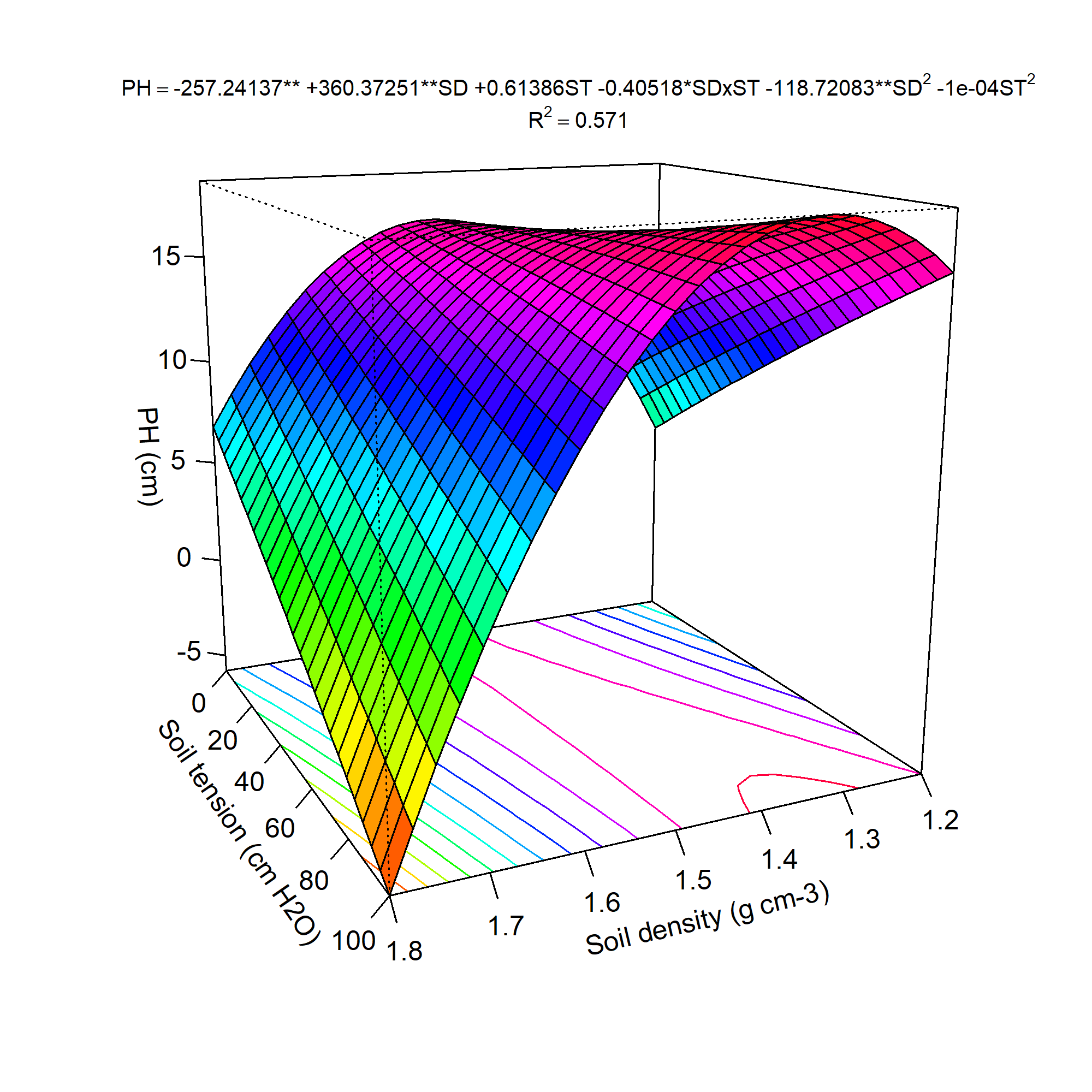
Fig 2. Plant height of Pioneer P3889R hybrid maize as a function of combinations of soil density levels and soil water tension. * indicates p ≤ 0.05. DS=soil density. T = water tension in the soil.

Fig 3. Growth rate (cm day-1) of Pioneer's P3889R hybrid maize as a function of combinations of soil density and soil water tension. * indicates p ≤ 0.05. DS=soil density. T = water tension in the soil.

Fig 4. Leaf area of Pioneer's P3889R hybrid maize as a function of the combinations of soil density levels and soil water tension. * indicates p ≤ 0.05. DS=soil density. T = water tension in the soil.
These results corroborate those of Silva et al. (2018), who highlighted the good performance of maize under low stresses. Water stress reduces plant height, stem diameter, and productivity because of the relatively small leaf area and damage to the photosynthetic apparatus (Guimarães et al., 2019). The high density of the soil also compromises plant growth by limiting root exploitation and the absorption of water and nutrients. Sousa Almeida et al. (2021) reported a linear relationship between increased density and a reduction in maize height. Guimarães et al. (2013) reported a similar effect on pearl millet, attributed to lower soil porosity and aeration, which hinder root and vegetative development.
The seedling growth rate was influenced by the interaction between the soil density and water tension. The highest value (1.5 cm day-1) was observed for the combination of a density of 1.5 g cm-3 with a tension of 40.2 cm H2O (Figure 3).
Growth depends on cellular processes that are vulnerable to water imbalance, especially during cell elongation (Tatagiba et al., 2024). Under harsh conditions, plants can reduce energy consumption as a defense mechanism (Liu, 2015). In the present study, even at high density (1.5 g cm-3), maize developed adequately. Physical soil restriction can limit water absorption, affecting physiological processes and growth. The interaction between density and water tension favored initial
 |
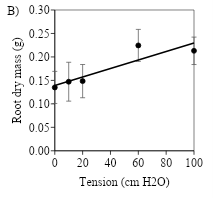 |
Fig 5. Root dry mass of Pioneer's hybrid maize P3889R crop subjected to different soil density levels (A) and soil water stresses (B). * indicates p ≤ 0.05; * indicates not significant. DS=soil density. T = water tension in the soil.
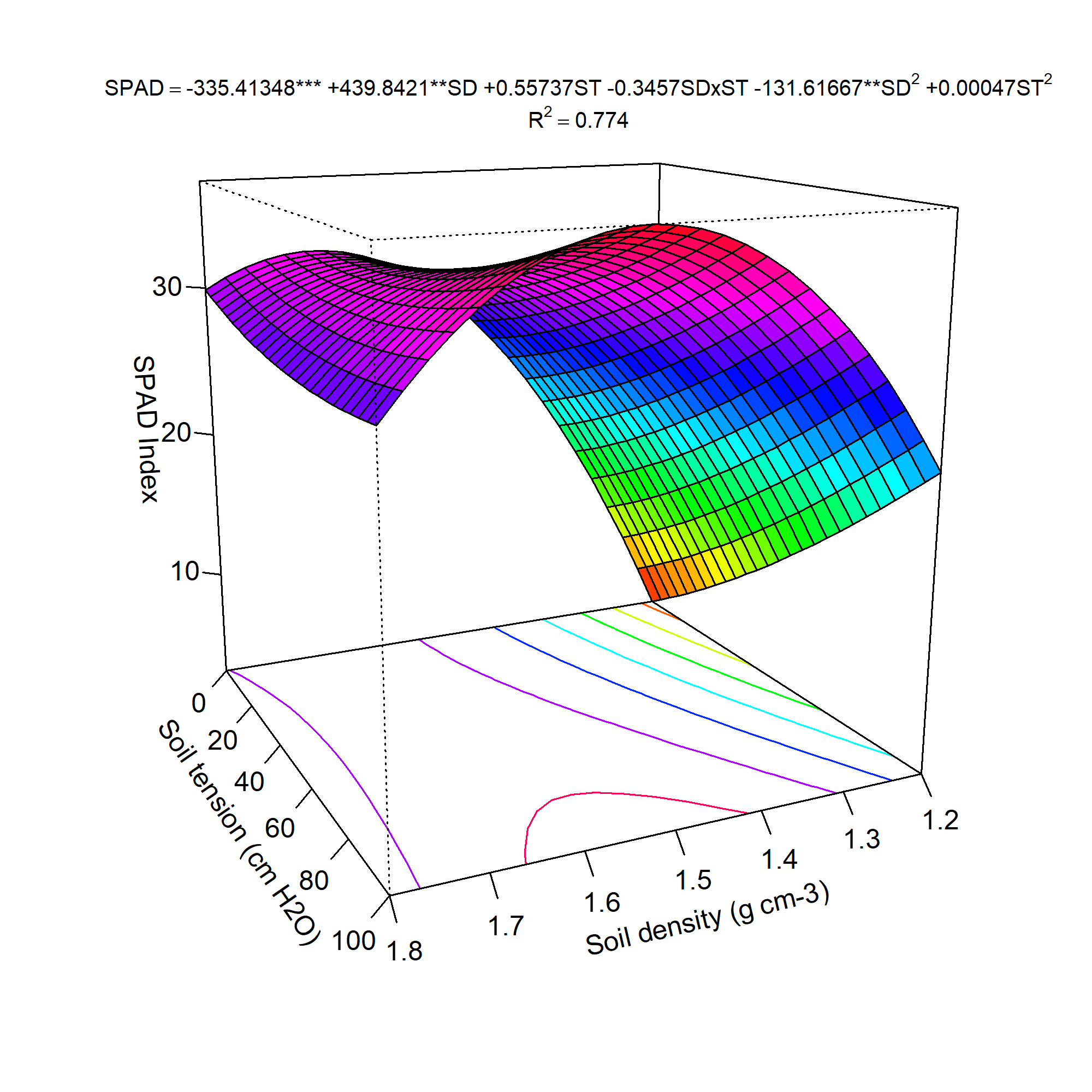
Fig 6. SPAD index of Pioneer hybrid maize P3889R as a function of combinations of soil density levels and soil water tension. * indicates p ≤ 0.05. DS=soil density. T = water tension in the soil.
growth, possibly associated with the carbon fixation metabolism of maize. Beutler and Centurion (2007) noted that compaction reduces porosity and water and nutrient availability, compromising plant growth.
The leaf area (LA) was significantly influenced (p<0.05) by the interaction between a soil density of 1.4 g cm-3 and a tension of 78.8 cm H2O, resulting in a 79.0 cm2 leaf area (Figure 4).
Leaf area is a crucial parameter for productivity because it favors photosynthesis and the synthesis of photoassimilates (Veronezi et al., 2018). The interaction between soil density and water availability is a determinant of the initial growth of maize, as the water supply directly influences the expansion of the leaf blade. Resende Neto et al. (2024) reported that a density of 1.0 g cm-3 favors the development of aerial and root parts, promoting greater leaf area. Under stress conditions, plants reduce the production of aerial phytomass by prioritizing vital functions, which compromises leaf expansion (Taiz & Zeiger, 2024).
Root dry mass was significantly influenced in isolation by soil density and water tension, fitting the quadratic model for density and the linear model for tension (Figure 5). The highest value (0.23 g) was observed at a density of 1.49 g cm3, representing the initial growth of maize (Figure 5A). The root dry mass increased linearly with increasing water strain, reflecting the need for water in the early stages of development (Figure 5B).
 |
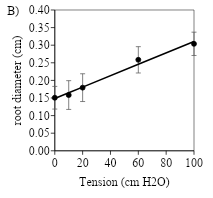 |
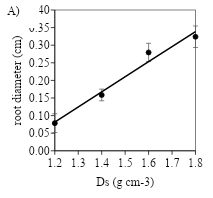
Fig 7. Average root diameter of the Pioneer P3889R hybrid maize crop subjected to different soil density levels (A) and soil water stresses (B). * indicates p ≤ 0.05; * indicates not significant. DS=soil density. T = water tension in the soil.

Fig 8. Root volume (cm) of Pioneer P3889R hybrid maize as a function of combinations of soil density and soil water tension. *indicates p ≤ 0.05. DS=soil density. T = water tension in the soil.
Adequate water availability during early growth favors cell division, root elongation, and nutrient absorption, contributing to an increase in root dry mass (Cruz et al., 2021). Water is essential for the translocation of assimilates, ensuring energy for root development (Bezerra et al., 2017). High soil densities reduce aeration, limiting root growth and slowing secondary root development (Liu et al., 2022). According to Reichert et al. (2008), each soil has a critical density that restricts root growth. Water is just as vital as nutrients for early growth, and a lack of both nutrients and nutrients can cause significant losses in productivity (Dias et al., 2019).
The SPAD index was significantly influenced by the interaction between soil density and water tension, with a maximum value of 31.7 observed at a density of 1.65 g cm-3 and a tension of 14.52 cm H2O (Figure 6).
Soil density can reduce the leaf area, photosynthetic rate, and chlorophyll synthesis (Morales et al., 2020; Oliveira et al., 2023). High SPAD indices tend to occur in relatively small leaves, optimizing photosynthesis under resource constraints (Cruz et al., 2021). However, the SPAD index does not fully reflect growth, since soil density can affect root biomass and leaf area regardless of the index.
The average diameter of the maize roots had significant isolated effects on the soil density and water tension according to the quadratic model. The increase in soil density increased the root diameter (Figure 7A), whereas the increase in water tension (100 cm H2O) resulted in a maximum diameter of 0.36 cm (Figure 7B).
Yu et al. (2024) investigated the impact of soil compaction on wheat root growth and reported that soils with densities of 1.3 and 1.5 g cm-3 presented variations in root diameter according to the soil texture and moisture. Similarly, this study revealed that increased soil density is associated with increased root diameter, although Mondal et al. (2023) reported that high density reduces root length and area, especially in clay soils, which can mitigate these effects via moisture retention. The clay loam soil used in this study likely provided sufficient moisture for the root development of the maize.

Fig 9. Total root surface area (cm2) of Pioneer's P3889R hybrid maize as a function of combinations of soil density and soil water tension. * indicates p ≤ 0.05. DS=soil density. T = water tension in the soil.

Fig 10. Total root length (cm) of Pioneer hybrid maize P3889R as a function of combinations of soil density and soil water tension. * indicates p ≤ 0.05. DS=soil density. T = water tension in the soil.
Vanhees et al. (2021) reported that high water levels stimulate root growth, with thick roots (>1 mm) being advantageous. In the present study, diameters larger than those mentioned above were observed, suggesting greater root potential. Colombi et al. (2018) noted that shallow roots favor the absorption of surface water.
The linear increase in the average diameter of the roots with increasing water tension reflects the concentration of the roots in the surface layers, where water is more available. Fine roots have a relatively large surface area and efficient water and nutrient absorption, which are crucial in conditions of scarcity (Kohn et al., 2016). Wasaya et al. (2018) reported that roots with larger diameters promote more expressive growth due to better water absorption, increasing the resilience of plants to edaphic stresses, especially in the face of increasing climate variability in agricultural systems.
Root volume was significantly influenced by the interaction between soil density and water tension, with a greater value of 4.9 mL observed in the combination of 1.28 g cm-3 density and 94.5 cm H2O tension (Figure 8).
Efficient root growth depends on a suitable soil physical environment that provides porous space, oxygenation, and favorable water availability (Mottin et al., 2022). This study revealed that high soil density reduces the pore space, limits root penetration and results in greater water retention, restricting root access by plants. Therefore, there is an ideal range of soil density and moisture that allows root development without mechanical limitations and with adequate water availability.
Similar results were reported by Souza et al. (2024) and Calonego et al. (2011), who reported a significant reduction in root volume in denser soils, and by Rocha et al. (2023), who reported a lower root volume in surface layers under high density. Roots are essential for the support and absorption of water and nutrients essential to plant metabolism (Batista et al., 2018), and soil moisture regulates their elongation and access to water resources (Colombi et al., 2018).
Notably, the interaction between moisture and density affects root volume and root development. In addition, the increase in the root system of maize may be associated with the radial expansion of the roots, which favors lateral growth and water absorption, in addition to plant support (Koetz et al., 2017; Colombi et al., 2018).
The total root surface area was significantly influenced by the interaction between soil density and water stress during the initial growth of maize. The highest value, 101.6 cm2, occurred with a density of 1.3 g cm-3 and a water tension of 72 cm H2O (Figure 9).
The total root surface area depends on root length and diameter, which are parameters that directly influence root quality (Santos et al., 2025). The interaction between density and water tension in the soil favors the root growth of maize, as roots in adverse environments adapt by penetrating pores of similar size, altering the soil structure and forming new pores (Jia et al., 2024). This soil modification is essential for the absorption of water and nutrients, the deficit of which impairs the development and transport of nutrients in plants. Zhu et al. (2016) reported that irrigation increases the surface area of roots, increasing their absorption efficiency.
The total root length significantly affected the interaction between soil density and water tension, represented by the response surface. The highest value, 181.7 cm, was observed for the combination of a density of 1.4 g cm-3 and a tension of 55.3 cm H2O (Figure 10).
High soil density can limit root development and plant productivity. Yu et al. (2024) reported that a density of 1.7 Mg m-3 affects the length of wheat roots. In this study, the highest density evaluated was 1.8 g cm-3, but the highest root length occurred at 1.4 g cm-3, indicating that, up to this level, the maize roots were not significantly damaged. Under resistance to deep growth, roots can adapt by becoming thinner and more tortuous to seek water and nutrients. Compacted soils have less porous space, reducing nutrient absorption, water storage, and oxygen diffusion and compromising plant support and growth (Rocha et al., 2023). The interaction between density and water tension should be considered, as dense soils can retain less water, aggravating the negative effects on growth.
Material and methods
Experimental site and experimental design
The experiment was carried out in a greenhouse at the Federal University of Rondonópolis (UFR), located at 16°27'49" S, 54°34'46" W and 290 m altitude, between May 20 and June 8, 2024. Soil classified as a dystrophic Oxisol or Red Latosol on Brazil (Embrapa, 2018) with a sandy clay-loam texture was collected from the 0-0.20 m layer under Cerrado vegetation at coordinates 16°27'35" S and 54°35'00" W. After collection, the soil was sieved through a 4 mm mesh and subjected to chemical analysis, as shown in Table 1.
Liming was performed 30 days before the installation of the experiment for soil correction. The experimental design was completely randomized in a factorial scheme with three replications. The treatments consisted of a combination of four levels of soil density (1.2, 1.4, 1.6 and 1.8 g cm-3) and five soil water tensions (0, 10, 20, 60 and 100 cm H2O), totaling 20 treatments and 60 experimental units.
Filling the cylinders with soil
The units consisted of PVC cylinders (12 cm high × 5 cm in diameter) filled with compacted soil according to a methodology adapted from Farias et al. (2013). The soil was previously homogenized and added to the pipes in successive layers, each compacted by a hydraulic press until the desired density was reached. The process was repeated until the surface was completely filled and leveled, ensuring the uniformity of compaction along the profile.
The soil compressibility was obtained with a manual hydraulic press according to the procedures of the ABNT MB-3336 standard (1990), which refers to the one-dimensional density test, and the Technical Communiqué 111 of Embrapa (1997), which recommends the use of a manual press to determine the compaction of agricultural soils.
The soil mass required to reach densities of 1.2, 1.4, 1.6 and 1.8 g cm-3 was calculated via equation 1:
| \[Ds = \frac{Ms}{Vt}\] | Eq. 1 |
where: Ds = soil density (g cm-3); Ms = mass of solids (g); and Vt = soil volume (cm3).
Installation of cylinders on tension bench
The water tensions were determined by a bench built on the basis of the principle of the tension table, which uses water columns with heights ranging from 10 to 100 cm, as shown in the diagram in Figure 11.
After soil saturation and water balance in the PVC pipes under the tension table, three holes of approximately 2 cm were drilled at the limit of the upper ring of each experimental unit for sowing. The seeds of the hybrid maize P3889R (Pioneer), a modified simple hybrid with an early cycle, were placed in each well to evaluate germination and initial growth under the different treatments.
Table 1. Soil analysis was carried out with 0-20 cm deep soil.
| Depth (cm) | pH | P | K | Ca+Mg | Ca | Mg | Al | H | OM | SB | CEC | BS (V) | Ca/Mg | Al Sat. | |
| H2O | CaCl2 | mg dm-3 | cmolc dm-3 | g dm-3 | cmolc dm-3 | % | % | ||||||||
| 0-20 | 6.6 | 5.9 | 12.9 | 167.2 | 5.86 | 3.9 | 1.9 | 0.0 | 2.5 | 32.8 | 6.29 | 8.84 | 71.15 | 2.07 | 0.0 |
P: phosphorus; K: potassium; Ca: calcium; Mg: magnesium; Al: aluminum; H: hydrogen; OM: organic matter; SB: sum of bases; CEC: cation exchange capacity; BS: base saturation.
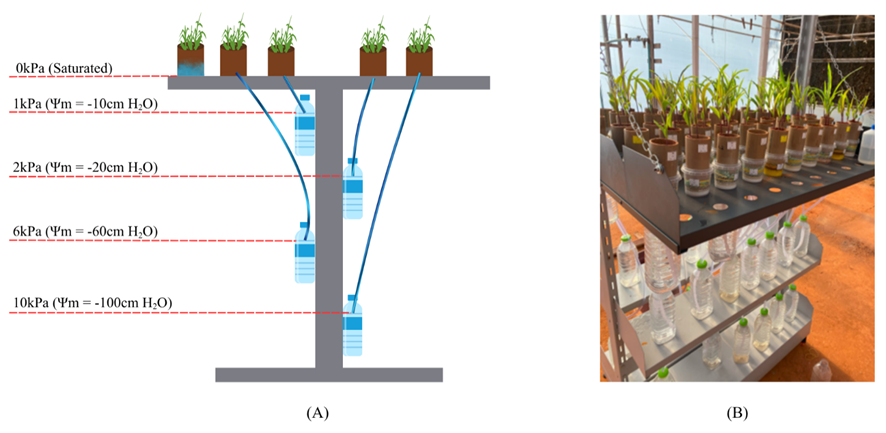
Fig 11. (A) Diagram of the bench using the principle of a tension table developed to obtain the different water tensions in the soil in the experimental units. (0, 1, 2, 6 and 10 kPa); (B) Maize plants 20 days after emergence.
Variables analyzed
The emergence time (ET) was recorded every 24 hours after sowing, considering that the first visible seedling emerged. The growth rate (GR) was monitored daily after emergence via a graduated ruler. At 15 days, the SPAD index was evaluated; at 20 days, the plant height (PH) was measured, and the units were transferred for laboratory analysis.
In the laboratory, the following parameters were determined: leaf area (LA), root dry mass (RDM), root diameter (RD), root volume (RV), root surface area (RSA) and total root length (TRL). The RSA corresponds to the functional surface of water and nutrient absorption. After seedling emergence, plant height was measured every 24 hours with a graduated ruler to quantify the daily growth rate (GR). At 15 days after sowing, the SPAD index was evaluated in each plot via SPAD-502 Plus equipment.
At the end of the experiment, plant height (PH) was evaluated with a graduated ruler, which was measured from the soil to the largest leaf. The experimental units were then removed from the tension table for laboratory analysis, in which the leaf area (LA) was determined via an LI-3100C area meter integrator.
The roots were removed from the soil by sieve washing, and their volume (RV) was estimated by the displacement of water in a beaker. The total root length (TRL), root surface area (RSA) and mean root diameter (RD) were calculated via equations 2, 3 and 4 respectively.
| \[TRL(cm) = \frac{{RA}^{2}}{1,27324 \times RV}\] | Eq. 2 |
where: TRL – total root length; RA – Root System Area; RV – root volume.
| \[SRA\left( {cm}^{2} \right) = \ \pi \times TRL \times \ RD\] | Eq. 3 |
where: SRA – surface root area; TRL – total root length; RD – average root diameter.
| \[RD(cm) = \frac{1,27324 \times RV}{RV \times RA}\] | Eq. 4 |
where:
RD – average root diameter; RV – root volume; RA – Root System Area
After the volume of the roots was determined, the roots were dried in a forced-air oven at 105 °C for 24 h to obtain the dry mass (DMR). The root‒shoot ratio was calculated according to Benincasa (2003).
Statistical analysis
Data normality was assessed via the Shapiro-Wilk test, and homoscedasticity was assessed via the Bartlett test at 5% probability. After confirming the ANOVA assumptions, analysis of variance was performed via the F test. For significant effects, the interactions with the Sisvar software were unfolded (Ferreira, 2019). Data with significant isolated effects were adjusted via linear and quadratic polynomial regression, whereas significant interactions were analyzed via a response surface model (z = a + bx + cx² + dxy + ey + fy²) via R software version 4.4.2.
Conclusion
The interaction between soil density and water tension influences the initial growth of maize seedlings, affecting morphological and physiological variables. Intermediate densities (especially 1.4 g cm-3) and moderate water tensions (approximately 65.2 cm H2O) provide ideal conditions for the accumulation of biomass in the shoot, whereas higher stresses (72.03 and 94.5 cm H2O), combined with densities between 1.3 and 1.49 g cm-3, favor root development in terms of volume, root area and length.
References
Ali L, Xiukang W, Naveed M, Ashraf S, Nadeem SM, Haider FU, Mustafa A (2021) Impact of biochar application on germination behavior and early growth of maize seedlings: insights from a growth room experiment. Appl Sci 11:11666. https://doi.org/10.3390/app112411666
ABNT (1990) NBR 12007: Solo – ensaio de adensamento unidimensional. Rio de Janeiro.
Batista MA, Inoue TT, Esper Neto M, Muniz AS (2018) Princípios de fertilidade do solo, adubação e nutrição mineral. In: Brandão Filho JUT, Freitas PSL, Berian LOS, Goto R (eds) Hortaliças-fruto. EDUEM, Maringá, pp 113–162. https://doi.org/10.7476/9786586383010.0006.
Benincasa MMP (2003) Análise de crescimento de plantas: noções básicas. FUNEP, Jaboticabal, 42 p.
Beutler AN, Centurion JF (2004) Compactação do solo no desenvolvimento radicular e na produtividade da soja. Pesqui Agropecu Bras 39:581–588. https://doi.org/10.1590/S0100-204X2004000600010
Bezerra BKL, Alves DAS, Germino GH, Lima J, Bianchi L, Broetto F (2017) O estresse das plantas: teoria & prática. 2nd edn. Cultura Acadêmica, São Paulo, pp 25–46.
Calonego JC, Gomes TC, Santos CH, Tiritan CS (2011) Desenvolvimento de plantas de cobertura em solo compactado. Biosci J 27(2):289–296.
Cintra FLD, Portela JC, Nogueira LC (2004) Caracterização física e hídrica em solos dos Tabuleiros Costeiros no Distrito de Irrigação Platô de Neópolis. Rev Bras Eng Agríc Ambient 8:45–50. https://doi.org/10.1590/S1415-43662004000100007.
Colombi T, Torres LC, Walter A, Keller T (2018) Feedbacks between soil penetration resistance, root architecture and water uptake limit water accessibility and crop growth: a vicious circle. Sci Total Environ 626:1026–1035. https://doi.org/10.1016/j.scitotenv.2018.01.129.
CONAB (2024) Acompanhamento da safra brasileira de grãos 2021/2022. Companhia Nacional de Abastecimento, 6º levantamento. Available at: https://www.conab.gov.br/info-agro/safras/serie-historica--das-safras?start=20. (accessed 8 Oct 2024)
Cruz NT, Pires AJV, Fries DD, Jardim RR, Sousa BML, Dias DLS, Sacramento MRSV (2021) Fatores que afetam as características morfogênicas e estruturais de plantas forrageiras. Res Soc Dev 10(7):e5410716180. https://doi.org/10.33448/rsd-v10i7.16180.
Dias MS, Reis LS, Lima IRV, Oliveira AW, Santos RHS, Almeida CAC, Silva VM (2019) Eficiência do uso da água pela cultura do amendoim sob diferentes lâminas de irrigação e adubação. Colloq Agrariae 15(2):72–83. https://doi.org/10.5747/ca.2019.v15.n1.a286.
Embrapa (1997) Manual de métodos de análise de solo. 2nd edn. Embrapa Solos, Rio de Janeiro, 212 p.
Embrapa (2018) Sistema Brasileiro de Classificação de Solos. 5th edn. Embrapa, Brasília. Available at: https://www.embrapa.br/solos/busca-de-publicacoes/-/publicacao/1107206/sistema-brasileiro-de-classificacao-de-solos (accessed 29 Jun 2025)
Embrapa (2023) Sensor para monitoramento da tensão da água no solo. Available at: https://www.embrapa.br/busca-de-solucoes-tecnologicas/-/produto-servico/2068/sensor-para-monitoramento-da-tensao-da-agua-no-solo. (accessed 18 Mar 2025)
Farias LN, Silva EM, Souza WP, Vilarinho MKC, Silva TJA, Guimaraes SL (2013) Características morfológicas e produtivas de feijão guandu anão cultivado em solo compactado. Rev Bras Eng Agríc Ambient 17(5):497–503. https://doi.org/10.1590/S1415-43662013000500005.
Ferreira DF (2019) SISVAR: um sistema computacional de análise para experimentos do tipo split plot com efeitos fixos. Rev Bras Biom 37(4):529–535.
Genero AFC, Sampaio A, Giboski FJ, Anholeto GL, Anghinoni V, Lajús CR, Anastácio TC (2023) Desenvolvimento radicular de milho com diferentes métodos de inoculação. In: Lajús CR, Busnello FJ, Sauer AV, Costella MF, Dalcanton F (eds) Tecnologia e gestão da inovação em sistemas de produção sustentáveis. EPTEC, Campina Grande, pp 165–175.
Gotardo R, Pinheiro A, Kaufmann V, Piazza GA, Torres E (2019) Comparação entre curvas de retenção de água obtidas em laboratório e a campo. Irriga 24:125–142. https://doi.org/10.15809/irriga.2019v24n1p125-142.
Guimarães CV, Assis RL, Simon GA, Pires FR, Ferreira RL, Santos DC (2013) Desempenho de cultivares e híbridos de milheto em solo submetido a compactação. Rev Bras Eng Agríc Ambient 17:1189–1194. https://doi.org/10.1590/S1415-43662013001100009.
Guimarães PS, Rocha DS, Paterniani MEAGZ (2019) Conteúdo de carboidrato foliar em híbridos de milho submetidos à restrição hídrica. Evidencia 19(2):93–112. https://doi.org/10.18593/eba.v19i1.20201.
Hargreaves PR, Baker KL, Graceson A, Bonnett S, Ball BC, Cloy JM (2019) Soil compaction effects on grassland silage yields and soil structure under different levels of compaction over three years. Eur J Agron 109:125916. https://doi.org/10.1016/j.eja.2019.125916.
Jia Y, Huan H, Zhang W, Wan B, Sol J, Tu Z (2024) Soil infiltration mechanisms under plant root disturbance in arid and semi-arid grasslands and the response of solute transport in rhizosphere soil. Sci Total Environ 957:177633. https://doi.org/10.1016/j.scitotenv.2024.177633.
Keller T, Colombi T, Ruiz S, Manalili MP, Rek J, Stadelmann V, Wunderli H, Breitenstein D, Reiser R, Oberholzer H, Schymanski S, Romero-Ruiz A, Linde N, Weisskopf P, Walter A, Or D (2017) Long-term soil structure observatory for monitoring post-compaction evolution of soil structure. Vadose Zone J 16(4):1–16. https://doi.org/10.2136/vzj2016.11.0118.
Koetz M, Bär CEL, Pacheco AB, Castro WD, Crisostomo WL, Silva ED (2017) Production and water use efficiency of Paiaguás grass under soil water tension. Rev Bras Agric Irrig 11:1223–1232. https://doir.org.10.7127/rbai.v11n100571.
Kohn LS, Carducci CE, Silva KCR, Barbosa JS, Fucks JS, Benevenute PAN (2016) Desenvolvimento das raízes de linho (Linum usitatissimum L.) em dois anos de cultivo sobre Cambissolo Húmico Sci Agrar 17:36–41.
Liu H, Colombi T, Jäck O, Keller T, Weih M (2022) Effects of soil compaction on grain yield of wheat depend on weather conditions. Sci Total Environ 807:1507632. https://doi.org/10.1016/j.scitotenv.2021.150763.
Liu M, Jiang Y (2015) Genotypic variation in growth and metabolic responses of perennial ryegrass exposed to short-term waterlogging and submergence stress. Plant Physiol Biochem 95:57–64. https://doi.org/10.1016/j.plaphy.2015.07.008.
Lucas JFR, Tavares MHF, Cardoso DL, Cássaro FAM (2011) Curva de retenção de água no solo pelo método do papel filtro. Rev Bras. Ciênc Solo 35(6):1957–1973. https://doi.org/10.1590/S0100-06832011000600013.
Magalhães PC, Durães FOM (2002) Cultivo do milho: germinação e emergência. Comunicado Técnico 39. Embrapa Milho e Sorgo, Sete Lagoas.
Melo Filho JF, Sacramento JAAS, Conceição BPS (2015) Curva de retenção de água elaborada pelo método do psicrômetro para uso na determinação do índice "S" de qualidade física do solo. Eng Agríc 35(5):959–966. https://doi.org/10.1590/1809-4430-Eng.Agric.v35n5p959-966/2015.
Mondal S, Chakraborty D (2023) Root growth and physiological responses in wheat to topsoil and subsoil compaction with or without artificial vertical macropores. Heliyon 9(8):e18834. https://doi.org/10.1016/j.heliyon.2023.e18834.
Morales F, Ancín M, Fakhet D, González-Torralba J, Gámez AL, Seminario A, Aranjuelo I (2020) Photosynthetic metabolism under stressful growth conditions as a basis for crop breeding and yield improvement. Plants 9:88. https://doi.org/10.3390/plants9010088.
Mottin MC, Seidel EP, Ribeiro LLO, Pan R, Fey E, Rosset JS (2022) Efeito do cultivo de milho consorciado com plantas de cobertura na produção de massa seca e nas propriedades físicas do solo. Conjecturas 22(9):70–91. https://doi.org/10.53660/CONJ-1422-AG13.
Nascimento PS, Bassoi LH, Paz VPS, Vaz CMP, Naime JM, Manieri JM (2010) Estudo comparativo de métodos para a determinação da curva de retenção de água no solo. Irriga 15(2):193–207. https://doi.org/10.15809/irriga.2010v15n2p193.
Oliveira MB, Menezes JFS, Roberti G, Ferreira MP, Policarpo VHC, Oliveira AM, Menezes CCE (2023) Biomass production and chlorophyll contents of cover crops in compacted soils. Res Soc Dev 12(4):e22612441171. https://doi.org/10.33448/rsd-v12i4.41171.
Reichert DJ, Albuquerque JA, Reichert JM, Aita C, Andrada MMC (2008) Limites críticos de densidade do solo para o crescimento de raízes de plantas de cobertura em Argissolo vermelho. Rev Bras Ciênc Solo 32(5):1805–1816. https://doi.org/10.1590/S0100-06832008000500002.
Resende Neto GL, Modesto AO, Silva FB, Borges DF (2024) Avaliação do desenvolvimento do milho (Zea mays L.) sobre diferentes níveis de compactação no solo. GETEC 14:191–198.
Rocha RAS, Silva TJ, Bonfim-Silva EM, Duarte TF, Oliveira NP (2023) Cultivation of Urochloa brizantha under different soil densities and doses of wood ash. Rev Bras Eng Agríc Ambient 27:230–238. https://doi.org/10.1590/1807-1929/agriambi.v27n3p230-238.
Santos LB, Barbosa FS, Guerra AMNM, Mendonça AVR, Silva AG, Aquino TN (2025) Use of ashes and extracts from spontaneous plants in mineral nutrition and plant protection for beet cultivation. JMC 11(27):1–27. https://doi.org/10.17349/jmcv11n27-005.
Schjønning P, Lamandé M, Crétin V, Nielsen JA (2017) Upper subsoil pore characteristics and functions as affected by field traffic and freeze–thaw and dry–wet treatments. Soil Res 55(3):234–244. https://doi.org/10.1071/SR16149.
Silva FG, Aspiazu I, Oliveira RM, Silva KMJ, Santos SR, Portugal AF, Moreira JAA, Brito OG, Silva NP (2018) Tensão de água no solo para o reinício da irrigação de milho verde no Semiárido. Rev Bras Milho Sorgo 17(2):190–200. https://doi.org/10.18512/1980-6477/rbms.v17n2p190-200.
Sousa Almeida M, Cunha MBM, Oliveira MS, Gomes KJS, Silva Paz JAA, Carneiro MVB, Silvestre FER (2021) Compactação do solo e os efeitos no crescimento inicial do milho. Ciênc Agríc 19(2):95–100. https://doi.org/10.28998/rca.v19i2.11472.
Souza Sabóia A, Bonfim-Silva EM, Silva TJA, Meneghetti LAM, Silva Rocha RA, Silva MAP (2024) Sistema radicular de nabo forrageiro na descompactação do solo cultivado em vaso de poliuretano expansível. Obs Econ Latinoam 22(11): e7941-e7941. https://doi.org/10.55905/oelv22n11-212.
Taiz L, Zeiger E (2024) Fisiologia e desenvolvimento vegetal. 7th edn. Artmed, Porto Alegre, 864 p.
Tatagiba SD, Figueiredo ALP, Brancaleoni L, Carelli C, Modolon GF (2024) Crescimento e produção do feijoeiro comum, cultivar “Querência”, do grupo carioca, submetido à restrição hídrica em ambiente protegido. Agropecuária Cient Semi-Árido 20(2):26–34. https://doi.org/10.30969/eqch2z93.
Vanhees DJ, Loades KW, Bengough AG, Mooney SJ, Lynch JP (2021) The ability of maize roots to grow through compacted soil is not dependent on the amount of roots formed. Field Crops Res 264:108013. https://doi.org/10.1016/j.fcr.2020.108013.
Veronezi SDF, Ribeiro LM, Ceccon G (2018) Uso de Azospirillum brasilense em milho safrinha solteiro consorciado com Brachiaria ruziziensis. Braz J Biosyst Eng 12(4):349–360. https://doi.org/10.18011/bioeng2018v12n4p349-360.
Viana JHM, Cruz JC, Alvarenga RC, Santana DP (2006) Manejo do solo para a cultura do milho. Circular Técnica 77, Embrapa Milho e Sorgo, Sete Lagoas.
Wasaya A, Zhang X, Fang Q, Yan Z (2018) Root phenotyping for drought tolerance: a review. Agronomy 8(11):241. https://doi.org/10.3390/agronomy8110241.
Xiong P, Zhang Z, Hallett PD (2020) Variable responses of maize root architecture in elite cultivars due to soil compaction and moisture. Plant Soil 455:79–91. https://doi.org/10.1007/s11104-020-04673-3.
Xiong P, Zhang Z, Guo Z, Peng X (2022) Macropores in a compacted soil impact maize growth at the seedling stage: effects of pore diameter and density. Soil Tillage Res 220:105370. https://doi.org/10.1016/j.still.2022.105370.
Yu C, Mawodza T, Atkinson BS, Atkinson JA, Sturrock CJ, Whalley R, Mooney SJ (2024) The effects of soil compaction on wheat seedling root growth are specific to soil texture and soil moisture status. Rhizosphere 29:100838. https://doi.org/10.1016/j.rhisph.2023.100838.
Zarehaghi D, Neyshabouri MR, Gorji M, Hassanpour R, Bandehagh A (2017) Growth and development of pistachio seedling root at different levels of soil moisture and compaction in greenhouse conditions. Soil Water Res 12:60–66. https://doi.org/10.17221/146/2015-SWR.
Zhu L, Kan W, Zhang Y, Sun J (2016) Visualizing the structure of the Earth’s lithosphere on the Google Earth virtual-globe platform. ISPRS Int J Geo-Inf 5(3):26. https://doi.org/10.3390/ijgi5030026.