Australian Journal of Crop Science
Article | https://doi.org/10.21475/ajcs.26.20.08.pne184
Submitted: 15 November 2025 | Revised: 21 March 2026 | Accepted: 25 March 2026
Pages 662-669
Imazethapyr + imazapic rates in sorghum-Mulato II intercropping and their impacts on soybean and weeds
Felipe Pereira Cunha1*, Adriano Jakelaitis1, Estevam Matheus Costa2, Anny Éllen Sousa Alves1, Natanael Vitor de Souza1, Jardel Lopes Pereira1
1Weed laboratory, Instituto Federal Goiano – Campus Rio Verde, Rio Verde, Goiás, Brazil
2Grupo Associado de Pesquisa do Sudoeste Goiano – GAPES, Rio Verde, Goiás, Brazil
*Corresponding author: felipe.cunha@estudante.ifgoiano.edu.br
ORCID: https://orcid.org/0009-0003-4479-0593
Abstract: This study aimed to determine appropriate rates of the imazethapyr + imazapic ready-made mixture for managing Urochloa hybrid cv. Mulato II intercropped with sorghum (Sorghum bicolor (L.) Moench), as well as to evaluate the effects of mulch on weed suppression and soybean performance under succession. The experiment was conducted in a randomized block design with four replications, with treatments consisting of sorghum monoculture and intercropping with Mulato II subjected to five rates of the commercial herbicide Zelone® (0, 0.35, 0.7, 1.05, and 1.4 L ha⁻¹). This study was conducted during the off-season, evaluating crop performance, forage biomass and phytotoxicity, and weed dynamics. The herbicide caused phytotoxic effects on the forage, reaching approximately 60% injury at 14 days after application, followed by gradual recovery. The highest rates (1.05 and 1.4 L ha⁻¹) effectively suppressed Mulato II without affecting sorghum yield, which averaged 5,852 kg ha⁻¹, exceeding state (4,006 kg ha⁻¹) and national (3,739 kg ha⁻¹) averages. Mulch derived from the intercropping system effectively suppressed weed growth, eliminating the need for pre-emergence herbicide application in soybean. Moreover, no negative effects on soybean establishment or yield were observed. Intercropping Urochloa hybrid cv. Mulato II with imidazolinone-tolerant sorghum is a viable strategy when managed with the ready-mix formulation of imazethapyr + imazapic, contributing to invasive grass control and enhancing sustainability in integrated production systems in the Brazilian Cerrado.
Keywords: ALS, cereals, grasses, mix, integration systems.
Abbreviations: ALS_acetolactate synthase; BIC_Bayesian Information Criterion; CLI_crop–livestock integration; CONAB_National Supply Company, Brazil; CV_cultivar; DAA_days after application; DAE_days after emergence; GAPES_Associated Research Group of Southwest Goiás; ha⁻¹_per hectare; IF Goiano_Federal Institute of Goiás; INMET_National Institute of Meteorology, Brazil; kg ha⁻¹_kilograms per hectare; L ha⁻¹_liters per hectare; N_nitrogen; cp_commercial product; R_R statistical software environment; UPL_United Phosphorus Limited; and V3_soybean vegetative stage with three fully developed nodes.
Introduction
Simultaneous cultivation of species from the Urochloa or Panicum genera with maize or sorghum enables grain harvesting while providing early high-yield forage and straw formation for soybean or other grain crops under no-tillage systems. Adequate straw cover is essential for successful no-tillage. When no-tillage is implemented in areas with insufficient crop residue or soil cover, infestation by herbicide-tolerant or -resistant weed species increases and can significantly reduce soybean yield compared with fields planted over Urochloa spp. residues (Grün et al., 2024; Sekiya et al., 2025).
In such systems, forage grasses have been widely used to support crop–livestock integration (CLI) (Franzluebbers and Martin, 2022). Maize, sorghum, and soybean are the most common grain crops cultivated within CLI systems in the Brazilian Midwest (Silva et al., 2023). Under Cerrado conditions, intercropping sorghum with Urochloa species has proven to be a viable technology that maintains sorghum grain yield (Oliveira et al., 2020) while contributing to straw production and ensuring adequate soil cover for subsequent soybean cultivation.
However, African forage grasses, known for their high forage yield, have vigorous and deep root systems that enhance drought tolerance and nutrient cycling (Sarto et al., 2021), but can reduce sorghum grain yield due to competition. Thus, cultural practices such as the use of herbicides that temporarily inhibit the initial growth rate of forage species are necessary to minimize competition (Martins et al., 2019). Nonetheless, there are currently no herbicides capable of controlling or suppressing forage grasses that are also selective to sorghum. This scenario may change with the recent release of sorghum hybrids tolerant to acetolactate synthase (ALS)-inhibiting herbicides, known as the “Igrowth technology.”
The use of improved Urochloa cultivars within CLI systems has increased considerably (Almeida et al., 2017). The hybrid Mulato II, developed from an interspecific cross between U. ruziziensis and U. decumbens Stapf cv. Basilisk, shows high adaptability to acidic and low-fertility soils typical of the Cerrado region, as well as strong tolerance to prolonged drought. It is highly responsive to fertilization, particularly nitrogen (N), and exhibits strong tolerance to pasture spittlebugs (Paraiso et al., 2019).
Therefore, considering that the “Igrowth” technology—developed through mutagenesis—provides sorghum plants tolerant to imidazolinone herbicides, specifically the ready-mix formulation of imazethapyr + imazapic, this study aimed to determine the appropriate herbicide rates for managing the hybrid Mulato II when intercropped with sorghum, and to evaluate the effects of the resulting straw on weed suppression and on the performance of the succeeding soybean crop.
Results
Weeds
Throughout the experiment, three weed assessments were conducted: at 30 days after application (DAA), at sorghum harvest, and at the V3 growth stage of soybean. Eight weed species were identified, belonging to four botanical families: sourgrass (Digitaria insularis), Jamaican crabgrass (Digitaria horizontalis), goosegrass (Eleusine indica), sorghum (Sorghum bicolor), and wild sorghum (Sorghum arundinaceum) from the Poaceae family; benghal dayflower (Commelina benghalensis) from Commelinaceae; fleabane (Conyza spp.) from Asteraceae; and asthma plant (Euphorbia hirta) from Euphorbiaceae. Significant differences among herbicide rates were detected for weed dry matter and plant density at 30 DAA, and for density at harvest. In the remaining evaluations, no treatment effects were observed (Table 1).
Table 2 presents the Bayesian Information Criterion (BIC) values and the regression models fitted to the data. The quadratic model provided the best fit for the variables that showed statistical significance, as it yielded the lowest BIC values. Based on the means shown in Table 1, both weed dry matter and plant density at 30 DAA, as well as weed density at harvest, exhibited a marked reduction between 0 and 0.35 L ha⁻¹ of the herbicide, followed by stabilization at higher rates, a trend consistent with the quadratic response observed.
Table 1. Dry mass (g m⁻²) and density (plants m⁻²) of weeds observed throughout the sorghum–Mulato II intercropping and soybean succession system.
| 30 DAA | Doses (L cp ha-1) | p value | ||||
| 0 | 0.35 | 0.7 | 1.05 | 1.4 | ||
| Dry mass | 186.50 | 4.00 | 6.50 | 1.00 | 0.00 | 0.0003* |
| Density | 10.50 | 2.50 | 2.50 | 1.00 | 0.00 | 0.0106* |
| Harvest | Doses (L cp ha-1) | p value | ||||
| 0 | 0.35 | 0.7 | 1.05 | 1.4 | ||
| Dry mass | 85.00 | 0.00 | 0.00 | 0.00 | 0.00 | 0.1300 |
| Density | 8.25 | 0.00 | 0.00 | 0.00 | 0.00 | 0.0311* |
| Soybean V3 | Doses (L cp ha-1) | p value | ||||
| 0 | 0.35 | 0.7 | 1.05 | 1.4 | ||
| Dry mass | 11.82 | 6.465 | 14.02 | 8.24 | 22.94 | 0.4568 |
| Density | 16.00 | 13.00 | 8.00 | 7.50 | 14.50 | 0.6576 |
* - significant at 5%. cp – commercial product.
Table 2. Regression models for weed dry mass (g m⁻²) and density (plants m⁻²) during sorghum–Mulato II intercropping, and Bayesian Information Criterion (BIC) values for the linear and quadratic models.
| Weeds | BIC | Model | |
| Linear | Quadratic | ||
| Dry mass 30 DAA | 239.93 | 230.38 | y = 206.99x2 - 397.23x + 165.51 |
| Density 30 DAA | 123.67 | 122.38 | y = 7.29x2 - 16.63x + 9.59 |
| Density at harvest | 127.45 | 123.91 | y = 9.62x2 - 18.18x + 7.31 |
DAA – days after application.
A third analysis of variance was also performed for the soybean V3 stage, comparing systems with and without mulch. No significant differences were found between systems for weed dry matter (p = 0.378) or density (p = 0.954).
Among the weed species identified, five out of eight were grass-type weeds, indicating the high effectiveness of the broadleaf herbicide along with the treatments used in all plots for controlling non-grass species. Across the three evaluation periods, wild sorghum (Sorghum arundinaceum) was the most predominant species, accounting respectively for 89%, 99%, and 41% of total weed dry matter, and 33%, 92%, and 43% of total weed density at the first, second, and third assessments.
Urochloa hybrid cv. Mulato II
Fig 2 presents the results of phytotoxicity assessments on Mulato II following the application of the ready-mix formulation of imazethapyr + imazapic. It was observed that, with increasing herbicide rates and over time, the injuries caused by the herbicide intensified up to a certain point, reaching a peak of approximately 50% phytotoxicity around 14 DAA. After this peak, the symptoms gradually decreased, indicating recovery of the forage grass.
Table 3 shows the analysis of variance results for Mulato II dry matter yield across the three harvests, as well as the Bayesian Information Criterion (BIC) values for the fitted models. Treatment effects were significant in all cuts, with the quadratic
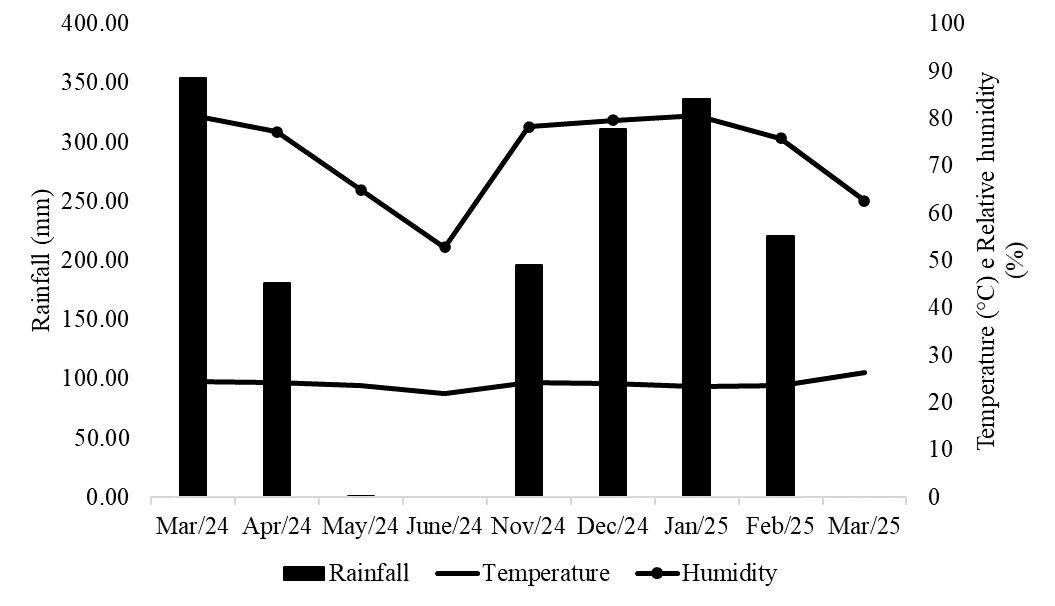
Fig 1. Climate data during the experimental period (INMET, 2025).
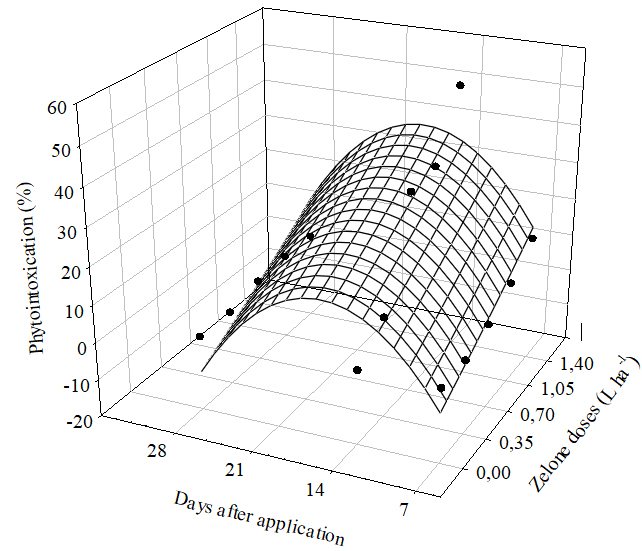
Fig 2. Phytotoxicity response surface for cv. Mulato II intercropped with sorghum as a function of the Zelone® (imazethapyr + imazapic) rates and days after application. The points represent the average values of each treatment. The fitted equation was: f = y₀* + ax + by* + cx² + dy²*, with R² = 0.7408 (Adj R² = 0.6371). The estimated coefficients were: y₀ = –48.8024 ± 15.2280, a = 14.9898 ± 17.8079, b = 7.5750 ± 2.0047, c = 1.2148 ± 12.1975, and d = –0.2206 ± 0.0551. The model was significant (p = 0.0016), with a standard error of estimate (SEE) of 9.6835. Observed values represent mean ± standard error. * - significant at 5%. Zelone® = imazethapyr + imazapic.
model providing the best fit for the first cut, whereas the linear model showed a better fit for the second and third cuts.
Table 4 presents the mean dry matter yields of the forage and the corresponding regression models. A reduction in biomass accumulation was observed up to the 1.05 L ha⁻¹ rate during the first cut, followed by an increase at higher rates. The second and third cuts exhibited a similar pattern, both showing decreases in dry matter yield as herbicide rates increased, with reductions of 683.57 kg ha⁻¹ and 1,185 kg ha⁻¹ per liter of product applied, respectively.
Sorghum (Sorghum bicolor)
Table 5 presents the analysis of variance results for the sorghum variables according to the cropping system. It was observed that only grain yield was significantly affected by the treatment, while no significant differences were detected for the other variables between the cropping systems. Higher grain yield was obtained in the sole sorghum cropping system
Table 3. F-test results for the dry mass of cv. Mulato II intercropped with sorghum and subjected to different Zelone® (imazethapyr + imazapic) rates, and Bayesian Information Criterion (BIC) values for the linear and quadratic models.
| Dry mass (kg ha-1) | p value | BIC | |
| Linear | Quadratic | ||
| 1st cut | 0.0068* | 302.30 | 296.29 |
| 2nd cut | 0.0009* | 311.27 | 311.47 |
| 3rd cut | 0.0275* | 352.88 | 355.22 |
* - significant at 5%.
Table 4. Regression models for the dry-mass yield of cv. Mulato II intercropped with sorghum and subjected to different Zelone® (imazethapyr + imazapic) rates.
| Dry mass (kg ha-1) | Zelone® doses (L cp ha-1) | Model | ||||
| 0 | 0.35 | 0.7 | 1.05 | 1.4 | ||
| 1st cut | 1675.0 | 1480.0 | 895.0 | 990.0 | 1200.0 | y = 868.8x2* - 1627.8x* + 1748.9* |
| 2nd cut | 2160.0 | 1935.0 | 2355.0 | 1327.5 | 1267.5 | y = 2287.5* - 683.57x* |
| 3rd cut | 5200.0 | 5047.5 | 2955.0 | 4580.0 | 3360.0 | y = 5058* - 1185x* |
* - significant at 5%. cp – commercial product.
Table 5. Analysis of variance and comparison of means between cropping systems for sorghum variables in the sorghum–Mulato II intercrop.
| Variables | p value | Cropping systems | Standard Error | ||
| Intercropped | Single | Intercropped | Single | ||
| Height (cm) | 0.5782 | 103.61 | 104.90 | 0.93 | 2.08 |
| Panicle length (cm) | 0.2840 | 27.24 | 28.15 | 0.34 | 0.75 |
| Stem diameter (mm) | 0.1354 | 15.11 | 16.42 | 0.34 | 0.76 |
| Population (plants m-1) | 0.3169 | 9.55 | 10.25 | 0.28 | 0.62 |
| Harvest Index | 0.3730 | 0.57 | 0.56 | 0.01 | 0.01 |
| Thousand-grain weight (g) | 0.4315 | 19.86 | 20.96 | 0.55 | 1.24 |
| Grain yield (kg ha-1) | 0.001* | 5616.06 b | 7032.18 a | 136.94 | 306.21 |
* - significant at 5%. Means followed by different letters in the same row differ according to Tukey's test at the 5% significance level.
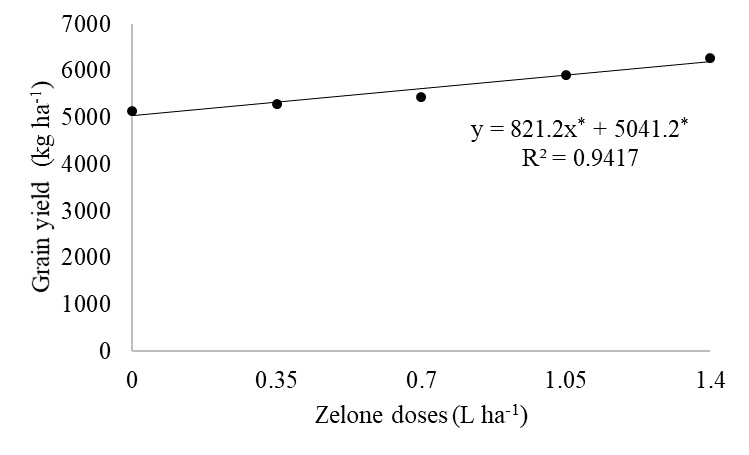
Fig 3. Grain-yield regression curve for sorghum intercropped with cv. Mulato II and subjected to different Zelone® (imazethapyr + imazapic) doses. * - significant at 5%.
compared with the intercropping system with the forage grass.
An additional analysis of variance was conducted considering the herbicide rates, and the results are shown in Table 6. Treatment effects were significant only for grain yield, with the linear model providing the best fit to the data.
Fig 3 illustrates the regression model for sorghum grain yield. An increase in sorghum productivity was observed with increasing herbicide rates, with an estimated yield gain of 821.2 kg ha⁻¹ for each liter of product applied.
Table 6. Regression F-test results for sorghum variables in the sorghum–Mulato II intercrop subjected to different Zelone® (imazethapyr + imazapic) rates, and Bayesian Information Criterion (BIC) values for the linear and quadratic models.
| Variables | p value | BIC | |
| Linear | Quadratic | ||
| Height (cm) | 0.8299 | - | - |
| Panicle length (cm) | 0.8169 | - | - |
| Stem diameter (mm) | 0.0516 | - | - |
| Population (plants m-1) | 0.8003 | - | - |
| Harvest Index | 0.6726 | - | - |
| Thousand-grain weight (g) | 0.7335 | - | - |
| Grain yield (kg ha-1) | 0.0417* | 314.60 | 316.57 |
* - significant at 5%.
Table 7. Analysis of variance and comparison of means for soybean variables following the sorghum–Mulato II intercrop.
| Variables | p value | Straw | Standard Error | ||
| With | Without | With | Without | ||
| Failures | 0.7547 | 1.85 | 1.75 | 0.13 | 0.29 |
| Double | 0.5620 | 1.15 | 1.00 | 0.10 | 0.23 |
| Pods per plant | 0.0380* | 46.35 b | 54.00 a | 1.40 | 3.13 |
| Grains per pod | 0.2141 | 2.05 | 2.25 | 0.06 | 0.14 |
| Population (plants m-1) | 0.3559 | 12.70 | 13.00 | 0.13 | 0.29 |
| Harvest Index | 0.2090 | 0.57 | 0.55 | 0.01 | 0.02 |
| Thousand-grain weight (g) | 0.3214 | 189.69 | 184.25 | 2.18 | 4.88 |
| Grain yield (kg ha-1) | 0.7522 | 4967.97 | 4892.90 | 95.67 | 213.92 |
* - significant at 5%. Means followed by different letters in the same row differ according to Tukey's test at the 5% significance level.
Table 8. Regression F-test results for soybean variables following the sorghum–Mulato II intercrop, and Bayesian Information Criterion (BIC) values for the linear and quadratic models.
| Variables | p value | BIC | Model | |
| Linear | Quadratic | |||
| Failures | 0.9424 | - | - | - |
| Double | 0.1024 | - | - | - |
| Pods per plant | 0.0252* | 143.54 | 144.58 | y = -3.5x + 48.8 |
| Grains per pod | 0.4449 | - | - | - |
| Population (plants m-1) | 0.0433* | 44.45 | 41.43 | y = 1.17x2 - 1.06x + 12.59 |
| Harvest Index | 0.0089* | -67.29 | -65.38 | y = 0.03x2 - 0.05x + 0.58 |
| Thousand-grain weight (g) | 0.2003 | - | - | - |
| Grain yield (kg ha-1) | 0.4584 | - | - | - |
* - significant at 5%.
Soybean (Glycine max)
As with sorghum, an analysis of variance was performed for soybean comparing systems with and without mulch, and the results are presented in Table 7. Among the evaluated variables, only the number of pods per plant was significantly affected by the treatment, with a higher number of pods observed in the absence of mulch.
Table 8 shows the F-test results considering the application rates of the imazethapyr + imazapic ready-mix formulation, along with the BIC values for the fitted models. Treatment effects were significant for the number of pods per plant, plant population, and harvest index. The quadratic model provided a better fit for the latter two variables, whereas the linear model best described the response for the number of pods per plant.
Discussion
Sorghum arundinaceum (wild sorghum) was the most predominant species in the area. The control of weeds, mainly grass species, represents a major challenge in sorghum cultivation, particularly due to the limited availability of selective herbicides (Dille et al., 2020; Braz et al., 2019). This pattern was confirmed in the present study, in which 63% of the weed community belonged to the Poaceae family, including the predominant species S. arundinaceum. Its competitive ability is associated with tall growth and a deep, branched root system, which enhances light interception and access to water under drought conditions, causing significant yield losses in many crops (Tessele et al., 2014; Martins et al., 2016).
In this context, imidazolinone-tolerant sorghum hybrids, combined with the ready-mix formulation of imazethapyr + imazapic, represent a promising strategy. In the present study, S. arundinaceum was observed only in plots without herbicide application, whereas in treated plots the plants were effectively controlled, with clear symptoms of herbicide action. These results highlight the potential of Igrowth technology for managing this invasive species and enabling sorghum–forage intercropping systems.
Additionally, no weed occurrence was recorded before soybean planting, indicating the suppressive effect of mulch, which eliminated the need for pre-emergence herbicide application, in agreement with Ferreira et al. (2018).
In intercropping systems, it is recommended that phytotoxicity symptoms do not exceed 60% up to 35 DAA to prevent adverse effects on forage development (Cruvinel et al., 2021). The data obtained in this study met this requirement, suggesting the feasibility of using the ready-mix formulation of imazethapyr + imazapic herbicide for managing cv. Mulato II intercropped with sorghum. To confirm this potential, it is crucial that the reduction in forage biomass remains between 20% and 60% compared with the untreated control (Cunha et al., 2025). At harvest, only the 1.05 and 1.4 L ha⁻¹ rates remained within the expected range, with reductions of 39% and 41%, respectively. Therefore, these two rates proved to be the most promising, provided that they do not negatively affect sorghum grain yield.
Regarding sorghum yield, when compared with the sorghum monoculture, the 1.05 and 1.4 L ha⁻¹ rates showed no significant differences, reinforcing the suitability of these doses for managing the Mulato II hybrid in intercropping with sorghum. According to CONAB (2025), the national average sorghum yield in Brazil was 3,739 kg ha⁻¹, while in the state of Goiás it reached 4,006 kg ha⁻¹. The average yield observed in this study, 5,852 kg ha⁻¹, was higher than both values. Even considering some competition between the intercropped species, the untreated control, which had the lowest yield in this study, already outperformed both regional and national averages, indicating the feasibility of the intercropping system and reinforcing the potential use of the herbicide in sorghum–forage intercropping systems. This finding is interesting, as the commercial rate demonstrated effective potential, making it an attractive option for weed management, especially for grass species.
Another important aspect of these systems is that the remaining mulch should not hinder soybean establishment (Dhakal et al., 2024). To verify this, the frequencies of planting failures and double plants per meter were evaluated, and no significant differences were detected between treatments, consistent with the findings of those authors.
Regarding soybean yield, no significant differences were observed between systems with and without mulch, nor among herbicide rates. This result agrees with that reported by Cortez et al. (2019). However, several recent studies have shown that mulch can enhance soybean yield (Prado et al., 2025; Sodré Filho et al., 2024; Alves et al., 2024; Sodré Filho et al., 2022). According to Alves et al. (2024), when water availability is adequate, along with proper agronomic management, adequate soybean yields can be achieved. The crop’s total water requirement ranges from 450 to 800 mm throughout its growth cycle (Alves et al., 2021). In the most recent growing season, cumulative rainfall at the experimental site reached 978 mm (INMET, 2025), indicating the absence of water limitation. This condition may explain the lack of a significant mulch effect on soybean yield, supporting the findings reported by Alves et al. (2024).
Material and methods
Experimental site
The experiment was conducted at the Centro de Inovação e Tecnologia – GAPES, Rio Verde, Goiás, Brazil (17°48′58″ S, 51°03′24″ W; 752 m altitude). Soil chemical characteristics at depths of 0–20 and 20–40 cm were: pH (CaCl₂) 4.7 and 4.3; P 14.6 and 3.1 mg dm⁻³; K 0.28 and 0.13 cmolc dm⁻³; Ca 3.60 and 1.05 cmolc dm⁻³; Mg 0.70 and 0.21 cmolc dm⁻³; Al 0.09 and 0.40 cmolc dm⁻³; and base saturation of 45.8 and 17.4%, respectively. Soil texture consisted of 420 g kg⁻¹ clay, 70 g kg⁻¹ silt, and 510 g kg⁻¹ sand. Climatic data during the experimental period are shown in Fig. 1.
Experimental design and treatments
The treatments were arranged in a randomized block design with four replications. Treatments consisted of sorghum monoculture and sorghum intercropped with Urochloa hybrid cv. Mulato II, managed with increasing doses of the ready-mix herbicide imazethapyr + imazapic (Zelone®, UPL). The doses corresponded to 0, 25, 50, 75 and 100% of the commercial rate (1.4 L ha⁻¹), containing 75 g L⁻¹ of imazethapyr and 25 g L⁻¹ of imazapic.
Experimental plots consisted of eight sorghum rows, six meters long, totaling 24 m², with evaluations performed in the six central rows. Herbicide application was carried out on March 29, 2024 using a CO₂-pressurized backpack sprayer at 2.0 bar, equipped with four TT 110.02 nozzles spaced 1.0 m apart, delivering 180 L ha⁻¹ of spray solution. The spray mixture included the adjuvant Top Oil Plus® (0.5%) and atrazine (Aclamado BR®, 4.0 L ha⁻¹) for broadleaf weed control. At the time of application, environmental conditions were: wind speed of 2.2 km h⁻¹, air temperature of 27.2 °C, and relative humidity of 78.5%.
A soybean experiment was conducted in succession under a randomized block design with four replications. Treatments consisted of the straw produced by sorghum monoculture or sorghum–forage intercropping systems used for no-tillage establishment. Soybean was sown using a multiple seeder with 0.50 m row spacing. Plots consisted of eight rows, six meters long (24 m²), with the six central rows considered as the useful area.
Crop establishment and management
The imidazolinone-tolerant sorghum hybrid ADV 1151 was sown on March 6, 2024 using a multiple seeder with 0.50 m row spacing. At sowing, Moltop® (1.5 L ha⁻¹) was applied in the planting furrow, and glyphosate + glufosinate (2.0 L ha⁻¹ each) were used for pre-plant weed management. The forage Urochloa hybrid cv. Mulato II was sown by broadcasting one day before sorghum sowing at a rate of 30 kg ha⁻¹. During crop development, pest and disease management was performed through insecticide and fungicide applications at 14, 30, 45 and 60 days after emergence (DAE), according to regional technical recommendations for sorghum cultivation.
Soybean was cultivated in succession in the same area after sorghum–forage intercropping. Forage desiccation was carried out on October 19, 2024 using glyphosate (4.0 L ha⁻¹) plus Agris® (0.5 L ha⁻¹). The early-maturing soybean cultivar Raptor I2X was sown on November 11, 2024 using row spacing of 0.50 m. At sowing, biological and nutritional products were applied in the planting furrow to promote seedling establishment. During soybean development, four fungicide and insecticide applications were performed at 25, 40, 60 and 75 days after emergence (DAE) to control pests and diseases, following regional crop management recommendations.
Evaluated variables
Sorghum evaluations were performed at 30, 60 and 120 days after emergence (DAE), including plant height, stem diameter and panicle length. At harvest (120 DAE), three plants per plot were collected to determine vegetative and reproductive dry mass to calculate harvest index and to measure thousand-grain weight. Final stand and grain yield (corrected to 13% moisture) were determined by harvesting 4 linear meters within the useful plot area.
For the forage, phytotoxicity was visually assessed at 7, 14 and 28 days after herbicide application (DAA) using a scale from 0 (no injury) to 100% (plant death), according to the EWRC scale modified by Frans (1972). Forage biomass accumulation was measured at 30 and 120 DAA and one day before desiccation for soybean sowing. Two random samples of 1 m² per plot were collected and dried at 65 °C for 72 h until constant weight to determine dry mass.
Soybean evaluations included plantability at 30 DAE, determined by counting failures and double plants in five meters per plot. At harvest, five plants per plot were collected to determine vegetative and reproductive dry mass to calculate harvest index, and also to measure pods per plant, grains per pod and thousand-grain weight. Final stand was determined in six linear meters, and grain yield was corrected to 13% moisture.
Weed community evaluations were conducted at four time points: 30 DAA of the herbicide during sorghum–forage intercropping, at sorghum harvest, ten days before forage desiccation prior to soybean sowing, and at soybean stage V3. Samples were collected using 1 m² quadrats, where weeds were identified at species level and counted to determine density. The collected material was dried at 65 °C for 72 h to determine dry mass.
Statistical analysis
All data were subjected to the F-test using the ExpDes.pt package (Ferreira et al., 2021). When significant, herbicide dose effects were evaluated using linear and quadratic regression models fitted with the easyreg package (Arnhold, 2018), and the model with the lowest Bayesian Information Criterion (BIC) was selected. Additionally, comparisons between cropping systems (intercropped and monoculture) were performed for sorghum and soybean. When statistical significance was detected, a complementary analysis was conducted comparing herbicide doses with the sorghum monoculture treatment, while the straw from each intercropping treatment was compared with the control without straw in soybean using Tukey’s test. These analyses were performed using the easyanova package (Arnhold, 2013). Phytotoxicity was expressed in a three-dimensional response-surface plot. The significance level adopted in all analyses was 5%. Statistical procedures were performed using R software (R Core Team, 2025).
Conclusion
The results of this study demonstrated the need to suppress Urochloa hybrid cv. Mulato II when intercropped with sorghum; the 75% (1.05 L ha⁻¹) and 100% (1.4 L ha⁻¹) commercial rates of the ready-mix herbicide showed adequate potential for this purpose. These findings are particularly relevant for weed management, particularly for controlling invasive grass species such as wild sorghum, as the commercial rate proved to be effective.
Regarding the effect of mulch on weed suppression and soybean development, the presence of ground cover efficiently reduced weed infestation, eliminating the need for pre-emergence herbicide applications in soybean. Furthermore, the mulch did not negatively affect soybean growth or yield.
Acknowledgments
The authors would like to thank CAPES for granting a scholarship to the first author, CNPq for supporting the research project, GAPES for providing the experimental area, and IF Goiano, Rio Verde Campus, for all the technical and institutional support.
Funding: The study received financial support from CNPq, process number 316743/2023-2.
Conflict of Interest: The authors declare no conflict of interest.
References
Almeida REMD, Gomes CM, Lago BC, Oliveira SMD, Pierozan C, & Favarin JL (2017) Corn yield, forage production and quality affected by methods of intercropping corn and Panicum maximum. Pesq. Agropecu. Bras., 52: 170-176.
Alves EDS, Rodrigues LN, Oliveira RAD, & Lorena DR (2021) Water deficit on the growth and yield of irrigated soybean in the Brazilian Cerrado region. Rev. Bras. Eng. Agríc. Ambient., 25: 750-757.
Alves MSS, Nascimento NM, Pereira LAFM, Barbosa TA, da Costa CHM, Guimarães TM, Bezerra ACTP, Machado DL (2024) Long-Term Effect of Crop Succession Systems on Soil Chemical and Physical Attributes and Soybean Yield. Plants, 13: 2217.
Arnhold E (2018) R-environment package for regression analysis. Pesq. Agropecu. Bras., 53: 870-873.
Arnhold E (2013) Package in the R environment for analysis of variance and complementary analyses. Braz. J. Vet. Res. Anim. Sci., 50: 488-492.
Braz GBP, Machado FG, do Carmo EL, Rocha AGC, Simon GA, & Ferreira CJB (2019) Desempenho agronômico e supressão de plantas daninhas no sorgo em semeadura adensada. Rev. Ciênc. Agroveterin., 18: 170-177.
CONAB – Companhia Nacional de Abastecimento (2025). 12º Levantamento da Safra de Grãos 2024/25. Brasília: CONAB. Available at: https://www.gov.br/conab/pt-br/atuacao/informacoes-agropecuarias/safras/safra-de-graos/boletim-da-safra-de-graos/12o-levantamento-safra-2024-25/12o-levantamento-safra-2024-25.
Cortez JW, Furlani CEA, da Silva RP, & Arcoverde SNS (2019) Manejo da palhada e adubação na produção da soja e cobertura do solo. Nativa, 7: 506-512.
Cruvinel AG, Gonçalo TP, Moraes KL, Pereira BCS, de Sousa JVA, & de Andrade DN (2021) Effects of herbicide underdoses on the vegetative development of Panicum maximum cultivars. Científica, 49: 121-127.
Cunha FP, Cruz DC, de Souza Silva NV, da Silva JO, Costa EM, & Jakelaitis A (2025) Supressão da forrageira BRS Ipyporã com doses de imazetapir + imazapique. Obs. Econ. Latinoam., 23: 1-22.
Dhakal M, Rui Y, Benson AR, Hinson PO, Delate K, Afshar RK, & Smith A (2024) Cover crop management strategies affect weeds and profitability of organic no-till soybean. Renew. Agric. Food Syst., 39: 1-13.
Dille JA, Stahlman PW, Thompson CR, Bean BW, Soltani N, & Sikkema PH (2020) Potential yield loss in grain sorghum (Sorghum bicolor) with weed interference in the United States. Weed Technol., 34: 624-629.
Ferreira ACDB, Borin ALDC, Bogiani JC, & Lamas FM (2018) Suppressive effects on weeds and dry matter yields of cover crops. Pesq. Agropecu. Bras., 53: 566-574.
Ferreira EB, Cavalcanti PP, Nogueira DA (2021) ExpDes.pt: Pacote Experimental Designs (Português). R package version 1.2.2. https://CRAN.R-project.org/package=ExpDes.pt.
Frans RE (1972) Measuring plant responses. In: Wilkinson RE (ed) Research methods in weed science. Southern Weed Science Society: 28–41.
Franzluebbers AJ, & Martin G (2022) Farming with forages can reconnect crop and livestock operations to enhance circularity and foster ecosystem services. Grass Forage Sci., 77: 270-281.
Grün E, Alves AF, Silva ALd, Zanon AJ, Corrêa AR, Leichtweis EM, Avila Neto RC, & Ulguim AdR (2024) How Do Off-Season Cover Crops Affect Soybean Weed Communities? Agriculture, 14: 1509.
Instituto Nacional de Meteorologia – INMET (2025) Banco de Dados Meteorológicos para Ensino e Pesquisa (BDMEP). https://bdmep.inmet.gov.br/. Accessed 29 September 2025.
Martins D, Jakelaitis A, Pereira L, Moura L, & Guimarães K (2019) Consórcio entre milho e Urochloa brizantha manejada com subdoses de mesotrione. Planta Daninha, 37: e019186923.
Martins DA, Jakelaitis A, Cardoso IS, Costa AC, & Sales JDF (2016) Growth and physiological characteristics of the weed false johnsongrass (Sorghum arundinaceum (Desv.) Stapf). Rev. Ceres, 63: 16-24.
Oliveira S, Costa KA, Severiano E, da Silva A, Dias M, Oliveira G, & Costa JV (2020) Performance of grain sorghum and forage of the genus Brachiaria in integrated agricultural production systems. Agronomy, 10: 1714.
Paraiso IGN, Silva DSM, Carvalho APS, Sollenberger LE, Pereira DH, Euclides VPB & Pedreira BC (2019) Herbage accumulation, nutritive value, and organic reserves of continuously stocked ‘Ipyporã’ and Mulato II Brachiaria grasses. Crop Sci., 59: 2903-2914.
Prado LG, de Pinho Costa KA, da Silva LM, da Costa Severiano E, Vilela L, Costa JVCP, & Martinez CA (2025) Management of Brachiaria ruziziensis biomass affects soybean productivity in integrated crop-livestock system. J. Agric. Food Res., 20: 101792.
R Core Team (2025) R: A Language and Environment for Statistical Computing. Vienna: R Foundation for Statistical Computing. Available at: https://www.r-project.org/. Accessed in: June 12, 2025.
Sarto MVM, Borges WLB, Bassegio D, Rice C, & Rosolem CA (2021) Maize and sorghum root growth and yield when intercropped with forage grasses. Agron. J., 113: 4900-4915.
Sekiya BMS, Andreotti M, Lupatini GC, Silva JRD, Marangoni GAO, Batista AR, & Coleta D (2025) Agronomic performance of soybean in succession to off-season pastures with Urochloa mixes. Pesq. Agropecu. Bras., 60: e03848.
Silva CHDLE, Mello CE, Silva JOD, Jakelaitis A, Marques RP, Sousa GDD, & Silva EJD (2023) Use of glyphosate in the management of Panicum maximum cv. BRS Zuri intercropped with maize. Rev. Bras. Eng. Agríc. Ambient., 27: 795-802.
Sodré Filho J, Carvalho AMD, Marchão RL, & Carmona R (2024) Decomposition of sorghum, grass, and sorghum intercropped with grass and soybean performance in integrated systems in the Cerrado. Sci. Agric., 81: e20230011.
Sodré Filho J, Marchão RL, Carmona R, & Carvalho AMD (2022) Intercropping sorghum and grasses during off-season in Brazilian Cerrado. Sci. Agric., 79: e20200284.
Tessele A, Furtado RCN, Moreno G, Bortoluzzi J, Lorenzetti DJG, Albrecht LP, & Albrecht AJP (2014) Sorghum spp.: situação como planta daninha e manejo no Brasil. J. Agron. Sci., 3: 256-273.