Australian Journal of Crop Science
Article | https://doi.org/10.21475/ajcs.26.20.08.pne158
Submitted: 24 October 2025 | Revised: 05 June 2026 | Accepted: 20 June 2026
Pages 636-644
Sustainable improvement of salt-tolerant rice through somaclonal variation: Discovery of BR3 as a promising line
Md. Abunasar Miah1, Most. Ummay Salma Khatun2, Afshana Parven3*, Shamsul H. Prodhan4, Abrar Hossain Chowdhury1, Md. Hammadul Hoque4, A.S.M. Faisal1, Ayesha Akter1 and Md. Nur Islam1
1Department of Biotechnology and Genetic Engineering (BGE), Faculty of Biological Sciences, Noakhali Science and Technology University (NSTU), Noakhali-3814, Bangladesh
2Bangladesh Jute Research Institute (BJRI), Regional Station, Chandina, Comilla, Bangladesh
3Social Research Institute, Chulalongkorn University, Thailand
4Department of Genetic Engineering and Biotechnology (GEB), School of Life Sciences, Shahjalal University of Science and Technology (SUST), Sylhet-3114, Bangladesh
*Corresponding author: afshana.p@chula.ac.th
ORCID ID: 0000-0003-0415-101X
Abstract: Salinity in saline soil is the world's biggest problem, especially in Bangladesh's coastal areas. This problem can be solved by developing salt-tolerant rice somaclones from BRRI Dhan-47, a moderately salt-tolerant rice cultivar, as explants. Rice embryos were cultured on the Murashige and Skoog (MS) medium containing various concentrations of plant growth regulators (2, 4-Dichlorophenoxyacetic acid (2, 4-D), Kinetin (Kin), and Naphthalene acetic acid (NAA)). Varying levels of NaCl concentration (0, 25, 50, 75, and 100 mM) were used to induce callus formation to find the best salt-tolerant rice calli. The highest callus induction rate (92%) was achieved using MS medium with 3 mg L−1 2, 4-D, 0.5 mg L−1 Kin, 1 mg L−1 NAA, and 50 mM NaCl. Embryogenic calli were transferred approximately 4-6 weeks later to regeneration media supplemented with Kin, benzyladenine (BA), and NAA, and subjected to NaCl concentrations of 0, 25, 50, 75, and 100 mM to assess salt tolerance. The somaclone designated BR3 exhibited optimal regeneration at 50 mM NaCl in media containing 2.5 mg L−1 Kin and 1 mg L−1 NAA. Next, BR3 somaclone was transplanted into the pot soil containing 50 mM NaCl to evaluate viability for 30 days. The BR3 somaclones showed better performance in callus induction, regeneration efficiency, and growth under salinity stress compared to the mother plant. These results represent a significant step toward sustainable rice cultivation and food security in salt-affected areas and suggest the potential for further application of somaclonal variation in the development of stress-tolerant crops.
Keywords: BRRI Dhan-47; Callus induction; Plant Regeneration; Salt Tolerance; Somaclonal variation.
Introduction
For half of the world's population, rice is a staple food, accounting for 13% of protein and 20% of calories. In Bangladesh, with its large population, it is consumed three times as much. Production is at risk due to increased salinity, yet yield must rise to satisfy demand (Paul et al., 1986). It affects 3% of Earth's land. In Bangladesh, approximately 53% of the coastal areas are affected by salinity, accounting for about 30% of the country's cultivable land (Haque, 2006). Salinity is increasing (2 to ≥12 dSm⁻¹) over 2.85 million hectares in southern and southwestern Bangladesh. Urbanization worsens the issue by preventing agricultural growth (Mukhtar et al., 2018; Razzaque et al., 2011).
Moreover, field management becomes difficult when rice is grown in saline conditions, as this hinders photosynthesis, weakens roots, delays maturity, increases disease susceptibility, reduces seed germination, and impairs water and nutrient uptake (Mukhtar et al., 2018). The most successful efforts to address low yields in salt-affected regions have used high-yielding, salt-tolerant rice varieties. Many researchers have used various methods for developing salt-tolerant rice cultivars. Among these traditional methods, Backcrossing is mainly used to develop plant varieties (Léon, 2021). It is labor-intensive and time-consuming, yet it enhances rice quality (Kalaivanan et al., 2016; Bhuiyan et al., 2014).
To address the above problems, somaclonal variation offers a viable strategy to increase crop yields (Ferreira et al., 2023). It creates genetic variety by causing mutations during tissue culture. These techniques can produce somaclones with new characteristics, such as increased salt resistance, providing unique genetic options not found in the original germplasm (Bouharmont et al., 1993). Somaclonal variation generated in BRRI dhan-47 produced rice lines with enhanced salt tolerance, and several somaclones showed superior performance compared with the original genotype, supporting the role of tissue culture–induced genetic variation in stress adaptation (Larkin et al.,1981; Murashige and Skoog, 1962). In contrast to conventional techniques, somaclonal variation produces genetic variety quickly, accelerating breeding (Vajrabhaya et al., 1991). This technique improves BRRI Dhan-47's salt tolerance through somaclonal variation, increasing adaptability in areas with limited donor features and reducing dependence on external inputs for sustainability (Mandal et al., 1999).
Thus, the main objective of this study is to identify the best salt-tolerant somaclones using moderate-salt-tolerant BRRI Dhan 47 as an explant via the somaclonal variation technique. This study evaluates the effects of different plant growth regulators, applied alone or in combination with MS media, on callus induction rate at several NaCl concentrations. Similarly, the experiment will also focus on plant regeneration rate, which will be assessed in plant regeneration media containing different concentrations of NaCl to identify the best salinity-tolerant somaclonal lines. The study will identify the best salt-tolerant somaclones using BRRI Dhan-47 rice embryos as explants, thereby addressing salinity issues in rice production and enhancing food security in affected areas.
Thus, the main objective of this study is to identify the best salt-tolerant somaclones using moderate-salt-tolerant BRRI Dhan 47 as an explant via the somaclonal variation technique. This study evaluates the effects of different plant growth regulators, applied alone or in combination with MS media, on callus induction rate at several NaCl concentrations. Similarly, the experiment will also focus on plant regeneration rate, which will be assessed in plant regeneration media containing different concentrations of NaCl to identify the best salinity-tolerant somaclonal lines. Finally, the best-performing salt-tolerant somaclones will be evaluated against the mother plant (BRRI Dhan 47 variety) under saline pot soil conditions. Overall, the study will identify the best salt-tolerant somaclones using BRRI Dhan-47 rice embryos as explants, thereby addressing salinity issues in rice production and enhancing food security in affected areas.
Results
Callus induction
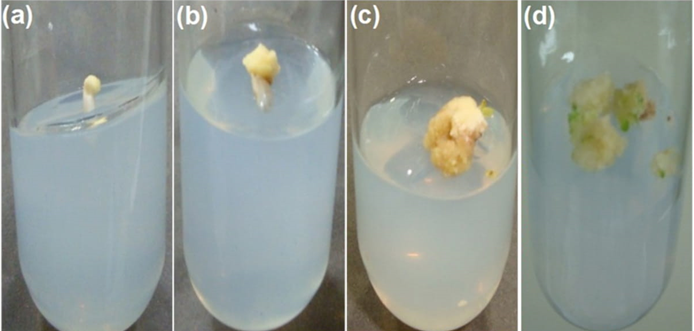
Callus induction was successfully achieved from rice embryos cultured on MS medium supplemented with varying concentrations of plant growth regulators at various concentrations of NaCl. The sterile mature de-husked BRRI dhan-47 rice embryos were inoculated into the callus induction medium to initiate the callus (Figure 1 (a)). A callus scutellum was developed within weeks. The callus was induced in the callus induction medium for 6-8 days (Figure 1 (b)). Subculture at two weeks post-callus initiation is shown in Figure 1(c). The ultimate subculture callus, after five weeks, is shown in Figure 1 (d).
The frequency of calluses ©nduced by plant growth regulators ©s shown ©n Figure 2. ©n the case of a single plant growth regulator effect on callus induction, the highest callus frequency, 58%, was observed at 3 mg L−1 2, 4-D with 50 mM NaCl salt. In contrast, the lowest callus induction frequency was 16% in MS medium supplemented with 2 mg L−1 2, 4-D at 75 mM NaCl salt. Next, the callus induction frequency decreased with the increase of the 2, 4-D growth regulator concentration, as shown in Figure 2 (a). In contrast, the callus induction frequency is also assessed by combining plant growth regulators with MS media, as shown in Figure 2(b). The combination of 1, 2, 3, 4 mg L−1 of 2, 4-D with constant 0.5 mg L−1 Kin and 1 mg L−1 NAA had shown 42%, 71%, 92%, and 83% callus at 50 mM NaCl salt, respectively.
Callus induction was most effective in BRRI Dhan-47 rice embryos when MS media was supplemented with 3 mg L−1 2, 4-D at 50 mM NaCl, resulting in 58% callus induction frequency. However, the callus induction reached 92% with MS media supplemented with a combination of 3 mg L−1 2, 4-D, 0.5 mg L−1 Kin, and 1 mg L−1 NAA at 50 mM NaCl, emphasizing the significance of plant growth regulator combinations.
To validate the salt-responsive morphogenic data, a comparative summary of callus induction efficiency is presented in Table 3. In this table, somaclones showed significantly higher induction efficiency (92%) compared to the mother plant at 50 mM NaCl conditions to confirm enhanced cellular reprogramming capacity in BR3-somaclonal lines.
Fig 1. In vitro callus induction of BRRI dhan-47. (a) Inoculated rice embryo; (b) callus initiation after 6-8 days; sub-cultured of callus after 15 days; (c) second sub-culture at 4 weeks and (d) final subculture after 5 weeks later.
Table 1. Composition of callus induction medium.
| Medium | Plant growth regulator levels (mg L−1) | NaCl (mM) | ||
| 2, 4-D | Kin | NAA | ||
| MS | 1 | - | - | 0, 25, 50, and 75 |
| MS | 2 | - | - | |
| MS | 3 | - | - | |
| MS | 4 | - | - | |
| MS | 1 | 0.5 | 1 | |
| MS | 2 | 0.5 | 1 | |
| MS | 3 | 0.5 | 1 | |
| MS | 4 | 0.5 | 1 | |
Table 2. Composition of plant regeneration media.
| Medium | Plant growth regulator levels (mg L−1) | NaCl (mM) | ||
| Kin | BA | NAA | ||
| MS | 2 | 2 | 1 | 0, 25, 50, and 75 |
| MS | 2.5 | 0 | 1 | |
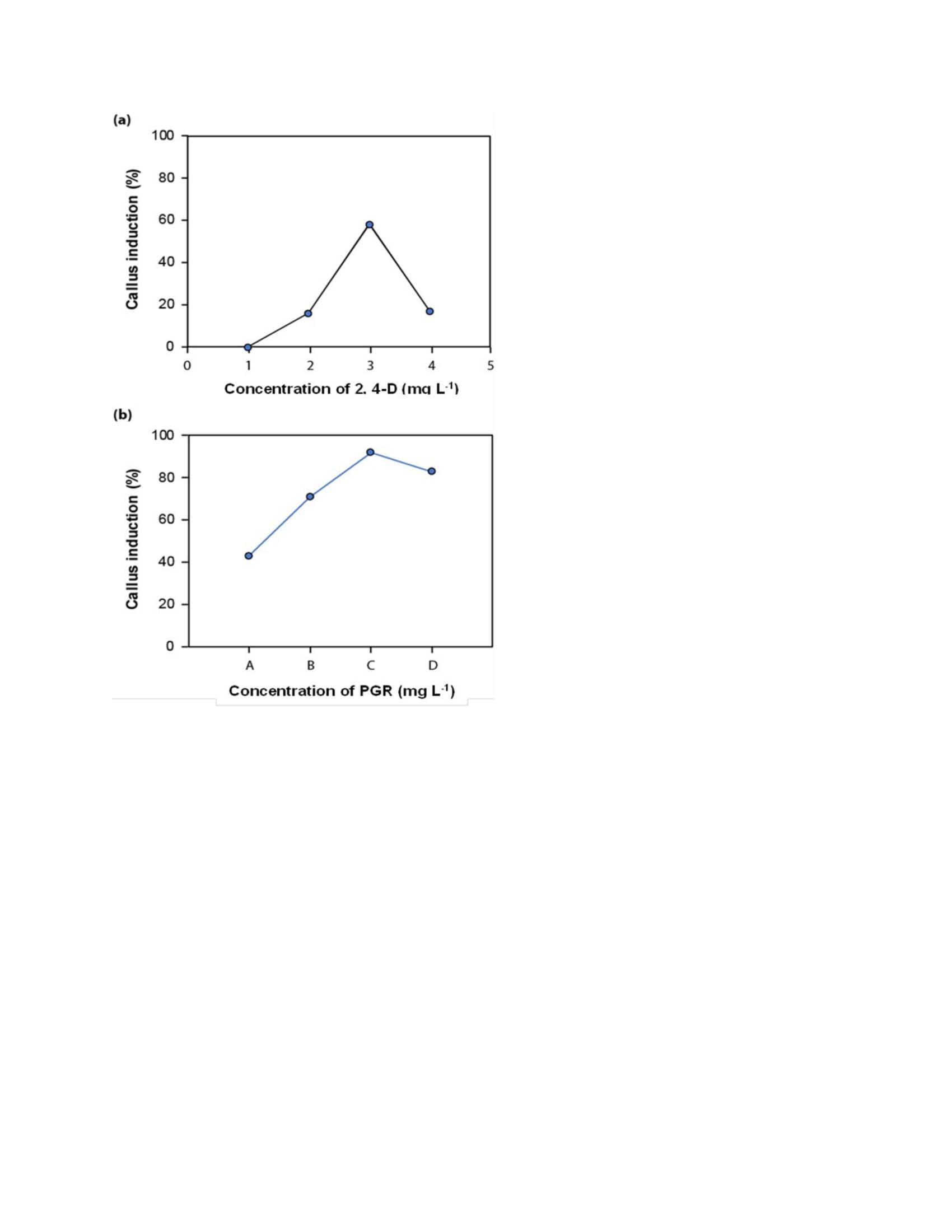
Fig 2. Callus induction frequency (in %) at various levels of plant growth regulators. (a) Callus induction at different concentrations of 2,4-D. The highest 58% callus induction was observed in MS medium containing 3 mg L−1 2,4-D with 50 mM NaCl, whereas plant growth regulators decreased the percentage of callus induction at 4 mg L−1 2,4-D with 50 mM NaCl. (b) Effect of 2, 4-D, Kin, and NAA concentrations on callus induction. The lowest 43% callus observed at MS media contains 1 mg L−1 2, 4-D, 0.5 mg L−1 Kin, and 1 mg L-1 NAA at 50 mM NaCl salt, whereas the highest was observed at MS medium supplemented with 3 mg L−1 2, 4-D, 0.5 mg L−1 Kin, and 1 mg L-1 NAA at 50 mM NaCl salt. Where, A = 1 mg L−1 2, 4-D, 0.5 mg L−1 Kin, 1 mg L−1 NAA, and 50 mM NaCl; B = 2 mg L−1 2, 4-D, 0.5 mg L−1 Kin, 1 mg L−1 NAA, and 50 mM NaCl; C = 3 mg L−1 2, 4-D, 0.5 mg L−1 Kin, 1 mg L−1 NAA and 50 mM NaCl; and D = 4 mg L−1 2, 4-D, 0.5 mg L−1 Kin, 1 mg L−1 NAA and 50 mM NaCl.
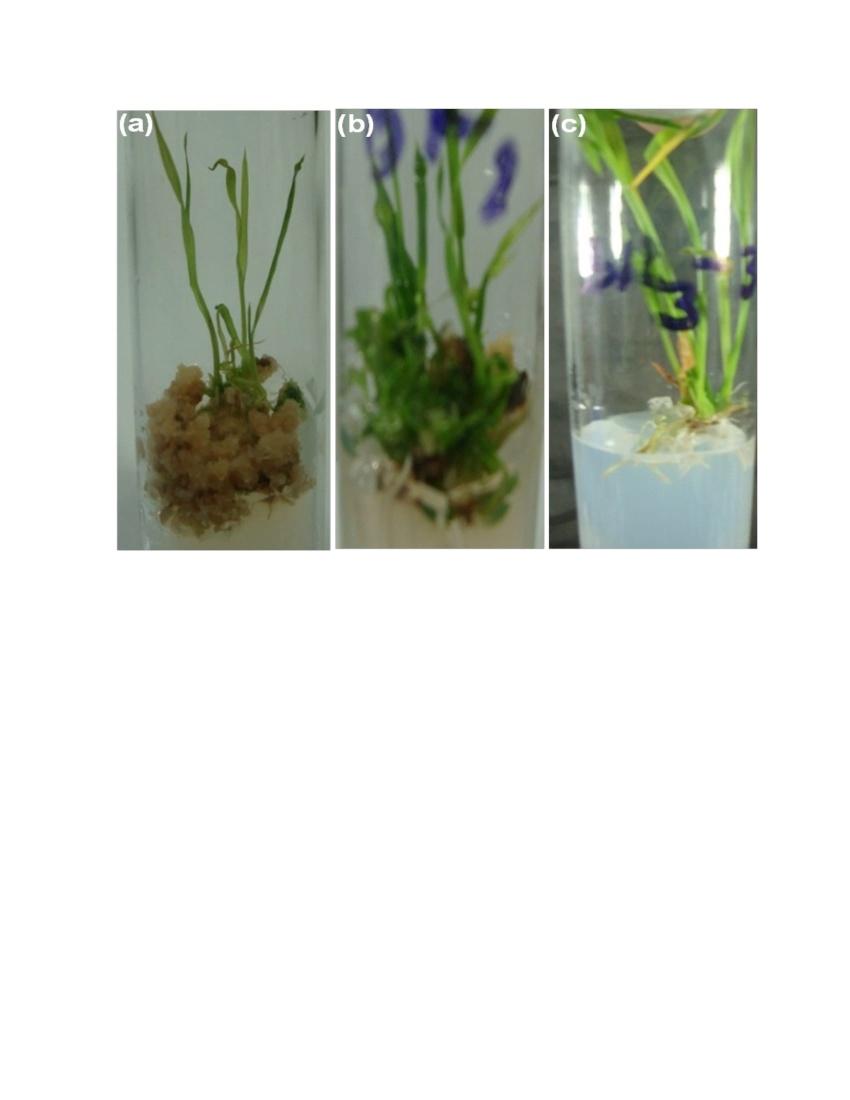
Fig 3. Plant regeneration at various salt levels. (a) Inoculated embryogenic calli became greenish in color to visible plantlets after 20 days; (b) Subculturing of plantlets at 30 days; and (c) Completely developed plantlets after 50 days.
Table 3. A statistical comparison between somaclone (BR3) and mother plant (BRRI dhan-47) under 50 mM NaCl stress for 30 days.
| Parameters | Mother Plant | Somaclone BR3 | Remarks | ||
|---|---|---|---|---|---|
| Callus induction (%) | 58 | 92 | Higher with PGR combination | ||
| Regeneration at 50 mM (%) | 45 ± 2.5 b | 66 ± 2.0 a | BR3 superior | ||
| Max regeneration (%) | ~70 | 97 (BR2), 66 (BR3) | BR3 stable under stress |
||
| Survival (%) | 68.3 ± 3.2 b | 91.5 ± 2.8 a | Significant improvement | ||
| Plant height (cm) | 28.4 ± 1.5 b | 36.7 ± 1.8 a | Better growth under salt | ||
Values are mean ± SD (n=10). Different letters indicate significant differences at p < 0.05.
Plant regeneration under salt stress conditions
Both the salinity stress and the composition of the regeneration media significantly influence the plant regeneration capacity (Figure 3). Embryogenic calli were first separated from non-embryogenic ones, chopped into small pieces, and cultured in MS media with two different growth regulator combinations: (1) 2 mg L−1 kinetin + 2 mg L−1 BA + 1 mg L−1 NAA and (2) 2.5 mg L−1 kinetin + 1 mg L−1 NAA. After 10 days, the induced calli turned green, and visible plantlets began to appear by day 20 (Figure 3 (a)). These plantlets were then transferred to fresh media supplemented with 0, 25, 50, 75, and 100 mM NaCl to evaluate salt tolerance. Subcultures were performed on days 30 (Figure 3 (b)), and 50 (Figure 3 (c)).
The results revealed that regeneration rates varied widely across somaclone lines and NaCl concentrations depicted in Figure 4. BR2 somaclones exhibited the highest regeneration rate (97%) at 25 mM NaCl, while AR5 showed the lowest (17%) at 100 mM. BR3 somaclones demonstrated a 66% regeneration frequency at 50 mM NaCl and strong salinity tolerance. The second-best regeneration performance (66%) under high salinity was also observed in the MS medium containing 2.5 mg L−1 kinetin and 1 mg L−1 NAA. These results, presented in Figure 4(a) and 4(b), emphasize the effectiveness of optimized growth regulator combinations and the differential salt tolerance of rice somaclone lines.
Based on the balance of regeneration rate and salt tolerance, BR3 emerged as the most promising somaclonal line. It demonstrated a strong regeneration frequency of 66% at 50 mM NaCl—indicating robust performance under moderate to high salinity—making it a suitable candidate for further development of salt-tolerant rice plants.
Table 3 shows the regeneration performance comparison between the mother plant and the somaclonal lines. The BR3 somaclones consistently showed higher regeneration efficiency (66% at 50 mM NaCl) than the mother plant, indicating superior stress-adaptive morphogenesis. Thus, BR3 emerged as the most promising somaclonal line at high salinity—making it a suitable candidate for further development of salt-tolerant rice plants.
Pot experiment of BR3 somaclones under 50 mM NaCl stress
For in vivo evaluation, BR3 somaclones and mother plant were transplanted into pots containing well-prepared soil. After a 10-day establishment period, the plants were irrigated with saline water containing 50 mM NaCl saline water and maintained under these conditions for 30 days. During this period, BR3 somaclones exhibited vigorous growth and maintained healthy morphology, demonstrating their superior tolerance to salt stress compared to the mother salt plant (Figure 5). The overall comparative performance, callus induction, regeneration efficiency, and pot-level survival across in
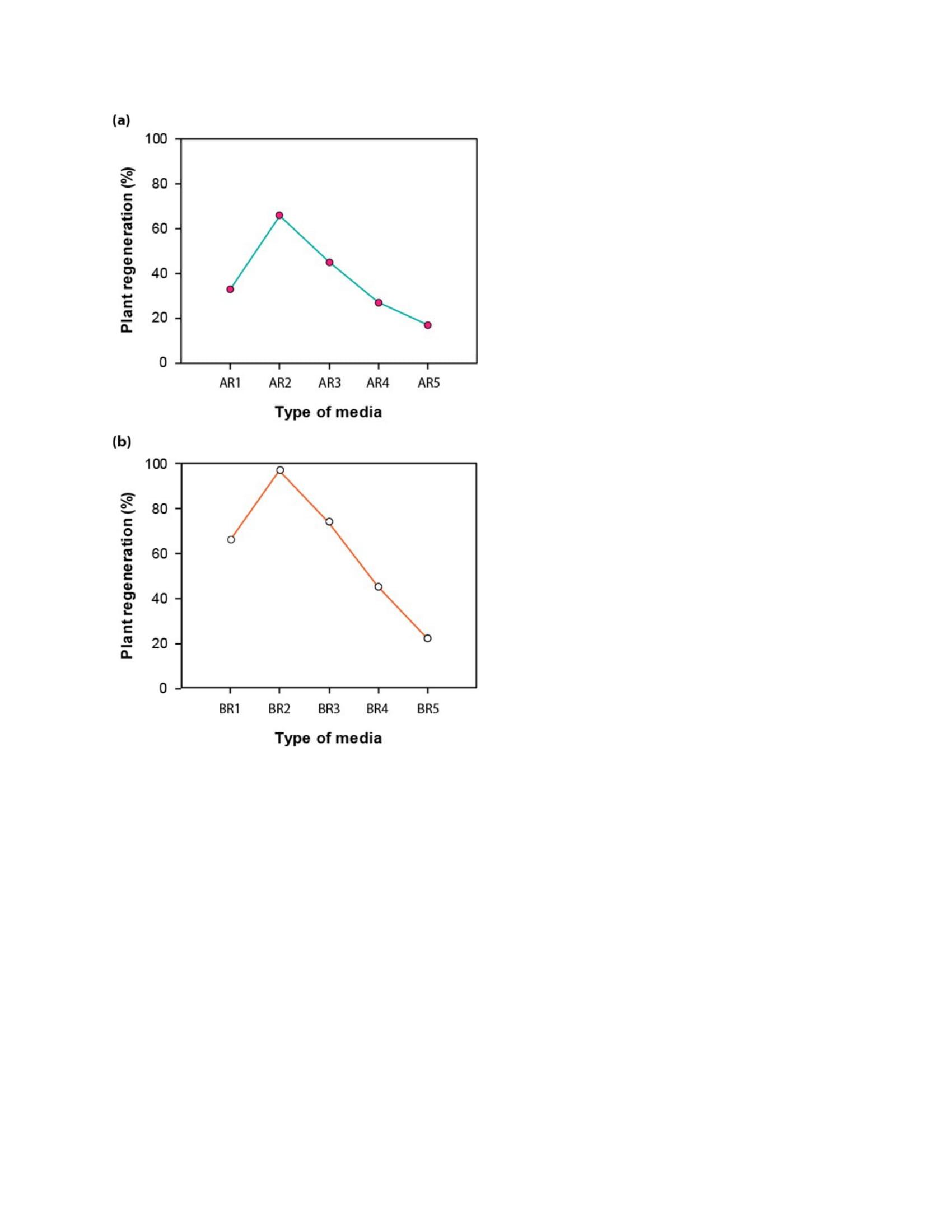
Fig 4. Effect of plant growth regulators on plant regeneration of rice calli under NaCl stress. (a) The percentage of regeneration in different media. The highest percentage (66%) of plant regeneration was found in the AR2 somaclones at 25 mM of NaCl salt, and the lowest percentage, 17% of plant regeneration, was observed for AR5 somaclones at 100 mM NaCl. (b) The rate of plant regeneration using 6-benzylaminopurine. 97% plant regeneration was observed in BR2 somaclones at 25 mM NaCl level, and the lowest 18% was observed for BR5 at 100 mM NaCl. Where, A = 2 mg L−1 Kin + 2 mg L−1 BA + 1 mg L−1 NAA. B= 2.5 mg L−1 kin + 1 mg L−1 NAA. R1, R2, R3, R4, and R5 = 0, 25, 50, 75, and 100 mM of NaCl, respectively.
vitro and in vivo stages are summarized in Table 3, clearly demonstrating the superior adaptive capacity of BR3 somaclones compared with the mother genotype under saline stress conditions.
Discussion
Salinity is one of the most critical abiotic stresses limiting rice production, particularly in the coastal and saline-prone areas of Bangladesh, where high soil salinity can inhibit germination, reduce tillering, and ultimately lower yields (Haque et al., 2020) In this study, somaclonal variation was employed to improve the salt tolerance of BRRI dhan-47, a moderately salt-tolerant variety, through callus induction and regeneration under varying NaCl concentrations.
The term "somaclonal variation" refers to genetic and epigenetic changes that affect the morphological, cytological, and biochemical features of transgenic plants derived from a single donor. Although bulk propagation is possible, uniformity in plantings and micropropagation may be hampered. Nevertheless, it also provides breeders with a valuable resource for creating better plant types (Al Aboud et al., 2018). The somaclonal variation must be evaluated to ensure true-to-type plant regeneration following in vitro culture. Scientists suggest various techniques to assess genetic, phenotypic, cytological, and phytochemical characteristics. Mitotic instability and uncontrolled cell division in vitro, particularly in callus cultures, frequently increase cytogenetic variance (Duta-Cornescu et al., 2023).
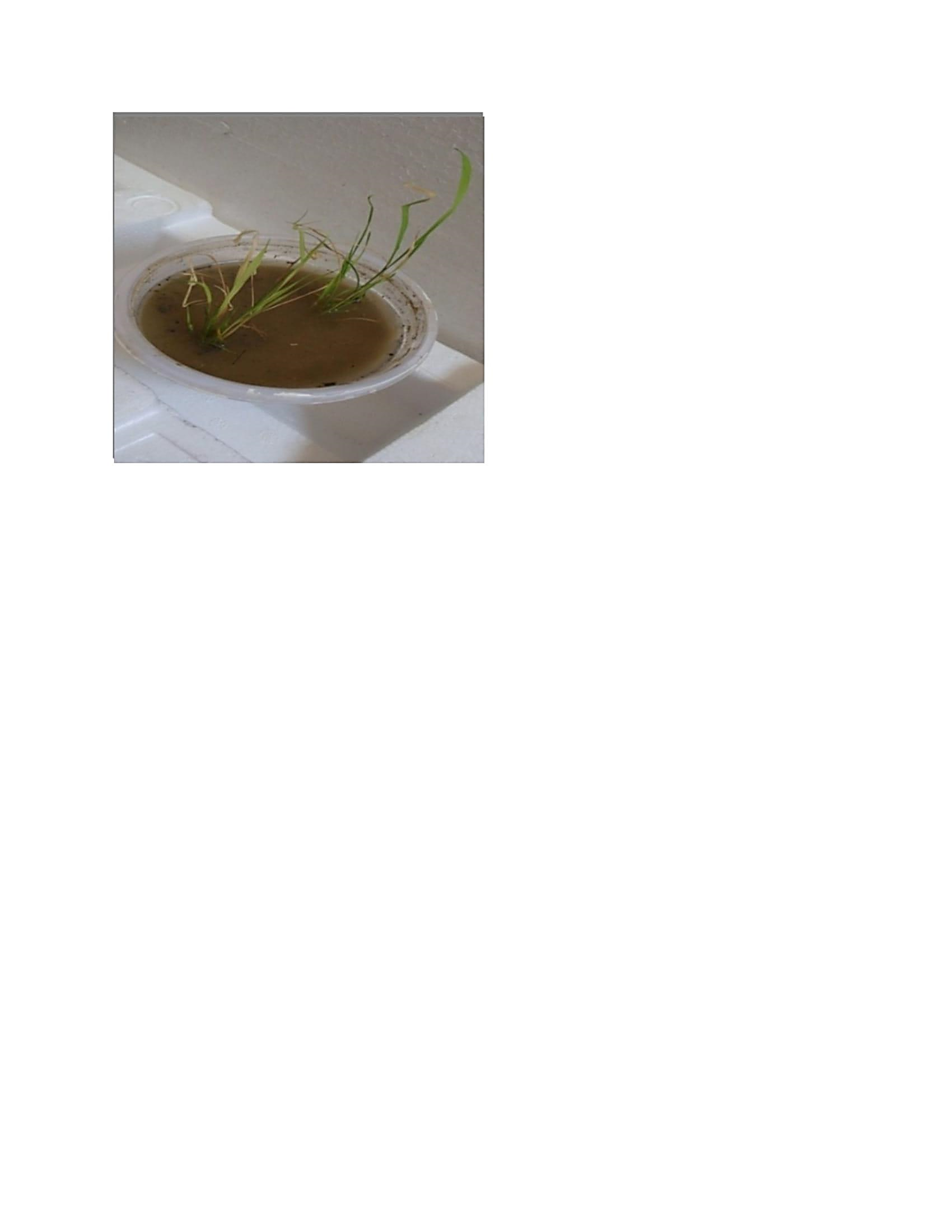 Fig 5.
Growth performance of salt-tolerant rice somaclones (BR3) after 30 days
of exposure to 50 mM NaCl in plastic pot soil.
Fig 5.
Growth performance of salt-tolerant rice somaclones (BR3) after 30 days
of exposure to 50 mM NaCl in plastic pot soil.
The present results demonstrated that plant regeneration and salt tolerance were significantly influenced by the composition of the regeneration medium and the level of salt stress. The highest callus induction rate (58%) was observed in MS Medium supplemented with 3 mg L−1 2,4-D. Similar results were observed in a previous study on cereal embryos, in which 2,4-D concentrations of 1-3 mg L−1 were essential for embryogenic callus formation (Manivannan et al., 2010). For indica rice, 2–4 mg L−1 2,4-D on MS medium has been optimal for callus induction (Bhuiyan et al., 2014), consistent with the present findings.
Combining auxins and cytokinins enhances callus formation and differentiation (Ikeuchi et al., 2013), and the present study shows increased callus production when combining 2,4-D, Kin, and NAA. The highest callus induction rate, 92%, was observed when MS Media was supplemented with 3 mg L−1 2,4-D, 0.5 mg L−1 Kin, and 1 mg L−1 NAA. Similar effects of auxin–cytokines combination have also been observed in rice and other crops (Liza et al., 2013; Azizi et al., 2015)
Successful varietal development through somaclonal variation depends heavily on regenerable embryogenic callus (Juturu et al. 2015). In this study, cytokinin–auxin balance, particularly the combination of Kin and NAA, played a critical role in improving regeneration efficiency under salinity stress. Kin stimulates shoot induction, while NAA promotes cell division and callus initiation (Martins et al., 2022). This study observed the best regeneration in MS media containing 2.5 mg L−1 Kin and 1 mg L−1 NAA, especially under 50 mM NaCl, where the BR3 somaclones demonstrated strong growth and resilience. This finding aligns with earlier reports suggesting that such growth regulator combinations effectively induce shoot regeneration from rice explants (Azizi et al., 2015).
Moreover, cytokinins such as Kin and BA (benzyladenine) have been shown to mitigate salt-induced cytokinin depletion in crops, thereby improving stress resilience and yield potential (Gadallah, 1999). In line with Iqbal et al. (2006), cytokinin treatment enhances yield and stress resilience against adverse conditions.
However, the comparative results of the present study between the mother plant and BR3 somclones showed better performance, which validates the strength of these observations (Table 3). The superior line BR3 over the mother plant had the higher callus induction (92% vs. baseline 58%), regeneration frequency (66% at 50 mM NaCl), survival rate (91.5%), and biomass accumulation under salinity stress. The superiority of the BR3 somaclones across in vitro and in vivo has shown that somaclonal variation successfully induced stable physiological and morphogenic adaptations in BR3. These findings agree with previously published work indicating that somaclonal variation enhances abiotic stress in somaclones through genetic and epigenetic pathways (Larkin and Scowcroft, 1981; Ferreira et al., 2023). Notably, the regeneration and survival capacity of the somaclones demonstrated that adjustments in ion homeostasis and stress response in somaclonal lines are key traits for salt tolerance in rice (Haque et al., 2020; Razzaque et al., 2011).
Acclimatization is a crucial stage in producing plantlets from regenerated tissue. The BR3 somaclone shows the best growth at 50 mM NaCl in pot soil conditions, confirming the successful transfer of in vitro tolerance genotypes to ex vitro environments. These findings seem similar to those that emphasize the importance of field validation of salt-tolerant genotypes (Karim et al., 2012).
Overall, this study demonstrates that the potential of somaclonal
variation combined with optimized hormonal regulation significantly
to enhances salt tolerance in rice, particularly in the BRRI
dhan-47 variety. BR3 somaclones across all lines, with respect to
agronomic characteristics, including overall performance, callus
induction, plant regeneration, and pot-level evaluation, showed that the
best line survived under salt stress. Also, the comparative study
results provided strong quantitative scientific evidence that the
developed BR3 line not only shows superiority in tissue culture but also
in ex vitro conditions, confirming its potential as a stable,
salt-tolerant rice genotype for cultivation in coastal areas.
Materials and methods
Plant materials, reagents, and equipment
The Bangladesh Rice Research Institute (BRRI), Gazipur, Bangladesh, provided the BRRI dhan-47 rice cultivar for the study, along with several chemicals from Sisco Research Laboratories Pvt., including Naphthalene-1-acetic acid (NAA), 6-Benzyladenine (BA), Kin-99% (Kin), Agar Powder, Tween-20, Ethanol, Sodium Hypochlorite (NaClO), and sucrose. The study used Petri dishes, test tubes, an air conditioner, a Bunsen burner, an autoclave (AC-60), a Laminar Airflow cabinet (BBS-V800), and a scale. Pure water was used to prepare all solutions and to cleanse explants.
Methodology
Two culture media were used for callus initiation and plant regeneration. In this connection, MS (Murashige and Skoog) medium was the first basal medium used for both procedures. For callus induction, 10 mL of MS medium was used for callus initiation and was dispensed into glass screw vials, whereas 20 mL of MS medium was poured into culture jars for plant regeneration. The details of the methodology are explained below:
Preparation of callus induction medium: MS basal medium was used to prepare the callus induction medium for rice embryo culture. The medium was supplemented with 2,4-D alone or combined with Kin and NAA at 0, 25, 50, and 75 mM NaCl to induce callus. Sucrose (30 gL-1) was added as a carbon source, and the pH was adjusted to 5.8 before adding 0.8% agar. The medium was autoclaved at 121°C for 15 minutes. After cooling, rice embryos were aseptically inoculated onto the callus-induction medium and incubated in the dark at 25±2°C to induce callus formation (Table 1).
Explant preparation and inoculation: The mature BRRI dhan-47 seeds were de-husked, sterilized for 30 seconds with 70% ethyl alcohol, treated for 30 minutes with 5% sodium hypochlorite, and then washed with distilled water. Sterile forceps were used to inoculate sterilized seeds into a callus-induction medium, and a sterile cork was used to seal the test tube. Six days after inoculation, callus initiation occurred, and weekly subcultures were performed. Following several subcultures, the thick, creamy, or yellow callus was identified as embryogenic or non-embryogenic, and then transferred to plant regeneration media to produce plantlets.
Preparation of plant regeneration media
MS basal media were prepared for plant regeneration with different plant growth regulator concentrations indicated in Table 2. Plant regeneration was performed on MS media containing different concentrations of plant growth regulators and NaCl. The first combination of plant growth regulators in MS media was 2 mg L−1 Kin + 2 mg L−1 BA + 1 mg L−1 NAA, and the second was 2.5 mg L−1 Kin and 1 mg L−1 NAA. Kin and NAA were used as plant growth regulators in this case. The Kin helped to initiate plant shoots, and NAA was used to initiate the roots. After preparing the plant regeneration media, the embryogenic calli were cut into small pieces to inoculate into the press. Next, the different NaCl concentrations (0, 25, 50, 75, and 100 mM) were used with the regeneration media after growing the plantlet with shoots. The effects of plant growth regulators on rice calli regeneration under NaCl stress were observed in AR1, AR2, AR3, AR4, AR5, BR1, BR2, BR3, BR4, and BR5 media. Where A = 2 mg L−1 Kin + 2 mg L−1 BA + 1 mg L−1 NAA; B= 2.5 mg L−1 Kin + 1 mg L−1 NAA; and R1, R2, R3, R4, and R5 = 0, 25, 50, 75, and 100 mM of NaCl, respectively. The plant regeneration frequency was calculated based on the appearance of shoots. The regeneration percentage from plated calli was calculated by using the following formula:
\[Plant\ regenartion\ frequency\ (\%) = \frac{No.\ of\ calli\ produced\ plants}{No.\ of\ calli\ plated} \times 100\%\]
The callus induction frequency (%) was determined in the comparative experiments by calculating the number of explants with callus out of the total number of treated explants in each treatment at 50 mM NaCl. At least 10 explants were used per treatment, and the experiment was repeated three times.
Pot experiment: Plastic pots collected from the local market in Sylhet City, Bangladesh, were thoroughly cleaned with detergent and tap water. Next, the pot was then filled with prepared soil and used for transplanting the selected salt-tolerant somaclones and mother plantlets (BRRI Dhan-47). The pots were irrigated with saline water containing 50 mM NaCl and maintained under regular watering for 30 days under salt stress. After 30 days of salt treatment, growth and physiological characteristics such as survival rate (%), plant height (cm), number of tillers per plant, root length (cm), and fresh biomass (g plant⁻¹) were measured. The total of 10 plants per treatment was used, and the data were presented as mean ± standard deviation (SD).
Culture environment: The cultured rice embryos were incubated under controlled environmental conditions to promote optimal callus induction and regeneration. The cultures were maintained in a growth chamber at 25 ± 2°C with 70–80% relative humidity. During callus induction, cultures were kept in complete darkness (8 h) to enhance callus formation. For shoot regeneration, the cultures were transferred to light conditions with a 16 h photoperiod and light intensity of approximately 2000–3000 lux provided by cool white fluorescent lamps. These conditions were consistently monitored to ensure uniform development and minimize stress-induced variations.
Statistical analysis: The statistical analysis was performed using one-way Analysis of Variance (ANOVA). The mean comparisons between the mother plant and the BR3 somaclone were performed using Duncan’s Multiple Range Test (DMRT) at the significant probability p < 0.05. Moreover, all statistical software has been used for validating differences among treatments.
Conclusion
This paper shows that somaclonal variation is a viable technique that can be adopted by researchers in developing salt-tolerant rice lines out of BRRI Dhan-47. The experiment was effective in inducing callus and regenerated plants under a saline environment, indicating that 50 mM NaCl is the most appropriate level for selecting salt tolerant somaclones. The BR3 somaclone was superior to others and was able to endure high salt stress and survive in laboratory culture and in the pot conditions. These findings validate increased salt tolerance of BR3. The comparative analysis presented in Table 3 further quantitatively supports the superior performance of BR3 over the mother plant across all evaluated stages. Generally, the results indicate that the selection of rice varieties by using tissue culture can enhance rice production in salty coastal regions in Bangladesh, which will also ensure food security in the coastal region. Future experiments ought to test these somaclones in the field and determine their genetic stability before they are used in large scale.
Acknowledgements
The authors are grateful to the Plant Genetic Engineering Laboratory of the Department of Genetic Engineering and Biotechnology, Shahjalal University of Science and Technology, Sylhet-3114, Bangladesh.
Statement of Contributions
Md. Abunasar Miah was responsible for the conceptualization, experimental design, overall supervision, data analysis, and preparation of the original manuscript draft. Most. Ummay Salma Khatun conducted the majority of the experiments, collected and curated data, and contributed to preliminary data analysis and interpretation. Shamsul H. Prodhan was supervised and prepared the manuscript draft. Afshana Parven, Abrar Hossain Chowdhury, Md. Hammadul Hoque, A.S.M. Faisal, Ayesha Akter, and Md. Nur Islam contributed to field and laboratory experiments, assisted in data collection, supported statistical analysis, and critically reviewed and edited the manuscript for intellectual content. All authors have read and approved the final version of the manuscript.
Conflict of Interest
The authors declare that there is no conflict of interest.
References
Al Aboud NM, Tupper C, Jialal I (2018) Genetics, epigenetic mechanism. In: Jialal I (ed) StatPearls, 1st edn. StatPearls Publishing, Treasure Island, FL.
Azizi P, Rafii MY, Mahmood M, Hanafi MM, Abdullah SNA, Abiri R, Sahebi M (2015) Highly efficient protocol for callogenesis, somagenesis and regeneration of indica rice plants. C R Biol. 338:463–470.
Bhuiyan R, Miah MDA, Shakil SK, Ferdous M, Prodhan SH (2014) Comparison of callus initiation and regeneration frequency for two submerge tolerant rice (Oryza sativa). J Pharm Biol Sci. 9:74–78.
Bouharmont J, Béloualy N, van Jan VS (1993) Improvement of salt tolerance in plants by in vitro selection at the cellular level. In: Towards the rational use of high salinity tolerant plants. 2:83–88.
Duta-Cornescu G, Constantin N, Pojoga D-M, Nicuta D, Simon-Gruita A (2023) Somaclonal variation—advantage or disadvantage in micropropagation of medicinal plants. Int J Mol Sci. 24:838.
Ferreira MDS, Rocha ADJ, Nascimento FDS, Oliveira WDDS, Soares JMDS, Rebouças TA, Morais Lino LS, Haddad F, Ferreira CF, Santos-Serejo JAD, Fernández JS (2023) The role of somaclonal variation in plant genetic improvement: a systematic review. Agronomy 13:730.
Gadallah MAA (1999) Effects of kinetin on growth, grain yield and some mineral elements in wheat plants growing under excess salinity and oxygen deficiency. Plant Growth Regul. 27:63–74.
Haque MA, Rahman MA, Islam MT (2020) Salinity stress in rice and mechanisms of tolerance. Plant Sci Today. 7:323–334.
Haque SA (2006) Salinity problems and crop production in coastal regions of Bangladesh. Pak J Bot. 38:1359–1365.
Ikeuchi M, Sugimoto K, Iwase A (2013) Plant callus: mechanisms of induction and repression. Plant Cell. 25:3159–3173.
Iqbal M, Ashraf M, Jamil A (2006) Seed enhancement with cytokinins: changes in growth and grain yield in salt-stressed wheat plants. Plant Growth Regul. 50:29–39.
Juturu VN, Mekala GK, Kirti PB (2015) Tissue culture and genetic transformation in cotton. Plant Cell Tissue Organ Cult. 120:813–839.
Kalaivanan D, Ganeshamurthy AN (2016) Mechanisms of heavy metal toxicity in plants. In: Abiotic stress physiology of horticultural crops (ed) Springer, New Delhi,
Karim MA, Frimpong F, Mensah JK (2012) Screening rice genotypes for salt tolerance in Bangladesh. Int J Agron Agric Res. 2:20–28.
Laboney UZ, Biswas GC, Abdullah-Al-Shoeb M, Miah MdA (2013) Callus induction and regeneration of potato from shoot tip culture. Int J Agric Sci. 3:i+040–045.
Larkin PJ, Scowcroft WR (1981) Somaclonal variation—a novel source of variability from cell cultures for plant improvement. Theor Appl Genet. 60:197–214.
Larkin PJ, Scowcroft WR (1981) Somaclonal variation—a novel source of variability from cell cultures for plant improvement. Theoretical and applied genetics.; 60:197-214.
Léon J (2021) An overview of backcross breeding in plants. Int J Plant Breed Genet. 8:1–1.
Liza LN, Nasar ANM, Zinnah KMA, Chowdhury MAN, Ashrafuzzaman M (2013) In vitro growth media effect for regeneration of tomato (Lycopersicon esculentum) and evaluation of the salt tolerance activity of callus. J Agric Sustain. 3:132-143.
Mandal AB, Pramanik SC, Chowdhury B, Bandyopadhyay AK (1999) Salt-tolerant Pokkali somaclones: performance under normal and saline soils in Bay Islands. Field Crops Res. 61:13–21.
Manivannan A, Kaul J, Singode A, Dass S (2010) Callus induction and regeneration of elite Indian maize inbreds. Afr J Biotechnol. 9:7446–7452.
Martins JPR, Wawrzyniak MK, Ley-López JM, Kalemba EM, Mendes MM, Chmielarz P (2022) 6-Benzylaminopurine and kinetin modulations during in vitro propagation of Quercus robur (L.): an assessment of anatomical, biochemical, and physiological profiling of shoots. Plant Cell Tissue Organ Cult. 151:149–164.
Mukhtar S, Mehnaz S, Mirza MS, Mirza BS, Malik KA (2018) Diversity of Bacillus-like bacterial community in rhizospheric and non-rhizospheric soil of halophytes (Salsola stocksii and Atriplex amnicola), and characterization of osmoregulatory genes in halophilic Bacilli. Can J Microbiol. 64:567–579.
Murashige T, Skoog F (1962) A revised medium for rapid growth and bio assays with tobacco tissue cultures. Physiol Plant. 15:473–497.
Paul NK, Ghosh PD (1986) In vitro selection of NaCl tolerant cell cultures in Oryza sativa L. Curr Sci. 55:568–569.
Razzaque MdA, Talukder NM, Islam MdT, Dutta RK (2011) Salinity effect on mineral nutrient distribution along roots and shoots of rice (Oryza sativa L.) genotypes differing in salt tolerance. Arch Agron Soil Sci. 57:33–45.
Vajrabhaya M, Vajrabhaya T (1991) Somaclonal variation for salt tolerance in rice. In: Rice (ed) Springer, Berlin, Heidelberg.