Australian Journal of Crop Science
Article | https://doi.org/10.21475/ajcs.26.20.08.pne98
Submitted: 08 August 2025 | Revised: 08 November 2025 | Accepted: 03 January 2026
Pages 598-611
Optimizing semi-arid wheat production through synergistic water and nitrogen management: Boosting yield, grain quality, and nitrogen use efficiency
Fatima Zahra Ben Debbane*1,2, Aziz Baidani2, Rachid Aboutayeb3, Ali Amamou1
1Research Unit of Plant Breeding and Genetic Resources Conservation, Regional Center of Agricultural Research of Settat, National Institute of Agricultural Research, Settat 26000, Morocco
2Laboratory of Agrifood and Health, Faculty of Sciences and Techniques, Hassan First University of Settat, Settat 26000, Morocco
3Sustainable Management of Natural Resources Research unit, Regional Center of Agricultural Research of Settat, National Institute of Agricultural Research, Avenue Ennasr, BP 415 Rabat Principale, 10090 Rabat, Morocco
Corresponding author: f.bendebbane@uhp.ac.ma
ORCID iD: 0009-0003-2682-6011
Abstract: Bread wheat production in semi-arid Moroccan regions is challenging, due to water scarcity and inefficient nitrogen use. Consequently, optimizing water and nitrogen management is crucial to ensure sustainable yield and quality. This study aimed to evaluate the effects of varying nitrogen fertilizer rates and environment-specific irrigation regimes on the performance of the Moroccan bread wheat cultivar, focusing on yield, Nitrogen Use Efficiency (NUE), and grain quality.
A randomized complete block design with three replicates was conducted across three INRA experimental stations: Sidi El Aidi (drip-irrigation), Merchouch (rainfed), and Afourar (gravitational: surface) irrigation. Three nitrogen rates were tested (N0: 0%; N1: 50% and N2: 100% of the recommended dose). The assessment included yield parameters, components of NUE, and grain and stem protein content. Under drought conditions, applying 50% of recommended nitrogen dose with supplemental drip irrigation, significantly improved yield components. Compared to rainfed and gravitational irrigation, drip irrigation enhanced grain yield by 78.24% and 62.50%, biomass by 59.96% and 61%, and grain number per m² by 45.43% and 75.00%, respectively. Nitrogen input mainly enhanced grain quality and NUE. Although higher nitrogen rates increased protein content, they significantly reduced NUE regardless of the irrigation regimes. Notably, NUE under drip irrigation was 65.6% and 109.0% higher than under rainfed and gravitational irrigation. Combining drip irrigation with 50% reduced nitrogen fertilizer is optimal for wheat yield, NUE, and quality under semi-arid conditions. This integrated strategy supports sustainable wheat production in water- and nitrogen-limited environments, promoting efficient resource use.
Keywords: Bread wheat, nitrogen fertilization, nitrogen use efficiency, yield, supplemental irrigation, water and nitrogen management, grain quality, drought conditions.
Abbreviations: GNM²_ Grain number per m², GPC_ Grain protein content (percentage). GY_ Grain yield (q/ha). HI_ Harvest index (percentage). NUE_ Nitrogen use efficiency (kg.ha-1). NUpE_ Nitrogen uptake efficiency (kg.ha-1). NUtE_ Nitrogen Utilization Efficiency (kg.ha-1). N0_ 0%. N1_ 50%, and N2_100% of the recommended nitrogen dose. SL_ Spike length (cm). SNM²_ Spike Number per m². SNS_ Spikelet number per spike. SPC_ Stem Protein Content (percentage). TKW_ Thousand-Kernel Weight (g).
Introduction
Bread wheat (Triticum aestivum L.) is one of the most widely cultivated cereal crops worldwide, accounting for 90% of global cereal production alongside maize and rice between 2000 and 2022 (FAO, 2023a). It plays a crucial role in global food security, particularly in the Mediterranean region, where it is a staple crop for the production of bread, pasta, and couscous. In Morocco, wheat is the most extensively grown cereal, with an average annual production of 3,327.6 tones for both durum and bread wheat (ONICL, 2023). However, increasing wheat yield and nitrogen use efficiency (NUE) in arid regions remains a significant challenge due to limited water availability and suboptimal nitrogen uptake.
Nitrogen fertilization is a key determinant of wheat productivity, but its inefficient use contributes significantly to environmental degradation and economic losses. In Morocco, inorganic fertilizer consumption increased slightly from 207.6 thousand tones (21.5 kg/ha) in 2000 to 211 thousand tones (23.5 kg/ha) in 2020 (IFASTAT, 2022; FAO, 2023b), meeting only 30–50% of actual crop requirements (ElGharous and Boulal, 2016). The Nitrogen Use Efficiency (NUE) of Cereal crops is estimated to be approximately 33%, with the remainder lost through leaching and volatilization (Raun and Johnson, 1999; Hawkesford, 2017).
In arid regions, such as Morocco, climate change exacerbates nitrogen inefficiency. Water shortages, low organic matter contents, elevated temperatures, and increased evapotranspiration, not only reduce grain yields but also hinder nitrogen uptake and assimilation (Trnka et al., 2014; Asseng et al., 2015; Aboutayeb et al., 2024; Bouslihim et al., 2024). Over the past three decades, Morocco has experienced a 30% decline in annual rainfall, which has negatively impacted yield performances and nitrogen efficiency in wheat cultivation (Amamou, 2024). These climate stressors delay nitrogen absorption and utilization, further limiting productivity under resource-limited conditions (Sadras et al., 2016).
Improving NUE while maintaining wheat productivity under such adverse conditions necessitates integrated nitrogen and water management. While increasing nitrogen application may boost yields, studies indicate that this often results in decreased NUE (Mandic et al., 2015; Haque et al., 2017; Mirosavljević1 et al., 2019; EL Sabagh et al., 2021; Yildirim et al., 2022). Water availability is equally important, as inadequate irrigation can severely reduce NUE (Rathore et al., 2017). Conversely, optimized irrigation practices improve nutrient availability for root uptake and minimize nitrogen losses (Karrou and Nachit, 2015).
In this regard, improving NUE while maintaining yield has emerged as a key objective for sustainable wheat production. NUE relies on synchronization of nitrogen availability with water supply (Raun and Johnson, 1999; Fageria, 2014). Supplemental irrigation ; adapted to the specific water availability of each environment ;has been proposed as a key strategy to improve nitrogen uptake and utilization without exacerbating water stress in arid regions (Oweis et al., 2000; Wang et al., 2023). However, the success of such an integrated approach is highly dependent on local conditions, including soil fertility, irrigation type (e.g., drip, surface, or rainfed), and climatic variability.
Previous researches have mostly examined the individual effects of nitrogen fertilization and irrigation on wheat productivity. Oweis et al (2000) showed that supplemental irrigation stabilizes yields in Mediterranean dry lands. However, few studies have explored the combined effects of varying nitrogen rates and irrigation systems across diverse agro-environmental conditions in Morocco's arid regions. This limits the ability to recommend context-specific nitrogen and water management strategies for optimizing wheat production.
This study aims to i) evaluate the combined effect of environment-specific irrigation systems and nitrogen application levels on yield and yield components, nitrogen uptake, utilization, and use efficiencies of bread wheat under arid Moroccan conditions, ii) investigate the potential of supplemental irrigation to mitigate drought stress and enhance yield and nitrogen efficiency in limited conditions.
This research addresses a key gap by integrating multi-environment field trials with practical management practices to generate actionable insights for climate-resilient-wheat production. Its novelty lies in the context-specific evaluation of Nitrogen Use Efficiency across real divers Moroccan agro-systems, using a local wheat variety under actual field constraints.
Results
ANOVA two-ways evaluation; main factors: Nitrogen rate and Environment-Irrigation system
According to the two-way ANOVA results (Table.1), the irrigation system has a very highly significant affect (p < 0.001) on grain yield (GY), yield components, nitrogen use efficiency (NUE) and its components as well as grain protein content (GPC). However, it did not significantly influence stem protein content (SPC) and harvest index (HI). Nitrogen application rates significantly affected the spike number per square meter (SNM²), NUE and its components, spike number per spike (SNS) and GPC. The interaction between nitrogen rates and the irrigation system was not significant for SPC, GY, HI, total Biomass or grain number per square meter (GNM²). However, the interaction was very highly significant (p<0.001) for NUE and thousand kernel weight (TKW), highly significant (p<0.01) for GPC and SNM² and significant (p<0.05) for nitrogen utilization efficiency (NUtE) and nitrogen uptake efficiency (NUpE).
Effect on yield and yield components
Nitrogen fertilization significantly affected grain yield (GY) and its components, with magnitude and nature of the effects varying across irrigation systems as reported in table 2. Under gravitational irrigation, the highest nitrogen rate (N₂) significantly increased GY and TKW, reaching 17.09 q/ha and 25.83 g, respectively (p < 0.05 and p<0.01). The SNM² was also maximized under N₂ (366.7; p < 0.001). However, nitrogen had no significant effect on total biomass production, HI, or GNM² under this system. In the non-irrigated system, a moderate nitrogen rate (N₁) resulted in the highest GY (18.45 q/ha; p < 0.001) and significantly increased GNM² and SNM² (p < 0.001 and 0.005, respectively). In contrast, biomass, HI, or TKW were not significantly affected by nitrogen application in this environment. Under drip irrigation, both N₁ and N₂ improved GY and key yield components. The highest GY (28.04 q/ha) was achieved with N₁, while TKW and SNM² increased significantly under nitrogen fertilization (p < 0.05, p<0.05, and p< 0.001 respectively). As in other systems, Biomass, HI, and GNM² remained statistically unaffected. Overall, nitrogen application; especially at moderate levels (N₁); improved GY and key yield components such as TKW and SNM², especially under water-limited and drip-irrigated conditions. In contrast, higher nitrogen rates (N₂) were more beneficial under gravitational irrigation. Across all irrigation systems, biomass and harvest index showed limited sensitivity to nitrogen fertilization.
Effect on Nitrogen Use Efficiency (NUE) and its components
Nitrogen use efficiency (NUE) and its components; nitrogen uptake efficiency (NUpE) and nitrogen utilization efficiency (NUtE); responded differently to nitrogen application rates depending on the irrigation regime (Table 2). Under gravitational irrigation, both NUE and NUtE were highest under the control treatment (N₀), reaching 38.10 kg /kg N and 0.37 kg/kg, respectively, and indicating efficient nitrogen use under low input conditions. However, NUpE was lowest at N₀ (51.90%) and significantly increased with nitrogen application (p < 0.001), highlighting improved nitrogen uptake with added fertilizer. In the non-irrigated system, a similar trend was observed. NUE and NUtE peaked under N₀ (33.40 and 0.38, respectively), while N₁ significantly enhanced NUpE to 90.40% (p < 0.01), suggesting that moderate nitrogen improved nitrogen uptake efficiency under water-stressed conditions. Under drip irrigation, NUE and NUtE were again highest at N₀ (54.40 kg/kg N and 0.37 kg/kg), whereas NUpE was maximized at N₁ (105.20%; p < 0.001), demonstrating that moderate nitrogen application enhanced NUpE even in well-watered conditions. Overall, these findings indicate that low nitrogen input favours overall nitrogen use and utilization efficiency (NUE and NUtE), particularly by optimizing nitrogen use per unit of applied fertilizer. In contrast, moderate nitrogen rates (N₁) significantly improve nitrogen uptake efficiency (NUpE), especially under water-limited and drip-irrigated environments. This suggests a strategic benefit to moderate nitrogen use for maximizing uptake without compromising utilization.
Effect on spike morphology
Spike length (SL) and spikelet number per spike (SNS) were significantly influenced by nitrogen fertilization, with the magnitude of responses varying across irrigation regimes (Table 2). Under gravitational irrigation, the highest nitrogen level (N₂) significantly increased both SL (7.57 cm) and SNS (17.88), with p < 0.05 for both traits. In the rainfed system, nitrogen application also enhanced SL and SNS, with the longest spikes recorded at moderate nitrogen level (N₁ p < 0.01) and the highest SNS at N₂ (p < 0.01). Under drip irrigation, the moderate nitrogen rate (N₁) produced the most pronounced increases in SL (7.57 cm) and SNS (17.55), with p < 0.05 for both traits 0.013. These findings demonstrated that both SL and SNS are responsive to nitrogen fertilization, particularly under moderate to adequate water availability.
Effect on grain protein content and stem protein content
Nitrogen application positively influenced grain protein content (GPC) and stem protein content (SPC), although the responses varied depending on the irrigation system (Table 2). Under gravitational irrigation, the highest nitrogen rate (N₂) significantly increased both GPC (14.71%) and SPC (9.29%) compared to the control (N₀), (p < 0.05 and p < 0.001) respectively; confirming the protein-enhancing effect of high nitrogen availability. In the non-irrigated system, no significant differences in GPC or SPC were observed among nitrogen treatments (p > 0.05), likely due to the drought-induced limitation on protein synthesis. Under drip irrigation, nitrogen fertilization led to modest increase in both parameters, with SPC showing a significant improvement at N₂ (p < 0.05), while the increase in GPC was marginal but statistically nitrogen application, with (p < 0.01). These results indicate that nitrogen fertilization enhances protein accumulation in both grain and stem, particularly under conditions of sufficient water availability.
Effect of nitrogen rates and environment-specific irrigation on traits variation
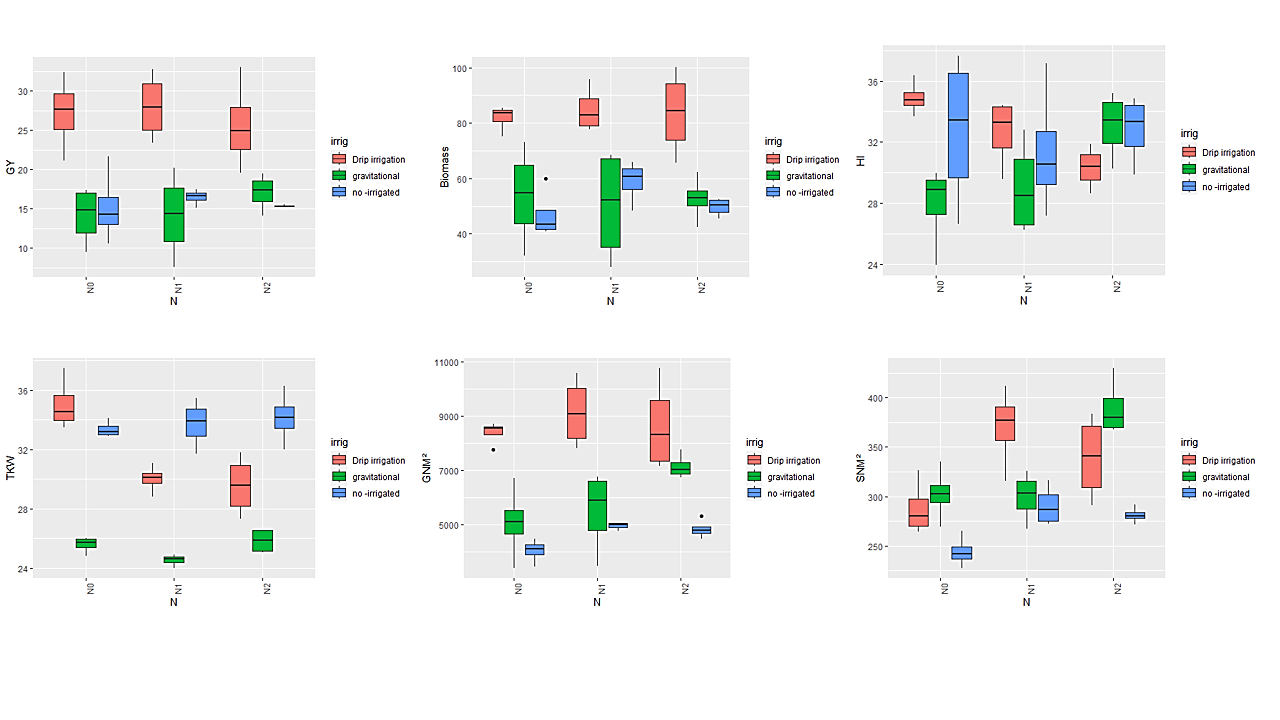
To better visualize the nitrogen-water interaction, boxplots presented in Fig.1 illustrate the variation in key agronomic traits. Grain yield (GY) exhibited a clear synergistic response to both nitrogen application and irrigation regime. Under drip irrigation, GY peaked at moderate nitrogen level (N1), averaging around 30 q/ha, with slightly lower yields at N0 and a decline at N2, indicating potential over-fertilization or diminishing returns at higher nitrogen rates. In contrast, under gravitational irrigation, GY reached a modest peak at N2 (approximately 18 q/ha), yet remained significantly lower than yields observed under drip irrigation. Under rainfed conditions, GY remained consistently low (~15 q/ha), with minimal response to nitrogen, indicating that water availability was the primary limiting factor. Biomass production followed a similar pattern. The highest biomass (~95 q/ha) recorded under drip irrigation at N2, while gravitational and rainfed conditions resulted in significantly lower biomass levels (35–50 q/ha across all nitrogen levels), reflecting a reduced biomass response to nitrogen when water supply was suboptimal.
The harvest index (HI) remained relatively stable across treatments, ranging from 28% to 36%, though greater variability was observed under gravitational irrigation. This may reflect inconsistencies in biomass partitioning under less favorable water conditions. Thousand kernel weight (TKW) was highest under rainfed conditions, particularly at N0 and N2 (~34–36 g), suggesting that reduced capacity (i.e. fewer grains) allowed for greater individual grains weight. Under both drip and gravitational irrigation, TKW slightly decreased with increasing nitrogen, possibly due to trade-offs in resource allocation favoring grain number over grain size.
The number of grains per square meter (GNM²) and spikes per square meter (SNM²) were the most responsive yield components to the nitrogen × irrigation interaction. Under drip irrigation, GNM² peaked at N1 and N2 (approximately 9500–10500 grains/m²), while SNM² increased steadily from N0 (~320 spikes/m²) to N2 (~400 spikes/m²). In contrast, under rainfed and gravitational irrigation, both components showed weak or inconsistent responses to nitrogen. In the absence of irrigation, GNM² remained below 5000 grains/m² and SNM² below 280 spikes/m².
These findings confirm that drip irrigation enhances nitrogen use efficiency and optimizes the expression of key yield components, particularly GNM² and SNM², which are critical for maximizing grain yield. Conversely, under water-limited conditions, the plant's capacity to convert nitrogen into yield is significantly constrained, resulting in poor responsiveness to nitrogen fertilization.
Table 1. Mean squares from two ways ANOVA results for the studied traits (two factors: N rates, environment-irrigation).
| SOV | Df | GY | HI | Biomass | TKW | GNM² | SNM² | SL | SNS | GPC | SPC | NUE | NUtE | NUpE |
|---|---|---|---|---|---|---|---|---|---|---|---|---|---|---|
| Env-irrigation | 2 | 498.40 *** |
221.12 ns |
3963 *** |
221.12 *** |
52899299 *** |
11316 *** |
11.55 *** |
59.04 *** |
185.29 *** |
2.72 ns |
1025 *** |
562 *** |
30.34 *** |
| N. Rates | 2 | 5.50 ns |
9.13 ns |
45 ns |
9.13 * |
3340496 . |
12966 *** |
0.56 . |
4.44 ** |
15.63 *** |
0.66 ns |
1133.9 *** |
10 ** |
31.42 *** |
| N. Rates* Env-irrigation | 4 | 11.70 ns |
15.78 ns | 67 ns |
15.78 *** |
1465774 ns |
3999 ** |
0.02 ns |
0.72 ns |
7.40 ** |
0.53 ns |
136 *** |
3.7 * |
2.93 * |
| CV% | 20.3 | 9.6 | 19.3 | 4.5 | 14 | 9.3 | 4.5 | 3.8 | 12.9 | 12.3 | 17.8 | 14.5 | 20.5 |
Df: degrees of freedom; Significance codes: Pr (>F) = 0‘***’; 0.001‘**’; 0.01‘*’;’ .05 ‘.’; ‘ns’ no significance. GY: Grain yield, HI: Harvest index, TKW: Thousand kernel weight, GNM²: Grain number per m², SNM²: Spike number per m², SL: Spike length, SNS: Spikelets number per spike, GPC: Grain protein content, SPC: Stem protein content, NUE: Nitrogen use efficiency, NUtE: Nitrogen utilisation efficiency, NUpE: Nitrogen uptake efficiency.
Table 2. Means comparison by Post-hoc Tukey HSD test of the nitrogen effect on the three environment-specific-irrigation systems for all studied traits.
| Env- Irrig | N. rates | GY | Biomass | HI | SNS | SL | TKW | GNM² | SNM | SPC | GPC | NUE | NUpE | NUtE |
|---|---|---|---|---|---|---|---|---|---|---|---|---|---|---|
| AFR-Gravitational | N2 | 17.09a | 52.60a | 33.10a | 21.14d | 9.81b | 25.83ab | 6599a | 366.70a | 2.85b | 14.71b | 8.50a | 51.90a | 0.16a |
| N1 | 14.14a | 50.20a | 29.02a | 20.61d | 9.61b | 26.10abc | 5520a | 299.90a | 1.15a | 12.88ab | 11.80a | 77.60b | 0.42a | |
| N0 | 14.14a | 53.70a | 27.93a | 20.28d | 9.28b | 24.48a | 5882ab | 324.20a | 2.53a | 11.28a | 38.10cd | 228.60f | 0.31ab | |
| F.pr | 0.018 | 0.79 | 0.09 | 0.012 | 0.014 | 0.09 | 0.070 | <0.001 | <0.001 | 0.014 | <0.001 | <0.001 | 0.85 | |
| MCH-Non-irrig | N2 | 16.09a | 49.70a | 32.84a | 17.05abc | 8.01a | 34.14d | 4849a | 300.50 a | 1.56a | 4.64a | 15.7ab | 41.40a | 0.15c |
| N1 | 18.45a | 58.90a | 31.36a | 16.56ab | 7.78a | 33.76d | 5439a | 290.50a | 2.00a | 4.76a | 24.9bc | 56.10a | 0.45c | |
| N0 | 15.22a | 46.90a | 32.79a | 15.79a | 7.55a | 32.73d | 4609a | 263.80a | 2.10a | 4.6a | 33.4cd | 90.40b | 0.38c | |
| F.pr | <0.001 | 0.001 | 0.57 | 0.016 | 0.038 | 0.026 | <0.001 | 0.005 | 0.76 | 0.982 | 0.006 | 0.002 | 0.55 | |
| SEA-Drip-irrig | N2 | 25.60b | 83.70b | 30.33a | 19.11bcd | 9.51b | 29.58abcd | 8639b | 339a | 1.31a | 12.08b | 28.10cd | 90.10c | 0.17ac |
| N1 | 28.04b | 84.80b | 32.65a | 19.11cd | 9.41b | 30.88bd | 9143b | 342.30a | 1.24ab | 10.68a | 39.70d | 105.20d | 0.38c | |
| N0 | 27.20b | 81.90b | 32.57a | 18.47bcd | 9.21b | 32.48d | 8396b | 311.60a | 2.08a | 10a | 54.40e | 148.20e | 0.37c | |
| F.pr | 0.032 | 0.62 | 0.038 | 0.31 | 0.35 | 0.037 | 0.1 | 0.31 | 0.047 | 0.007 | <0.001 | <0.001 | 0.01 |
- Within each column, mean values from all nitrogen rates across the three irrigation systems that are followed by different letters are significantly different, based on the Tukey HSD test. Values of F.pr in bold represent the significant (p<0.05), the highly significant (p<0.01), and the very highly significant (p<0.001) effect of N rates on each environment- specific irrigation system according to ANOVA.
Figure 1. Boxplot of grain yield and yield components as affected by nitrogen rates and irrigation system. GY: Grain yield, HI: Harvest index, TKW: Thousand kernel weight, GNM²: Grain number per m², SNM²: Spike number per m², N0 : 0%, N1: 50%, and N2: 100% of the recommended nitrogen dose.
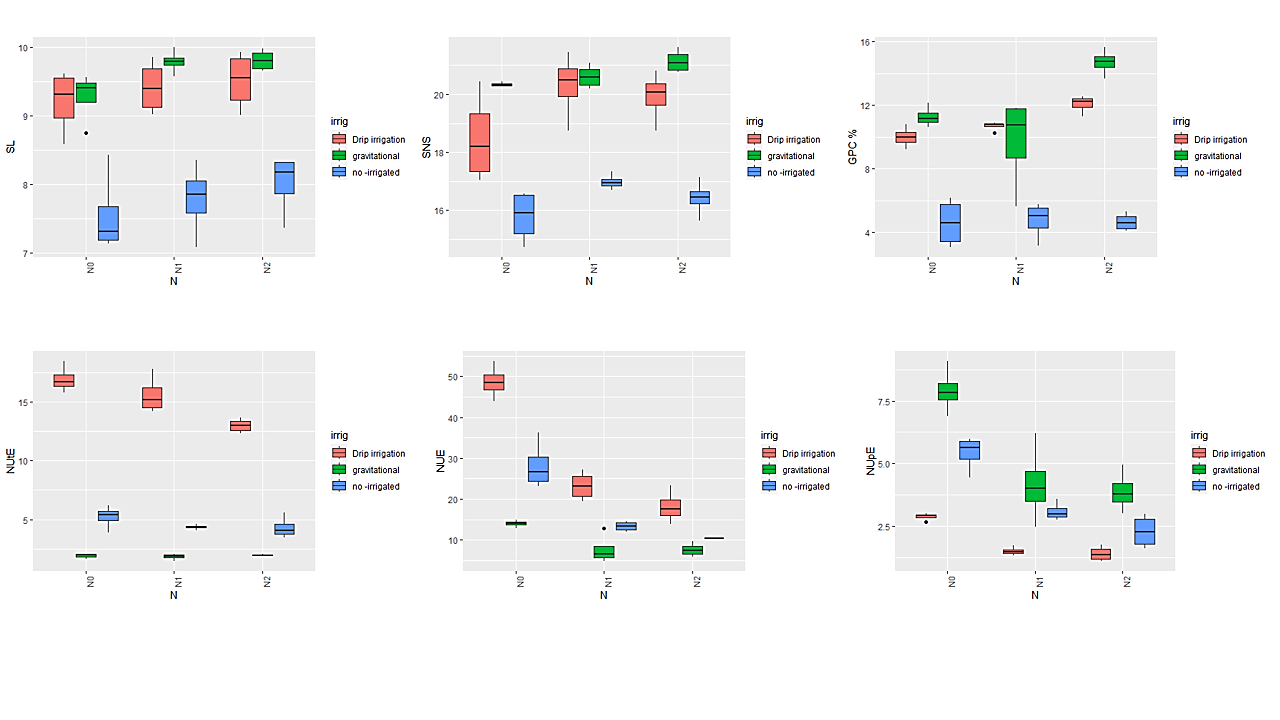
Figure 2. Boxplot of comparison between nitrogen rates and irrigation system for spike morphology, grain protein content and nitrogen use efficiency and its components. SL: Spike length, SNS: Spikelets number per spike, GPC: Grain protein content, SPC: Stem protein content, NUE: Nitrogen use efficiency, NUtE: Nitrogen utilisation efficiency, NUpE: Nitrogen uptake efficiency, N0: 0%, N1: 50%, and N2: 100% of the recommended nitrogen dose.
Furthermore, water and nitrogen supply differentially affect NUE and its components (Fig. 2). NUE was highest under drip irrigation at the lowest N application rates (N0 and N1), exceeding 50 kg grain/kg N applied. However, it declined markedly at the highest nitrogen rate N2 reaching approximately 30 kg/kg, indicating diminishing returns from excessive N input. In contrast, under gravitational and rainfed conditions, NUE remained consistently low (~20–35 kg/kg), particularly at N2, due to inefficient nitrogen uptake and limited water availability. Similarly, nitrogen uptake efficiency (NUpE) followed a comparable pattern, peaking under drip irrigation; especially at N2 (~4.5 kg N/ha); suggesting enhanced root activity and improved soil N availability. Under rainfed conditions, NUpE remained relatively constant across all N rates (~2–2.5 kg N/ha), likely constrained by drought -induced limitations on root function and N acquisition.
Nitrogen utilization efficiency (NUtE) was highest at N0 and N1, particularly under non-irrigated conditions, reaching values up to 80 kg grain/kg N taken up. This reflects efficient conversion of limited N into grain yield. However, NUtE decreased with increasing N supply under all irrigation regimes, most notably under gravitational irrigation, likely due to luxury N uptake with minimal yield improvement.
Grain protein content (GPC) increased steadily with higher N rates across all irrigation regimes, indicating improved nitrogen assimilation into grain. Under drip irrigation, GPC values at N2 were slightly reduced, possibly due to a dilution effect associated with greater grain yield. In contrast, under rainfed conditions, GPC remained relatively high even at low N inputs, likely because reduced biomass limited protein dilution in the grain.
Regarding spike morphology, both spike length (SL) and spikelet number per spike (SNS) responded positively to increasing N rates, particularly under drip irrigation, where optimal moisture and nutrient availability supported reproductive development. The longest spikes and highest SNS values were observed under the N2–drip irrigation combination, suggesting a synergistic effect of water and nitrogen on reproductive growth. Consistently, under rainfed and gravitational irrigation, SL and SNS remained consistently lower, underscoring the critical role of water availability in the expression of these traits.
Principal Components Analysis of studied traits by N rates and irrigation systems
A Principal Component Analysis (PCA) was performed to examine the relationships among all measured variables across different nitrogen (N) rates and irrigation systems. The two first principal components (PCA1 and PCA2) accounted for 67.3% of the total variation, providing a strong basis for interpretation (Fig3.A). The PCA biplot grouped by irrigation system (Fig.3.B) indicates that drip irrigation is positively associated with key agronomic and nitrogen efficiency traits (NUE) traits, including grain yield ‘GY), harvest index (HI) and NUE. These associations align with trait means and boxplot distributions, which demonstrated superior performance under drip irrigation compared to other methods.
Similarly, the PCA biplot stratified by nitrogen rate (Fig.3.C) shows that the moderate nitrogen rate (N1) clusters closely with traits indicative of high yield and nitrogen efficiency, such as SNS, GPC, and NUE components. This corroborates earlier findings, where N1 consistently outperformed both the zero (N0) and high (N2) nitrogen rates in achieving an optimal balance between productivity and resource efficiency.
Together, these PCA results highlight the synergistic benefits of combining drip irrigation with moderate nitrogen rate. This integrated approach appears to be the most effective strategy for enhancing both yield and nitrogen use efficiency in bread wheat grown under arid conditions, offering valuable insights for sustainable crop management in water-limited environments.
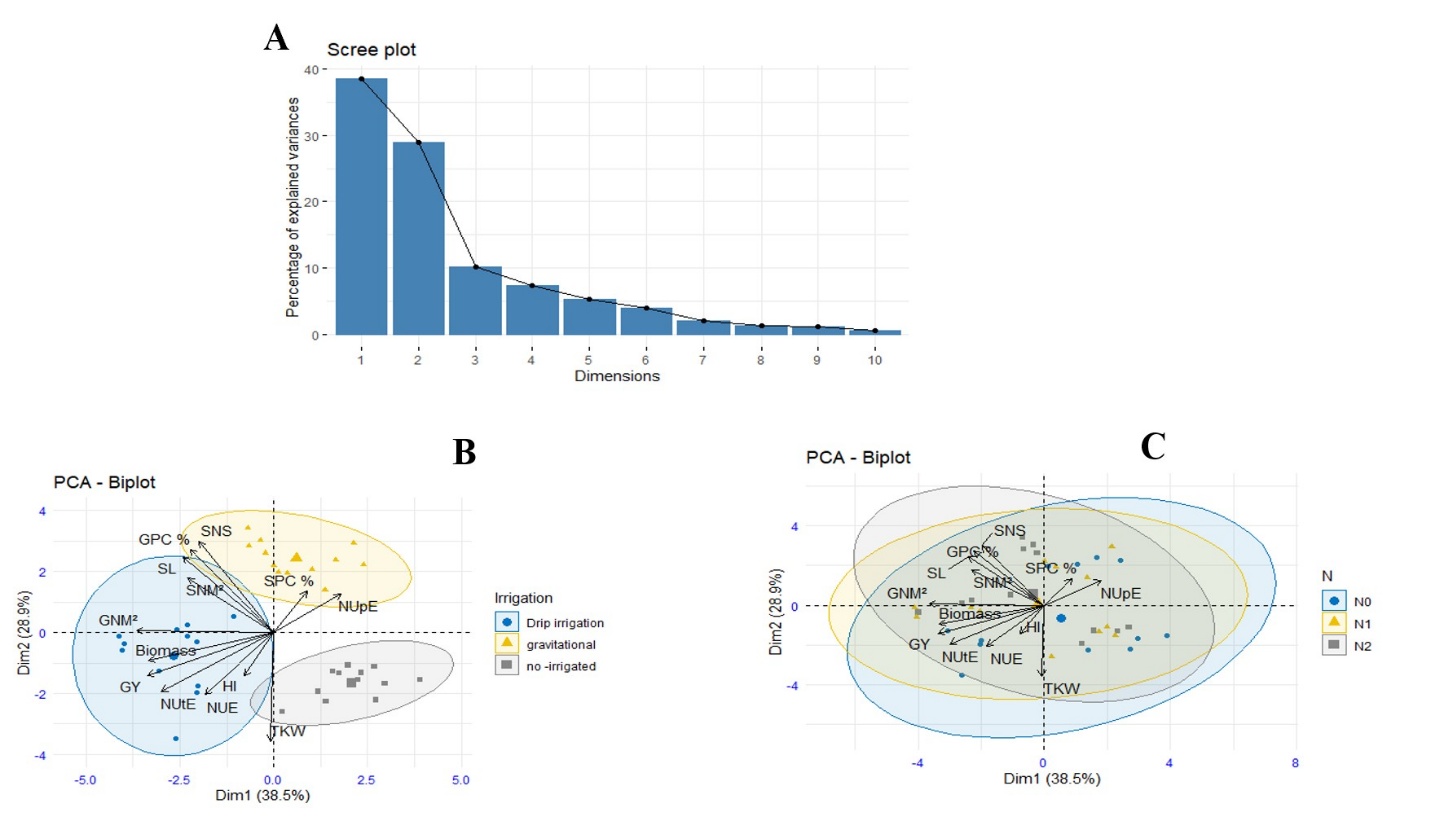
Figure 3. Principal component analysis (PCA) results showing (A) the scree plot indicating the proportion of variance explained by each principal component, and (B-C) the PCA by irrigation and N levels.
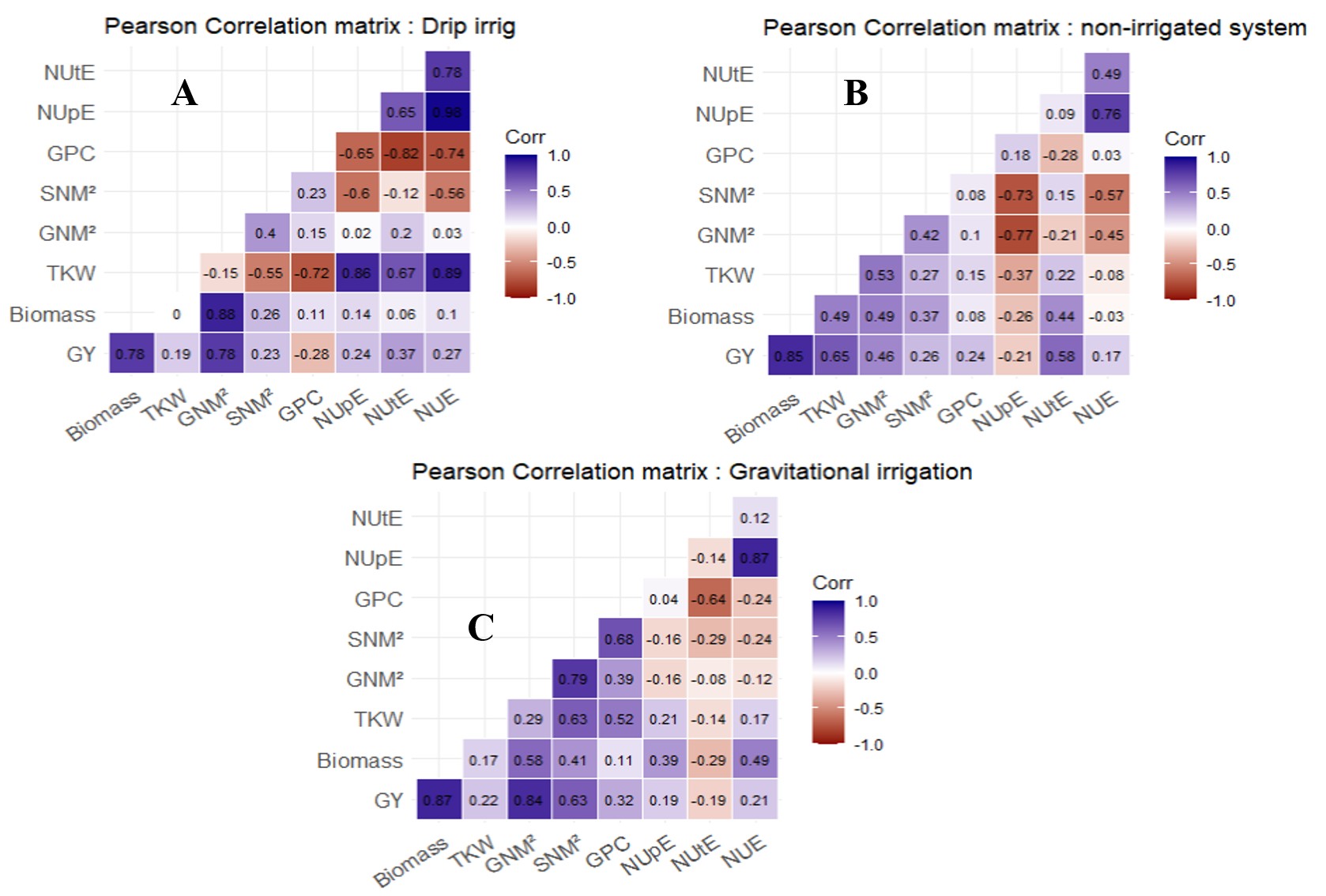
Figure 4. Heat maps showing the correlation between studied traits in (A) Drip irrigation system, (B) non-irrigated system, and (C) gravitational system.
Pearson correlation matrix between all studied traits by irrigation systems
In the drip irrigation system (Fig.4A), GY exhibited strong positive correlations both total biomass (r = 0.78*) and GNM² (r = 0.78**), mirroring trends observed under gravitational irrigation. However, drip irrigation uniquely displayed a remarkably strong positive association between NUE and both NUtE (r = 0.78*) and NUpE (r = 0.98**). At the same time a strong negative correlation was observed between NUE and GPC (r = -0.74), suggesting that drip irrigation enhances nitrogen acquisition and its effective conversion into yield components. This may come at the cost of reduced protein concentration; likely due to a dilution effect, wherein increased biomass and grain yield dilute the protein content.
In the rainfed system (Fig. 4B), GY remained strongly associated with biomass production (r = 0.85***), but also showed significant correlations with thousand kernel weight (TKW; r = 0.65*). Indicating that under water-limited conditions, yield depends more heavily on assimilate partitioning and grain filling efficiency. NUE in this system showed its strongest correlation with NUpE (r = 0.76*), and GY itself was positively associated with NUtE (r = 0.58**), underscoring the critical role of internal nitrogen remobilization and utilization under drought stress.
Under the gravitational irrigation system (Fig. 4C), GY correlated very strongly with both biomass (r = 0.87*) and GNM²(r = 0.84***), indicating that yield in this system is primarily driven by vegetative vigor and spike density. However, there are notable correlations between NUE and biomass (r = 0.49), as well as between NUE and GPC (r = -0.23**), suggesting a potential trade-off between high productivity and nitrogen efficiency in high-input environments. These patterns imply that while gravitational irrigation can boost yield through enhanced vegetative growth, it may do so at the expense of nitrogen efficiency and grain quality.
Discussion
The findings of this study highlight the complex interplay between nitrogen (N) fertilization and irrigation strategies in shaping wheat productivity and nitrogen use efficiency (NUE) under arid conditions in Morocco. Grain yield and its components exhibited significant variability across different irrigation regimes and N levels, emphasizing the critical influence of environmental factors in crop performance. These observations are consistent with previous studies that underscore the role of environmental conditions in determining cereal crop yields (Mirosavljević et al., 2018). Under gravitational irrigation, grain yield increased with higher nitrogen inputs, corroborating the results of Otteson et al., (2007); Iqbal et al., (2012); Souissi et al., (2020), who reported that enhanced nitrogen inputs resulted in better productivity. Under rainfed and drip-irrigated conditions, maximum grain yield, biomass, and grain number per square meter (GNM²) were achieved at 50% of the recommended nitrogen input, with a decline observed at 100% N. This reduction may be attributed to nitrogen toxicity, which occurs when excessive nitrogen inputs exceeds plant assimilation capacity, leading to nitrate accumulation in plant tissues, which can disrupt metabolic homeostasis. On the other hand, excessive nitrate can alter chlorophyll synthesis, reduce carbohydrates partitioning, and induce oxidative stress through the overproduction of reactive oxygen species (Zheng et al., 2020; Khan et al., 2023). Moreover, excessive ammonium supply, often present in nitrogen fertilizers, may inhibit nitrate uptake due to competitive interactions (Ben Debbane et al., 2025), enhances osmotic potential in the rhizosphere and nitrate leaching, contributing to nutrient imbalances and reduced yield and nitrogen use efficiency (Karrou and Nachit, 2015).
Furthermore, yield components under these conditions may be negatively affected by irregular rainfall and an increased risk of lodging at higher nitrogen levels (Chen et al., 2018; Mirosavljević1 et al., 2019; Yang et al., 2019). Limited water availability intensifies plant competition for nitrogen, which is further exacerbated by nitrogen interaction with groundwater and competition among ions for nitrate (NO3-) uptake. These interactions exacerbate water stress and can disrupt vital physiological processes such as photosynthesis, nutrient uptake, and transpiration, ultimately reducing plant health and productivity.
This diminished physiological capacity limits the crop to utilize effectively agronomic inputs. The findings are consistent with these of Lopez-Bellido et al., (1996), who demonstrated that wheat may little to no response to nitrogen fertilization during dry years, particularly when seasonal rainfall falls below 450 mm. Similarly, Guo et al., (2020) and Ding et al., (2022), showed that optimal nitrogen rate varies across irrigation system and is contingent upon synchronizing N availability with crop demand. As Sadras et al., (2016) noted, when water is a limiting factor, nitrogen application must be carefully managed to avoid an imbalance in shoot-to-root ratios and premature soil moisture depletion. Moreover, high temperatures and drought stress can modify the physiological characteristics of plant organs, thereby disrupting the source-sink balance and reducing the efficiency of nitrogen remobilization from vegetative tissues to developing grains (Ben Debbane et al., 2025).
Furthermore, significant treatment effects were under rainfed conditions for all variables, whereas differences were less pronounced under supplemental irrigation systems (drip and gravitational). These results are in agreement with the findings of Khlila et al., (2025), who reported reduced variability in irrigated plots due to more stable soil moisture conditions. The harvest index (HI) remained low across all irrigation systems (27–33%), likely due to precipitation deficits and elevated temperatures during critical growth stages, as noted by Benchelali et al., (2022) and Donald and Hamblin, (1976). A temperature increase of 4 °C can reduce potential yield and its components by up to 34% (Bouras et al., 2023). Interestingly, irrigation did not have a significant effect on HI variation, which aligns with findings by Rathore et al., (2017), who suggested that moderate deficit irrigation may improve HI by promoting carbon remobilization efficiency during grain filling. An inverse relationship between nitrogen levels and TKW was observed under drip irrigation, with the highest TKW recorded at N0 level. This may be attributed to excessive irrigation during the vegetative phase combined with N application, resulting in soil moisture depletion during the grain-filling stage (Benchelali et al., 2022). Furthermore, high N rates can delay senescence, thereby reducing the rate of grain filling rates (Anbessa et al., 2009; Ayadi et al., 2022).
In contrast, spike number per square meter (SNM²) exhibited a positive correlation with increasing N rates across all environments, in agreement with Ierna et al., (2016); Rathore et al., (2017); Ayadi et al., (2022). Nevertheless, overall SNM² values remained relatively low (263–340 spikes/m²), despite a seeding rate of 350 grains/m², likely due to early-season drought stress that adversely affected germination and tillering (Guendouz et al., 2012; Mandic et al., 2015). Early application of supplemental irrigation could therefore enhance grain yield, TKW and water productivity (Karrou et al., 2008). Additionally, spike length and the number of spikelets per spike increased with higher N levels under varying environmental and irrigation conditions, as reported by Ali et al., (2011); Iqbal et al., (2012); Gheith et al., (2013); and Mandic et al., (2015) also found no significant difference in spike length between nitrogen treatments. Correlation analyses indicated that biomass and grain number per square meter (GNM²) were the primary contributors to grain yield under drip and gravitational irrigation, while biomass alone was the dominant factor under rainfed conditions. These results are consistent with those of Rathore et al., (2017) and Karrou and Nachit, (2015), who emphasized the central role of biomass and grain number in determining grain yield. However, other studies have identified SNM² and TKW as key yield determinants (Akram et al., 2008; Mandic et al., 2015), suggesting that the most yield-contributing trait may vary depending on environmental and management conditions.
Grain protein content (GPC) and stem protein content (SPC) increased with higher N levels, regardless of the irrigation regime, corroborating previous studies (Subedi et al., 2007; Ayadi et al., 2014, 2022; Mondal et al., 2015; Ierna et al., 2016). However, the Merchouch station (MCH), despite being the latest sown, recorded the lowest GPC; likely due to heavy rainfall between maturity and harvest, which failed to compensate for earlier water deficits and likely contributed to reduced grain yield and quality (Karrou et al., 2008). Nitrogen use efficiency (NUE) and its components; nitrogen uptake efficiency (NUpE) and nitrogen utilization efficiency (NUtE); declined with increasing N application rates across all stations. This trend aligns with findings from previous studies (López-Bellido and López-Bellido, 2001; Ayadi et al., 2014, 2022; Karrou and Nachit, 2015; Mandic et al., 2015; Ierna et al., 2016; Rathore et al., 2017; Mirosavljević1 et al., 2019; Vidican et al., 2020; Benchelali et al., 2022). Notably, crops growth under drip and rainfed conditions exhibited higher NUE and NUpE than those under gravitational irrigation, underscoring the critical role of water availability in nitrogen uptake and utilization. Since nitrogen use is closely dependent on soil moisture, adequate water enhances nitrogen mobility in the soil, improving its accessibility to plant roots and facilitates its uptake. Furthermore, under moderate soil moisture improves nitrogen mineralization while reducing nitrogen losses through leaching and volatilization (Hatfield and Prueger, 2004; Bandyopadhyay et al., 2010; Rathore et al., 2017). Across all stations, NUtE peaked at 50% of the recommended N input, suggesting that moderate N applications optimize the conversion of absorbed N into grain yield. The relative contribution of NUpE and NUtE to overall NUE varied with N availability: NUpE was more influential under low N conditions, while NUtE played a great role under high N availability (Karrou and Nachit, 2015) Given the strong correlation between NUtE and grain yield, NUtE is a key trait for breeding programs aimed to enhance wheat productivity across diverse environmental conditions (Mandic et al., 2015). Importantly, both NUpE and NUtE achieve optimal performance only when water and nitrogen are simultaneously available. NUpE is more sensitive to water availability, while NUtE responds more to nitrogen levels. This highlights the importance of synchronizing irrigation with soil moisture depletion and adjusting nitrogen application rates to maximize both nitrogen production and water use efficiency, particularly in the semi-arid regions of Morocco (Ech-chatir et al., 2025).
Water availability and N rate interacted significantly with most agronomic and physiological parameters, underscoring the need to consider both factors simultaneously in management strategies. Recent studies have shown that while a moderate N supply during drought may intensify stress by delaying senescence and disrupting the source-sink balance, it can also enhance biomass allocation and reproductive development in water-limited environments (Verner et al., 2018; Cossani and Sadras, 2021). Under well-watered conditions, where water is not a limiting factor, increased N inputs can promote tillering and grain filling (Tao et al., 2021). Conversely, applying 50% of the recommended nitrogen rate often improves performance under rainfed or water-stressed conditions by enhancing nitrogen absorption and reducing the risk of luxury consumption (Wang et al., 2022). These responses are likely mediated by changes in stomatal regulation, root architecture, and hormonal signaling (Cai et al., 2022).
In conclusion, this research highlights the importance of tailoring nitrogen fertilization and irrigation practices to specific environmental conditions to optimize wheat yield and nitrogen use efficiency. This approach aligns with Devkota et al., (2023). Furthermore, adopting moderate nitrogen application rates can improve grain quality and nitrogen efficiency while mitigating environmental risks associated with excessive nitrogen use; particularly in drip irrigated and rainfed systems. Developing sustainable wheat production systems practices in arid and semi-arid regions depends on the integration of this knowledge into agronomic practices.
Materiel and Methods
Plant material
Certified seeds of the Moroccan spring wheat variety “Arrehane” developed by INRA Morocco were used in this experiment.
Sites description and experimental design
The experiment was carried out during the 2022-2023 cropping season using a Randomized Complete Block Design (RCBD) with three replications at three INRA experimental stations. Afourar (AFR) (Tadla: 32°12'60.00" N -6°29'59.99" W) a semi-arid irrigated zone, Sidi El Aidi (SEA) (Settat: 33°07'40.0" N 7°37'26.1" W) a semi-arid zone, and Merchouch (MCH) (Romani: 32°61'54.72" N, -6°71'87.42" W) as a sub-humid to semi-arid transition zone lately. The schematic map of the experimental stations is represented in Figure. 5. The net plot size was 4.8 x 5 m² (24 m2). Wheat was sown using a Six-Row Seeder with 20 cm spacing between rows. Sowing dates were in November with a seed rate of 350 grains/m². Harvest took place in June using a dedicated combine harvester.
Due to the severe drought conditions experienced during the growing season (Fig.6), supplemental irrigation was applied to prevent crop failure. It is not implemented as an experimental treatment, but rather as an adaptive management strategy to ensure crop survival and respond to environmental conditions. Consequently, each was characterized by a specific irrigation system, which was managed in a way to bring the total amount of water (rainfall + irrigation), to the long-term rainfall average in the region. Irrigation typically targeted key crop growth stages, such as tillering, heading, and grain filling; and often coincided with nitrogen fertilizer application.
Sidi El Aidi (SEA – Drip irrigation): Supplemental irrigation was applied through a drip system, with 3 to 4 irrigation events during the growing season. Each event delivered approximately 10–20 mm of additional water.
Afourar (AFR – Gravitational irrigation): A total of 4 to 5 surface irrigations were applied throw the season. Each application supplied approximately 30–50 mm of water.
Marchouch (MCH – Rainfed with supplemental irrigation): Although primarily rainfed, two rescue irrigations of approximately 15 mm each were applied; at flowering and at the grain filling stages.
Soil properties and treatments
To assess soil properties, samples were collected in a zigzag pattern across the plots, using an auger to a depth of 30 cm. Samples were sieved, and dried at 40°C. Nitrate concentrations were analysed using Devarda's Alloy method (Bremner and Keeney 1965), with ammonium specifically measured via the distillation-titration method. Organic matter content was measured using the Walkley and Black (1934) methods, while the phosphorus levels were assessed using the Olsen et al. (1954) method. The results obtained to date are presented in Table 3.
Based on soil analysis and the target grain yield at each experimental site, three nitrogen fertilizer rates (N0, N1, and N2) were evaluated as the main treatment factor and arranged following a randomized complete bloc design as mentioned in the sites description and experimental design section. N0 served as the control treatment, with no nitrogen fertilizer applied; relying solely on residual soil nitrogen. N1 consisted of the residual soil nitrogen + 50% of the estimated nitrogen requirement needed to achieve the site-specific yield potential. N2 included the residual soil nitrogen plus 100% of the estimated nitrogen requirement to attain the maximum yield potential, as determined by varietal capacity and local agronomic conditions.
Nitrogen was applied in the form of ammonium nitrate (33.5% N) in three equal splits: one-third at sowing, one-third at the first node stage (Zadoks stage GS31), and one-third at heading (Zadoks stage GS55). All other crop management practices;
Table 3. Soil characteristics of experimental stations.
| Depth (cm) | Dominant soil | Previous crop | pH | EC dS.m-1 | NO3- (ppm) | P(ppm) | K(ppm) | OM% | |
|---|---|---|---|---|---|---|---|---|---|
| AFR | 0-30 | Alluvial soils | Barley | 8.27±0.05 | 0.155±0.028 | 9.51±1.89 | 1.98±0.35 | 190.9±15.1 | 1.28±0.36 |
| SEA | 0-30 | Sandy to loamy | Bread wheat | 8.25±0.057 | 0.452±0.037 | 12.83±1.25 | 13.39±0.80 | 182.67±4.08 | 2.12±0.38 |
| MCH | 0-30 | Vertisols | Durum wheat | 6.02±0.15 | 0.08±0.01 | 11.68±2.98 | 49.47±1.47 | 192.97±1.76 | 1.77±0.51 |
AFR: Afourar; SEA: Sidi el Aidi; MCH: Merchouch; EC: electrical conductivity; P: phosphorus; K: potassium; OM: organic matter.
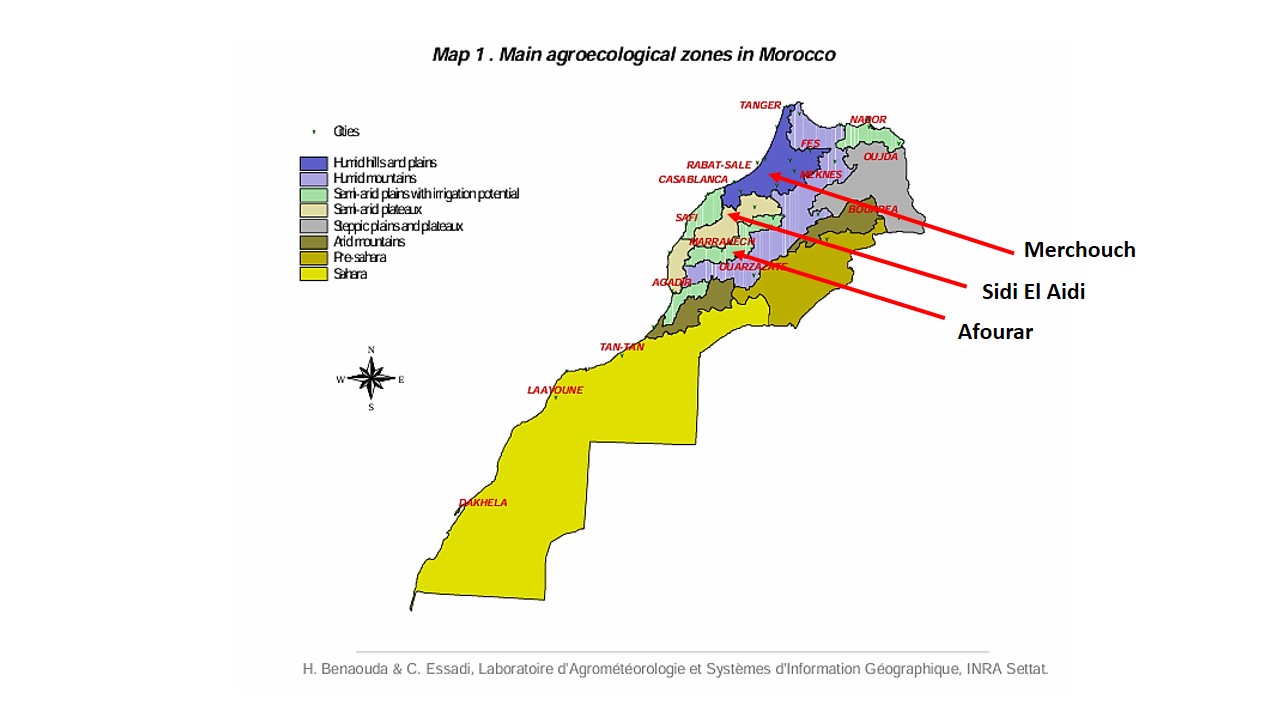
Figure 5. Schematic map of the main agro ecological zones of Morocco, showing the three experimental stations location.
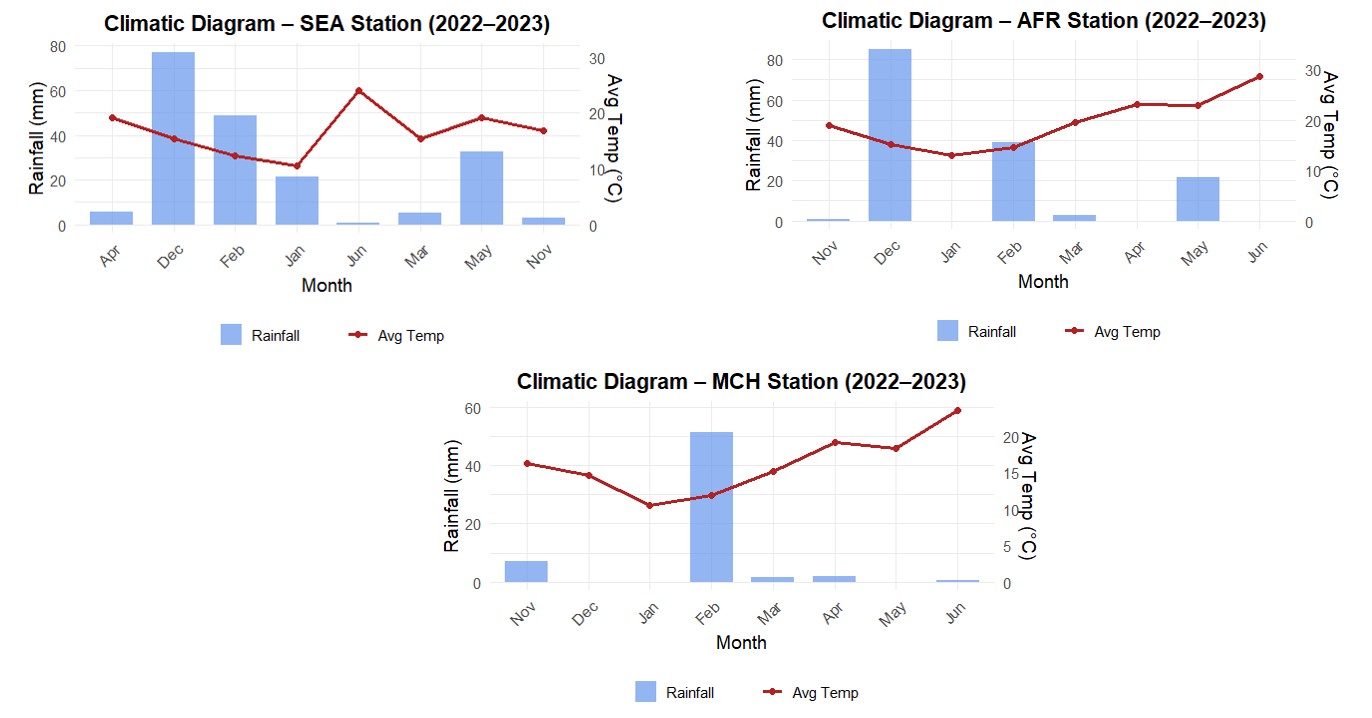
Figure 6. Climatic conditions (rainfall and average temperatures) of the studied environments.
including tillage, weed control, and pest and disease management, were applied uniformly across all treatments and locations to ensure consistency.
Crop measurements
Physiological traits such as spike length (SL) and spikelet number (SNS) were evaluated at maturity. After harvest, total biomass and yield components including thousand kernel weight (TKW), spike number per m² (SNM²), grain number per m² (GNM²), and Harvest Index (HI). Grain quality parameters; grain protein content and stem protein content; were analyzed using the Kjeldahl method at the soil, water and plant laboratory of the Regional Center of Agricultural Research (CRRA) of Settat.
Data analysis
Initial data analysis and outlier detection were performed using Genstat (14th Edition). Analysis of variance (ANOVA) was carried out using both one-way and two-way models to evaluate the significance of N rates, environment-irrigation system, and their interactions. Post hoc comparisons were performed using Tukey's Honestly Significant Difference (HSD). Statistical significance was assessed at three levels: p<0.05 (significant), p<0.01 (highly significant), and p<0.001 (very highly significant). Subsequent multivariate and correlational analyses were conducted using the R statistical software environment (version 4.3.2). All statistical analyses were conducted with appropriate checks for normality and homogeneity of variances to ensure the validity of the results.
Conclusions
This study demonstrates that optimizing nitrogen fertilization in combination with environment-specific irrigation strategies enhances nitrogen use efficiency, yield, and grain quality of bread what under semi-arid Moroccan conditions. Drip irrigation coupled with moderate nitrogen input consistently improved grain yield, thousand-kernel weight and grain number per square meter; while maintaining a high harvest index. In contrast, excessive nitrogen application did not lead to further yield gains under any irrigation regime, indicating a threshold beyond where nitrogen becomes both inefficient and environmentally detrimental. Drip irrigation achieved the highest NUE and N uptake efficiency due to better soil moisture and nutrient availability, whereas nitrogen utilization efficiency (NUtE) was significantly higher under low nitrogen input, especially in rainfed and gravitational irrigation systems. Morphological traits, including spike length and spikelet number per spike, also respond positively to combined water and nitrogen supply. Grain protein content (GPC) increased with nitrogen input, but declined under high-yield drip conditions, suggesting a dilution effect. Overall, integrating moderate nitrogen application with drip irrigation emerges as the optimal strategy for balancing high productivity, resource use efficiency, and grain quality. This approach supports sustainable wheat production and highlights the importance of site-specific-nitrogen-water management under Morocco’s semi-arid conditions to ensure efficient input use and to address the growing challenges of climate variability and resource scarcity.
Author contributions: FZ.BD: Conceptualization, methodology, writing original draft, statistical analysis, review and editing; A.B: Review, validation and project administration; R.A: review, editing and validation; A.A: Conceptualization, supervision, validation and review. All authors read and approved the final manuscript. The authors declare that they have no known competing financial or personal relationships that could have influenced the work reported in this paper.
Acknowledgement: This research is supported by the National Institute of Agricultural Research (INRA)-Syngenta Morocco agreement on using biostimulants on Moroccan wheat crop under Moroccan field conditions.
References
Aboutayeb R, Boutarfa A, and Mrabet A (2024) Carbon sequestration strategies in agricultural lands: towards a sustainable agriculture. In : Water-soil-plant-animal nexus in the era of climate change. IGI Global: 28–48
Akram Z, Ajmal S.U, and Munir M (2008) Estimation of correlation coefficient among some yield parameters of wheat under rainfed conditions. Pakistan J. Bot. 40(4 SPEC. ISS.): 1777–1781.
Ali A., Ahmad A, Syed W.H, Khaliq T, Asif M, Aziz M, and Mubeen M (2011) Effects of nitrogen on growth and yield components of wheat. (Report). Sci. Int. 23(4): 331–332.
Amamou, A (2024) For resilient cereal production in the context of climate change : a genetic and agronomic option. Afrimed. AJ-Al Awamia. 143: 67–80.
Anbessa Y, Juskiw P, Good A, Nyachiro J, and Helm J (2009) Genetic variability in nitrogen use efficiency of spring barley. Crop Sci. 49(4): 1259–1269. doi: 10.2135/cropsci2008.09.0566.
Asseng S, Ewert F, Martre P, Rötter R.P, Lobell D.B, et al (2015) Rising temperatures reduce global wheat production. Nat. Clim. Chang. 5(2): 143–147. doi: 10.1038/nclimate2470.
Ayadi S, Jallouli S, Chamekh Z, Zouari I, Landi S, et al. (2022) Variation of grain yield, grain protein content and nitrogen use efficiency components under different nitrogen rates in mediterranean durum wheat genotypes. Agric. 12(7). doi: 10.3390/agriculture12070916.
Ayadi S, Karmous C, Hammami Z, Trifa Z, and Rezgui S (2014) Variation of durum wheat yield and nitrogen use efficiency under mediterranean rainfed environment. IJACS J. 7 10.1982: 693–699. doi: 10.13140/RG.2.1.2810.0880.
Bandyopadhyay K.K, Misra A.K, Ghosh P.K, Hati K.M, Mandal K.G, Moahnty M (2010) Effect of irrigation and nitrogen application methods on input use efficiency of wheat under limited water supply in a Vertisol of Central India. Irrig. Sci. 2.4: 285–299. doi: 10.1007/s00271-009-0190-z.
Benchelali S, Benkherbache N, Mefti M, Ronga D, Louahdi N, Russo M, Pechianni N (2022) Nitrogen use efficiency in durum wheat (Triticum durum Desf.) grown under semiarid conditions in Algeria. Agron 12.6: 1–16. doi: 10.3390/agronomy12061284.
Bouras F.Z, Hadjout S, Haddad S, Malek A, Aitmoumene S, et al (2023). The effect of nitrogen supply on water and nitrogen use efficiency by wheat–chickpea intercropping system under rain-fed mediterranean conditions. Agric. 13.2: 1–15. doi: 10.3390/agriculture13020338.
Bouslihim Y, Aboutayeb A, and Benabdelouahab T (2024) Overview of soil organic carbon mapping using machine learning algorithms in Africa. African Mediterr. Afrimed- Al Awamia 145 SE: 27–38. https://revues.imist.ma/index.php/Afrimed/article/view/49544.
Cai S, Zhao X, and Yan X (2022) Effects of climate and soil properties on regional differences in nitrogen use efficiency and reactive nitrogen losses in rice. Environ. Res. Lett. 17.5. doi: 10.1088/1748-9326/ac6a6b.
Chen X, Wang J, Wang Z, Li W, Wang C, et al (2018). Optimized nitrogen fertilizer application mode increased culms lignin accumulation and lodging resistance in culms of winter wheat. F. Crop. Res. 228.October 2015: 31–38. doi: 10.1016/j.fcr.2018.08.019.
Cossani C.M, and Sadras V.O (2021) Nitrogen and water supply modulate the effect of elevated temperature on wheat yield. Eur. J. Agron. 124.December 2020: 126-227. doi: 10.1016/j.eja.2020.126227.
Ben Debbane F.Z, Baidani A, Aarbaoui M, Moussadek R, Mrabet R, and Amamou A (2025) Exploring nitrogen use efficiency in cereals: Insight into traits, metabolism, and management strategies under climate change conditions – A comprehensive review. J. Soil Sci. Plant Nutr. 25.2: 3774–3796. doi: 10.1007/s42729-025-02366-3.
Devkota K.P, Devkota M, Moussadek R, and Nangia N (2023) Genotype × environment × agronomic management interaction to enhance wheat yield in the Mediterranean rainfed environments of Morocco: II. Process based modeling. Eur. J. Agron. 151(April): 126-973. doi: 10.1016/j.eja.2023.126973.
Ding Y, Zhang X, Ma Q, Li F, Tao R, et al (2022) Tiller fertility is critical for improving grain yield, photosynthesis and nitrogen efficiency in wheat. J. Integr. Agric. (Fao 2019). doi: 10.1016/j.jia.2022.10.005.
Donald C.M, and Hamblin J (1976) The biological yield and harvest index of cereals as agronomic and plant breeding criteria. Adv.Agron.
Ech-chatir L, Er-Raki S, Rodriguez J.C, Meddich A, and Chehbouni A (2025) Optimizing sowing date, fertilization, and irrigation strategies for winter wheat in Tensift Al Haouz (Morocco) using the DSSAT-CERES-wheat model. Agric. Water Manag. 312.February 2024: 109443. doi: 10.1016/j.agwat.2025.109443.
ElGharous M, and Boulal H (2016) IPNI North Africa Challenges in Nutrient Management under Rainfed Agriculture of Morocco. Procedia Eng. 138: 332–336. doi: 10.1016/j.proeng.2016.02.093.
Fageria, N.K. 2014. Nitrogen management in crop production. Taylor & F. Boca Raton.
FAO (2023a) Agricultural production statistics 2000-2022. Faostat Anal. Br. 79. https://www.fao.org/faostat/en/#data/QCL.
FAO (2023b) Bulletin de la FAO sur l’offre et la demande de céréales. https://www.fao.org/worldfoodsituation/csdb/fr/.
Gheith E.M.S, El-badry O.Z, and Wahid S.A (2013) Sowing dates and nitrogen fertilizer levels effect on grain yield and its components of different wheat genotypes. Res. J. Agric. & Biol. Sci. 9.5: 176–181.
Guendouz A, Guessoum S, Maamari K, and Hafsi M (2012) The effect of supplementary irrigation on grain yield , yield components and some morphological traits of durum cheat (Triticum Durum Desf.) cultivars. Adv. Environ. Biol. 6.2: 564–572.
Guo Y, Chen Y, Searchinger T.D, Zhou M, Pan D, et al. (2020) Air quality, nitrogen use efficiency and food security in China are improved by cost-effective agricultural nitrogen management. Nat. Food 1.10: 648–658. doi: 10.1038/s43016-020-00162-z.
Haque A.N.A, Hossain M.E, Haque M.E, Hasan M.M, Malek M.A, Rafii M.Y, and Shamsuzzaman S.M (2017) Response of yield, nitrogen use efficiency and grain protein content of wheat (Triticum aestivum L.) varieties to different nitrogen levels. Bangladesh J. Bot. 46.1: 389–396.
Hatfield J.L, and Prueger J.H (2004) Nitrogen over-use, under-use, and efficiency. In :New directions for a diverse planet. 3: 1–15
Hawkesford M.J (2017) Genetic variation in traits for nitrogen use efficiency in wheat. J. Exp. Bot. 68.10: 2627–2632. doi: 10.1093/jxb/erx079.
Ierna A, Lombardo G.M, and Mauromicale G (2016) Yield, nitrogen use efficiency and grain quality in Durum wheat as affected by nitrogen fertilization under a Mediterranean environment. Exp. Agric. 52.2: 314–329. doi: 10.1017/S0014479715000113.
IFASTAT (2022). Fertilizer consumption - historical trends by country or region. https://www.ifastat.org/databases/graph/1_1.
Iqbal J, Khizer H, Safdar H, Anser A, and Bakhsh M.A.A.H.A (2012) Effect of seeding rates and nitrogen levels on yield and yield components of wheat (Triticum aestivum L.). pakistan J. Nutr. 11.7: 629–634.
Karrou M, El Mourid M, Boutfirass M, and El Gharouss M (2008) Opportunities for improving wheat water productivity in semi-arid areas of Morocco. African Mediterr. Afrimed- Al Awamia. June:123-124
Karrou M, and Nachit M (2015) Durum wheat genotypic variation of yield and nitrogen use efficiency and its components under different water and nitrogen regimes in the Mediterranean region. J. Plant Nutr. 38.14: 2259–2278. doi: 10.1080/01904167.2015.1022184.
Khan A.G, Niaz A, Mahpara A, Ullah R,Tahir R, et al (2023) Impact of various irrigation levels and nitrogen rates on wheat (Triticum aestivum L.) yield and nitrate leaching. J. King Saud Univ. - Sci. 35.10. doi: 10.1016/j.jksus.2023.102940.
Khlila I, Baidani A, Hnizil O, and Amamou A (2025) Integrated management of water, nitrogen, and genotype selection for enhanced wheat productivity in Moroccan arid and semi-arid regions. Agron 15.3: 1–27. doi: 10.3390/agronomy15030612.
Lopez-Bellido L, Fuentes M, Castillo J.E, Lopez-Garrido F.J, and Fernaindez E.J (1996) Long-term tillage, crop rotation, and nitrogen fertilizer effects on wheat yield under rainfed mediterranean conditions. Agron. J. 88.5: 783–791. doi: 10.2134/agronj1996.00021962008800050016x.
López-Bellido R.J and López-Bellido L (2001) Efficiency of nitrogen in wheat under Mediterranean conditions: Effect of tillage, crop rotation and N fertilization. F. Crop. Res. 71.1: 31–46. doi: 10.1016/S0378-4290(01)00146-0.
Mandic V, Krnjaja V, Tomic Z, Bijelic Z, Simic A, et al. (2015) Nitrogen fertilizer influence on wheat yield and use efficiency under different environmental conditions. Chil. J. Agric. Res. 75.1: 92–97. doi: 10.4067/S0718-58392015000100013.
Mirosavljević M, Momčilović V, Denčić S, Mikić S, Trkulja S, et al. (2018) Grain number and grain weight as determinants of triticale, wheat, two-rowed and six-rowed barley yield in the pannonian environment. Spanish J. Agric. Res. 16.3 doi: 10.5424/sjar/2018163-11388.
Mirosavljević1 M, Aćin V, Sabadoš V, and Dorotić D (2019) Variation in nitrogen use efficiency of winter wheat. Genetika 51.2: 1165–1174. doi: https://doi.org/10.2298/GENSR1903165M.
Mondal H, Mazumder S, Roy S, Mujahidi T, and S. Paul (2015) Growth, yield and quality of wheat varities as affected by different levels of nitrogen. Bangladesh Agron. J. 18.1: 89–98. doi: 10.3329/baj.v18i1.25576.
ONICL (2023) Statistiques sur les superficies emblavées au Maroc. https://www.onicl.org.ma/portail/.
Otteson B.N, Mergoum M, and Ransom M (2007) Seeding rate and nitrogen management effects on spring wheat yield and yield components. Agron. J. 99.6: 1615–1621. doi: 10.2134/agronj2007.0002.
Oweis T, Zhang H, and Pala M (2000) Water use efficiency of rainfed and irrigated bread wheat in a Mediterranean environment. Agron. J. 92.2: 231–238. doi: 10.2134/agronj2000.922231x.
Rathore V.S, Nathawat N.S, Bhardwaj S, Sasidharan R.P, Yadav B.M et al. (2017) Yield, water and nitrogen use efficiencies of sprinkler irrigated wheat grown under different irrigation and nitrogen levels in an arid region. Agric. Water Manag. 187: 232–245. doi: 10.1016/j.agwat.2017.03.031.
Raun W.R., and Johnson G. V (1999) Improving nitrogen use efficiency for cereal production. Agron. J. 91.3: 357–363. doi: 10.2134/agronj1999.00021962009100030001x.
EL Sabagh A, Islam M.S, Skalicky M, Ali Raza M., Singh K, et al. (2021) Salinity stress in Wheat (Triticum aestivum L.) in the Changing Climate: Adaptation and Management Strategies. Front. Agron. 3.July: 1–20. doi: 10.3389/fagro.2021.661932.
Sadras V.O, Hayman P.T, Rodriguez P.T, Monjardino M, Bielich M, et al. (2016). Interactions between water and nitrogen in Australian cropping systems: Physiological, agronomic, economic, breeding and modelling perspectives. Crop Pasture Sci. 67.10: 1019–1053. doi: 10.1071/CP16027.
Souissi A, Bahri H, M’Hamed H.C, Chakroun M, Benyoussef S, et al. (2020) Effect of tillage, previous crop, and N fertilization on agronomic and economic performances of durum wheat (Triticum durum desf.) under rainfed semi-arid environment. Agron 10.8: 1–16. doi: 10.3390/agronomy10081161.
Subedi K.D, Ma B.L, and Xue A.G (2007) Planting date and nitrogen effects on grain yield and protein content of spring wheat. Crop Sci. 47.1: 36–44. doi: 10.2135/cropsci2006.02.0099.
Tao R, Li J, Hu B, Shah J.A, and Chu G (2021) A 2-year study of the impact of reduced nitrogen application combined with double inhibitors on soil nitrogen transformation and wheat productivity under drip irrigation. J. Sci. Food Agric. 101.5: 1772–1781. doi: 10.1002/jsfa.10791.
Trnka M, Rötter R.P, Ruiz-Ramos R, Kersebaum K.C, Olesen J.E, et al. (2014) Adverse weather conditions for European wheat production will become more frequent with climate change. Nat. Clim. Chang. 4.7: 637–643. doi: 10.1038/nclimate2242.
Verner D,Treguer D, Redwood J, Christensen J, McDonnell R, et al. (2018) Climate variability, drought, and drought management in Morocco’s agricultural sector.
Vidican R, Mǎlinaş A, Rotar I, Kadar A, Deac V, et al. (2020) Assessing wheat response to N fertilization in a wheat-maize-soybean long-term rotation through NUE measurements. Agron. 10.7. doi: 10.3390/agronomy10070941.
Wang J, Hussain S, Sun X, Zhang P, Javed T, et al. (2022) Effects of nitrogen application rate under straw incorporation on photosynthesis, productivity and nitrogen use efficiency in winter wheat. Front. Plant Sci. 13.March: 1–13. doi: 10.3389/fpls.2022.862088.
Wang N, Zhang T, Cong A, and Lian J. (2023) Integrated application of fertilization and reduced irrigation improved maize (Zea mays L.) yield, crop water productivity and nitrogen use efficiency in a semi-arid region. Agric. Water Manag. 289.August: 108566. doi: 10.1016/j.agwat.2023.108566.
Yang D, Cai T, Luo T, and Wang Z (2019) Optimizing plant density and nitrogen application to manipulate tiller growth and increase grain yield and nitrogen-use efficiency in winter wheat. PeerJ 2019.2. doi: 10.7717/peerj.6484.
Yildirim M, Kizilgeci K, Albayrak O, Iqbal M.A, and Akinci C (2022) Grain yield and nitrogen use efficiency in spring wheat (Triticum aestivum L.) hybrids under different nitrogen fertilization regimes. J. Elem. 27.3: 627–644. doi: 10.5601/jelem.2022.27.3.2241.
Zheng X, Yu Z, Zhang Y, and Shi Y (2020) Nitrogen supply modulates nitrogen remobilization and nitrogen use of wheat under supplemental irrigation in the North China Plain. Sci. Rep. 10.1: 1–10. doi: 10.1038/s41598-020-59877-5.