Australian Journal of Crop Science
Article | https://doi.org/10.21475/ajcs.26.20.08.pne154
Submitted: 13 October 2025 | Revised: 25 January 2026 | Accepted: 29 January 2026
Pages 627-635
Sacch5A1a489bp: Candidate molecular marker associated with smut tolerance in modern sugarcane genotypes
Bruna Sisti Michelan de Polli¹, Luiz Gustavo da Mata Borsuk², Hugo Zeni Neto³, Maria de Fátima Pires da Silva Machado4, Adriana Gonela³, Claudete Aparecida Mangolin4
¹Genetics and Plant Breeding, State University of Maringá, Maringá, PR 87020-900, Brazil
²Agronomy, State University of Maringá, Maringá, PR 87020-900, Brazil
³Department of Agronomy, State University of Maringá, Maringá, PR 87020-900, Brazil
⁴Department of Biotechnology, Genetics and Cell Biology, State University of Maringá, Maringá, PR 87020-900, Brazil
Corresponding author: brunadepolli@gmail.com
Abstract: Sugarcane smut, which is caused by the fungus Sporisorium scitamineum, is one of the most detrimental diseases affecting the sugarcane crop and has been shown to significantly reduce productivity. Evidence indicates that chromosome 5 is the main origin of most resistance gene analogs (RGAs) involved in pathogenic responses in modern sugarcane cultivars. The present study aimed to identify RGAs that segregate according to the presence of smut, with the goal of using them as molecular markers associated with tolerance. A total of 81 RGAs from S. spontaneum were selected; these RGAs were previously characterized by the presence of conserved regions or sequences similar to the leucine-rich repeat (LRR) domain, indicating their potential roles in plant defense. From these sequences, 147 primer pairs were designed and hybridized in silico with 77 of the selected RGAs, of which 18 pairs were subsequently evaluated in vivo. Sequencing of the 489-bp amplicon and subsequent genomic analyses indicated that the Sacch5A1a locus may be a strong candidate molecular marker associated with sugarcane smut tolerance, which was supported by in silico and in vivo findings in the contrasting genotypes analyzed: RB86-7515 (tolerant) and LCP85-384 × MP (susceptible).
Keywords: Saccharum; Sporisorium scitamineum; bioinformatics; LRR.
Introduction
Sugarcane (Saccharum spp.) holds remarkable social and economic importance, mainly because of its byproducts such as ethanol and sugar (Rosse et al., 2002). Favorable edaphoclimatic conditions, the extensive area available for cultivation, and the global demand for biofuels have made Brazil the world’s largest sugarcane producer, with 678.67 million tons harvested in the 2024/2025 season (Conab, 2024). Brazil is also recognized as a major center for research and technological development in this sector (Shikida & Bacha, 2019).
Sugarcane possesses one of the most complex genomes among cultivated species; this complexity can be attributed to its polyploidy, chromosomal rearrangements, large number of genes and transposable elements, and the interspecific hybridization between Saccharum officinarum and S. spontaneum used in the development of modern cultivars (Landell & Bressiani, 2008; Garsmeur et al., 2018). Consequently, modern sugarcane cultivars are interspecific hybrids that combine the high sugar content of S. officinarum with the enhanced disease resistance of S. spontaneum (Ming et al., 2006; Creste et al., 2008; Zhang et al., 2018). However, despite evidence of intercrossing among species of the Saccharum complex, the high degree of heterozygosity and the occurrence of aneuploidy have hindered advances in sugarcane genetics and breeding programs (Grivet & Arruda, 2002).
Another challenge lies in the fact that sugarcane is a host to numerous fungal, bacterial, and viral diseases, with at least 10 of these (leaf scald, red stripe, ratoon stunting disease, mosaic, yellow leaf, rust, smut, brown spot, pineapple disease, and Fusarium wilt) having major importance for the crop in Brazil, (Rossetto & Santiago, 2022).
Among the fungal diseases affecting sugarcane, smut, caused by the etiological agent Sporisorium scitamineum, is one of the most damaging. It is endemic in all Brazilian producing regions, since the ideal conditions for its development are temperatures between 25°C and 30°C and relative humidity of 65%–70% (Mansoor, 2016). Under such conditions, in susceptible genotypes, yield losses may reach up to 100% in addition to negatively affecting juice quality (Tokeshi, 1997; Rajput et al., 2021). Among the most efficient strategies for pathogen control, the use of resistant cultivars is the most effective. However, the development of such cultivars through breeding requires a thorough understanding of the pathogen and the identification of resistance genes within the species’ germplasm (Bespalhok et al., 1999).
In this context, Zhang et al. (2018) reported the sequencing of the haploid genome AP85-411 of S. spontaneum and identified 35,525 genes homologous to Sorghum bicolor. Of these, 80% contained nucleotide-binding sites (NBS) linked to disease-resistance genes located on four reorganized chromosomes: ScChr02, ScChr05, ScChr06, and ScChr07.
Similarly, Rody et al. (2019) analyzed the sugarcane genotype SP80-3280, which is resistant to smut, and identified resistance gene analogs (RGAs) homologous to those of sorghum on the same chromosomes described by Zhang et al. (2018). According to the authors, the transmembrane domains followed by leucine-rich repeat (TM-LRR) family is the most responsive at the onset of pathogen infection, indicating an innate immune system. Rody et al. (2019) also highlighted chromosome 5 as a potential source of most of the RGAs involved in the response of modern sugarcane cultivars to smut. These gene regions associated with smut resistance may serve as valuable resources for identifying molecular DNA markers that, once validated, can be incorporated into sugarcane breeding programs.
Based on these considerations, the objective of this study was to identify chromosome 5 RGAs that segregated in relation to the presence of smut for use as molecular markers associated with tolerance.
Results and Discussion
Analysis of selected RGAs
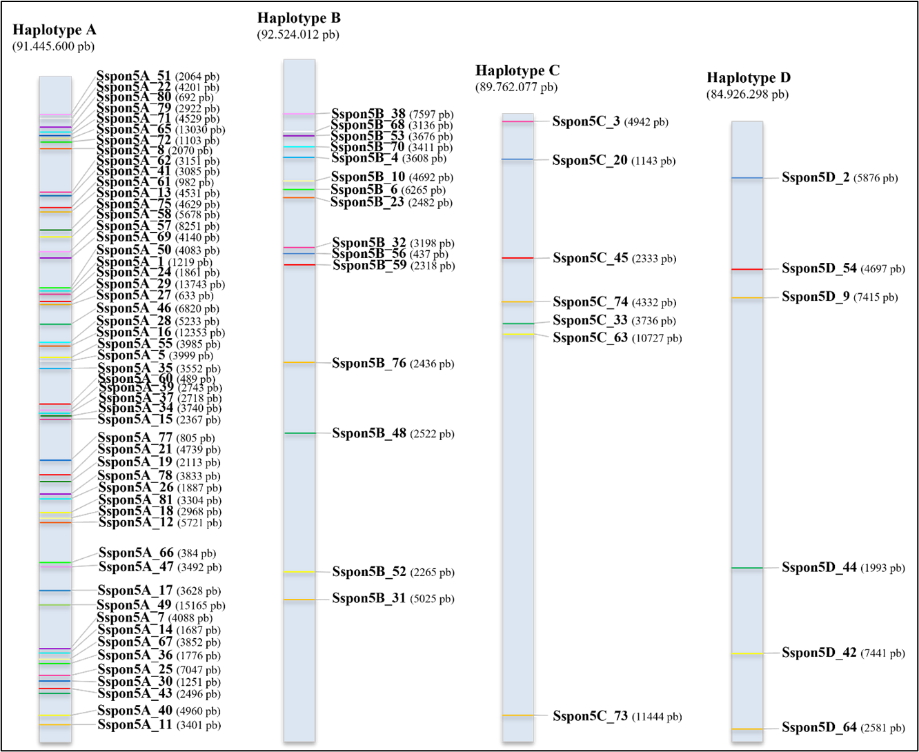
A total of 81 RGAs were differentially distributed among the four haplotypes of Saccharum spontaneum AP85-441. Among these, 53 were located in haplotype A, 15 on haplotype B, seven on haplotype C, and six on haplotype D (Fig. 1; Supplementary Table 1). Considering all haplotypes, the highest concentration of RGA sequences (11) was identified within the genomic region spanning positions 400,000 to 5,400,000 bp, followed by nine sequences between 85,401,000 and 90,400,000 bp and another nine between 65,401,000 and 70,400,000 bp. The sequence lengths ranged from 384 bp (Sspon5A_66) to 15,165 bp (Sspon5A_49), with approximately 60% of the RGAs exceeding 3,000 bp in length.
Among the identified RGAs, 86.42% encoded proteins containing leucine-rich repeats (LRRs), which were characterized by a structurally diverse domain (Sekhwal et al., 2015). This domain consisted of 2–45 motifs, each 20–30 amino acids long, whose combinations can be highly variable (Enkhbayar et al., 2004). Approximately 2,000 known proteins contain LRR domains, spanning genomes from viruses to eukaryotes (Enkhbayar et al., 2004). Functionally, LRR-containing proteins participate in several biological processes, including signal transduction, cell adhesion, DNA repair, recombination, transcription, RNA processing, disease resistance, apoptosis, and the immune response (Rothberg et al., 1990).
In addition to proteins containing LRR domains, those with RPM1 (Sspon5A_1, Sspon5D_2, Sspon5A_5), RPP13 (Sspon5C_3, Sspon5B_4, Sspon5B_6, Sspon5A_8), and RP3 (Sspon5B_10) domains were also identified, all of which were directly associated with the formation of disease-resistance proteins, as reported by Rody et al. (2019).
Fig. 1. Distribution of the selected RGAs along the haplotypes (A, B, C, and D) of sugarcane chromosome 5.
Analysis of designed primers
In total, 147 primer pairs were designed to hybridize with 77 of the selected RGAs (Supplementary Table 2). Among these, 74 RGAs met the initial criterion of obtaining two primer pairs per sequence, whereas seven yielded only one viable primer pair. For four RGAs (Sacch5A35, Sspon5A_43, Sspon5A_66, and Sspon5C_74), suitable primer pairs could not be developed because of limiting factors, such as the presence of homopolymeric regions and the inability to obtain compatible annealing temperatures between primer pairs. Additionally, primer pairs that formed more than one secondary structure with Gibbs free energy (∆G) values stronger (more negative) than –9.0 kcal·mol⁻¹, as determined by NetPrimer analysis, were excluded from the study.
Ten RGAs with functional annotations directly associated with disease resistance were selected, and these covered 18 loci (Sacch5A1a, Sacch5D2a, Sacch5D2b, Sacch5C3a, Sacch5C3b, Sacch5B4a, Sacch5B4b, Sacch5A5a, Sacch5A5b, Sacch5B6a, Sacch5A7a, Sacch5A7b, Sacch5A8a, Sacch5A8b, Sacch5D9a, Sacch5D9b, Sacch5B10a, and Sacch5B10b) (Table 1). The primer pair used for amplification of the Sacch5A1a locus was the only one selected for validation and showed no secondary structure formation in the NetPrimer analysis (Supplementary Table 2).
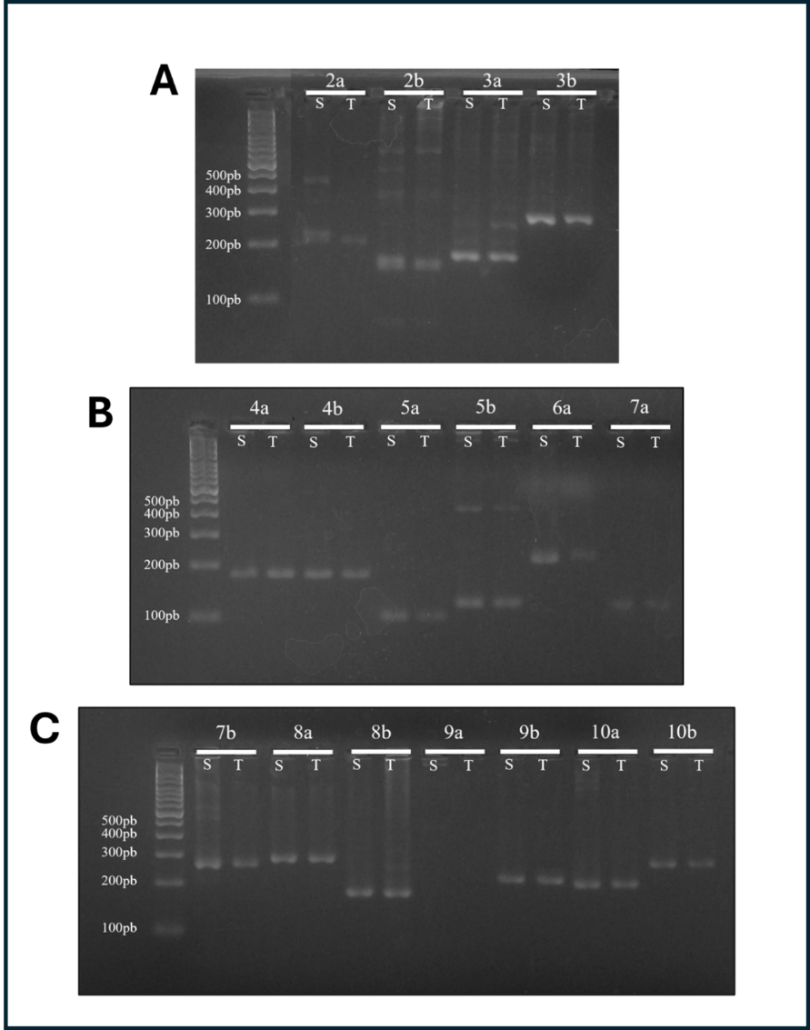
Fig. 2. Amplification of 17 RGA loci in the genotypes RB86-7515 (smut-tolerant) and LCP85-384 × MP (smut-susceptible), namely, 2a, Sacch5D2a; 2b, Sacch5D2b; 3a, Sacch5C3a; 3b, Sacch5C3b; 4a, Sacch5B4a; 4b, Sacch5B4b; 5a, Sacch5A5a; 5b, Sacch5A5b; 6a, Sacch5B6a; 7a, Sacch5A7a; 7b, Sacch5A7b; 8a, Sacch5A8a; 8b, Sacch5A8b; 9a, Sacch5D9a; 9b, Sacch5D9b; 10a, Sacch5B10a; 10b, Sacch5B10b.
Analysis of contrasting genotypes for smut
Among the primer pairs designed for the 18 loci, 17 produced successful amplifications (Figs. 2 and 3), indicating that the hybridization regions were conserved between S. spontaneum and the analyzed modern sugarcane genotypes. Both in silico and in vivo observations of efficient heterologous amplification confirmed conservation of the target regions (Table 2). Only the Sacch5D9a locus showed no amplification products for any genotype, indicating possible alterations in the hybridization region of one or both primers within the RGA sequence. Notably, the genome of modern sugarcane species is highly complex, characterized by chromosomal rearrangements, polyploidy, transposable elements, and a large number of genes (Landell & Bressiani, 2008; Garsmeur et al., 2018). These genomic features can directly influence primer-annealing efficiency, and, consequently, the size of the amplified fragment, which may differ (larger or smaller) from that obtained in S. spontaneum.
When comparing the number and size of in silico amplicons in S. spontaneum with those obtained in vivo from modern genotypes, an equal number of amplicons of identical sizes (in bp) were observed for the Sacch5A7b, Sacch5B10a, and Sacch5B10b loci. In contrast, the Sacch5D2a, Sacch5C3a, and Sacch5C3b loci showed the same number of amplicons, but slightly smaller sizes in the modern genotypes. For the Sacch5A1a locus, three distinct amplicons were obtained from the modern genotypes, which differed from those of S. spontaneum. Other differences indicate the likely occurrence of indels in some loci; for example, in Sacch5C3b, the amplicon was 292 bp in S. spontaneum and 260 bp in the modern genotypes. Therefore, sequencing of these regions is recommended to determine the exact size and composition of the amplicons with greater accuracy.
When analyzing the segregation of amplicons within loci for the contrasting genotypes RB86-7515 (tolerant) and LCP85-384 × MP (susceptible), the Sacch5A1a locus was the only locus that exhibited polymorphism (Fig. 3). The 260-bp amplicon was detected exclusively in the susceptible genotype, whereas the ~480-bp amplicon was observed only in the tolerant genotype, indicating a potential association with smut tolerance.
Amplification of the Sacch5A1a locus revealed polymorphisms in the evaluated genotypes. The expected ~470-bp fragment was detected in a subset of T1 and T2 genotypes and in individuals from segregating families classified as resistant, whereas it was absent in all plants exhibiting smut symptoms. On the basis of phenotypic evaluations conducted over three years, 86% of the asymptomatic plants carried the marker, whereas none of the susceptible genotypes showed amplification of this fragment.
Comparative analysis of the Sacch5A1a locus and its association with disease resistance
To enhance our understanding of the Sacch5A1a locus, the ~480-bp amplicon detected in the tolerant genotype was sequenced, resulting in a 489-bp sequence (Fig. 6). Comparative analysis revealed a 78% (215 bp) increase in sequence
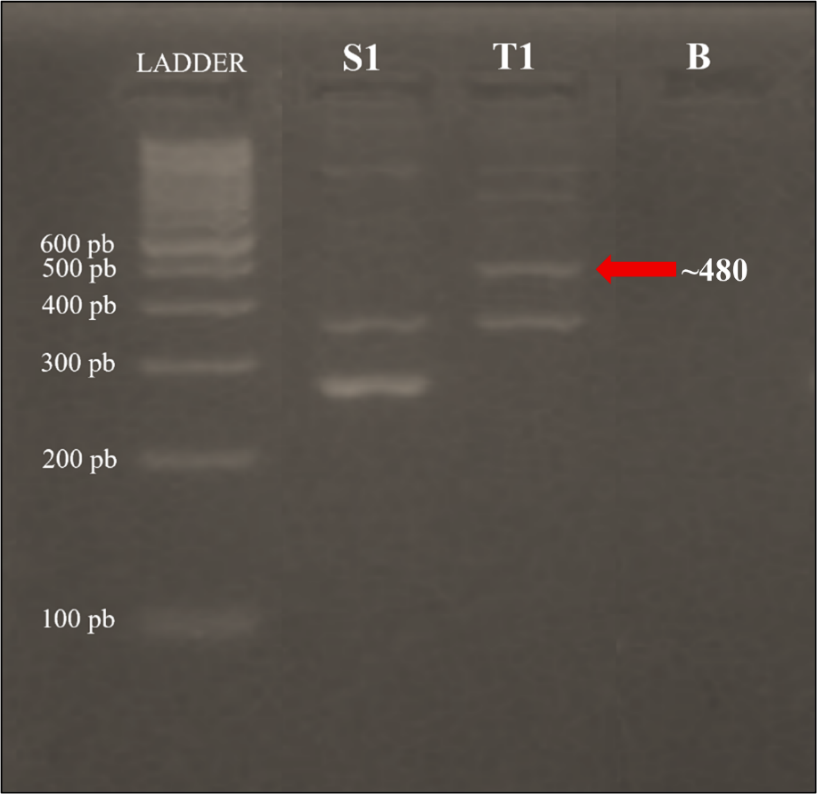
Fig. 3. Polymorphism observed at the Sacch5A1a locus between the smut-tolerant genotype RB86-7515 (T1) and the smut-susceptible genotype LCP85-384 × MP (S1). 100 bp ladder; B = Blank.
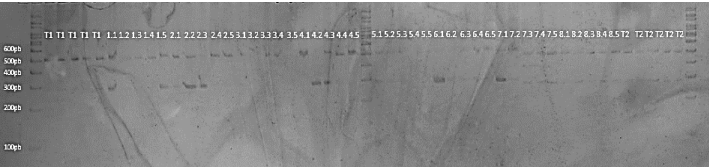
Fig. 4. PCR amplification of the Sacch5A1a locus in segregating sugarcane families showing the ~470 bp fragment associated with smut resistance. 100 bp ladder; B = Blank.
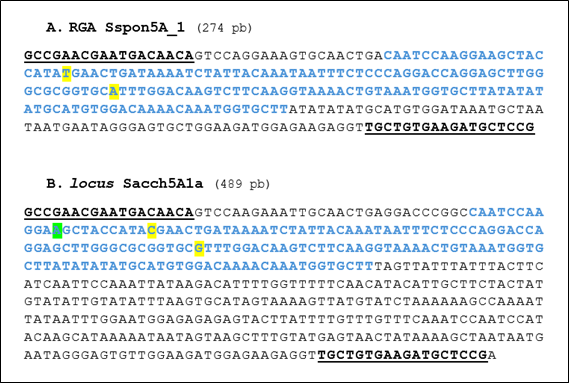
Fig. 5. Comparison between (A) the original RGA sequence from S. spontaneum (Sspon5A_1) and (B) the locus identified in the modern cultivar RB86-7515 (Sacch5A1a). Forward and reverse primers are indicated in bold and underlined; the conserved region is highlighted in blue; insertions and deletions (indels) are shown in green; and nucleotide substitutions are highlighted in yellow.
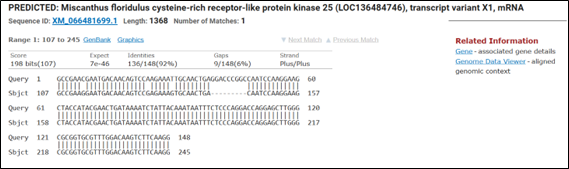
Fig. 6. BLASTn alignment results of the Sacch5A1a locus.
length in the tolerant genotype RB86-7515 in comparison with the RGA sequence originally identified in silico in S. spontaneum. Since modern sugarcane genotypes are hybrids derived from interspecific crosses within the Saccharum genus and RB86-7515 originated from a polycross in which the parental variety RB72454 was open-pollinated by multiple genotypes (RIDESA, 2010), the 215-bp insertion can be plausibly considered to have originated from other Saccharum species, such as S. officinarum.
Subsequent comparative analysis revealed that 31.0% of the Sacch5A1a locus remained conserved after hybridization (Fig. 6). Within this region, an adenine (“A”) insertion was identified at position 59, along with two nucleotide substitutions (T > C and A > G) at positions 69 and 129, respectively.
Since modifications in the Sacch5A1a locus may be associated with functional changes in the encoded protein, characterization of its domains is essential to elucidate its potential biological role. Notably, the original RGA Sacch5A_1 identified in S. spontaneum contains the RPM1 domain, which is associated with kinase proteins, a major family responsible for regulating key cellular processes such as division, proliferation, apoptosis, and differentiation (Manning et al., 2002) and is directly linked to disease resistance (Grant et al., 1995).
Accordingly, the 489-bp amplicon sequence from the smut-tolerant genotype was compared with database entries using BLASTn. The analysis revealed a high similarity (92%) with cysteine-rich receptor-like kinase 25 (CRK25) from Miscanthus floridulus (Fig. 6). The CRK family is a subgroup within the receptor-like kinase (RLK) superfamily in plants that acts as a central component in multiple physiological processes, including extracellular signal perception, development, symbiosis, and plant immunity (Zeiner et al., 2023).
In the context of defense, CRKs play an essential role by interacting with pattern-recognition receptors such as LRR-RLKs, triggering a significant increase in the production of stress-related molecules that act as chemical defenses against pathogens (Zeiner et al., 2023). Therefore, these results provide strong evidence for a functional relationship among the RPM1 protein (Rody et al., 2019) encoded by Sacch5A_1 (S. spontaneum), kinase 25, and the Sacch5A1a locus identified in the smut-tolerant genotype (RB86-7515), all of which are likely involved in immune signaling pathways related to disease resistance.
This high sequence similarity, combined with the close evolutionary relationship between Miscanthus spp. and sugarcane (Mitros et al., 2020), supports the hypothesis that the Sacch5A1a locus is closely associated with the regulation of cellular and physiological processes, particularly those involved in biotic and abiotic stress responses. These findings highlight the potential role of this locus in the signaling and/or expression of disease-resistance genes in sugarcane.
Altogether, the results obtained in this study indicate that the Sacch5A1a locus, specifically the 489-bp amplicon, may represent a strong candidate molecular marker associated with sugarcane smut tolerance, which is supported by both in silico and in vivo evidence from the contrasting genotypes analyzed: RB86-7515 (tolerant) and LCP85-384 × MP (susceptible).
Materials and Methods
Rody et al. (2019) identified RGAs located on chromosome 5, specifically haplotypes A, B, C, and D, belonging to the Saccharum spontaneum genome, cultivar AP85-441, which were then selected. Subsequently, primer pairs were designed to anneal to the selected RGAs and tested in genotypes with contrasting smut tolerance.
In silico RGA sequence selection and primer design
The criteria used for RGA selection were their location on chromosome 5 and the presence of proteins containing the LRR domain. These data for genomic localization (chromosome, start, and end positions) were obtained from the study by Rody et al. (2019). Among the 368 RGAs identified by Rody et al. (2019) on chromosome 5, 81 met the selection criteria and were chosen (Supplementary Table 1). Previously known information regarding RGA localization was used to retrieve the corresponding nucleotide sequences from the S. spontaneum genome (cultivar AP85-441) available in the Ensembl Plants database (https://plants.ensembl.org/index.html).
After identifying and characterizing the sequences of interest associated with disease-resistance genes, specific primers were designed using Primer3Plus v. 3.3.0 (Untergasser et al., 2007), in accordance with the parameters established by Chuang et al. (2013). Ten primer pairs were generated for each RGA and subsequently re-evaluated using NetPrimer (http://www.premierbiosoft.com/netprimer/). The selection criteria were based on the absence or minimal Gibbs free energy (ΔG) values, with the aim of minimizing potential primer–primer interactions (primer dimers, heterodimers, and
Table 1. List of loci, designed primers, and melting temperatures (Tm).
| Locus | Primer Sequences (5' - 3') | Tm (°C) |
|---|---|---|
| Sacch5A1a | F-GCCGAACGAATGACAACA | 55 |
| R-CGGAGCATCTTCACAGCA | ||
| Sacch5D2a | F-CATGTCCCGTTGTTGCTG | 56 |
| R-TGCCATCCGTGTCAGAGA | ||
| Sacch5D2b | F-ATCTTGCCGCTCATCGAC | 56 |
| R-ACCAGCACACGGTCATCA | ||
| Sacch5C3a | F-CACCACCATTGCTGCTTG | 56 |
| R-CGTGAGGCAGGCTTCATT | ||
| Sacch5C3b | F-TCGGCAACTCCTTGATCC | 56 |
| R-CGTGAGGCAGGCTTCATT | ||
| Sacch5B4a | F-TCGGCTGCTGTCAATGAG | 55 |
| R-TTGTTTCCCCAGGTTCCA | ||
| Sacch5B4b | F-TCGGCTGCTGTCAATGAG | 55 |
| R-TGTTTCCCCAGGTTCCAA | ||
| Sacch5A5a | F-CTGTGCAAATGCCTCGTG | 56 |
| R-CAGCCGTCCAACTTCCAT | ||
| Sacch5A5b | F-ACGGTGCATCATCGGATT | 54 |
| R-TGTTGCAGCCTGATTCCA | ||
| Sacch5B6a | F-ACACATCCGGCACAGTGA | 55 |
| R-TTGGGAGGGCATTTTGAG | ||
| Sacch5A7a | F-ATGGGAGGGATTGGGAAG | 56 |
| R-TCACCCTACGCACGTCAA | ||
| Sacch5A7b | F-AGGTGCCCAGAAATGCAG | 56 |
| R-CAGCAATGCAGCCGTAGA | ||
| Sacch5A8a | F-CGTGAGGCAGGCTTCATT | 56 |
| R-TCGGCAACTCCTTGATCC | ||
| Sacch5A8b | F-CGTGAGGCAGGCTTCATT | 56 |
| R-CACCACCATTGCTGCTTG | ||
| Sacch5D9a | F-CCTTGCAACGCCACTTTT | 55 |
| R-CGCACCACAGCCTTTTCT | ||
| Sacch5D9b | F-GCTTCGCCATCCATCCTA | 56 |
| R-AGGATGGGGTTCACGACA | ||
| Sacch5B10a | F-CGGAGCATGTGTTGTTGG | 55 |
| R-TTGTTGGGCTTGGTGGTT | ||
| Sacch5B10b | F-CTCATGCCATGCGTCATC | 55 |
| R-TTGTTGGGCTTGGTGGTT |
hairpins). The two best primer pairs for each RGA were selected for further analysis. Primer-annealing specificity to the target region was initially validated in silico using Ugene v.38 (Okonechnikov et al., 2012).
Amplification and segregation analysis of RGAs in genotypes with contrasting smut tolerance
Because the primers were originally designed to anneal to S. spontaneum RGAs, we had to confirm their annealing efficiency in modern genotypes derived from S. spontaneum × S. officinarum hybrids and assess amplicon segregation between smut-tolerant and smut-susceptible genotypes. For this purpose, two contrasting genotypes were selected: RB86-7515 (tolerant to smut) (Ridesa, 2010) and LCP85-384 × MP (susceptible to smut, based on field evaluations conducted by the Sugarcane Breeding Program at the State University of Maringá). Both genotypes belonged to this breeding program.
Marker validation was performed using progenies derived from eight biparental sugarcane crosses, with the cultivars RB867515 and RB966928 serving as controls. Seedlings were transplanted to the field, and smut symptoms were visually assessed 3–9 months after transplantation. Evaluations were conducted over three consecutive years, recording the presence or absence of the characteristic smut whip. Families showing symptoms in any evaluation year were classified as
Table 2. Comparison of amplicons obtained in S. spontaneum (in silico) and in modern genotypes (in vivo).
| Locus | Amplicon Size (bp) | |
| S. spontaneum | Modern Genotypes | |
| Sacch5A1a | 274 | 260, 350 e 470 |
| Sacch5D2a | 217 | 200 |
| Sacch5D2b | 157 | 150 |
| Sacch5C3a | 184 | 180 |
| Sacch5C3b | 292 | 260 |
| Sacch5B4a | 183 | 180 |
| Sacch5B4b | 182 | 180 |
| Sacch5A5a | 104 | 100 |
| Sacch5A5b | 125 | 120 |
| Sacch5B6a | 221 | 220 |
| Sacch5A7a | 121 | 120 |
| Sacch5A7b | 260 | 260 |
| Sacch5A8a | 292 | 280 |
| Sacch5A8b | 184 | 180 |
| Sacch5D9a | 142 | - |
| Sacch5D9b | 217 | 200 |
| Sacch5B10a | 199 | 190 |
| Sacch5B10b | 263 | 260 |
susceptible (4.2; 5.1; 5.4; 5.5; 6.1; 6.2; 6.3; 6.4; 6.5; 7.1; 7.2 and 8.2), whereas those without symptoms throughout the period were classified as resistant (T1, T2, 1.1;1.2;1.3;1.4;1.5; 2.1; 2.2; 2.3; 2.4; 2.5; 3.1; 3.2; 3.3; 3.4; 3.5; 4.1; 4.3; 4.4; 4.5; 5.2; 5.3; 7.3; 7.4; 7.5; 8.1; 8.3; 8.4 and 8.5). For molecular analysis, five plants per family were sampled, and individual plants were classified as resistant or susceptible based on symptom expression to assess the segregation of the Sacch5A1a marker.
Genomic DNA was extracted from +1 leaves of the contrasting sugarcane genotypes in accordance with the protocol described by Hoisington et al. (1994), with adaptations for sugarcane. Briefly, +1 leaves were ground in liquid nitrogen to obtain a fine powder. Approximately 300–400 mg of macerated tissue was transferred to microtubes containing 800 µL of CTAB extraction buffer (1% CTAB—cationic hexadecyl trimethyl ammonium bromide, 1 M Tris-HCl pH 7.5, 5 M NaCl, 0.5 M ethylenediaminetetraacetic acid [EDTA] pH 8.0) and 1% β-mercaptoethanol. Samples were incubated in a water bath for 60 min at 65°C. After incubation, 800 µL of chloroform:isoamyl alcohol (24:1) was added, mixed gently by inversion for ~5 min, and centrifuged at 12,000 rpm for 10 min. The supernatant was transferred to new microtubes, and the extraction with chloroform:isoamyl alcohol was repeated. After the second centrifugation, 450 µL of chilled isopropanol was added to the supernatant, and the samples were stored at –20°C for 24 h. Subsequently, samples were centrifuged (12,000 rpm, 10 min); the supernatant was discarded; and the pellet washed with 800 µL of chilled 70% ethanol. After another centrifugation (12,000 rpm, 10 min), the pellet was air-dried for approximately 30 min and resuspended in 400 µL of TE buffer (1 M Tris-HCl and 0.5 M EDTA, pH 8.0). The samples were incubated overnight at 4°C. Then, 4 µL of RNase (10 ng µL⁻¹) was added, and the samples were incubated at room temperature for 2 h. Next, 200 µL of phenol and 200 µL of chloroform:isoamyl alcohol (24:1) were added, followed by manual inversion for 5 min and centrifugation (10 min, 12,000 rpm). The supernatant was transferred to new microtubes and washed with chloroform:isoamyl alcohol (24:1). After centrifugation, 300 µL of the supernatant was transferred to new tubes, to which 250 µL of chilled isopropanol and 25 µL of NaCl (5 M) were added. The samples were mixed and stored overnight at –20°C. After centrifugation (10 min, 12,000 rpm), the supernatant was discarded, and the pellet was washed with chilled 70% ethanol. Finally, the pellet was air-dried for approximately 2 h, resuspended in 50 µL of TE buffer, and stored at 4°C.
Polymerase chain reaction (PCR) amplifications were performed in a final volume of 20 µL containing 1× PCR buffer (Invitrogen, Life Technologies Corporation), 2.5 mM MgCl₂, 0.10 mM of each dNTP, 1 U of Platinum® Taq DNA polymerase (Invitrogen), 0.5 µM of each primer (forward and reverse), and 30 ng·µL⁻¹ of genomic DNA. The cycling program employed a touchdown PCR profile consisting of the following steps: initial denaturation at 94°C for 1 min; 10 cycles of 94°C for 1 min, 65°C for 1 min, and 72°C for 1 min; followed by 20 cycles of 94°C for 1 min, 55°C for 1 min, and 72°C for 2 min; and a final extension at 72°C for 5 min before cooling to 4°C.
The amplified products were resolved by agarose gel electrophoresis using a mixture of 50% ultrapure agarose and 50% MS-8 agarose in 0.5× Tris-borate-EDTA (TBE) buffer (44.5 mM Tris, 44.5 mM boric acid, 1 mM EDTA), stained with SYBR Safe, and visualized using an L-Piximage 1.21 photodocumentation system (Loccus Biotecnologia). A 100-bp DNA ladder was used as a molecular weight marker.
Conclusions
In silico analysis of sugarcane RGAs enabled inference of the potential mechanisms associated with disease response and reinforced the functional relevance of LRR domains in this biological process. Among the selected RGAs, Sacch5A1 stood out because a portion of its sequence provided valuable information regarding disease resistance.
Notably, the Sacch5A1a locus, which was analyzed in modern genotypes, proved to be the most informative, revealing distinct responses between genotypes with contrasting levels of sugarcane smut tolerance. Therefore, the 489-bp amplicon, detected exclusively in the smut-tolerant genotype, may serve as a candidate molecular marker (Sacch5A1a489bp) associated with smut tolerance. However, to implement this marker in breeding programs aimed at developing smut-resistant genotypes, validation across a larger set of resistant and susceptible genotypes is necessary.
This study provides valuable insights that can support sugarcane breeding programs and contribute to a deeper understanding of the complex genomic architecture of modern sugarcane genotypes.
Acknowledgments
The authors thank the Coordination for the Improvement of Higher Education Personnel (CAPES) for financial support.
References
Bespalhok FJC, Guerra EP, Oliveira R (1999) Introdução ao melhoramento de plantas. In Bespalhok FJC, Guerra EP and Oliveira R (ed) Melhoramento de plantas. Editora da UFP, Curitiba. 1-9.
Chuang LY, Cheng YH, Yang CH (2013) Specific primer design for the polymerase chain reaction. Biotechnol Lett. 35:1541–1549.
Conab (2024) 1º Boletim de Acompanhamento da Safra Brasileira: Cana-de-açúcar Safra 2024/25, Quarto Levantamento, Abril/2024. Brasília, DF: Companhia Nacional de Abastecimento, 53p.
Creste S, Rosa-Júnior VE, Pinto LR, Albino JC, Figueira AVO (2008) A biotecnologia como ferramenta para o melhoramento genético. In: Dinardomiranda LL, Vasconcelos ACM, Landell MGA (ed) Cana-de-açúcar. Instituto Agronômico, Campinas. 157-176.
Enkhbayar P, Kamiya M, Osaki M, Matsumoto T, Matsushima N (2004) Structural principles of leucine-rich repeat (LRR) proteins. Proteins: Structure, Function and Genetics. 54(3):394-403.
Garsmeur O, Droc G, Antonise R, Grimwood J, Potier B, Aitken K, Jenkins J, Martin G, Charron C, Hervouet C, Costet L, Yahiaoui N, Healey A, Sims D, Cherukuri Y, Sreedasyam A, Kilian A, Chan A, Van S, Luys M, Swaminathan K, Town C, Bergès H, Simmons B, Glaszmann J, Van Der Vossen E, Henry R, Schmutz J, D’Hont A (2018) A mosaic monoploid reference sequence for the highly complex genome of sugarcane. Nat Commun. 9: 2638.
Grant MR, Godiard L, Straube E, Ashfield T, Lewald J, Sattler A, Innes RW, Dangl JL (1995) Structure of the Arabidopsis RPM1 gene enabling dual specificity disease resistance. Science. 269(5225):843-46.
Grivet L, Arruda P (2002) Sugarcane genomics: depicting the complex genome of an important tropical crop. Current Opinion in Plant Biology. 5(2):122-127.
Hoisington D, Khairallah M, Gonzalez De Leon D (1994) Laboratory Protocols: CIMMYT, Applied Molecular Genetic Laboratory, 2ª ed. Cimmyt, México. 88.
Landell MGA, Bressiani JA (2008) Melhoramento genético, caracterização e manejo varietal. Cana-de-açúcar. Campinas: Instituto Agronômico. 101-155.
Manning G, Plowman GD, Hunter T, Sudarsanam S (2002) Evolution of protein kinase signaling from yeast to man. Trends Biochem. Sci. 27(10):514-520.
Mansoor, S. (2016). Screening of sugarcane germplasm against whip smut disease in relation to epidemiological factors in Faisalabad. J. Plant Pathol. Microbiol. 7(7):366.
Ming R, Moore PH, Wu K, D´Hont A, Glazmann JC, Tew TL, Mirkov TE, Da Silva J, Jifon J, Rai M, Schnell RJ, Brumbley SM, Lakshmanan P, Comstock JC, Paterson AH (2006) Sugarcane improvement through breeding and biotechnology. Plant Breed. Rev. 27:15-118.
Mitros T, Session AM, James BT, Wu GA, Belaffif MB, Clark LV, Shu S, Dong H, Barling A, Holmes JR, Mattick JE, Bredeson JV, Liu S, Farrar K, Glowacka K, Jezowski S, Barry K, Chae WB, Juvik JA, Gifford J, Oladeinde A, Yamada T, Grimwood J, Putnanm NH, Vega J, Barth S, Klaas M, Hodkinson T, Li L, Jin X, Peng J, Yu CY, Heo K, Yoo JH, Ghimire BK, Donnison IS, Schmutz J, Hudson ME, Sacks EJ, Moose SP, Swaminathan K, Rokhsar DS (2020) Genome biology of the paleotetraploid perennial biomass crop Miscanthus. Nat. Commun. 11(1):5442.
NetPrimer: analysis of oligonucleotide primers. Palo Alto (CA): PREMIER Biosoft International; s.d. Available from: https://www.premierbiosoft.com/netprimer/
(accessed: march 9, 2020).
Okonechnikov K, Golosova O, Fursov M, Varlamov A, Vaskin Y, Efremov I, German Grehov OG, Kandrov D, Rasputin K, Syabro M, Tleukenov T (2012) Unipro UGENE: A unified bioinformatics toolkit. Bioinformatics. 28(8):1166–1167.
Rajput MA, Rajput NA, Syed RN, Lodhi AM, Que Y (2021) Sugarcane Smut: Current Knowledge and the Way Forward for Management. J. Fungi. 7(12):1095.
Ridesa, B (2010) Catálogo nacional de variedades “RB” de cana-de-açúcar. Curitiba: Rede Interuniversitária para o Desenvolvimento do Setor Sucroalcooleiro. 136.
Rody HVS, Bombardelli RGH, Creste S, Camargo LEA, Van Sluys MA, Monteiro-Vitorello CB (2019) Genome survey of resistance gene analogs in sugarcane: genomic features and differential expression of the innate immune system from a smut-resistant genotype. BMC Genomics. 20:1-17.
Rosse LN, Vencovsky R, Ferreira DF (2002) Comparison of regression methods for evaluation of phenotypic stability in sugarcane. Pesq. Agropecu. Bras. 37(1):25-32.
Rossetto R, Santiago AD (2022) Doenças da cana-de-açúcar. Ageitec - Agência Embrapa de Informação Tecnológica. Disponível em: https://www.embrapa.br/agencia-de-informacao-tecnologica/cultivos/cana-de-acucar/producao/manejo/fitossanidade/doencas. Acesso em: 07 de outubro de 2025.
Rothberg JM, Jacobs JR, Goodman CS, Artavanis-Tsakonas S (1990) Slit: An extracellular protein necessary for development of midline glia and commissural axon pathways contains both EGF and LRR domains. Genes Dev. 4(12 A):2169–2187.
Sekhwal MK, Li P, Lam I, Wang X, Cloutier S, You FM (2015) Disease resistance gene analogs (RGAs) in plants. Int. J. Mol. Sci. 16(8):19248-19290.
Shikida PFA, Bacha CJC (2019). Aspectos econômicos da geração de tecnologia e a utilização dos principais produtos e subprodutos da agroindústria canavieira do Brasil. Rev. Econ. Sociol. Rural. 36(2):9-30.
Tokeshi H (1997) Doenças de cana-de-açúcar (híbridos de Saccharum spp.) In: Kimath H, Amorim L, Bergamin Filho A, Camargo LEA, Rezende JAM (eds) Manual de Fitopatologia. Editora Agronômica Ceres, São Paulo. 207-225.
Untergasser A, Nijveen H, Rao X, Bisseling T, Geurts R, Leunissen JAM (2007) Primer3Plus, an enhanced web interface to Primer3. Nucleic Acids Res. 35.
Zeiner A, Colina FJ, Citterico M, Wrzaczek M (2023) Cysteine-Rich Receptor-Like Protein Kinases: their evolution, structure, and roles in stress response and development, J. Exp. Bot. 74 (17):4910-4927.
Zhang J, Zhang X, Tang H, Zhang Q, Hua X, Ma X, Zhu F, Jones T, Zhu X, Bowers J, Wai CM, Zheng C, Shi Y, Chen S, Xu X, Yue J, Nelson DR, Huang L, Li Z, Xu H, Zhou D, Wang Y, Hu W, Lin J, Deng Y, Pandey N, Mancini M, Zerpa D, Nguyen JK, Wang L, Yu L, Xin Y, Ge L, Arro J, Han JO, Chakrabarty S, Pushko M, Zhang W, Ma Y, Ma P, Lv M, Chen F, Zheng G, Xu J, Yang Z, Deng F, Chen X, Liao Z, Zhang X, Lin Z, Lin H, Yan H, Kuang Z, Zhong W, Liang P, Wang G, Yuan Y, Shi J, Hou J, Lin J, Jin J, Cao P, Shen Q, Jiang Q, Zhou P, Ma Y, Zhang X, Xu R, Liu J, Zhou Y, Jia H, Ma Q, Qi R, Zhang Z, Fang J, Fang H, Song J, Wang M, Dong G, Wang G, Chen Z, Ma T, Liu H, Dhungana SR, Huss SE, Yang X, Sharma A, Trujillo JH, Martinez MC, Hudson M, Riascos JJ, Schuler M, Chen L, Braun DM, Li L, Yu Q, Wang J, Wang K, Schatz MC, Heckerman D, Sluys MV, Souza GM, Moore PH, Sankoff D, Vanburen R, Paterson AH, Nagai C, Ming R (2018) Allele-defined genome of the autopolyploid sugarcane Saccharum spontaneum L. Nat. Genet. 50:1565-1573.