Australian Journal of Crop Science
Article | https://doi.org/10.21475/ajcs.26.20.08.pne353X
Submitted: 02 December 2025 | Revised: 29 April 2026 | Accepted: 30 April 2026
Pages 679-688
Atomization of liquid fertilizers for nutrient management of charged aerosols in aeroponics of mini potato tuber culture
Slameto*, Kacung Hariyono, Indri Fariroh, Muhamad Wahyu Saputra
Faculty of Agriculture University of Jember Jl. Kalimantan 37, Jember, East Java, Indonesia, 68121
*Correcponding author: slametohdsct.faperta@unej.ac.id
ORCID ID 0000-0001-9900-2775
Abstract: One promising solution to produce high-quality seed potatoes is the use of soilless cultivation technologies, such as hydroponics and aeroponics. However, one of the challenges in aeroponic systems is ensuring efficient nutrient absorption by the roots. In traditional aeroponics, nutrient droplets sprayed onto plant roots often fail to adhere effectively, reducing nutrient uptake. Factors such as droplet size, distribution, and concentration influence the efficiency of nutrient absorption. To address this, researchers have explored the use of electrostatic charges to enhance nutrient absorption by ionizing the nutrient droplets. The research parameters of this study focus on investigating various factors such as the potato cultivar used, the aeroponic system design (electrostatic ionization), growth parameters (root development, plant height, leaf area, and tuber yield), and the anatomical characteristics. In particular, this study will evaluate seed quality by assessing mini-tuber characteristics such as disease resistance, uniformity, and vigor. The ultimate goal is to enhance the efficiency and quality of potato seed production using innovative soilless cultivation techniques. Overall, ionized aerosol treatments help improve potato growth and yield, making them a useful technique for enhancing plant development, especially in hydroponic systems.
Keyword: Electrostatic ionization, Aeroponics, Nutrient absorption, Potato cultivar, Aeroponic system design.
Abbreviations: Atm - Standard Atmosphere, CCI - Cholophyll Content Index; DNS - 3,5-dinitrosalicylic acid; EC - Electrical Conductivity; FW - Fresh Weight; G0 - Generation 0; Mpa – Megapascal; NFT - Nutrient Film Technique; OP - Osmotic Pressure; SEM - Scanning Electron Microscope; SPC - Soluble Protein Content.
Introduction
Potatoes are one of the horticultural crops with high economic value and potential as an export commodity. The main challenge in potato cultivation in Indonesia is the limited availability of high-quality potato seeds, which can reduce the risk of crop failure due to disease attacks and increase the yields obtained by farmers (Saptana et al., 2022). Sembiring et al. (2021a) reported that only 48.0% (18 out of 32) of potato seed producers certify their G0 class mini-tube potato seeds (foundation seeds). This phenomenon is supported by a report from Syamsiyah et al. (2024), which states that uncertified seeds have a high potential to harm potato production and represent the greatest risk factor for potato cultivation failure. Uncertified seeds also carry a high potential for transmitting seed-borne diseases and have poor quality, which can negatively affect potato yields.
One way to obtain high-quality potato seeds is by using soilless cultivation technology, such as hydroponics or aeroponics. Soilless cultivation technology allows potatoes to grow in alternative growing media, such as nutrient-rich water or a controlled mixture of organic materials (Pereira and Nova, 2008; Slameto et al., 2021). The main advantage of this system is its ability to control environmental factors such as temperature, humidity, and nutrient availability more optimally, which helps support root and plant growth (Fussy & Papenbrock, 2022). In addition, soilless cultivation reduces the risk of pathogen and pest infections found in soil, such as potato leaf blight, Fusarium sp., etc., leading to healthy, high-quality potato seeds (Visen et al., 2024). Soilless potato seed production has also been widely reported to improve plant efficiency and resilience, especially in areas with soil quality issues.
Aeroponics can be used as an alternative strategy to address the issue of low potato seed production through soilless cultivation technology (Calori et al., 2018; Eldrage et al., 2020). Sumarni and Farid (2024) also reported that potato seed cultivation using aeroponics results in higher seed production compared to hydroponic NFT. Potato seed production with the aeroponic method has also been widely reported to improve yields in several tropical and subtropical countries (Wasilewska-Nascimento et al., 2020). Although the installation costs are high, some G0 potato seed producers have already adopted aeroponic seed production, yielding positive responses due to better control over the cultivation process and increased potato seed production (Sembiring et al., 2021b).
Aeroponics is a system that sprays nutrients (macronutrients such as N, P, K, Ca, Mg, S, and micronutrients like Cu, Mn, Zn, Fe) in the form of mist onto the plant roots, which can enhance potato seed production (Khutinaev et al., 2021). Increasing the plant's nutrient intake plays a crucial role in the growth and development of the plant (Grasso et al., 2024). However, spraying in the aeroponic system has several standard limitations that affect the effectiveness of nutrient aerosol usage. This is due to the polydispersity of the sprayed droplets, which results in low coverage density on the plant roots (Devederkin et al., 2021).
The adhesion of nutrient droplets is one of the key factors in optimizing aeroponics, through the oxygenation of fine mist particles that carry nutrients to the roots (Lieth & Oky, 2019). A common issue is that many fine mist droplets that reach the roots are retained by the roots and fall off as droplets (Antonov, 2020). The aerosol, which is pushed through a mist nozzle with a high-pressure pump, is also influenced by other factors such as the droplet size, concentration, and spatial distribution (Devederkin et al., 2021). These factors affect the plant's ability to absorb more nutrients and oxygen during the spraying period.
One approach to achieving an atomized nutrient state in aeroponic systems involves the ionization of the nutrient mist, wherein an electrical charge is applied to both the nutrient solution and the plant surfaces to enhance mist distribution and absorption efficiency. This liquid ionization technique is used for fertilizing plant roots with aerosolized nutrients in the air environment of an aeroponic chamber (Antonov, 2019). It is the spraying of liquid through a special nozzle with simultaneous electrical charge transfer to the small droplets of the nutrient solution, causing droplets smaller than 30 microns to be more widely distributed (Devederkin et al., 2021). It is hoped that the process of spraying nutrient solutions in mini potato tuber cultivation using aeroponics, by initially saturating the mist with charged gas or air, will become an effective solution for providing essential nutrients to the plants. The use of electrostatic charges (ionization) on the sprayed liquid droplets is expected to enhance nutrient absorption, increase productivity, and improve plant quality.
Result and Discussion
Nutrition quality
The varying nutrient composition of compound liquid fertilizers leads to differences in Electrical Conductivity (EC) levels, which in turn can influence plant metabolism, including photosynthesis rates, enzyme activity, and the potential for ion absorption by the roots. In hydroponic systems, EC plays a crucial role due to its impact on these processes Tahreen et al., 2020. EC values increase in proportion to the amount of salts present in the water and nutrient solution (Ahmadi et al., 2020). Excessive salt levels can damage plant roots and hinder the uptake of water and nutrients. According to Chrysargyris et al. (2021), low EC values can negatively affect plant health, while excessively high EC values restrict nutrient absorption by increasing osmotic pressure. The EC value of each type of fertilizer, particularly liquid fertilizers used in hydroponics, must be carefully considered, as it directly affects plant development.
The varying nutrient composition of compound liquid fertilizers results in different levels of Electrical Conductivity (EC), which can significantly influence plant metabolism, including photosynthesis rates, enzyme activity, and the absorption of ions by the roots. As EC directly affects these physiological processes, it becomes particularly important in hydroponic systems (an der Plas, 2004). EC values increase with the concentration of salts present in the water and nutrient solution (Ahmadi & Souri, 2017). Excessive salt levels can damage plant roots, inhibiting the uptake of water and essential nutrients. Chrysargyris et al. (2021) noted that low EC values can negatively impact plant health, while excessively high EC values can obstruct nutrient absorption by increasing osmotic pressure. Therefore, it is crucial to understand the EC value of each type of fertilizer, especially liquid fertilizers used in hydroponic systems, as it plays a vital role in influencing plant development.
Plant growth, development, and yield are determined by the overall ionic content of the nutrient solution (Calori et al., 2018). Osmotic pressure (OP) is a characteristic of collisions caused by the total number of dissolved salt ions in the nutrient solution. It is also dependent on the quantity of dissolved substances in the solution (Khraisheh et al., 2020). Moreover, the terms 'solute potential' and 'osmotic potential' are often used in nutrient solutions to describe how dissolved solutes influence water potential. Solutes dilute water, reducing its free energy (Qiao et al., 2024). Therefore, osmotic pressure and osmotic potential can be used interchangeably, though it remains crucial to consider the units commonly used, such as MPa, bar, and atm.
Plant morphology
Potato plant height was not influenced by root ionization treatments (Table 1). The average of potato height with ionized treatment was 86.7 cm, not different with non-ionized treatment (87.9 cm). This is maybe due to plant height was influenced by plant genetic characters. Ionization treatments influenced the potato number of leaves, stem diameter, root length, number of stolon, and stolon length. Ionized potato plant resulted the higher number in leaves, bigger stem diameter, longer roots and stolon, also higher number of stolon. This result showed that ionized aerosol application increased the nutrients absorption through the roots, thereby increased the number of leaves, stem diameter, stolon length, and number of stolon in potato plants.
Ionized aerosol technology resulted the higher number of ions to 33.375 ohms. Nutrient uptake in plants were influenced by the number of ions created around the roots, the higher number of ions, then the bigger chance the cation exchange was occurred. Devederkin et al. (2021) stated that, liquid atomization changed the nutrition into small drops as fog and transfered oxygen directly to the roots then settled over the entire of root hairs. This process made the nutrition uptake of plant effectively and efficient, so that increased the plant growth.
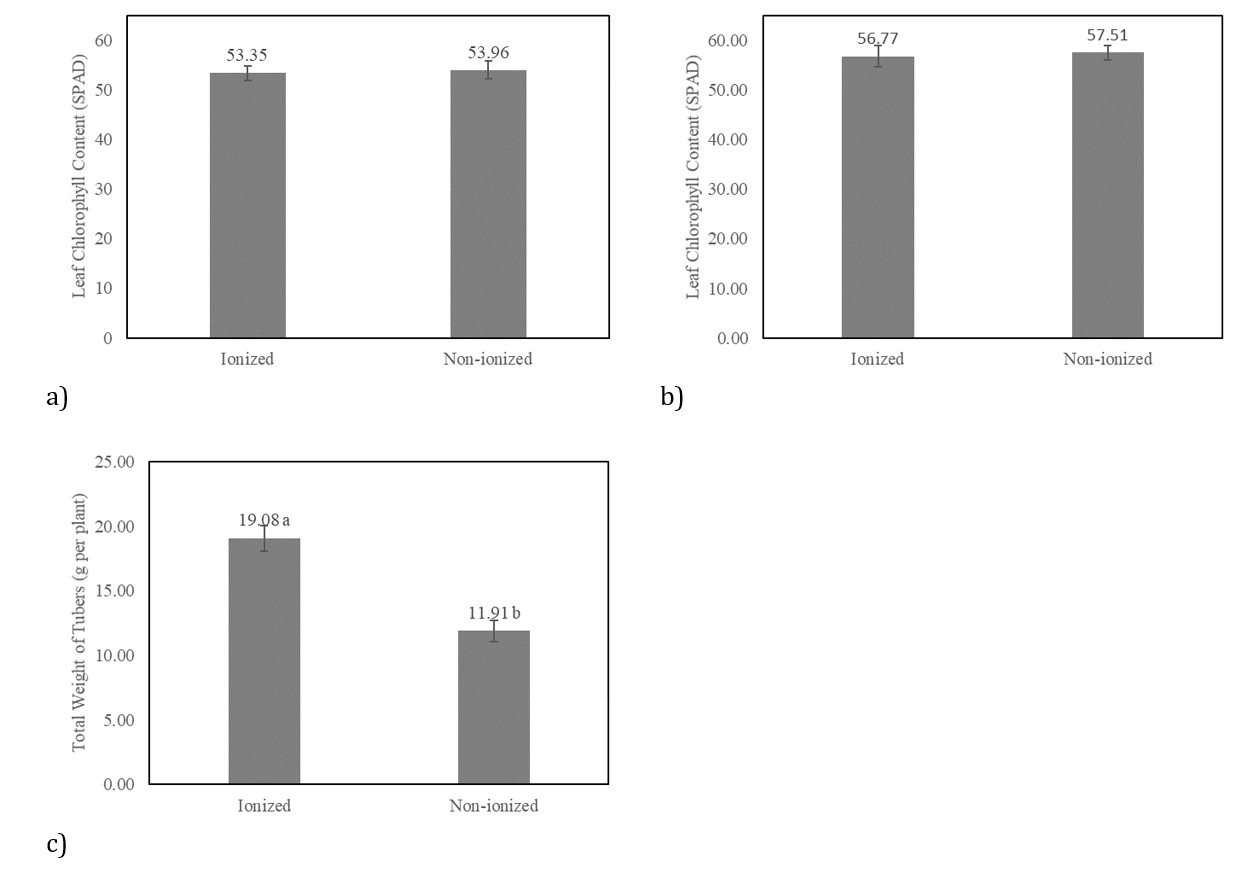
Chlorophyll content in leaves were not influenced by ionized treatments on potato plants (Figure 1). This might be due to the limitation of sunlight which was received by the small potato leaves and hindered by the paranet. Zhen et al. (2022) stated that the wider leaves can absorb more energy from sunlight for photosynthesis process. Guo et al. (2025) reported
Table 1. Potato plant growth response on ionization treatments
| Treatments | Plant height (cm) | Number of leaves | Stem diameter (mm) | Root length (cm) | Number of stolon | Stolon length (cm) |
|---|---|---|---|---|---|---|
| Ionized | 86.7 ± 4.51 | 118.1 ± 4.19 a | 9.6 ± 0.55 a | 69.5 ± 0.44 a | 9.1 ± 0.1 a | 48 ± 1.57 a |
| Non-ionized | 87.9 ± 7.64 | 97.8 ± 3.64 b | 8.5 ± 0.25 b | 55.7 ± 4.36 b | 7.5 ± 0.57 b | 41 ± 1.09 b |
| F Statistics (0.05) | 5.98 ns | 13.75** | 5.98* | 13.75** | 13.75** | 13.75** |
Note: ns = not significant, * = significant (p<0.05), ** = significant (p<0.001). Numbers followed by different letters indicate significance in the ionization treatments based on LSD test.
Table 2. Histological analysis of leaves, stems, roots, and stolons with and without ionized treatment.
| Treatment | Parameter Anatomy (average µm) | ||||
|---|---|---|---|---|---|
| Stolon | Stolon diameter | Cortex thickness | Trachea diameter (xylem) | Epidermis thickness | |
| Ionized | 1357.2 | 227.0 | 21.2 | 14.5 | |
| Non-ionized | 1356.8 | 238.6 | 18.0 | 27.2 | |
| Leaf | leaf thickness | Palisade thickness | Trachea diameter (xylem) | ||
| Ionized | 119.5 | 46.4 | 23.2 | ||
| Non-ionized | 88.7 | 40.4 | 16.7 | ||
| Stalk | Trachea diameter (xylem) | ||||
| Ionized | 24.7 | ||||
| Non-ionized | 29.6 | ||||
| Root | Root diameter | Cortex thickness | Trachea diameter (xylem) | ||
| Ionized | 536.3 | 215.3 | 35.2 | ||
| Non-ionized | 523.2 | 135.2 | 43.7 | ||
Figure 1. Chlorophyll content on a) vegetative and b) generative leaves c) total weight of tubes in ionized and non-ionized treatments.
that different light qualities received by plants also influenced the chlorophyll content in leaves. Specifically, blue light increased the chlorophyll content in potato plants by 20.35%, whereas ultraviolet and far-red light reduced it by 20.93% and 23.84%, respectively. Hamdani et al. (2018) explained that potato plants subjected to 45% shade exhibited a lower chlorophyll content (34.6 CCI) compared to unshaded plants (40.2 CCI). Heavier shading leads to a decrease in growth due to the reduced efficiency of photosynthesis, which is caused by decrease in light intensity limiting the absorption of CO2.
The lack of significant change in leaf chlorophyll content following ionized treatments on potato plants may be attributed to an insufficient magnitude of the treatment to induce a physiological response, specifically concerning the plants nitrogen status. Chlorophyll synthesis is highly dependent on nitrogen, as N is a key constituent of the chlorophyll molecule’s
Table 3. Protein and carbohydrate content in a) ionized and b) non-ionized treatments.
| Treatment | Protein (mg g-1) | Carbohydrate (mg g-1) | Germination vigor (%) |
|---|---|---|---|
| Ionized | 4.99 ± 0.29 | 155.62 ± 82.75 | 79.50 ± 5.51 a |
| Non-ionized | 5.00 ± 0.08 | 145.47 ± 71.24 | 67.75 ± 9.11 b |
Numbers followed by different letters indicate significance in the ionization treatments based on LSD test.
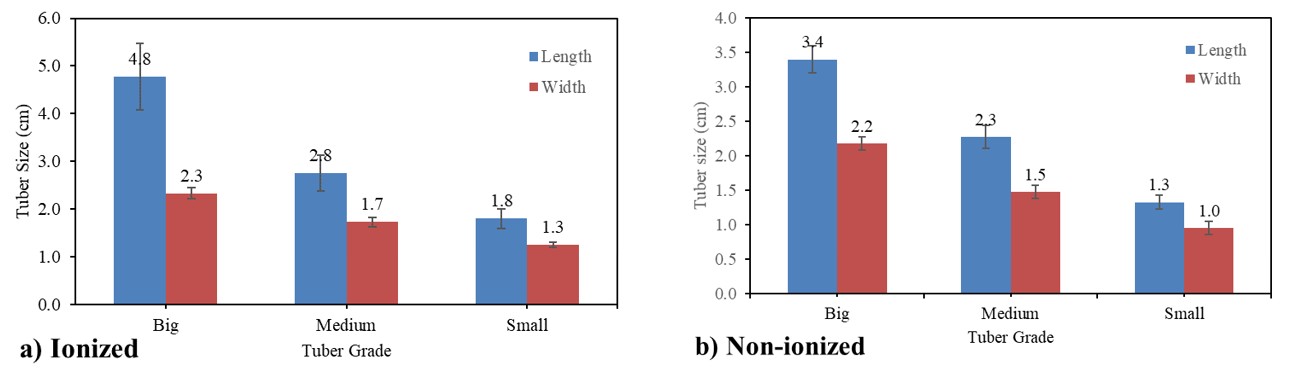
Figure 2. Count of tubers by grade in a) ionized and b) non-ionized treatments.
porphyrin ring. Joko et al. (2024) reported an increase in chlorophyll content in sweet potato plants that corresponded with the applied N rates (ranging from 50 to 200 kg/ha). Consequently, the chlorophyll content in plant leaves serves as an indicator of the relationship between N levels and pigmen production, with a reduced chlorophyll content often signaling nitrogen deficiency.
Changes in mineral stress, such as iron (Fe) and magnesium (Mg) deficiencies, often trigger a plant response, leading to a visible increase or decrease in chlorophyll production. The fact that the ionized treatment did not induce significant oxidative stress or directly interfere with the uptake or metabolism of Fe and Mg suggests that the chlorophyll synthetic pathway remained stable. The ionization may have been too mild or only affected surface-level physiological processes without penetrating the core leaf biochemistry responsible for chlorophyll synthesis. Karooki et al. (2021) reported that potato plants treated with 2% Fe and 2% Mg exhibited the highest chlorophyll index (48.51) compared to the control (35.93). This finding clearly demonstrates that Fe and Mg elements are essential for chlorophyll synthesis and activate key metabolic reactions in plants, thereby improving the nutritional value of the Sante cultivar.
Number of tubers and total weight of tubers were influenced by ionized treatments (Figure 1). Plant with ionized application in roots resulted higher number of tubers and total weight of tubers than non-ionized plant. The application of nutrient in potato root using ionized technology increased the root surface area and oxygen distribution, so that increase the number of tubers on potato plant. Devederkin et al. (2021) explained that potato root hairs charged positive ion while nutrient solution charged negative drops. This opposite charge resulted the efficiency of nutrition application to the roots, so increased the potato mini-tubers.
Tuber grade resulted in ionized treatment is bigger than non-ionized treatment (Figure 2). Big tuber grade in ionized treatment had longer and wider tuber if compared with the same tuber grade in non-ionized treatment. The same result also found in medium and small grades. Macro and micro nutrients were successfully delivered to the plants roots and effectively absorbed by plant using ionized technology then used as energy to create bigger tubber.
Anatomical characteristics
The anatomical analysis revealed notable differences between ionized and non-ionized treatments across various plant parts, suggesting differential responses to treatments. In the stolon, the diameter was similar between ionized (1357.2 µm) and non-ionized (1356.8 µm) plants, indicating no significant effect. However, cortex thickness was slightly higher in non-ionized stolons (238.6 µm) compared to ionized stolons (227.0 µm). Interestingly, the trachea diameter (xylem) was larger in ionized stolons (21.2 µm), indicating better water transport potential, while non-ionized stolons exhibited a thicker epidermis (27.2 µm) than ionized stolons (14.5 µm), likely as a stress response mechanism.
In the leaf, ionized plants displayed greater overall leaf thickness (119.5 µm) compared to non-ionized plants (88.7 µm), alongside thicker palisade layers (46.4 µm vs. 40.4 µm), which are crucial for photosynthesis. The trachea diameter (xylem) was also larger in ionized leaves (23.2 µm) than in non-ionized leaves (16.7 µm), suggesting enhanced water conduction in ionized plants. In the stalk, non-ionized plants exhibited a larger trachea diameter (29.6 µm) than ionized plants (24.7 µm), indicating a possible compensatory adaptation for water transport in non-ionized conditions.
In the root, ionized plants showed slightly larger root diameters (536.3 µm) than non-ionized plants (523.2 µm), with significantly thicker cortex tissue (215.3 µm vs. 135.2 µm), reflecting enhanced nutrient and water absorption capacity. However, the trachea diameter (xylem) was larger in non-ionized roots (43.7 µm) compared to ionized roots (35.2 µm), which may represent a structural adaptation to improve water transport efficiency under non-ionized conditions.
Overall, ionized treatments appear to enhance plant growth and physiological function, as evidenced by improved leaf tissue thickness, water conduction, and root development (Figure 3). Conversely, non-ionized plants exhibit structural adaptations, such as larger trachea and thicker epidermis, potentially to mitigate the stress effects of non-ionized conditions. These results highlight the beneficial impact of ionized treatment on plant anatomy and resource acquisition.
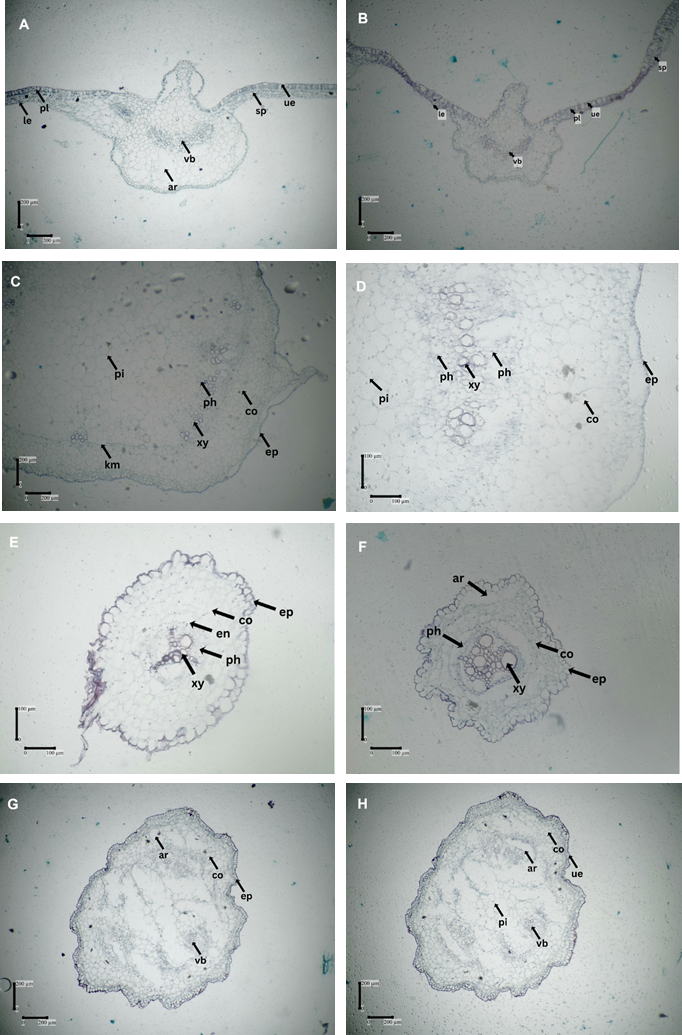
Figure 3. SEM images of (A) ionized leaf, (B) leaf non-ionized; (C) stem ionized, (D) stem non ionized, (E) root ionized, (F) root nonionized; and (G) stolon ionized, (H) stolon non ionized. Legend. pl: palisade, le: lower epidermis, sp: sponge, ue: upper epidermis, vb: vascular bundle, ar: aerenchyma, co: cortex, xy: xylem, ep: epidermis, pi: pith, ph: phloem. Representative micrographs of (3.A) ion-treated and (3.B) non-ion-treated leaves are shown. Leaves subjected to ion treatment exhibited a significantly thicker overall structure than those in the non-ion treatment, with mean thicknesses of 119.4 µm and 88.7 µm, respectively. Similarly, the palisade mesophyll layer was thicker in ion-treated leaves (119.4 µm) compared with non-ion-treated leaves (88.74 µm). In addition, the tracheal diameter was greater under ion treatment (23.2 µm) than under non-ion treatment (16.6 µm). Micrographs of stems from ion-treated (3.C) and non-ion-treated (3.D) plants revealed a well-organized tissue architecture comprising an outer epidermis, cortex, phloem, xylem, and a central pith. Clear demarcation between tissue layers was observed in both treatments, with a relatively thick cortex and uniformly distributed vascular tissues surrounding the pith. Histological analysis indicated enhanced structural development in ion-treated stems, as reflected by a larger tracheal diameter (29.6 µm) compared with non-ion-treated stems (24.6 µm). Micrographs of roots from ion-treated (3.E) and non-ion-treated (3.F) plants exhibited distinct tissue organization, including the epidermis, cortex, endodermis, phloem, xylem, and aerenchyma. Under ion treatment, the epidermis remained intact, the cortex was thicker and more compact, and the endodermis was clearly defined. The central vascular region showed more prominent xylem development, and aerenchyma was absent relative to the non-ion-treated roots. Quantitative measurements confirmed a larger root diameter in ion-treated plants (536.2 µm) compared with non-ion-treated plants (523.3 µm). Cortex thickness was also greater under ion treatment (215.3 µm vs. 135.1 µm), accompanied by an increased tracheal diameter (43.7 µm vs. 35.1 µm). Micrographs of stolons from ion-treated (3.G) and non-ion-treated (3.H) plants showed an outer epidermal layer followed by a relatively thick cortex. Aerenchyma tissue was present near the center, and vascular bundles containing phloem and xylem were evenly distributed around the pith. Stolon diameter was marginally greater in the ion-treated plants (1357.1 µm) than in the non-ion-treated plants (1356.8 µm). Ion treatment also resulted in increased epidermal thickness (27.2 µm vs. 14.49 µm), cortex thickness (238.5 µm vs. 226.9 µm), and tracheal diameter (21.16 µm vs. 17.9 µm).
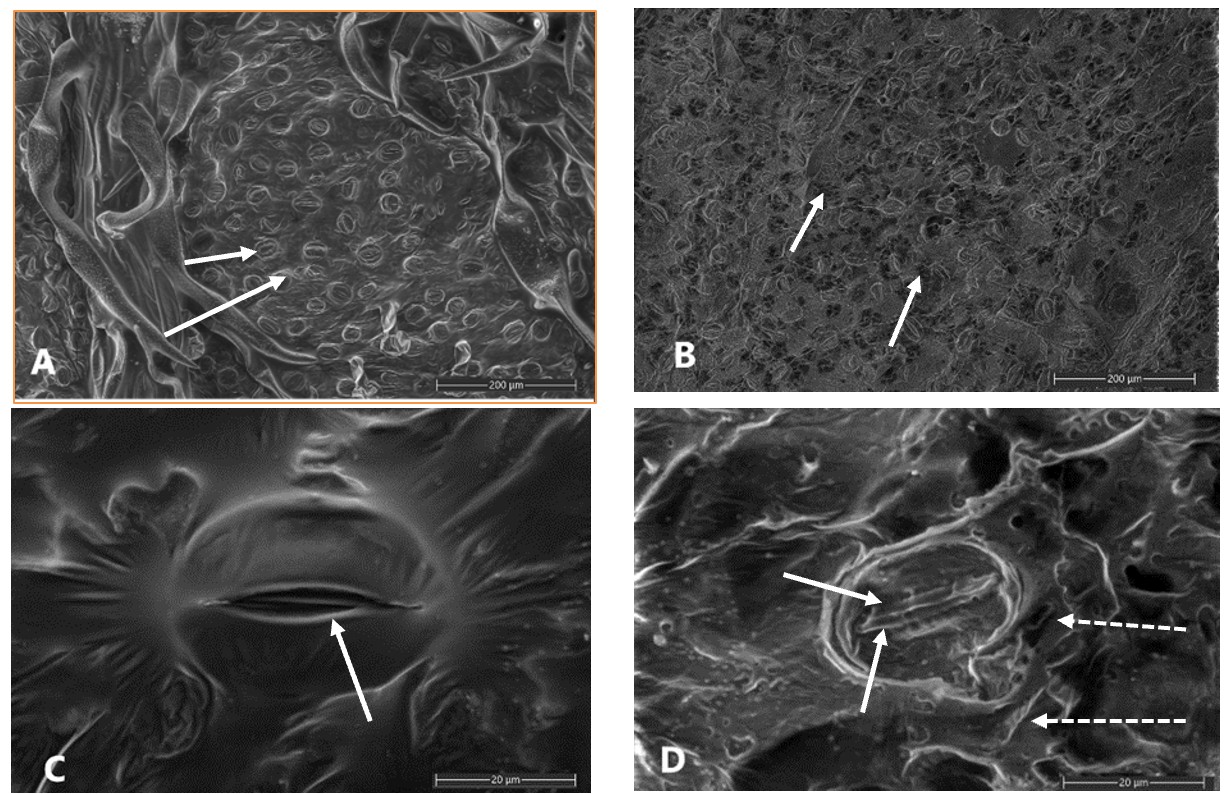
Figure 4. SEM images (scale size 200 μm) of stomata on leaves treated with ionized fertilizer (A) and non-ionized fertilizer (B), as well as single stomata on leaves treated with ionized fertilizer (C) and non-ionized fertilizer (D). Scanning electron microscopy (SEM) analysis at 200× magnification revealed that the leaf epidermis subjected to ionization treatment exhibited stomata that were uniform in size, evenly distributed, and densely arranged (solid arrows; Fig. 4.A). In contrast, potato leaves without ionization treatment displayed numerous trichomes (solid arrows), suggesting an adaptive response to environmental conditions (Fig. 4.B). Figure 4.C illustrates open stomata (solid arrows), indicative of active gas exchange. Figure 4.D shows a pair of curved guard cells surrounding the stomatal pore (solid arrows), which regulate stomatal opening and closure. The irregular, folded surface pattern surrounding the stomata (dashed arrows) corresponds to epidermal cells that contribute to water retention and the regulation of the stomatal microenvironment.
SEM images of potato leaves with ionized and non-ionized treatments showed no difference in stomatal density on the potato leaf surface (Figure 4). Stomatal density on leaves is an indicator of the biological activity level in plants, particularly the processes of photosynthesis and respiration. However, SEM images of individual stomata showed differences in size, both horizontally and vertically. Using the 'bar' scale from the SEM images, stomata with ionized liquid fertilizer treatment were larger, with a length of 40 μm and a width of 30 μm, compared to stomata without ionized treatment, which had a length of 26 μm and a width of 16 μm.
Stomata are important organs in the processes of photosynthesis and transpiration in plants. Stomata function as sites for CO2 exchange in leaves for photosynthesis and as locations for water evaporation in transpiration. Stomata serve as the main pathway through which plants interact with their environment via water and gas exchange, and they are closely related to vital physiological activities in plants such as photosynthesis, respiration, and transpiration (Tor-ngern and Leksungnoen 2020). The stomata in leaves play a key role in gas exchange (Gilner et al. 2015), water transpiration, nutrient absorption, and assimilation (Susilowati et al. 2022), as well as respiration (Boer et al. 2018). Stomata are found in all parts of the plant that interact with air, including leaves, stems, and rhizomes; however, stomata are most abundant in leaves (Inoue and Kinosita, 2017).
Stomatal types affect the leaf transpiration process. Stomata on leaves vary greatly among different plants in terms of density, size, and shape (Khan et al., 2014), as well as within plants belonging to the same genus or from different genetic resources of the same species. The stomatal features of plant epidermises are a significant area of investigation in the exploration of plant genetic resource diversity. Stomata play an important role in plant phylogenetic research, and their features are key elements in studies on the origin, evolution, and classification of plants.
Seed quality
Carbohydrates in G0 potato seeds are converted into sucrose, which acts as a signal for shoot development and as an energy source for its growth (Sonnewald and Sonnewald, 2014). Li et al. (2022) stated that proteins, specifically amino acids, contribute to faster sucrose production as an energy source during the development of potato shoots, which results from carbohydrate breakdown. Proteins and carbohydrates are also crucial for improving the quality of potato tubers (Table 3). It is believed that tuber weight increases with higher amounts of proteins and carbohydrates.
The process of breaking dormancy in potato tubers is a crucial first step for the initiation of sprout emergence. While carbohydrates and proteins contribute significantly to this process, the involvement of phytohormones such as cytokinin and gibberellin is equally vital. These hormones play a key role in the regulation of dormancy, promoting the activation of metabolic pathways that not only facilitate dormancy release but also stimulate the growth and emergence of new shoots
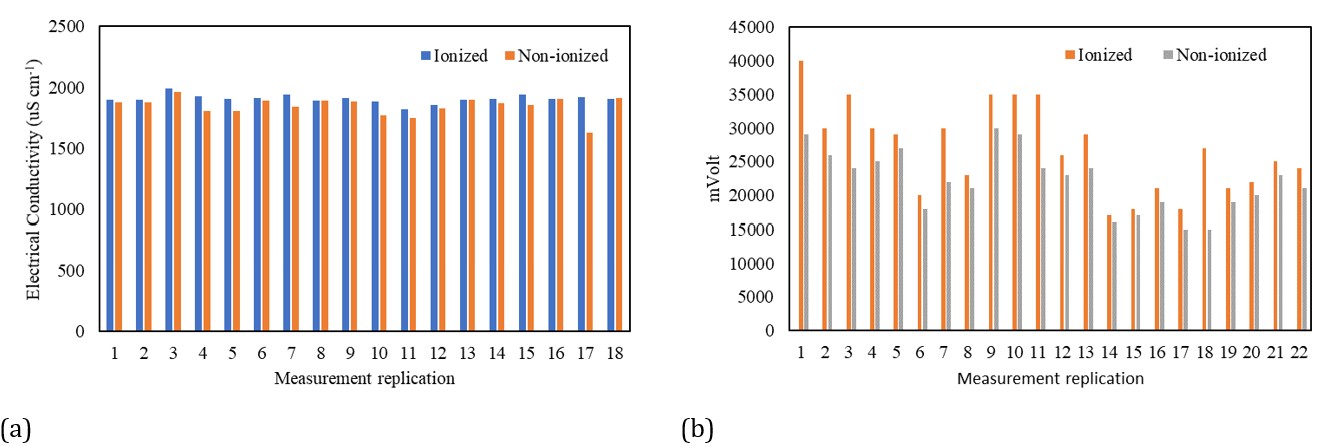
Figure 5. Electrical Conductivity (a) and voltmeter measurement (b) results in ionized and non-ionized aerosol liquid fertilizer
from the tubers. The intricate interplay of these factors is essential for ensuring successful sprouting and subsequent growth of the potato plant (Qu et al., 2024).
Materials and Methods
Plant materials
Potato seedling used in this research was Granola from PT. Kultur Jaringan Indonesia, Nongko Jajar, Malang, East Java. The seedling had been acclimatized and tested twice. The seedling selection was done based on the uniformity of the height and number of leaves.
Aeroponic installation
The installation is made from perforated angle iron, length of 4 m, width 1 m, and 0.9 m high. The gutters are installed with rubber on the sides and bottom, styrofoam is used as plant holder at the top of aeroponic installation. The base of the installation is made at slight angle, at the ends are connected so that nutrients flow back into the nutrient reservoir. Two pipes are installed inside the installation at a distance of 75 cm below the styrofoam and all pipes are connected to the aeroponic installation. Each of pipe is installed with a mist nozzle with has a distance of 25 cm and then connected to a pressurized water pup to produce soft water droplets (mist). The water pump will suck up the water through PVC pipe from a 350 L nutrient reservoir that immerse near the water pump.
Charged aerosol installation
The installation employed an aeroponic feeding method for agricultural crops as described by Devederkin et al. (2021). In this system, plant roots are supplied with nutrients via spraying with an ionized mineral solution. A pump delivers the nutrient solution to an injection mixer, while compressed air is supplied to an ionizer powered by a high-voltage source (≥ 14 kV). The ionizer imparts predominantly negative charges to the air, which subsequently mixes with the mineral solution in the injection mixer, forming an ionized liquid–air flow with a controlled ion concentration ranging from 500 × 10³ to 5000 × 10³ cm⁻³. This mixture is then distributed through a system of valves and spray lines to injectors that generate a fine aerosol directed toward the plant roots.
The plant stems are connected to a positively charged high-voltage electrode, creating an electrostatic field that attracts the negatively charged aerosol droplets to the positively charged root hairs. This electrostatic attraction promotes uniform spreading of the mineral solution over the root surface, thereby enhancing nutrient uptake and improving oxygen delivery to the root system. As a result, the electrostatic spraying approach increases the effective area of nutrient application and improves the homogeneity of droplet distribution.
The installation used the method of aeroponic feeding in agricultural crops designed by Devederkin et al. (2021). The method nourishes plant roots by spraying them with an ionized mineral solution. A pump delivers the nutrient liquid to an injection mixer, while a compressor sends air to an ionizer powered by a high-voltage source (at least 14 kV). The ionizer charges the air—mainly negatively—and this ionized air mixes with the mineral solution inside the mixer, forming an ionized liquid-air flow with a controlled ion concentration (500×10³ to 5000×10³ cm⁻³). This mixture is then distributed through valves and sprayer lines to injectors that release it as a fine aerosol toward the roots.
Because the plant stems are connected to a positive high-voltage electrode, the negatively charged droplets are electrostatically attracted to the positively charged root hairs. As a result, the mineral solution spreads evenly across the root surface, improving nutrient delivery and enhancing oxygen dosing to the roots. This electrostatic spraying method increases the effective area of nutrient application and improves uniformity of droplet distribution.
Thank you
Your feedback helps Google improve. See our Privacy Policy.
Share more feedbackReport a problemClose
Aeroponic nutrition
Nutrition used AB mix that was stored in reservoirs then sprayed in potato root area. The nutrition had an Electric Conductivity (EC) of 1 mS/cm3, appplied in the first 3 weeks of planting and 4 mS/cm3 applied in 4 weeks until harvest. Nutrient spraying intervals are carried out every 15 minutes and stop for 10 minutes with a pressure of 1.5 – 2 psi. The EC value in nutrients is controlled every day by checking the nutrient concentration through nutrient reservoir.
Determination of carbohydrate and protein.
Determination of carbohydrate using method of Bailey (1992). Sample (Supernatant) of 50 µl was added with 0.1 N phosphate buffer pH = 7.2 as much as 450 µl, incubated at 37oC - 40oC for 30 minutes, then add DNS 500 µl and incubated in boiling water for 5 minutes, cooled at room temperature and added potassium sodium tartrate tetrahydrate as much as 330 µl, measure the absorbance on a spectrophotometer at a wavelength of 575 nm. Calculate the carbohydrate content is calculated using the standard glucose equation, and absorbance as the x value.
Meanwhile for the protein determination was used Bradford method. The fresh material (1 g) was homogenised with 5 ml of distilled water and subsequently centrifuged at 10.000 rpm for 10 min; the suspension was removed to measure the soluble protein content (SPC in mg/g FW) of all sample extracts that was estimated colorimetrically with protein assay reagent by the Bradford method (Bradford 1976). Based on the size of the mini potato tubers, tuber grades are classified into several categories based on length and width: Big 5cm-3cm; Medium 2.9cm-1.5cm; Small 2cm-1.4cm.
SEM and histology
Leaf scanning was performed using the Thermo Scientific Prisma E-SEM. Leaves were scanned without coating treatment. A low-vacuum system was implemented. Subsequent steps for histological analysis using the procedure embedding. Two samples were prepared using a Microtome Leica-type HistoCore Multi Cut.
Protein and carbohydrate
Protein analysis was performed using fresh tuber samples (1 g), which were homogenized with 5 mL of distilled water and then centrifuged at 10,000 rpm for 10 minutes. The supernatant was collected to measure the soluble protein content (SPC, in mg/g FW) of all sample extracts, which was determined colorimetrically using a protein test reagent based on the Bradford method (Bradford, 1976).
Carbohydrate analysis in potato tubers was conducted by taking the samples, mixing them with 0.1 N phosphate buffer, DNS, and potassium sodium tartrate tetrahydrate, and then analyzing them using a spectrophotometer. The concentration of reducing sugars was determined using a glucose equation, with absorbance values used as the x-variable.
Plant maintenance
Temperature and plant conditions were controlled every day. Greenhouse temperature is controlled by spraying the surrounding leaves area using sprayer to lower the temperature around the plant. Pest and diseases are controlled using pesticides (antracol, rhizotyhn, bactocyn) every two or three days.
Research design and parameters
The research used a single randomized block design with aerosol ionization treatment, where P0 represented no ionization (no ionizer used) and P1 represented the aerosol ionization (ionizer used) treatment, with four replications. If significant effects were observed, the data were analyzed using the LSD (Least Significant Difference) method. The parameters observed included the ionization aerosol system, measured by total ion concentration; plant growth and development, assessed through plant height, total number of leaves, root length, leaf chlorophyll content, stolon length, and plant germination; plant yield, which included the number of tubers, tuber diameter, tuber weight, and tuber quality (carbohydrate content, protein content, and tuber grading); and cytological observations, which involved root histology and scanning electron microscopy (SEM) of the roots.
Statistical analysis
The analysis of growth and yield data for potato seed cultivation was conducted using Analysis of Variance (ANOVA), followed by a post hoc test Duncan's Multiple Range Test (DMRT) (one-way) to assess the significance of interactions between Ionized and non-ionized nutrient in aetophonics systems.
Conclusion
The study shows that ionized aerosol treatments improve potato plant growth compared to non-ionized treatments. Ionized plants had more leaves, thicker stems, longer roots, and more stolons. They also produced more and heavier tubers, likely due to better nutrient absorption and oxygen distribution in the roots. Anatomical differences were found, with ionized plants having thicker leaf tissues and larger xylem vessels, which help with water and nutrient transport. The ionized treatment also made the stomata larger, which could improve gas exchange and transpiration. While chlorophyll content was not affected, the ionized treatment resulted in larger and more tubers, as well as better carbohydrate and protein content, leading to better germination and plant growth.
References
The entries marked * mainly need checking because page numbers, editors/book details, issue information, or journal/source details are incomplete or potentially inconsistent in the supplied list.
Ahmadi M & Souri MK (2020) Growth characteristics and fruit quality of chili pepper under higher electrical conductivity of nutrient solution induced by various salts. AGRIVITA Journal of Agricultural Science 42(1). https://doi.org/10.17503/agrivita.v42i1.2225
Ali NS, Jabbar NM, Alardhi SM, Majdi HS & Albayati TM (2022) Adsorption of methyl violet dye onto a prepared bio-adsorbent from date seeds: isotherm, kinetics, and thermodynamic studies. Heliyon 8(8): e10276. https://doi.org/10.1016/j.heliyon.2022.e10276
*Antonov S (2020) Determination of parameters of aerosol charging process when spraying plants. Engineering for Rural Development.
Bailey MJ, Biely P & Poutanen K (1992) Interlaboratory testing of methods for assay of xylanase activity. Journal of Biotechnology 23: 257–270.
Bradford MM (1976) A rapid and sensitive method for the quantitation of microgram quantities of protein utilizing the principle of protein-dye binding. Analytical Biochemistry 72: 248–254.
Boer HJD, Price CA, Wagner-Cremer F, Dekker SC, Franks PJ & Veneklaas EJ (2016) Optimal allocation of leaf epidermal area for gas exchange. New Phytologist 210(4): 1219–1228. https://doi.org/10.1111/nph.13929
Sonnewald S & Sonnewald U (2014) Regulation of potato tuber sprouting. Planta 239(1): 27–38. https://doi.org/10.1007/s00425-013-1968-z
Calori AH, Factor TL, Feltran JC, Watanabe EY, Moraes CC de & Purquerio LFV (2018) Seed potato minituber production in an aeroponic system under tropical conditions: electrical conductivity and plant density. Journal of Plant Nutrition 41(17): 2200–2209. https://doi.org/10.1080/01904167.2018.1497652
Chrysargyris A, Petropoulos SA, Prvulovic D & Tzortzakis N (2021) Performance of hydroponically cultivated geranium and common verbena under salinity and high electrical conductivity levels. Agronomy 11(6): 1237. https://doi.org/10.3390/agronomy11061237
Devederkin IV, Antonov SN & Permyakov AV (2021) Aerosol management of nutrients in aeroponic potato mini-tubers cultivation technology. IOP Conference Series: Earth and Environmental Science 852(1): 012021. https://doi.org/10.1088/1755-1315/852/1/012021
Eldridge BM, Manzoni LR, Graham CA, Rodgers B, Farmer JR & Dodd AN (2020) Getting to the roots of aeroponic indoor farming. New Phytologist 228(4): 1183–1192. https://doi.org/10.1111/nph.16780
Fussy A & Papenbrock J (2022) An overview of soil and soilless cultivation techniques—chances, challenges and the neglected question of sustainability. Plants 11(9): 1153. https://doi.org/10.3390/plants11091153
*Gillner S, Korn S & Roloff A (2015) Leaf-gas exchange of five tree species at urban street sites. Arboriculture & Urban Forestry 41(3): 113–124. https://doi.org/10.48044/jauf..012
Gong HL, Dusengemungu L, Igiraneza C & Rukundo P (2021) Molecular regulation of potato tuber dormancy and sprouting: a mini-review. Plant Biotechnology Reports 15(4): 417–434. https://doi.org/10.1007/s11816-021-00689-y
*Grasso N, Fasciolo B, Awouda AMM & Bruno G (2024) A smart aeroponic chamber: structure and architecture for an efficient production and resource management. In: Encyclopedia of Sustainability Science and Technology Series. Springer, pp. 353–380.
Guo R, Jin Y, Liu J, Yang H, Cheng L, Yu B (2025) Harnessing light quality for potato production: red and blue light as key regulators of growth and yield. Plants 14: 1039. https://doi.org/10.3390/plants14071039
Hamdani JS, Kusumiyati & Mubarok S (2018) Effect of shading net and interval of watering increase plant growth and yield of potatoes ‘Atlantic’. Journal of Applied Sciences 18: 19–24. https://doi.org/10.3923/jas.2018.19.24
Inoue SI & Kinoshita T (2017) Blue light regulation of stomatal opening and the plasma membrane H+-ATPase. Plant Physiology 174(2): 531–538. https://doi.org/10.1104/pp.17.00166
Joko LB, Eiasu BK & Ngwenya SM (2024) The impact of nitrogen levels on the growth, development, and yield of orange-fleshed sweet potatoes (Ipomoea batatas L.). HortScience 59(10): 1520–1523. https://doi.org/10.21273/HORTSCI17996-24
*Karooki AK, Yavarzadeh M, Akbarian MM & Askari AA (2021) Effects of nanofertilizers (Mg and Fe) and planting date on productivity and quality of potato tubers in cold desert climate. Revista Agrogeoambiental 13(1). http://dx.doi.org/10.18406/2316-1817v13n120211580
Khan F, Yousaf Z, Ahmed HS, Arif A, Rehman HA, Younas A, Rashid M, Tariq Z & Raiz N (2014) Stomatal patterning: an important taxonomic tool for systematical studies of tree species of angiosperm. Annual Research & Review in Biology 4(24): 4034–4053. https://doi.org/10.9734/ARRB/2014/10073
Khraisheh M, Dawas N, Nasser MS, Al-Marri MJ, Hussien MA, Adham S & McKay G (2020) Osmotic pressure estimation using the Pitzer equation for forward osmosis modelling. Environmental Technology 41(19): 2533–2545. https://doi.org/10.1080/09593330.2019.1575476
Khutinaev OK, Dzhioeva CG, Basiev SS, Kozayeva DP & Pliev IG (2021) Innovative technology for growing potato minitubers on aerohydroponic devices. IOP Conference Series: Earth and Environmental Science 624(1): 012054. https://doi.org/10.1088/1755-1315/624/1/012054
Li LQ, Chen J, Lu YF, Ren B, Huang XL, Yu LP, Zeng FC, Wang Q, Wang XY & Lu LM (2022) Physiological and proteomic analyses of γ-aminobutyric acid (GABA)-treated tubers reveals that StPOD42 promotes sprouting in potato. Journal of Plant Physiology 278: 153826. https://doi.org/10.1016/j.jplph.2022.153826
*Lieth JH & Oki LR (2019) Irrigation in soilless production. In: Soilless Culture. Elsevier, pp. 381–423.
Pereira A & Nova NV (2008) Potato maximum yield as affected by crop parameters and climatic factors in Brazil. HortScience 43(5): 1611–1614. https://doi.org/10.21273/hortsci.43.5.1611
Qiao M, Hong C, Jiao Y, Hou S & Gao H (2024) Impacts of drought on photosynthesis in major food crops and the related mechanisms of plant responses to drought. Plants 13(13): 1808. https://doi.org/10.3390/plants13131808
Qu L, Huang X, Su X, Zhu G, Zheng L, Lin J, Wang J & Xue H (2024) Potato: from functional genomics to genetic improvement. Molecular Horticulture 4(1). https://doi.org/10.1186/s43897-024-00105-3
Rosnina R & Mauliza S (2020) Optimization of AB-mix fertilizer on varieties of hydroponic lettuce (Lactuca sativa L.). Journal of Tropical Horticulture 3(2): 86. https://doi.org/10.33089/jthort.v3i2.56
Saptana, Sayekti AL, Perwita AD, Sayaka B, Gunawan E, Sukmaya SG, Hayati NQ, Yusuf, Sumaryanto, Yufdy MP, Mardianto S & Pitaloka AD (2022) Analysis of competitive and comparative advantages of potato production in Indonesia. PLoS ONE 17(2): e0263633. https://doi.org/10.1371/journal.pone.0263633
Sembiring A, Murtiningsih R, Sahat JP & Hartanto S (2021) G0 potato aeroponic seed production in Indonesia: producers’ perception toward the benefits and challenges. IOP Conference Series: Earth and Environmental Science 948(1): 012086. https://doi.org/10.1088/1755-1315/948/1/012086
*Sembiring A, Murtiningsih RR & Kusmana K (2021) G0 potato seed production management in Indonesia: an overview and the challenges. AGRARIS: Journal of Agribusiness and Rural Development Research 7(1): 78–90. https://doi.org/10.18196/agraris.v7i1.5943
Slameto S, Fariroh I & Rusdiana RY (2022) Application of aeroponic technology for potato seed production in Ngadisari Village, Probolinggo Regency. Dharmakarya 11(1): 51. https://doi.org/10.24198/dharmakarya.v11i1.36136
*Sumarni E & Farid N (2024) The application of root zone cooling in various hydroponic methods for potato seed production in lowland wet tropics of Indonesia. CIGR Journal 26(3). https://cigrjournal.org/index.php/Ejounral/article/view/9179
Susilowati A, Novriyanti E, Rachmat HH, Rangkuti AB, Harahap MM, Ginting IM, Kaban NS & Iswanto AH (2022) Foliar stomata characteristics of tree species in a university green open space. Biodiversitas 23(3). https://doi.org/10.13057/biodiv/d230336
Syamsiyah N, Qanti SR & Rochdiani D (2024) Risk mitigation in environmental conservation for potato production in Cisangkuy Sub-Watershed, Bandung Regency, West Java, Indonesia. Agriculture 14(10): 1726. https://doi.org/10.3390/agriculture14101726
Tahreen A, Jami MS & Ali F (2020) Role of electrocoagulation in wastewater treatment: a developmental review. Journal of Water Process Engineering 37: 101440. https://doi.org/10.1016/j.jwpe.2020.101440
Tor-ngern P & Leksungnoen N (2020) Investigating carbon dioxide absorption by urban trees in a new park of Bangkok, Thailand. BMC Ecology 20(1). https://doi.org/10.1186/s12898-020-00289-4
van der Plas F, Schröder-Georgi T, Weigelt A, Barry K, Meyer S, Alzate A, Barnard RL, Buchmann N, de Kroon H, Ebeling A, Eisenhauer N, Engels C, Fischer M, Gleixner G, Hildebrandt A, Koller-France E, Leimer S, Milcu A, Mommer L et al. (2020) Plant traits alone are poor predictors of ecosystem properties and long-term ecosystem functioning. Nature Ecology & Evolution 4(12): 1602–1611. https://doi.org/10.1038/s41559-020-01316-9
*Visen SS, Thakur D & Atluri S (2024) Sustainable management of soilborne diseases of horticultural crops. In: Advances in Postharvest and Analytical Technology of Horticulture Crops. Springer Nature Singapore, pp. 349–363.
Wasilewska-Nascimento B, Boguszewska-Mańkowska D & Zarzyńska K (2020) Challenges in the production of high-quality seed potatoes (Solanum tuberosum L.) in the tropics and subtropics. Agronomy 10(2): 260. https://doi.org/10.3390/agronomy10020260
Zhen S, van Iersel MW & Bugbee B (2022) Photosynthesis in sun and shade: the surprising importance of far-red photons. New Phytologist 236(2): 538–546. https://doi.org/10.1111/nph.18375